The Glory of Africa
For over fifteen years, I have written a grandiose amount of information about the Glory of Africa. Filled with joy and inspiration, I always love to write about the power of my black people. It has been a privilege and an honor to express my views on this very important subject. We should have discernment too in standing up for our Blackness and oppose the fascist agenda of Donald Trump without question (as he has stripped black history from federal websites, view the Central Park Five as guilty, wants to deport black Haitians who were part of the legal TPS migrant program, wants DEI programs gone, and refuses to support reparations for black Americans). Many people claim to support us African Americans, but they do evil by expressing bigotry and xenophobia against Africans, Afro-Caribbeans, and all black people of the African Diaspora who was not born in America. What I find interesting is that these xenophobes sugarcoat the genocide done by white racists (who committed genocide and slavery against black people globally spanning centuries), but they want to scapegoat certain black people for their own issues. That is the definition of self-hatred. As a black American, I adhere to reparations for black Americans, but I reject xenophobia of any kind. Oppression doesn't have a limit based upon zip code or location. Africans, Afro-Caribbeans, and all black people of the globe including the rest of the African Diaspora are my Brothers and my Sisters from Shelly-Ann Fraser Pryce, Natasha Hastings, Idris Elba, and to the late Afro-Brazilian leader Abdias do Nascimento.
We all are born equal and are entitled to life, liberty, and the pursuit of happiness, irrespective of our nationality. Some of these liars who harbor hostility towards Pan African unity promote the lie to say that Jesse Jackson invented or popularized the term of African American during the 1980s. Afro-American was used by Malcolm X and Paul Robeson back in the 1960s. Malcolm X explicitly used the phrase African American too. The term of African American was utilized back in the 1700s too. We have to stand on truth. Some people exploit the suffering of some men as an excuse to be misogynistic (when it is wrong to falsely scapegoat women for all of the evils in the world. We know about the greatness and beauty of black women), and we all oppose sexism 100 percent. Some legitimately expose the bad policies of the far-right Netanyahu Israeli government (mainstream studies document overt war crimes done by the Israeli government and Hamas). Others exploit that reality in trying to be anti-Semitic, but I reject anti-Semitism. We want all people in the Middle East (who are Jewish people, Arabic people, and people of every color) to have equality and justice without Palestinian oppression and occupation. Many Jewish people desire freedom for the Palestinian people too, and that point must be made clear. Some people exploit cultural issues to be Islamophobic, and we must always reject hatred of Muslim people as well. Therefore, we love Africa with its diverse countries, its diverse cultures, and Africa represents a precise, essential tie to the human race in general. Like always, Black is Beautiful.
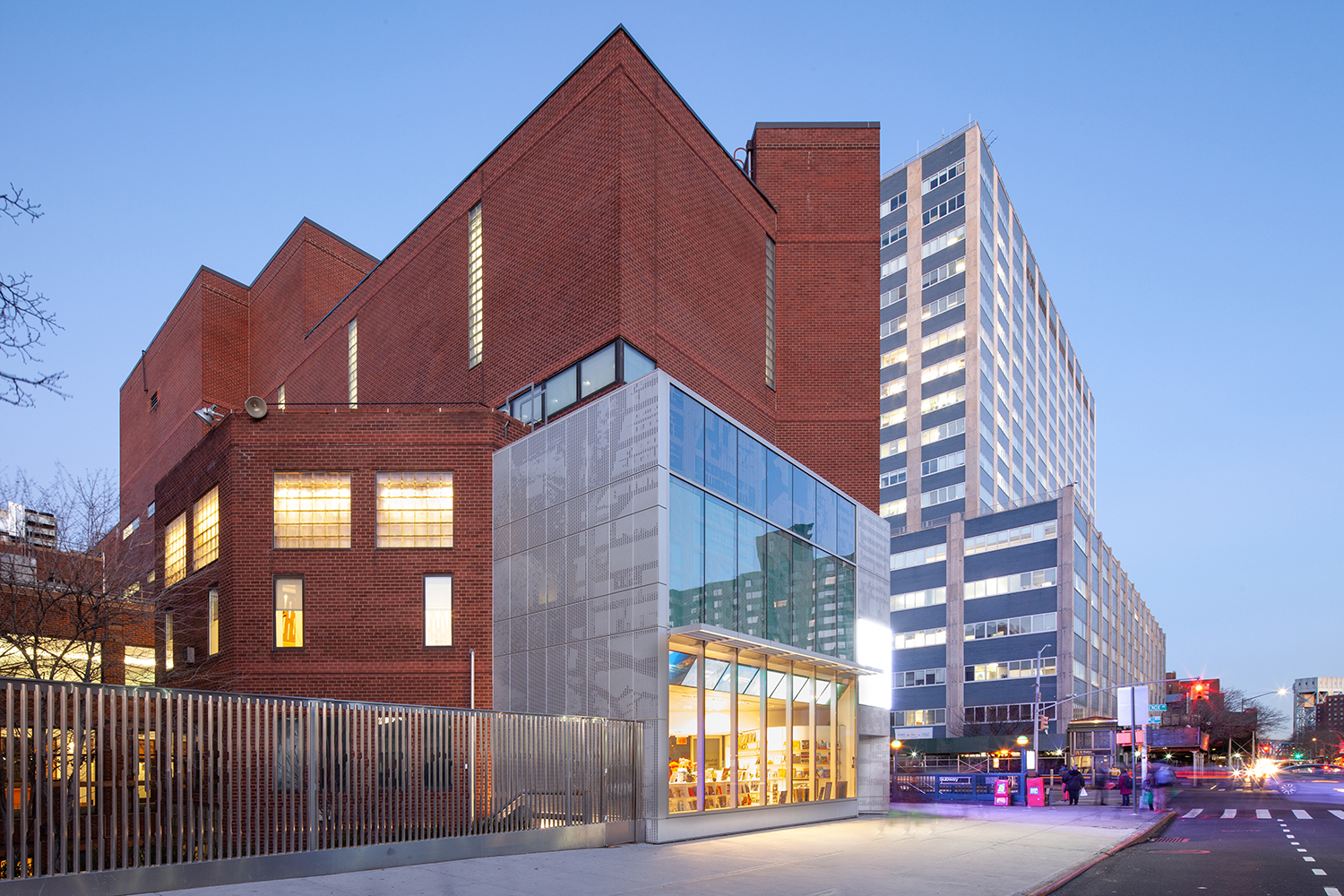
100th Anniversary of the Schomburg Center (in Harlem, New York City)
The Schomburg Center for Research in Black Culture has been around for 100 years, and that is a blessing. Today, it is a research library of the New York Public Library (NYPL) and an archive repository for information on people of African descent worldwide. Located at 515 Malcolm X Boulevard (Lenox Avenue) between West 135th and 136th Streets in the Harlem neighborhood of Manhattan, New York City, it has, almost from its inception, been an integral part of the Harlem community. It is named for Afro-Puerto Rican scholar Arturo Alfonso Schomburg. The resources of the center are broken up into five divisions: the Art and Artifacts Division, the Jean Blackwell Hutson General Research and Reference Division, the Manuscripts, Archives and Rare Books Division, the Moving Image and Recorded Sound Division, and the Photographs and Prints Division. In addition to research services, the center hosts readings, discussions, art exhibitions, and theatrical events. It is open to the general public. In 1901, Andrew Carnegie tentatively agreed to donate $5.2 million (equivalent to $196,539,200 in 2024) to construct 65 branch libraries in New York City, with the requirement that the city provide the land and maintain the buildings once construction was complete. Later in 1901, Carnegie formally signed a contract with the City of New York to transfer his donation to the city to then allow it to justify purchasing the land to house the libraries. McKim, Mead and White were chosen as the architects, and Charles Follen McKim designed the three-story library building at 103 West 135th Street in the Italian Renaissance Palazzo style. At its opening on July 14, 1905, the library had 10,000 books, and the librarian in charge was Gertrude Cohen. In 1920, Ernestine Rose, a white woman born in Bridgehampton in 1880, was the branch librarian. She quickly integrated the all-white library staff. Catherine Allen Latimer, the first African-American librarian hired by the NYPL, was sent to work with Rose as was Roberta Bosely months later. Sometime later, Sadie Peterson Delaney became employed at the branch. Together, they created a plan to assist in integrating reading into the lives of the library attendees and cooperated with schools and social organizations in the community.
In 1921, the library hosted the first exhibition of African-American art in Harlem; it became an annual event. The library became a focal point to the burgeoning Harlem Renaissance. In 1923, the 135th Street branch was the only branch in New York City employing black Americans as librarians, and consequently, when Regina M. Anderson was hired by the NYPL, she was sent to work at the 135th Street branch. Rose issued a report to the American Library Association in 1923, which stated that requests for books about black people or written by black people had been increasing, and that the demand for professionally trained black librarians was also. In late 1924, Rose called a meeting, with attendees including Arturo Alfonso Schomburg, James Weldon Johnson, Hubert Harrison, that decided to focus on preserving rare books and solicit donations to enhance its African-American collection. On May 8, 1925, it began operating as the Division of Negro Literature, History, and Prints, a division of the NYPL. In 1926, Schomburg was interested in selling his collection of African-American literature because he wanted it to be available to the general public, but he wanted the collection to stay in Harlem. Rose and the National Urban League convinced the Carnegie Foundation to pay $10,000 to Schomburg and then donate the books to the library. In 1926, the center's collection won acclaim with the addition of Schomburg's personal collection. By donating his collection, Schomburg sought to show that black people had a history and a culture and thus were not inferior to other races. About 5,000 objects in Schomburg's collection were donated.
In 1929, Anderson was desirous of a promotion and enlisted the help of W. E. B. DuBois and Walter Francis White when she was being discriminated against by not being promoted. After letters of intervention on her behalf by DuBois and White, and a boycott of the library by White, Anderson was promoted and transferred to the Rivington Street branch of the NYPL. By 1930, the center had 18,000 volumes. In 1932, Schomburg became the first curator of his collection until he died in 1938. In 1935, the Center developed a project to deliver books once a week to those handicapped severely enough that they could not make it to the library. Dr. Lawrence D. Reddick became the second curator of the Schomburg Collection of Negro Literature. At the behest of Reddick, in October 1940, the entire Division of Negro History, Literature, and Prints was renamed the Schomburg Collection of Negro History and Literature. In 1942, Rose retired after an extension was built onto the rear of the building, at a time when the library had 40,000 books. Dorothy Robinson Homer replaced her as Branch Librarian, after the Citizen's Committee of the 135th Street Branch Library specifically requested a black person to replace Rose.
Later, there was the Countee Cullen branch built. Homer created a room of books just for young adults and created the American Negro Theatre in the basement that spawned the play Anna Lucasta, which was moved to Broadway. She kept the emphasis on building a community center for art, music, and drama. She put on art exhibits that favored unknown, young artists of all races. After the outbreak of WWII, Homer started a program of monthly concert recitals in the auditorium to enhance public spirit, but the demand by performers and audience members to continue the practice made it permanent. The center was directed by Jean Blackwell. The Schomburg Center grew, and by 1972, it was designated as one of NYPL's research libraries. In 1978, the building on 135th Street between Lenox and 7th Avenues was entered into the National Register of Historic Places. In 1979, it was formally listed in the NRHP. In 1980, a new Schomburg Center was founded at 515 Lenox Avenue. In 1981, the original building on West 135th Street which held the Schomburg Collection, was designated a New York City Landmark. In 2016, both the original and current buildings, now joined by a connector, were designated a National Historic Landmark. The Roger Furman Theatre is located within the building. Many people were directors of the center like Khalil Gibran Muhammad, the great-grandson of Elijah Muhammad and professor of history at Indiana University (from 2011-2016). In the summer of 2011, Muhammad became the fifth director of the Schomburg. His stated goals were for the Schomburg to be a focal point for young adults and to collaborate with the local community, to not only reinforce its pride, but also for the center to be a gateway for revealing the history of Black people worldwide. In July, the center began an exhibit of Malcolm X footage and prints entitled Malcolm X: The Search for Truth.
On August 1, 2016, the New York Public Library announced that poet and academic Kevin Young would begin as director of the Schomburg in the late fall of 2016. During Young's four-year tenure, attendance increased by 40%, to 300,000 visitors per year. He is credited with raising more than $10 million in grants and donations, and securing several high-profile acquisitions, including the papers of James Baldwin; Harry Belafonte; and the couple Ossie Davis and Ruby Dee. A $22.3 million renovation of the Schomburg Center buildings was completed in 2017. The project included new gallery and research areas; upgrades to the Langston Hughes Auditorium; a two-story annex; and upgrades to the second-floor Rare Books Reading Room. Young stepped down at the end of 2020 to assume a new position as director of the Smithsonian's National Museum of African American History and Culture. In 2021, Joy Bivins was appointed as the director of the Schomburg Center. The next year, the Dormitory Authority of the State of New York provided $8 million for a renovation of the Schomburg Center buildings. The work included energy-efficiency and safety upgrades, in addition to a replacement of existing windows and roof. Now, the Schomburg collection has tons of items relating to black history and culture. As of 2010, the Collection stood at 10 million objects. The center contains a signed first edition of a book of poems by Phillis Wheatley, archival material of Melville J. Herskovits, John Henrik Clarke, Lorraine Hansberry, Malcolm X, and Nat King Cole. The collection includes the files, or papers of the International Labor Defense, the Civil Rights Congress, the Symphony of the New World, the National Negro Congress, and the files of the South African Dennis Brutus Defense Committee (restricted). It also includes the papers of Lawrence Brown (1893–1973), Melva L. Price, Ralph Bunche, Léon Damas, Thomas Henderson Kerr Jr., William Pickens, Hiram Rhodes Revels, Clarence Cameron White. The collection also includes manuscripts of Alexander Crummell and John Edward Bruce, manuscripts of Slavery, Abolitionism and on the West Indies, and letters and unpublished manuscripts of Langston Hughes. It includes some papers from Christian Fleetwood, Paul Robeson (restricted), Booker T. Washington, and Schomburg himself. It includes musical recordings, black and jazz periodicals, rare books and pamphlets, and tens of thousands of art objects. The center's collection includes documents signed by Toussaint Louverture and a rare recording of a speech by Marcus Garvey. The Claude McKay Estate is represented by the Faith Childs Literary Agency. In the past, the center had acted as the literary representative of the heirs of Claude McKay. The NYPL hosted various events in 2025 to celebrate the Schomburg Collection's 100th anniversary.

Queen Mother Moore
Queen Mother Moore was one of the greatest black activists in human history who lived from July 27, 1898, to May 2, 1997. She was a civil rights leader and a black nationalist who promoted Pan-African unity. She was friends with many people of the black freedom movement. She worked with many civil rights leaders and black activists like Marcus Garvey, Nelson Mandela, Winnie Mandela, Rosa Parks, and Jesse Jackson. She was born in the South in New Iberia, Louisiana to Ella and St. Cry Moore. Her father, St. Cyr Moore, served as deputy sheriff of Iberia Parish. Cry Moore would be married three times and fathered eight children. During his marriage to Ella Moore, Queen Mother Moore was the eldest of three, Lorita and Eloise. As children, Moore and her sisters went to Saint Catherine’s Catholic school. Moore's mother died when she was six years old, and she and her sisters were placed in the care of their maternal grandmother. Her grandmother, Nora Henry, had been born into slavery, and when Moore’s mother Ella was a child, her grandfather was lynched, leaving Ella and her siblings in the care of their mother. Moore and her siblings would later return to the care of their father in New Orleans, but he would pass away when she was in the fourth grade and she would drop out shortly after. The inheritance intended for Moore and her sisters was claimed by a half-brother that put them out of their home. To support herself and her sisters, Moore took her father's mules to auction and used the money to rent a home. She would later lie about her age in order to become a hairdresser, a position that would support them for some time.
Queen Mother Moore started her activism during her teenage years. Moore and her sisters mobilized their neighbors during World War I to provide aid to black recruits upon learning that the Red Cross was only providing sustenance for white soldiers. Her sister Eloise established what could be called the first United Service Organizations in Anniston, Alabama; she found space in an unused building where black soldiers could go to relax, a privilege previously only afforded to white soldiers. In 1919, Moore learned of Marcus Garvey and went to hear him speak in New Orleans in 1920. By this time, Moore had married, and she and her three sisters gained a "new consciousness" of their African heritage after Garvey's speech. After attending a speech by Marcus Garvey, Moore had begun preparing herself to move to Africa with her husband. However, after facing family issues she remained in the United States, moving first to California then to Chicago, before settling in Harlem, New York, with her husband and sisters in 1922. Moore moved through activist groups often; before joining the Communist Party USA around 1933, Moore joined the International Labor Defense. In the Communist Party, she found a new consciousness of "the society under which we live, an analysis of the system under which we live". Moore worked with the party for some time, but she resigned in 1950, believing the party was no longer working in the best interest of Black people.
After meeting Mary McLeod Bethune in Washington, Moore became a life member of the Council of Negro Women. It was with Bethune that Moore would make the first of many speeches to crowds of those interested in the fight for civil rights. Moore later became a leader and life member of the UNIA, founded in 1914 by Marcus Garvey. She participated in Garvey's first international convention in New York City and was a stock owner in the Black Star Line. Along with becoming a leading figure in the Civil Rights Movement, Moore worked for a variety of causes for over 60 years. Her last public appearance was at the Million Man March alongside Jesse Jackson during October 1995. Moore was the founder and president of the Universal Association of Ethiopian Women, as well as the founder of the Committee for Reparations for Descendants of U.S. Slaves. She was a founding member of the Republic of New Afrika to fight for self-determination, land, and reparations. In 1964, Moore founded the Eloise Moore College of African Studies, Mt. Addis Ababa, in Parksville, New York. The college was destroyed by fire in the late 1970s. For most of the 1950s and 1960s, Moore was the best-known advocate of African-American reparations. Operating out of Harlem and her organization, the Universal Association of Ethiopian Women, Moore actively promoted reparations from 1950 until her death.
Although raised Catholic, Moore disaffiliate during the Second Italo-Ethiopian War, during which she felt Pope Pius XII took improper actions in supporting the Italian army. Moore went between religions, from being a missionary in the Baptist Church, a member of the Apostolic Orthodox Church of Judah, and was later baptized into the Ethiopian Orthodox Church. She was also a founding member of the Commission to Eliminate Racism of the Council of Churches of Greater New York. In organizing this commission, she staged a 24-hour sit-in for three weeks. Moore was also a co-founder of the African American Cultural Foundation, Inc., which led the fight against usage of the slave term "Negro." In 1957, Moore presented a petition to the United Nations and in 1959 a second petition, arguing for self-determination, against genocide, for land and reparations, making her an international advocate. Interviewed by E. Menelik Pinto, Moore explained the petition, in which she asked for 200 billion dollars to monetarily compensate for 400 years of enslavement. The petition also called for compensations to be given to African Americans who wished to return to Africa and those who wished to remain in America. Moore was the first signatory of the New African agreement.
Moore travelled to Africa numerous times between 1972 and 1977. On her first trip to Africa in 1972, she travelled to Guinea for Dr. Kwame Nkrumah's funeral, before being called to Ghana by a chief. In Ghana, she was bestowed with the honorific title "Queen Mother" by the Ashanti in a ceremony. She later returned to Africa for the All-African Women's Conference in Tanzania. She also travelled to Guinea Bissau as the guest of Amilcar Cabral, to Nigeria for the World Festival of Black Arts and Culture and returned to Tanzania for the Sixth Pan-African Congress in Dar es Salaam and went to Uganda. In 1990, Blakely took her to meet Nelson Mandela after he left prison in South Africa. This was done at the residence of President Kenneth Kaunda in Lusaka, Zambia.
Moore officially integrated a stance on reparations into her activism work in the 1960s, when forming the Universal Association of Ethiopian Women (UAEW). Moore founded the UAEW in Louisiana in response to working on cases of rape and other sexual violence against Black women. Through her work with the UAEW, Moore advocated for policy such as welfare benefits as a form of reparations for the sexual violence inflicted on Black women by white men. The UAEW also created an extensive mutual aid network, collecting food and other resources for Black women who lost access to welfare benefits due to being falsely deemed unfit mothers under Suitable Home Law, a set of policies that targeted women who did not conform to ideals of white motherhood and domesticity.
In 1962, Moore moved to Philadelphia and joined the National Emancipation Proclamation Centennial Observance Committee (NEPCOC), around the same time that the group was overhauling its mission, transitioning from a commemorative organization to one that was active in the fight for civil rights. In April 1962, the group held All-Africans Freedom Day Celebrations, where the NEPCOC announced its national mission to fight for reparations. While it appears that this action may not have materialized, the NEPCOC did organize a series of lectures on the topic of reparations, some of which include Moore as a keynote speaker.
She advocated for a stance that recognized that the violence inflicted on African people during the time periods of the Middle Passage, Jim Crow Laws, and Slavery were a form of cultural destruction, and that extensive grassroots work and economic restitution was needed to restore communities. Her particular stance is credited as playing a large role in imagining the role that Black women play in reparations work within the context of creating diasporic African communities and calling for economic reparations. She was part of the Civil Rights Congress (CRC) promoted a developed a consciousness toward civil rights that appeals to international institutions.
One particularly formative moment for Moore was in 1951, when chairman of the CRC William Patterson submitted a petition to the United Nations titled "We Charge Genocide." This petition revealed many of the abuses suffered by Black Americans and demanded action from the international community. Moore worked with Patterson, and through this work began to integrate strategies such as appealing to international networks and institutions as a mechanism of reparations action, situating her work within an internationalist framework.
In 1996, Blakely assisted Moore in enstooling Winnie Mandela in the presence of the Ausar Auset Society International at the Lowes Victoria Theater (New York City) at 125th Street, Harlem. The first African-American Chairman of the Democratic National Committee and U.S. Secretary of Commerce Ron Brown, U.S. Congressman Charles Rangel, NYC Mayor David Dinkins and U.S. presidential candidate Jesse Jackson honored, supported, acknowledged, respected and insured the well-being of Moore as a royal elder in the Harlem community. Sonia Sanchez, voice of the liberation struggle of a people, was a God-daughter adored by Moore. On May 2, 1997, Moore died in a Brooklyn nursing home from natural causes, at the age of 98.
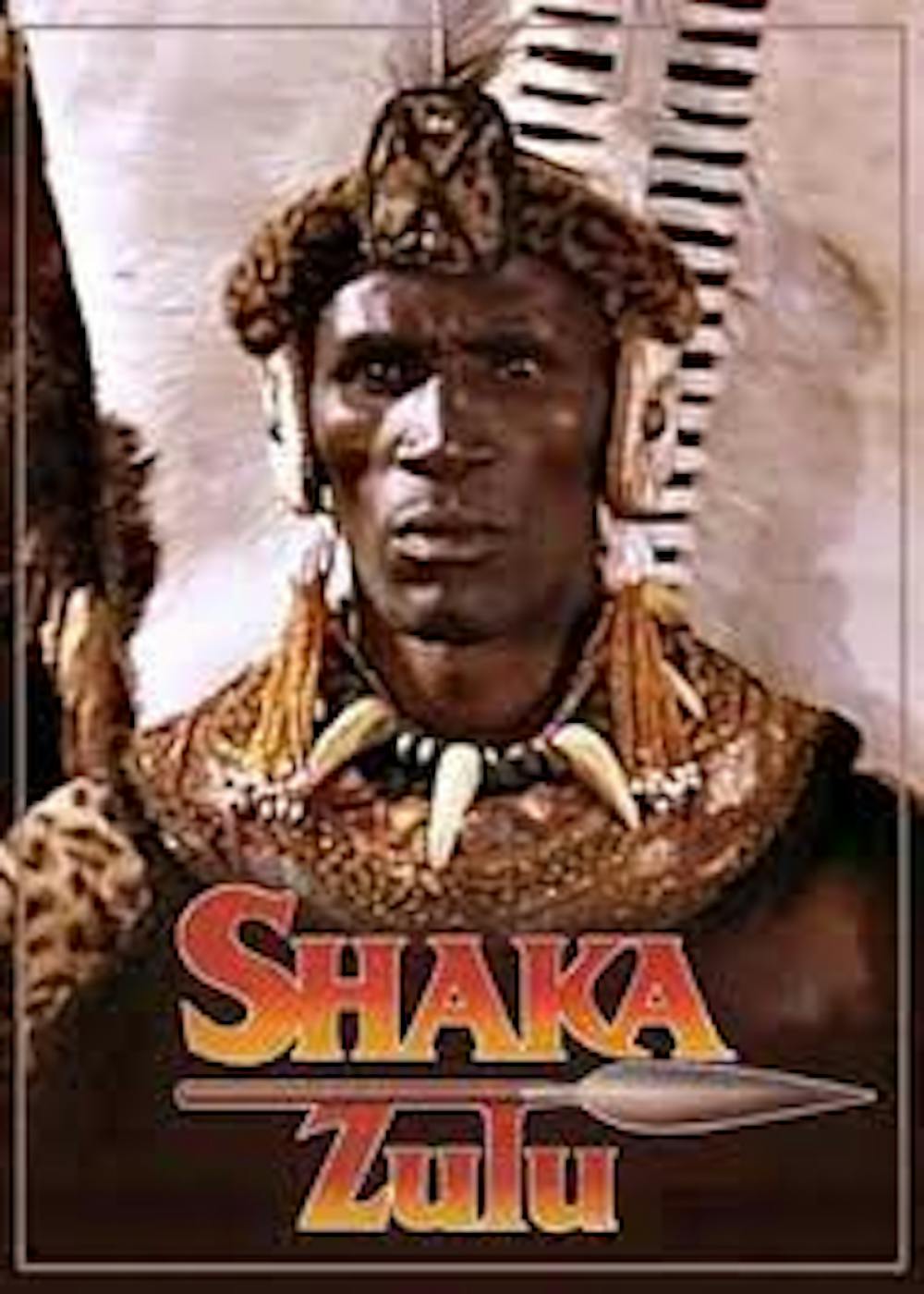
Shaka Zulu
Shaka Zulu was one of the most prominent leaders of African history. He lived from ca. 1787 to September 24, 1828. He was born in Mthonjaneni, KwaZulu-Natal Province, South Africa. The son of the Zulu King Senzangakhona kaJama, he was spurned as an illegitimate son. Shaka spent part of his childhood in his mother's settlements, where he was initiated into an ibutho lempi (fighting unit/regiment), serving as a warrior under Inkosi Dingiswayo. Shaka Zulu helped to improve the military forces of his people. He want alliances with his neighbors counter the Ndwandwe raids from the north. The initial Zulu maneuvers were primarily defensive, as King Shaka preferred to apply pressure diplomatically, with an occasional strategic assassination. His reforms of local society built on existing structures. Although he preferred social and propagandistic political methods, he also engaged in several battles. King Shaka's reign coincided with the start of the Mfecane/Difaqane ("upheaval" or "crushing"), a period of devastating warfare and chaos in southern Africa between 1815 and 1840 that depopulated the region. His role in the Mfecane/Difaqane is controversial. Back then, his brother ruled the Zulu Kingdom. This kingdom relied on pastoral livestock, sorghum, and milk. When Shaka reached a suitable age, he and his mother were sent to the Mthethwa clan, the most powerful regional tribe. There, he matured, and served as a warrior under Jobe, and then for Dingiswayo, a respected warrior and chief of the clan. When Inkosi Dingiswayo discovered Shaka was royalty, he put him in charge of a regiment, helping to develop Shaka's military tactics and strategy. Shaka Zulu was controversial. He murdered Zwide's mother, Ntombazi,a sangoma, after Zwide murered Diniswayo. I don't agree with killing someone's mother. Shaka Zulu fought hard in battles. Shaka continued his pursuit of Zwide. It was not until around 1825 that the two military leaders met in the vicinity of Pongola, near the present-day border of Mpumalanga, a province of South Africa. Shaka was victorious in battle, although his forces sustained heavy casualties, including his military commander, Mgobhozi Ovela Entabeni. he moved southwards across the Thukela River, establishing his capital, Bulawayo, in Qwabe territory. He never returned to the traditional Zulu heartland. In Qwabe, Shaka may have intervened in an existing succession dispute to help his own choice, Nqetho, into power.
Shaka Zulu was famous for his use of the short stabbing spear. Later, there is the Zulu vs. Ndwandwe war. Shaka Zulu taught the Zulus to conquer tribes and controlled them. The Zulu Empire grown with Shaka Zulu as its leaders from 1816 to 1828.
He supplemented this with a mixture of diplomacy and patronage, incorporating friendly chieftains, including Zihlandlo of the Mkhize, Jobe of the Sithole, and Mathubane of the Thuli. These people were never defeated in battle by the Zulus; they did not have to be. Shaka won them over with subtler tactics, such as patronage and reward. As for the ruling of Qwabe, they began re-inventing their genealogies to give the impression that Qwabe and Zulu were closely related (i.e. as Nguni) in the past. In this way, a greater sense of cohesion was created, though it never became complete, as subsequent civil wars attest.
Shaka granted permission to Europeans to enter Zulu territory on rare occasions. In the mid-1820s, Henry Francis Fynn provided medical treatment to the king after an assassination attempt by a rival tribe member hidden in a crowd. To show his gratitude, Shaka permitted European settlers to enter and operate in the Zulu kingdom. Shaka observed several demonstrations of European technology and knowledge, but he held that the Zulu way was superior to that of the foreigners.
Dingane and Mhlangana, Shaka's half-brothers, appeared to have made at least two attempts to assassinate Shaka before they succeeded, with support from the Mpondo elements and some disaffected iziYendane people. Shaka had made enough enemies among his own people to hasten his demise. It came relatively quickly after the death of his mother, Na;ndi, in October 1827 and the devastation caused by Shaka's subsequent erratic behavior. According to Donald Morris, Shaka ordered that no crops should be planted during the following year of mourning, no milk (the basis of the Zulu diet at the time) was to be used, and any woman who became pregnant was to be killed along with her husband. At least 7,000 people who were deemed to be insufficiently grief-stricken were executed, although the killing was not restricted to humans; cows were slaughtered so that their calves would know what losing a mother felt like.
⅘∆
He was assassinated by his half-brothers, King Dingane and Prince Mhlangana and Mbopha kaSithayi. Dingane assumed power and embarked on an extensive purge of pro-Shaka elements and chieftains, over the course of several years, in order to secure his position. The initial problem Dingane faced was maintaining the loyalty of the Zulu fighting regiments. He set up his main residence at Mgungundlovu and established his authority over the Zulu kingdom. Dingane ruled for some twelve years, during which time he fought, disastrously, against the Voortrekkers, and against another half-brother, Mpande, who, with Boer and British support, took over the Zulu leadership in 1840, ruling for some 30 years. Shaka Zulu's remains complex. He helped to unite tribes into making a powerful Zulu nation with the ikwa or short stabbing spear and buffalo horns to create revolutionary warfare tactics in South Africa. Shaka Zulu was a controversial person whose imperfections have no justification, but he remains an important historic figure of African history. Later, there were rival clans battling in South African and the Ango-Zulu war that ended the Zulu Kingdom by the late 1800s. Decades ago, a movie about his life was created, being called Shaka Zulu from 1986. The movie lasted for over 9 hours. It was South African based and was directed by William C. Faure and written by Joshua Sinclair for the South African Broadcasting Corporation (SABC), based on his 1985 novel of the same name. Margaret Singana sang the soundtrack of the film.
The 100th Year Anniversary of the Brotherhood of Sleepy Car Porters
This year is the 100th year Anniversary of the Brotherhood Sleepy Car Porters. This moment is very important part of African American history and culture. This group of the BSCP was the first labor organization led by African Americans to receive a charter in the American Federation of Labor (AFL). Back in the day, many black people were heavily discriminated against in the labor movement. Labor unionism is a legitimate aim for workers to pursue, but our black ancestors had to fight to not only end oppression against all workers. We had to fight racism, even in some unions back in the day. The BSCP grew very large with a membership of 18,000 passenger railway workers in Canada, Mexico, and the United States of America. After the American Civil War, the Pullman porter had a decent wage for black Americans. Major leaders of the BSCP were of course, the civil rights leader and socialist A. Philip Randolph (its founder and first president), Milton Webster (vice president and lead negotiator), and C. L. Dellums (vice president and second president). All three black men were involved in the eradication of Jim Crow apartheid in the South. BSCP members like E.D. Nixon were involved in grassroots organization and economic empowerment, being involved in the 1954 Montgomery Bus Boycott. By 1978, the BSCP merged with the Brotherhood of Railway and Airline Clerks (BRAC) to become the Transportation Communications and International Union.
By the 1920s and the 1930s, the Pullman Company was one of the largest single employers of black people. Back then, being a black Pullman Company worker would mean a middle-class or an upper-middle-class life. Yet, there were issues. Many workers were called George, not Mr. or sir. Some had to work long hours and paid little wages. They weren't promoted to conductor, which was reserved for white people back then. So, 500 porters met in Harlem on August 25, 1925, to organize again. They wanted equal rights for workers. Randolph and Webster (they had differences) fought for the common cause of black workers having great working conditions, workers' rights, and other rights to benefit the black communities and their families. By 1937, the BSCP fought to allow the Pullman Company to increase wages for porters and maids, have a 240 hour month, and give overtime pay after 260 hours. Women in the BSCP were African American and Chinese Americans. Many women had fought for union like in the International Ladies' Garment Workers' Union like Rosina C. Tucker and Halena Wilson including Frances Albrier. In 1953, Violet King Henry was the first black woman lawyer in Canada and the first black law graduate in Alberta). The union's president and vice president traveled to Alberta to recognize her. Today, movies and books celebrate their legacy like The Porter in 2022 being an 8 part CBC and BET television drama (being a worker of fiction partly inspired by the creation of the BSCP).


Ebony's 80th Year Anniversary
This year has tons of anniversaries. One great anniversary is the 80th year anniversary of Ebony Magazine. Ebony has been a staple in black American culture for decades. Many of us African Americans back in the day had covers of Ebony magazines in our homes as part of our family tradition. Every month, a new Ebony magazine represented our stories, our music, and our culture in general being shown. Ebony is more digitalized now, but it still shows the lives, accomplishments of not just influential or famous black people. It shows stories of unsung black people, too. It deals with people, fashion, politics, music, athletics, literature, and the diversity of Blackness. Blackness is very diverse, not monolithic. Some folks need to realize that. Ebony magazine was born in Chicago. Chicago is one major mecca of black culture. The Chicago Renaissance came from Chicago, Gwendolyn Brooks was born in Chicago, Lorraine Hansberry was raised in Chicago, Common was born in Chicago, Fred Hampton led his Black Panther movement in Chicago, almost 800,000 black people live in Chicago, and the founder of Chicago (who was Jean Baptiste Pointe DuSable) has some black African descent.
The founder of Ebony was a black businessman named John H. Johnson on November 1, 1945. The magazine was named after his wife, Eunice Walker Johnson. He patterned it after Life magazine, but it grew with its own style. It had a press run at first of 25,000 copies, and it sold out completely. Ebony's earlier content dealt with African American sports and entertainment people. It also included black achievers and celebrities of many different professions. They increasingly covered the Civil Rights Movement by the 1960s. Ebony had artists who dealt with activism, the Black Power Movement, and wanted social mobility for African Americans. By 1965, executive editor Lerone Bennett Jr. wrote a recurring column entitled "Black Power" that had an in-depth profile of Kwame Ture in 1966. Ebony commemorated historical events like the September 1963 issue that honored the 100th year anniversary of the Emancipation Proclamation. It dealt with more political issues from 1969 to 1985. Essence had a friendly competition with Ebony, so Ebony had to fulfill its obligation to provide truth to the people. Ebony had massive popularity from 1985 to 2005. By the 1980s, over 40 percent of African American adults had access to Ebony magazine. It had a circulation of 1.7 million in November 1985. By the 21st century, Ebony became more digitized. In 2024, Ebony returned to Chicago for its Juneteenth celebration at Soho House.
The International African American Museum
One of the greatest museums of the 21st century is the International African American Museum. It is located in the South in Charleston, South Carolina. Charleston has a long history involving us black Americans and other human beings of the black African Diaspora. Charleston is where about 40 percent of the nation's enslaved people disembarked. It opened on June 27, 2023, after 20 years of planning. It is located on 14 Wharfside Street in the city, and its President is Dr. Tonya M. Matthews. The museum was conceived by former Charleston Mayor Joseph P. Riley Jr. The city previously sold the land to a restaurateur. After construction on the site, people found traces of Gadsden's Wharf. Riley then decided to repurchase the land. The construction budget of the museum was $75 million. Riley raised money for the project as a private citizen.
The $25 million private donation goal was met in 2018. The South Carolina General Assembly delayed a $25 million contribution to the project. That delayed the construction of the 40,000 square foot facility. The city of North Charleston donated 1 million dollars to the project. Keith Sumney, the mayor of North Charleston, said that he wanted the museum to have an exhibit on Liberty Hill, a historically black neighborhood in North Charleston. The design architect is Harry Cobb, of Pei Cobb Freed and Partners, working in collaboration with Moody Nolan architectural firm of Columbus, Ohio; the exhibition designer is Ralph Appelbaum Associates, and the landscape designer is Walter Hood, of Oakland, California. The museum was built on the Cooper River, with a view towards Fort Sumter and out to the Atlantic Ocean. Its first CEO was Michael B. Moore. The museum opened in 2023 with presentations made at the dedication ceremony by former Charleston mayors Joseph P. Riley Jr and John Tecklenburg, Phylicia Rashad, Congressman Jim Clyburn, State Senator Darrell Jackson, State Representative JA Moore, gospel singer Bebe Winans, poet Nikky Finney, anthropologist Johnnetta Cole, former NASA Administrator Charles Bolden, IAAM President Dr. Tonya Matthews and others
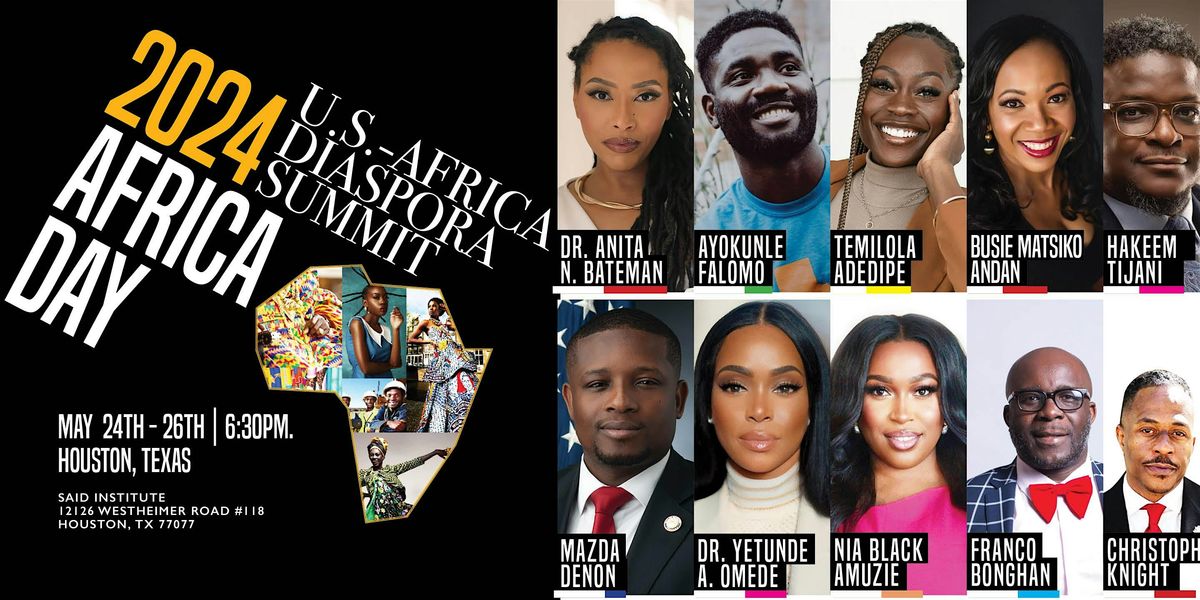
More Facts of the African Diaspora
As a Black American, it is important to acknowledge Afro-Caribbeans as being greatly part of the global Black African Diaspora. Many Afro-Caribbean people are people that tons of folks didn't know. For example, many people don't know that Naomie Harris is of Afro-Caribbean heritage. Harris's mother emigrated from Jamaica, and her father emigrated from Trinidad (with Grenadian, Guyanese, and British ancestors). Eric Holder Jr., the first black Attorney General in the history of the United States, has parents with roots in Barbados. Shirley Chisholm is the first black woman to run for the Democratic Party's presidential nomination. She stood up against economic, social, and political injustices. She was of Afro-Guyanese and Afro-Barbadian descent. Even the hip hop icon LL Cool J has a grandfather of Barbadian descent. The professional wrestler Jade Cargill has Jamaican heritage. Civil rights lawyer and law professor Deborah Archer is the first African American to be elected President of the American Civil Liberties Union. She is the daughter of immigrants from Jamaica.

Conclusion
I will always have an eternal love of Africa, because that is where my ancestors came from, and Africa is a blessing for the human race in general. Never give up is a precept that we all believe. Once upon a time, we didn't realize all the information that we know now. Yet, we worked hard, studied information, showed resiliency, and believe in truth with the inspiration from God to achieve great and mighty things. Africa is the location of the origin of all human life as proven by the maternal and paternal haplogroups, DNA evidence, etc. Africa is a place filled with diverse nations, cultures, religions, ethnic groups, and various infrastructure that has blessed the Universe in innumerable ways. Patrice Lumumba, Kwame Nkrumah, Thomas Sankara, and other African leaders taught the world about courage, standing up for real principles, and seeking liberation. We live in a new generation of our existence filled with a military occupation of Washington, D.C., wars in Ukraine (when the war criminal Putin continues to use drone attacks against civilians in Ukraine that even fake so-called "progressives" ignore or whitewash. These people are not real progressives to be clear) and Gaza (when Palestinians are starving to death which is evil), and increased prices on many goods and services. There is a growth of social media, the existence of crypto, the rise of A.I. into the next level, new headsets and devices, advanced smartphones, and other advanced technologies. These new developments have filled the world with fear, awe, and other emotions. Yet, the truth remains the same after all of these years. 25 years later, will be 2050, and we will see how this new 21st century and this new third millennium will evolve into. From climate change to new African alliances, Africa has always possessed a dynamic quality.
By Timothy
No comments:
Post a Comment