_Thanksgiving_Dinner.jpg/960px-Our_(Almost_Traditional)_Thanksgiving_Dinner.jpg)
Thanksgiving 2025
Thanksgiving is a unique time of the year when people not only have human camaraderie. It is also a time when friends support each other, relatives support each other, and people eat a lot of food. Food makes Thanksgiving very powerful as this is the time of the year when men and women show out to represent their culinary skills in creating turkey, apple pie, sweet potato pie, cranberry sauce, macaroni and cheese, potato salad, hamburgers, other vegetables (like greens, broccoli, and other items), and a diversity of items. Regardless of how wild and harsh times are during the end of 2025, we should always fight for our dreams. We have tons of gifts as human beings, and we should never give up at all period. This time of Thanksgiving is very important. It is the time when we seriously evaluate ourselves and recognize things more important than just money alone. Many extreme materialists view money as the most important thing in life. Yet, we shall not live by bread alone but by the words commanded from the mouth of God. In other words, people using money constructively is legitimate and fine. Yet, money should never be used to defend our ultimate dignity, our character, our humanity. Our human spirit is priceless. Thanksgiving has been celebrated for centuries. It has been a modern American holiday since the days of Abraham Lincoln in 1863. The Pilgrims' 1621 harvest festival with Native Americans (that is, who we talk about Thanksgiving) has many events tied to it. The real story about Thanksgiving is complex, tragic, and long. During Thanksgiving dinner, people eat turkey, mashed potatoes, stuffing, various pies, cranberry sauce, macaroni and cheese, various cakes, sweet potatoes, corn, green beans, and other items. Many of these foods are native to America. There are massive parades in cities like New York City, Los Angeles, St. Louis, Boston, etc. Many professional American NFL Games commonly occurring during Thanksgiving as well. Historian Michael Gannon claimed that there was a Thanksgiving meal on September 8, 1565, in St. Augustine, Florida. There was a Jamestown Thanksgiving in Virginia in 1610. There was another Thanksgiving on December 4, 1619, by English settlers at Berkeley Hundred, Charles City (in Virginia on the James River).
The Pilgrims and Native Americans' Thanksgiving event taking place in 1621, must be explained in detail. First, there is a distinction between the Pilgrims and Puritans of the United Kingdom. The Pilgrims came to New England first by 1620, most were working class and poor, there were Separatists from the Church of England; they settled in Plymouth. Many of their leaders were William Bradford and William Brewster. The Puritans were upper-middle-class and wealthy. They came to New England later by 1629. Many were educated; most were dedicated to supporting the Church of England. Many settled in Salem plus Boston, and their leaders were folks like John Winthrop, John Endicott, and the wicked Miles Standish. Both groups wanted to create their own government other than the UK. The Pilgrims had weapons and had more liberal ideals than the Puritans (who were more conservative, wanting a union of church and state).
First, Europe was in a different era by the early 1600's. Monarchies dominated the European continent. Many people were arrested for expressing political and religious dissent with the authorities. The Reformation occurred a century ago, which caused a massive challenge to the Roman Catholic Church's monopoly of religious power in Europe. The leadership of the Roman Catholic Church promoted superstitions that have no basis in Scripture, like calling the Pope Holy Father, transubstantiation, purgatory, the veneration of images, prayers threw people (who passed away, which is akin to divination), the Rosary, etc. Therefore, the Pilgrims wanted religious freedom, separating from the English state church. The English state church was Anglican (which was headed by the British Royals). The Pilgrims were formed in 1605 when they were led by John Smyth, John Robinson, Richard Clyfton, etc. They wanted churches to be voluntary democratic congregations, not whole Christian nations. As The Lord Jesus Christ explicitly supported the separation of church and state too. The Church of England forced people to attend services or face fines or imprisonment. This took place during the era of King James I. King James I was right to disagree with many of the doctrines of the Vatican, but even he was wrong to persecute dissidents like Baptists and Anabaptists (Baptists and Anabaptists refused to baptize infant babies). There is no biblical or moral basis to baptize babies as confession of faith must occur before baptism. The Puritans wanted to reform the Church of England. Many Pilgrims escaped to the Netherlands to escape the religious persecution done by the Church of England. They lived in Leiden, Holland (a city with 30,000 people). They worked hard in trades on textiles, printing, and brewing trades. Many Pilgrims were at Leiden University. William Bradford worked in Leiden, and William Brewster taught English at the university. Because of the different cultures and political issues in the Netherlands, the Pilgrims decided to go to America. Many were on the Speedwell to leave by July 1620 from Delfshaven. More left on the famous Mayflower ship.
They were in Plymouth by November 1620 in America. The Mayflower Compact was a promise to make a colony vote by majority and set up their own affairs involving governing affairs. Later, they saw the Nauset Native Americans. Native Americans visited by Europeans before as British imperialist Thomas Hunt kidnapped 20 people from the Patuxet Native Americans. One of the Patuxet men was Squanto, who was an ally of the Plymouth colony. Squanto could speak fluently in English. He came to America from England to see his village dead from the plague. The Pilgrims built homes and a colony by January 1621. William Bradford was the governor of the Plymouth colony in 1621 after the death of John Carver. By March 22, 1621, the Pilgrims of Plymouth Colony signed a peace treaty with Massasoit of the Wampanoag. When the first house was finished, it immediately became a hospital for the ill Pilgrims. Thirty-one of the company were dead by the end of February, with deaths still rising. Coles Hill became the first cemetery, on a prominence above the beach, and they allowed grass to overgrow the graves for fear that the Native Americans would discover how weakened the settlement had actually become.
The Plymouth colonists, today known as Pilgrims, had settled in a part of eastern Massachusetts formerly occupied by the Patuxet Native Americans, who had died in a devastating epidemic between 1614 and 1620. After the harsh winter of 1620-1621 killed half of the Plymouth colonists, two Native intermediaries, Samoset and Tisquantum (more commonly known by the diminutive variant Squanto, and the last living member of the Patuxet) came in at the request of Massasoit, leader of the Wampanoag, to negotiate a peace treaty and establish trade relations with the colonists, as both men had some knowledge of English from previous interactions with Europeans, through both trade (Samoset) and a period of enslavement (Squanto). Massasoit had hoped to establish a mutual protection alliance between the Wampanoag, themselves greatly weakened by the same plague that extirpated the Patuxet, and the better-armed English in their long-running rivalry with the Narragansett, who had largely been spared from the epidemic. The Wampanoag reasoned that, given that the Pilgrims had brought women and children, they had not arrived to wage war against them. Squanto taught the Pilgrims how to catch eel and grow corn and served as an interpreter for them until he too succumbed to disease a year later. The Wampanoag leader Massasoit also gave food to the colonists when supplies brought from England proved insufficient. Having brought in a good harvest, the Pilgrims celebrated at Plymouth for three days in the autumn of 1621. The exact time is unknown, but James Baker, a former Plimoth Plantation vice president of research, stated in 1996, "The event occurred between Sept. 21 and Nov. 11, 1621, with the most likely time being around Michaelmas (Sept. 29), the traditional time." Seventeenth-century accounts do not identify this as a day of thanksgiving, but rather as a harvest celebration.
John Two-Hawks, who runs the Native Circle web site, gives a sketch of the facts: “Thanksgiving' did not begin as a great loving relationship between the pilgrims and the Wampanoag, Pequot and Narragansett people. In fact, in October of 1621 when the pilgrim survivors of their first winter in Turtle Island sat down to share the first unofficial 'Thanksgiving' meal, the Indians who were there were not even invited! There was no turkey, squash, cranberry sauce or pumpkin pie. A few days before this alleged feast took place, a company of 'pilgrims' led by Miles Standish actively sought the head of a local Indian chief, and an 11 foot high wall was erected around the entire Plymouth settlement for the very purpose of keeping Indians out!"
Dr. Apidta writes: “He [Myles Standish] went to the Indians, pretended to be a trader, then beheaded an Indian man named Wituwamat. He brought the head to Plymouth, where it was displayed on a wooden spike for many years, according to Gary B. Nash, ‘as a symbol of white power.’ Standish had the Indian man's young brother hanged from the rafters for good measure. From that time on, the whites were known to the Indians of Massachusetts by the name ‘Wotowquenange,’ which in their tongue meant cutthroats and stabbers.” These are the Wampanoag people of our time who experienced injustice.
According to accounts by Wampanoag descendants, the harvest feast was originally set up for the Pilgrims alone (contrary to the common misconception that the Wampanoag were invited for their help in teaching the pilgrims their agricultural techniques). Part of the harvest celebration involved a demonstration of arms by the colonists, and the Wampanoag, having entered into a mutual protection agreement with the colonists and likely mistaking the celebratory gunfire for an attack by a common enemy, arrived fully armed. The Wampanoag were welcomed to join the celebration, as their farming and hunting techniques had produced much of the bounty for the Pilgrims and contributed their own foods to the meal. The Puritans came later to America. In 1630, the first ships of the Great Puritan Migration sailed to the New World, led by John Winthrop. From 1629 through 1643, approximately 21,000 Puritans immigrated to New England. The Puritans also believed they were in a national covenant with God. They believed they were chosen by God to help redeem the world by their total obedience to his will. If they were true to the covenant, they would be blessed; if not, they would fail. Many of the Puritans had a state religion. By the 1620s, most of the Patuxet people were wiped out before the Mayflower landed in America. The Massachusett Native Americans lived in the north of Plymouth Colony, led by Chief Massasoit, and the Pokaonet tribe being north, east, and south. Tisquantum was with the Patuxets.
The Narragansett tribe lived in Rhode Island. Massasoit has to make a decision to either form an alliance with the Plymouth colonists (to protect himself from the rival Narragansetts) or form a tribal coalition to drive the colonists out. There was a temporary alliance between Massasoit and the colonists. There was Samoset, being a sachem being allied with Massasoit. Bradford and Tisquantum were friends. Bradford was taught by Tisquantum on survival skills. He taught him how to plant corn, to fish, and other actions. Later, the colonists learned that the Narrangsetts attacked the Pokanokets and took Massasoit. Many people rescued a Billington boy. Governor Bradford organized an armed task force of a dozen men under the command of Miles Standish to Corbitant. Corbitant made his peace via Massasoit. By the 1630s, more tensions existed among Native Americans and the colonists. John Winthrop was wrong to write that it was God's will for smallpox to cause the death of Native Americans. In a letter to England, Massachusetts Bay colony founder John Winthrop wrote, "But for the natives in these parts, God hath so pursued them, as for 300 miles space the greatest part of them are swept away by smallpox which still continues among them. So as God hath thereby cleared our title to this place, those who remain in these parts, being in all not 50, have put themselves under our protection." Before the Pilgrim colony, many British imperialists enslaved Native Americans. Another common practice among European explorers was to give "smallpox blankets" to the Native Americans. Since smallpox was unknown on this continent before the arrival of the Europeans, Native Americans did not have any natural immunity to the disease so smallpox would effectively wipe out entire villages with very little effort required by the Europeans. From 1615 to 1619 smallpox ran rampant among the Wampanoags and their neighbors to the north. The Wampanoag lost 70 percent of their population to the epidemic and the Massachusetts lost 90 percent.
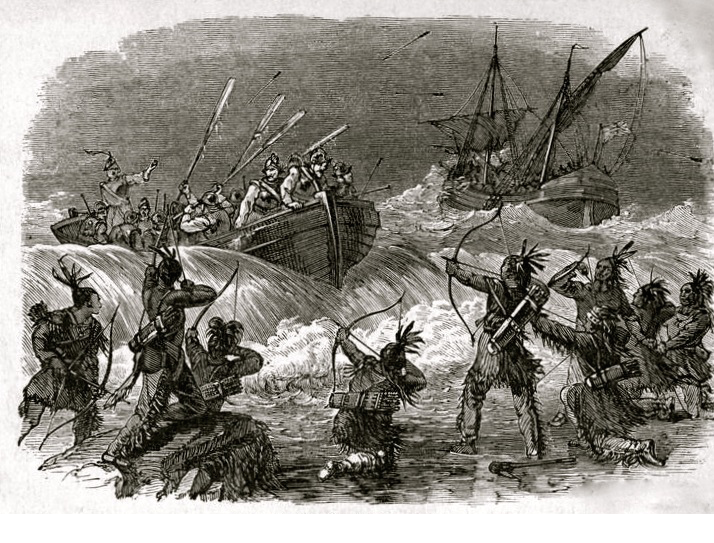
The Pequot War started a new chapter when a further genocide of Native Americans in Massachusetts reached new heights of destruction. Bradford has an alliance with Massasoit and the nearby Pakanoket tribe. By August 14, 1621, Myles Standish led an attack in trying to kill Corbitant. When Pokanoet people tried to escape, Standish's men fired their muskets. This caused a Pokanet man and woman to be wounded. Standish stabbed Pecksuot (a member of the Massashcusett, a rival of Massasoit) with his own knife. Standish ordered two more Massachuett warriors to be killed. The Pilgrims were allied with the Wampanoag since 1621. The Pequots allied with the Dutch colonists, and the Mohegans with the British colonies. Competition over the fur trade and conflicts inspired the Pequot War. The Pequot war had the deaths of colonists and massacres of Native Americans. The war ended with the Pequot's defeat. At the point where the Mystic River meets the sea, the combined force of English and allied Indians bypassed the Pequot fort to attack and set ablaze a town full of women, children, and old people.
William Bradford, the former Governor of Plymouth and one of the chroniclers of the 1621 feast, was also on hand for the great Mystic River massacre of 1637:
"Those that escaped the fire were slain with the sword; some hewed to pieces, others run through with their rapiers, so that they were quickly dispatched and very few escaped. It was conceived they thus destroyed about 400 at this time. It was a fearful sight to see them thus frying in the fire...horrible was the stink and scent thereof, but the victory seemed a sweet sacrifice, and they gave the prayers thereof to God, who had wrought so wonderfully for them, thus to enclose their enemies in their hands, and give them so speedy a victory over so proud and insulting an enemy."
King Philip's War took place from 1675 to 1676. This war happened after Massasoit's son Metacom saw that the colonists violated the alliance between the Wampanoags and the colonists. Metacom is Massasoit's son. Many Native Americans were hanged and murdered. Native Americans attacked homesteads and villages. After the Mystic Massacre, Narragansett leader Miantonomh united with Algonquian leaders in the 1640s to unite against the colonists all together. Negotiations fell apart as Puritans didn't recognize women leaders among Native American people which is sexism done by the Puritans. Massasoit and Metacom of the Wampanoags were prominent. The Wampanoags and settlers had issues as the settlers had intrusion of Wampanoag farms, food stores, and this continued despite complaints. Metacom didn't want his Wampanoag people to be forced to convert to Christianity. War happened, and the traitor Mammanuah signed a deed granting English colonizers the right to all the land from Pocasset Neck south to the sea. John Sassamon was a Native American convert to Christianity who wanted peace. Sassamon was later murdered. Metcomet fought the colonists, but the Mohawk, who were rivals of the Algonquian people, attacked Metacomet's forces causing a defeat. After King Philip's war, more than 1000 colonists and 3000 Native Americans died. Many Native Americans were sent to slave markets in the Caribbean from Bermuda to the Azores.

Many European colonists betrayed the Wampanoags, committing murder, scrapping, and genocide against them in New England. The genocide of Native Americans is completely evil and wrong. My black African ancestors were victims of slavery and genocide, too by the same European imperialists centuries ago. Therefore, we must separate truth and myth. The myth is that every Pilgrim and Puritan were just holy men who sought justice. The reality is that many Pilgrims and many Puritans were stone-cold murderers of Native Americans in a colonist enterprise. Also, many sincere people did desire religious freedom (as there is nothing wrong with believing in God), but the genocide of Native Americans and black Africans is completely unjustified. During this time of the year, we are thankful for the blessings that we have in our lives. We know the real history of Thanksgiving in the Plymouth Colony. Likewise, diverse thanksgiving ceremonies existed for millennia across the corners of the Earth. We can both condemn the genocide of Native Americans in the Americas and acknowledge the legitimate blessings that we have in our lives at the same time. These two things are true.
One lesson in life is to always move forward in live your life righteously. That truism is ever real. There are still millions and billions of people in the world who love their families, believe in respect for humanity, and desire a better world than the past or present. There are tons of redemption stories wherefore a human beings made bad decisions and go back on the road to recovery to be a living, shining example of righteousness. Regardless of what is going on in the world, we will still find our joy, our inspiration, express our humor, and be determined to stand up against fascism. I have no despair. I have wisdom and further motivation to support environmentalism, to stand up against racism, to oppose sexism (including manosphere bigoted propaganda), and to reject xenophobia. There are tons of people in the rural areas and small towns that believe like we believe it. They are just as dedicated to justice as we are. So, we should always realize that a remnant remains firm for freedom. The University of Virginia, USC, and MIT has refused to submit to the demands from the Trump administration to make their universities a pro-Trump front. Universities have every right to maintain their independent views and not be swayed by the political establishment or by the MAGA movement. We are in a battle against authoritarianism. White House Deputy Chief of Staff Stephen Miller said that Trump has "plenary authority" during his discussion about deployment of National Guard troops in Oregon. Plenary authority means that a single government official has absolute power on a particular matter. Obviously, Trump has no plenary authority over the National Guard. The President must have approval from the Governor to send National Guard troops and the 1878 law of the Posse Comitatus Act bans the military from law enforcement actions during times of peacetime in America. There is the separation of powers which occurs when all three branches of the government have co-equal powers. For example, the legislature can check the executive by vetoing law signed by the President. The Supreme Court can check the executive by making laws unconstitutional by its rulings too. We know of the corruption of the Trump administration when Bondi protects Homan when he took a $50,000 bribe by shutting down an investigation of Homan. Trump is filled with contradictions. Trump claims to want people to feel safer. Still, he has allowed ICE agents to use racial profiling and other aggressive, unwarranted tactics to terrorize communities plus detain even U.S. citizens, beyond just undocumented immigrants. Trump claims to want people to be healthier, but he supports ending legitimate regulations that protect us from being poisoned from the water, air, land, and food supply. Trump claims to support the law, but he has allowed officials to murder people without due process of law in the Caribbean. Even Republican Rand Paul has condemned that action as unconstitutional. Rand Paul is right on that issue. ICE harassing and terrorizing people in Chicago is evil too.
The Era of Sardis
Time has moved forward in the history of Christianity in diverse ways. The age of Sardis saw a rejuvenated Protestant Reformation going into a capricious situation. There were many independent churches globally from Asia to the Americas by this time. The Protestants were here to say, and the Catholic Church also renewed its power. These 2 religious factions created a peace treaty in 1648 and spread worldwide. The paradox is that some people in both religious factions, at that time, spread their religious views via the notorious evils of slavery (i.e. the Maafa, religious deception), colonialism, racism, sexism, and other forms of religious deceptions like the myth of white racial superiority. Likewise, many legitimate followers of God spread the Gospel internationally with love, grace, and inspiration from the Holy Spirit to grow the influence of spirituality too (as the true fruits of the Holy Spirit deal with patience, temperance, holiness, fulfilling God's ordained destiny, and the Golden Rule). Many haters of religion and God in general omit that crucial fact of history too. By this time, there were massive kingdoms who developed mathematics, science, architecture, other forms of technology, art, and literature in Asia, in Africa, in Europe, in the Americas, and in Oceania. New religious denominations spread like the Baptists, the Methodists, Presbyterians, the Quakers, etc. Also, the slave trade used chattel slavery that accelerated. The Maafa or chattel slavery (which was racial anti-black terrorism and economic exploitation) was about kidnapping people, murdering people, rape, and abuse against black human beings. Some use the sacrilege of involving God in justifying these crimes against humanity. Yet, there is absolutely no excuse for rape, murder, abuse, splitting families apart, slavery, torture, sexism, and emotional terrorism inflicted on black African people (or anyone in the human race in general) period. There was an Arabic slave trade that ruined many black lives as well. So, the age of Sardis many developments on the eve of world revolutions that should shake monarchies at their core.


The Spread of Protestantism
From 1648 to 1750, the Christian Church was completely different from the time of 33 A.D. at the time of the resurrection of the Lord and Savior Jesus Christ. We have now a multifaceted church with diverse peoples and doctrines. We see the Orthodox Church, the Ethiopian Church, the Asian churches, and other independent Christian movements in the world. The Protestants and the Catholics have numerous religious differences. Yet, their histories by this time will deal with the issues of missionaries, colonialism, and imperialism. The paradox of missionaries was that many missionaries sincerely wanted to promote healthcare, education, and other ways to help humanity. Yet, other missionaries and colonists had a different agenda to promote imperialism, control over people, and advance the falsehood of white racial superiority. Catholic missionaries spread from North and South America, Africa, and Asia from 1500-1800. Protestant missionaries have a similar spread too. By this time, we saw the discrimination of women and witch frenzy among many people who professed to be Christian. There were many Catholic women leaders were nunneries, exercising the same powers and privileges as their male counterparts, such as Hildegard of Bingen (d. 1179), Elisabeth of Schönau (d. 1164/65), and Marie d'Oignies (d. 1213). Hildegard began writing the first of her three-volume theology in 1141. Between 100,000 and 200,000 people were accused of being witches most often by fellow villagers. Approximately 80% of the accused were women; most were acquitted; most trials were civil trials. Inquisitions lessened the impact by requiring strict evidence. From 1561 to 1670, it is estimated that between 40,000 and 50,000 people were executed. For the record, it is wrong to murder people based on their ideological or spiritual beliefs. You can't claim to be moral and advocate persecution of those who disagree with your views. Anyone who does such evils have massive insecurities in their hearts. By the late 1600s, we see more people questioning religious authorities. There was the existence of political absolutism or kings having total control of the people. We saw another era during the Age of Enlightenment. This movement included Deists, atheists, and agnostics who not only rejected theocracy but desire scientific inquiry. They advocated for secularism, religious freedom, freedom of speech, religious toleration, and other ideologies. A lot of people don't know that back in the day in Europe, you could be locked up for using your free speech to oppose a policy of a king or ruler. Secular views spread and many Protestants allied with the Enlightenment principles.
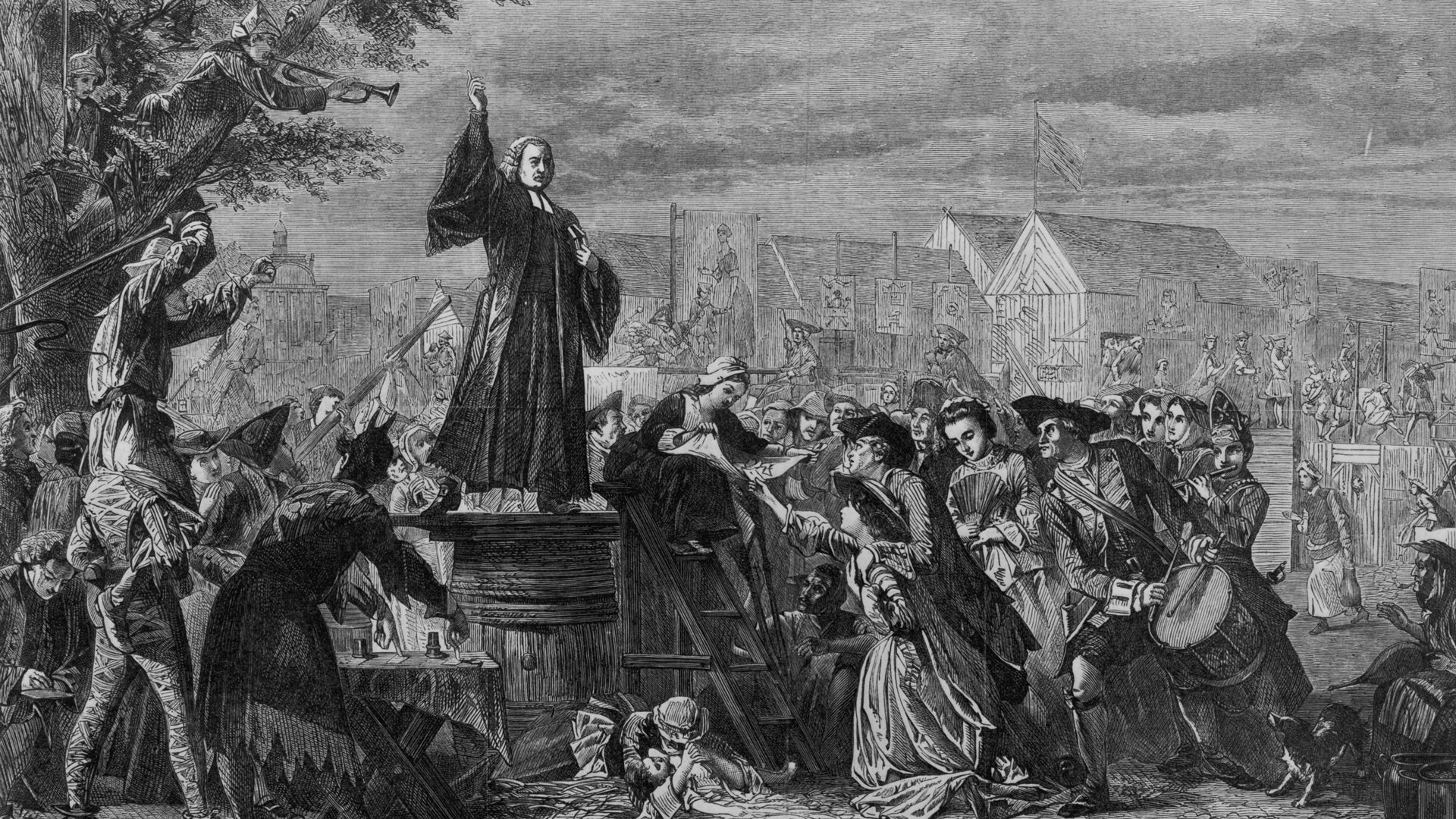
Pioneered by Protestants, Biblical criticism advocated historicism and rationalism to make study of the Bible more scholarly and secular in the 1700s. In reaction to rationalism, pietism, a holiness movement within Lutheranism, began in Europe and spread to the Thirteen Colonies where it contributed to the First Great Awakening, a religious revival of the 1700s. Pietist Moravians came to Georgia in 1732 where they influenced John Wesley, an Anglican missionary in Savannah, Georgia. After returning to England, Wesley began preaching in open-air meetings, leading to the creation of the Methodist church. In the colonies, Presbyterians and Baptists contributed to revival, and to divisions over it, which formed political parties and lent crucial support for the American Revolution. Some radical revolutionaries violently sought the dechristianization of France during the French Revolution leading the Eastern Orthodox Church to reject Enlightenment ideas as too dangerous to embrace. Many Protestants and Catholics in Europe promoted capitalism, urbanization, and industrialization. Some of them promoted aid to the poor, supported family welfare, offered medicine, and education. The problem is that many of them would be complicit in the Maafa, colonialism, and imperialism that would harm the lives of millions of innocent human beings. So, the Reformation originally was of God in my view that sparked spiritual people to find a way to try to cause the Roman Catholic church to end its false doctrines and superstitions. The Catholic Church leadership refused to change, and then Protestantism existed. The Protestant institution has been filled with strengths and weaknesses that changed how the world is forever. Many Protestants were faithful Christians who believed in God sincerely. Other professing Protestants were heretics, some were involved in the occult and secret societies, and some were heads of state.
The Protestant history accelerated by the 1600s. It was just nearly a century after the Protestant Reformation when Arminius in 1603 believed in the view that predestination is based on foreknowledge. By 1603, King James I was the leader of the Kingdom of England. He was raised Presbyterian in the Church of Scotland. He was a Protestant who would commission the creation of a new Bible called the King James Bible. King James I was from the House of Stuart. He is loved and hated by tons of people back then and now. King James I was not perfect, but he wasn't evil incarnate. King James I was right to express theological disagreements with the Romanist church. He was right to write literature to condemn adultery. He made the mistake of persecuting many Baptists and religious dissidents. He wrote many books like Daemonologie in 1597, The True Law of Free Monarchies in 1598, and Basilikon Doron in 1599. He tried to stop religious wars and prevented the hawkish members of the Parliament from fighting Spain. He also survived the Jesuit-orchestrated Gunpowder plot when dissident Catholics like Guy Fawkes wanted to use explosives to kill him and members of the Parliament House. The Catholics should have religious liberty rights, but Guy Fawkes and his crew were wrong in trying to use murder to express dissent. Robert Catesby headed the plot. King James, I debated Puritans since the Puritans wanted King James I to make reforms to eliminate rituals from the Church of England that they felt were allied with Catholicism.
The Pilgrims or Separatists wanted no compromise with King James I and left England to the Netherlands and later to America. The King James Version of the Bible was a work of both the Pilgrims and Puritans that became the most famous Bible of the English language. The KJV was a compromise between Anglican and Puritan views. The King James Bible was not created by King James. King James authorized its creation. The creators of the King James Bible were Bible scholars, polyglots, experts in theology, and came from diverse backgrounds. It came from the Greek Textus Receptus works and was influenced by the previous Tyndale Bible. Also, it is important to be made clear that while the King James Bible is a great translation, it is not superior to the original translations of the OT and NT. Puritans and Calvinists grew. The Calvinists promoted the 5 Point Calvinism views by 1619 after the Synod of Dort from 1618-1619. After King James I died, many British people were divided on the role of the Monarchy in the lives of the people. Charles I disagreed with the Puritans. The Monarchy and the Parliament debated each other on how much control they should have. The Monarchy wanted to maintain huge power, and the Parliament wanted reforms to limit the power of the Monarchy in England. Charles wanted more money to fight France and Spain, and Parliament opposed this action. Charles was King James I's son, so Charles dissolved Parliament. The Parliament wanted due process, consent to taxes, soldiers not being allowed into private homes, and the King being banned from advancing martial law during peacetime. Sound familiar? This was a century before the American Revolution took place in America. History does rhyme. Charles I agreed with the petition, but he ignored it.

By 1629, King Charles I dissolved the Parliament and refused to call it up again. King Charles I imposed taxes and fines on the English people (without permission from Parliament) to get money in order to fund his projects. His popularity declined. Charles I angered the Puritans by maintaining the rituals of the Anglican Church. By 1637, he wanted the Scottish Presbyterians Scots to follow an Anglican prayer book to make people to exist on one religious accord. The Scots threatened to invade England. He or Charles wanted money, and Parliament was ready to oppose him. Parliament limited royal power in the fall of 1641. King Charles was angry and threatened to arrest members of Parliament. Parliament members escaped arrest in January of 1642. People in London rallied to oppose Charles. He left London to go with his supporters in northern England. The English Civil War began, and it lasted from 1642 to 1649. It was between King Charles I and his supporters (called Cavaliers) vs. the Roundheads (or those who opposed King Charles I). The Roundheads included Puritans, too. Many of them wore their hair short over their ears, so the Cavaliers called them Roundheads. Each side had a stalemate in battles originally. Later, Oliver Cromwell, who was a general and allied with the Puritans in 1644, fought in the war. He started to defeat the Cavaliers. By 1647, he held King Charles I prisoner. In 1649, the Puritans and Oliver Cromwell tried King Charles I for treason. They found him guilty, and he or Charles I was executed. So, Charles I experienced a trial, and he was killed. Cromwell was the leader of England now. He formed a commonwealth. He abolished the monarchy and the House of Lords. His ally John Lambert formed a constitution, which was the first in English history. Later, Cromwell became a military dictator. He ended an Irish rebellion. Cromwell was right to disagree with Catholicism on many issues, but he went too far in his brutal response to end the crisis. Both sides (i.e. the British and the Irish) would cause a conflict resulting in the deaths of hundreds plus thousands of people. The Puritans (under Cromwell) restricted theaters, sporting events, and dancing in England for morality purposes. Obviously, this is extreme. Cromwell favored religious toleration for all except for Catholics. He allowed Jewish people to return since they were once expelled from England in 1290. That was a good thing. As for the Catholics, I don’t theologically agree with every aspect of Catholicism, but everyone (regardless of creed) should have the right to believe in what they want without suppression of their rights. Cromwell was the leader of England until his death in 1658. The Parliament ended the military rule as people were sick of it. Later, Charles II ruled England (or the son of Charles I). His reign was the Restoration or the time when the Monarchy was restored. Parliament passed habeas corpus. This means that anyone accused of a crime has the right to see a judge and the judge can decide if a prisoner is set free or not. Charles II wanted to rule like his cousin King Louis XIV (of France). He obtained funds from his rich French cousin Louis XIV.
Charles II was a very popular monarch in England. By February 6, 1685, Charles II died, and James II was on the throne. James II was an overt Catholic. He appointed Catholics to high office, which was a violation of English law. Parliament opposed him, and he dissolved Parliament. In 1688, James II’s wife gave birth to a son. English Protestants were afraid of a line of Catholic kings dominating England. James II’s older daughter was Mary. She was a Protestant. She married William of Orange (or a prince from the Netherlands). Many people from the Parliament invited William of Orange to overthrow James II, so that Protestantism can dominate English politics. By 1688, William and his army came into England. James II fled to France. This was a bloodless Revolution, and it was called the Glorious Revolution. Later, William and Mary promised to be a partner with Parliament in government. The government became a constitutional monarchy, which had laws to limit the powers of the monarchy. The Parliament drafted a Bill of Rights on 1689. This Bill of Rights bans suspending Parliament's laws, it allows Parliament to approve of taxing laws, it allowed for free speech in Parliament, and no one is punished if a citizen petitions a king about grievances. William and Mary agreed with these policies and other limits to their power.
So, after 1688, no British monarch can rule without the Parliament’s consent. In essence, the Glorious Revolution resulted in a reduction of the power of the monarchy (which was in contrast to the absolutist agenda of the Stuarts). The Glorious Revolution and the English 1689 Bill of Rights influenced John Locke & the American Revolution. The Tories and the Whigs political parties grew in England. By the 1700’s and beyond, cabinet would govern political policies in England. More Puritans go into America from the 1600’s and beyond. Protestantism in America was filled with spiritual growth like universities being built and the Great Awakening with people like Jonathan Edwards preaching in New England. Also, many Protestants and many Catholics would promote the evil of slavery in the Americas, too. This evil would ruin lives, harm black people, and promote theological poison (that poison is promoting the evils that slavery is fine and racism is fine, which are lies) for many years to come. In 1685, King Louis XIV of France (1638-1715) revoked the Edict of Nantes (this edict promoted religious freedom and toleration). King Louis XIV was known for his extremism and his absolutism. This caused French Protestants (like the Huguenots, etc.) to exodus France and travel worldwide, including into America.
Imperialism Spreads Globally
European imperialism grew at the same time when absolutism came about. Imperialism is evil as it strips the resources from others unjustly by theft, war, colonization, and other wicked means to promote empire and domination against innocent populations in the world. European imperialism over the course of centuries stole lands in multiple continents, murdered millions of people, raped tons of human beings, and did other grotesque actions that I can't mention here. Many people, who professed to be Christian, are complicit in the atrocity of imperialism. England with the Anglican Church had members who promoted colonies overseas and used imperialism from the Americas to Africa and Asia. Spain via the Roman Church used imperialism in Africa, the Americas, and other locations for financial benefit and political power. Even many atheists were involved in such evils too along with radicals who claim to be Muslim being complicit in the slave trade in Africa. By this time of the 1600s, the French, British, and Spanish empires fought each other for global domination basically. Monopolies and monarchs controlled large portions of the world's lands and populations filled with force and wickedness.
The Growth of Secret Societies.
There were many secret societies that grown during this time period like the Rosicurcians, the Freemasons, and the Hell Fire Club. The origin of the Rosicrucians are mysterious. The Rosicrucians included a spiritual and cultural movement that rose up in the early 1600s. Rosicrucianism is symbolized by the Rose Cross or Rosy Cross. There have been several Rosicrucian (or Rosicrucian-inspired) organizations since the initial movement was founded, including the Order of the Golden and Rosy Cross (1750s–1790s), the Societas Rosicruciana in Anglia (1865–present), and the Hermetic Order of the Golden Dawn (1887–1903). Between 1610 and 1615, two anonymous manifestos appeared in early modern Germany and soon after were published throughout Europe. The Fama Fraternitatis Rosae Crucis (The Fame of the Brotherhood of the Rosy Cross) was circulated in manuscript among German occultists since about 1610, and published at Cassel in 1614. Johannes Valentinus Andreae has been considered the possible author of the work. A literal reading narrates the travels and education of "Father Brother C.R.C." and his founding of a secret brotherhood of similarly prepared men. Names, numbers, and other details have Qabalistic allusions, in which the cognoscenti of that era were well-versed. The Confessio Fraternitatis (The Confession of the Brotherhood of RC), published in Frankfurt in 1615, responded to confusions and criticisms and elaborated the matter further. So, Rosicurcianism is a movement filled with occultists that wanted to merge Christian teachings with the occult to promote the "higher self" of consciousness. They want to research the physical universe, the spiritual realm, and many embraced Christian mysticism. They wanted to follow the holistic understanding of existence. They wanted spiritual alchemy, hermeticism (as above, so below, the law of correspondences, etc.), empathy towards people and the sacredness of all humanity (believing in the universal brotherhood) respected. Many Protestants allied with the Rosicrucians to oppose the Roman Catholic Church as the Catholic Church leadership back then persecuted occultists and pagans. The truth is that the Protestants are right to disagree with many of the false doctrines of Roman Catholicism, but many of them didn't have to ally with Rosicrucians to disagree with the views of Romanism. Freemasonry existed since the late Middle Ages. Back then, there were the operative masons who build cathedrals and buildings in Europe. The speculative masons were builders who merged mathematics with spiritual concepts that cause modern Freemasonry to exist.
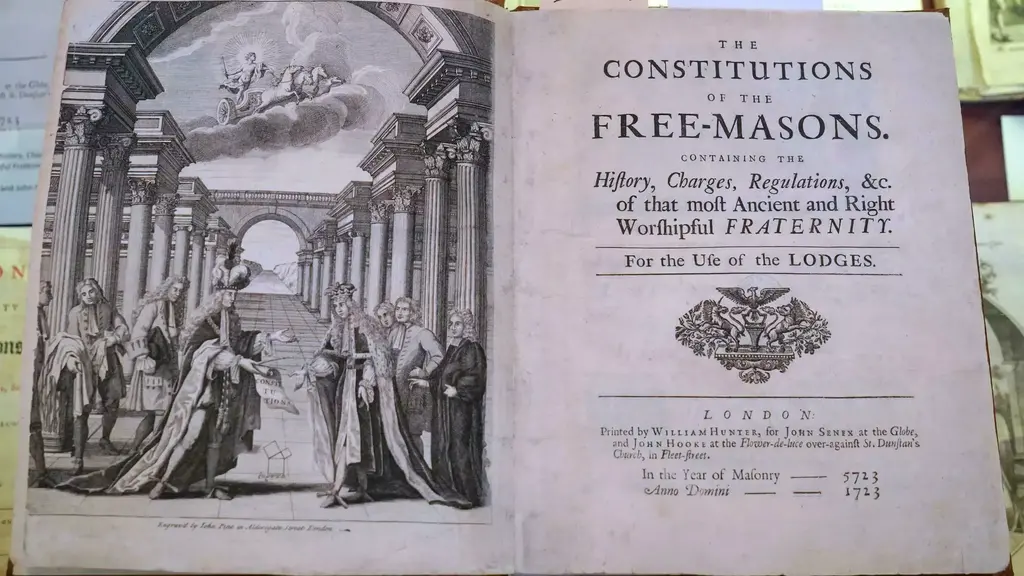
The earliest official English documents to refer to masons are written in Latin — "sculptores lapidum liberorum" (London 1212), "magister lathomus liberarum petrarum" (Oxford 1391) — or Norman French — "mestre mason de franche peer" (Statute of Labourers 1351 (25 Edw. 3. Stat. 2)). These all signify a worker in freestone, a grainless sandstone or limestone suitable for ornamental masonry. In the 17th century, building accounts of Wadham College the terms freemason and freestone mason are used interchangeably. he earliest surviving records of these are the laws and ordinances of the lodge at York Minster in 1352. These regulations were imposed by the Dean and Chapter of the Minster. The Cooke Manuscript, dating from about 1450, set the pattern for what Anderson called the "Gothic Constitutions", the older histories and regulations of the craft. By the 1400's, Masonry embraced the Solomon Temple and Boaz and Jachin imagery. Masons came from the guilds. By the 1500, Masonry spread into Scotland. Freemasonry spread into England heavily by the 1600s, and we know of the Grand Lodge of London being born in 1717. In 1719, they elected John Theophilus Desaguliers, a clergyman, an eminent scientist, and a Fellow of the Royal Society to be Grand Master of the Grand Lodge of England. Desaguliers is often described as the "father" of modern freemasonry. It was Desaguliers who inscribed the dedication to Anderson's Constitutions, headed the committee which directed and approved them, and supplied the "Gothic Constitutions" from which they were formed. Although he only served one term as Grand Master, he was twice Deputy Grand Master under figurehead Grand Masters, and at other times behaved as if he was Grand Master, forming irregular lodges to conduct initiations. It seems to have been Desaguliers who insisted that ritual be remembered rather than written down, leading to a dearth of material on the development of English ritual until after the formation of United Grand Lodge. Many Protestants were Freemasons despite Freemasonry being completely in opposition to Christianity based on its doctrines and views. The Anderson Constitution of Freemasonry set a foundation for what modern day Freemasonry is. Today, Freemasonry is very diverse in the world. The Hells Fire Club was based in England. It included people ike Benjamin Franklin. It was a group when people did orgies, did rituals, and did other actions. Francis Dashwood was part of it too. Many members did activities that mock religious ceremonies, discussed politics, and had meals that mocked religion. The club motto was Fais ce que tu voudras (Do what thou wilt), a philosophy of life associated with François Rabelais's fictional abbey at Thélème and later used by Aleister Crowley.

The Gospel Spreads
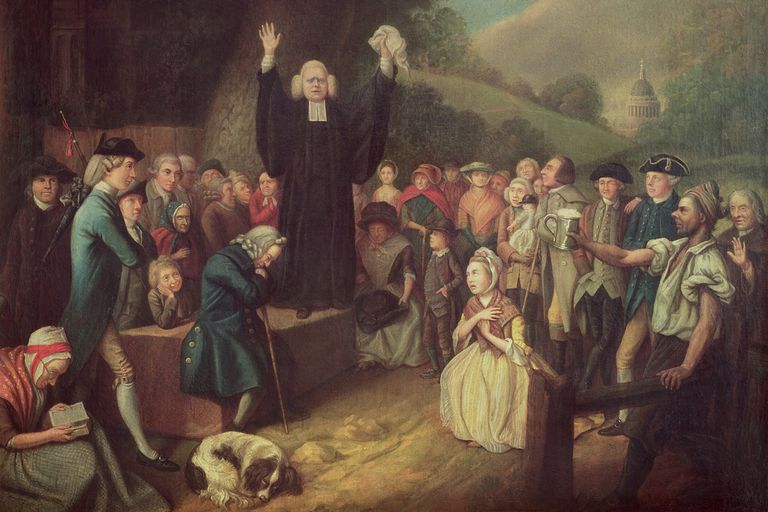
From 1648 to 1750, the Gospel of Jesus Christ has spread globally. By 1675, the Lutheran Philipp Jakob Spener publishes Pia Desideria, which becomes a manifesto for Pietism. John Bunyan published Pilgrim's Progress. Pilgrim Progress has been very famous in English literature, and it is a work that has been translated into more than 200 languages from Dutch, German, Swedish, etc. It has been shown in North America. It is a Protestant devotional literature. It is a book that has inspired both religious and secular authors like William Hogarth, C. S. Lewis, Nathaniel Hawthorne, Herman Melville, Charles Dickens, Louisa May Alcott, George Bernard Shaw, William Thackeray, Charlotte Bronte, Mark Twain, John Steinbeck and Enid Blyton." The lyrics of the hymn "To be a Pilgrim" are based on the novel. It is a book that deals with the journey of Christian in fictional story settings. John Bunyan was a nonconformists (meaning that he didn't confirm to all policies of the Church of England back then) who was arrested and spent 12 years in prison, because he refused to give up preaching. Roger Williams died in Providence, Rhode Island in 1683. Williams supported the separation of church and state. 1685 was when the Edict of Fontainebleau outlawed Protestantism in France. The Russian Orthodox Church introduced Orthodoxy to Beijing by 1685. Some religious freedom was promoted by the 1689 English Bill of Rights. The Salem witch trials took place in 1692 in Colonial America. Jakob Amman founds Amish sect in 1693 filled with Anabaptist roots. Old Catholic Church of the Netherlands splits with Roman Catholicism in 1701. Hans Egede was a missionary who arrived into Greenland in 1722. The famous and historic First Great Awakening took place from 1730 to 1749. This was when Christian revivals spread in English and America. Many people supported piety and religious devotion. Many leaders of this movement were George Whitefield, John Wesley, and Jonathan Edwards that spread across denominations. Evangelical preachers "sought to include every person in conversion, regardless of gender, race, and status." Throughout the North American colonies, especially in the South, the revival movement increased the number of African slaves and free blacks who were exposed to (and subsequently converted to) Christianity. It also inspired the founding of new missionary societies, such as the Baptist Missionary Society in 1792. The Great Awakening inspired the creation of evangelical educational institutions. In 1746, New Side Presbyterians founded what would become Princeton University. In 1754, the efforts of Eleazar Wheelock led to what would become Dartmouth College, originally established to train Native American boys for missionary work among their own people. While initially resistant, well-established Yale University came to embrace revivalism and played a leading role in American evangelicalism for the next century. George Frederick Handel performed his classic gospel oratorio "Messiah" for the first time in 1741. 1767–1815 was when we have the Suppression of the Jesuits.
The Americas
In America, Christianity spread. Back in the 1600s, very few Americans were, in fact Christians. Many Christians came to America to promote religious freedom, as many European countries were dominated by Protestant and Catholic theocrats who wanted people to follow their doctrines or face persecution or imprisonment. That is why many Huguenots, Puritans, and Pilgrims came to America to seek religious freedom. Many people who claimed to be Christian did in fact didn't act Christ-like by owning black African slaves and using genocide against Native Americans. Those actions were wrong and evil. That has no justification period. In America, there were many state churches. That means that certain churches had governmental powers and made certain religious practices illegal. For example, in the Massachusetts Bay Colony, there was a law that punished people who refused to baptize infants. This was done by the Congregational state church. The Puritans enforced a strict, theocratic government too in Massachusetts. The Church of England dominated the affairs of the Southern Colonies from Virginia to South Carolina. Many Baptists were persecuted which is why the controversial Thomas Jefferson took inspiration from the Baptists, the Quakers, etc. to promote religious liberty and the separation of church and state. The colonies of Rhode Island and Pennsylvania (that welcome people of diverse religions) had strong religious freedom where people of diverse creeds and religions lived without the threat of religious persecution. Maryland historically have been dominated by the Roman Catholic Church. Maryland, as a colony, offered religious tolerance at first. Later, Anglicanism was the established church in Maryland, and Catholics later had second class status. I don't agree with Roman Catholicism theologically, but Catholics shouldn't be treated as 2nd class citizens. They deserve the right to express their religious faith too. Me personally, I do agree with religious freedom, no religious persecution, and the separation of church and state.
Epilogue
The era of Sardis in Christian history included some of the most life changing events in all of human history. There was a remnant of born-again Christians who stood up for truth and gave the Gospel to many human beings. Many human beings from Africa, Europe, the Americas, Asia, Oceania, and Australia developed their own civilizations and culture. Many people in the four corners of the world also accepted the Gospel of the Lord Jesus Christ voluntarily. There was also the paradox of many other people exploiting the name of Christianity to do unjustified evil in the world. We know precisely what these evils are. These evils included slavery, imperialism, colonialism, murder, rape, assaults, and other forms of abuse that ruined so many lives. These injustices were supported by many European Kingdoms and their racist armies of terrorism. Evil people used these injustices to murder millions of people worldwide (mostly people of color, including my ancestors). These evil people committed some of the worst crimes in history by not treating your neighbor as you would like to be treated. That is why we have to be clear to condemn the Maafa, imperialism, and colonialism in the strongest terms possible. Also, the First Great Awakening helped to save souls forever and inspired future religious movements in the world too. The of Sardis was a transitional age after the beginning of the Reformation, but it was before the American Revolutions (and other Revolutions against Monarchs and empires in the world). Therefore, the time of Sardis reminded people that growing pains will exist as believers, but your core spiritual convictions ought to remind.
By Timothy
No comments:
Post a Comment