Judge rebukes Kari Lake in court filing alleging blatant contempt in push to cut 500-plus VOA jobs
Tuesday, September 30, 2025

Monday, September 29, 2025
Historical Information in Late September 2025.
From 1648 to 1750, the Christian Church was completely different from the time of 33 A.D. at the time of the resurrection of the Lord and Savior Jesus Christ. We have now a multifaceted church with diverse peoples and doctrines. The Protestants and the Catholics have numerous religious differences. Yet, their histories by this time will deal with the issues of missionaries, colonialism, and imperialism. The paradox of missionaries was that many missionaries sincerely wanted to promote healthcare, education, and other ways to help humanity. Yet, other missionaries and colonists had a different agenda to promote imperialism, control over people, and advance the falsehood of white racial superiority. Catholic missionaries spread from North and South America, Africa, and Asia from 1500-1800. Protestant missionaries have a similar spread too. By this time, we saw the discrimination of women and witch frenzy among many people who professed to be Christian. There were many Catholic women leaders were nunneries, exercising the same powers and privileges as their male counterparts, such as Hildegard of Bingen (d. 1179), Elisabeth of Schönau (d. 1164/65), and Marie d'Oignies (d. 1213). Hildegard began writing the first of her three-volume theology in 1141. Between 100,000 and 200,000 people were accused most often by fellow villagers. Approximately 80% of the accused were women; most were acquitted; most trials were civil trials. Inquisitions lessened the impact by requiring strict evidence. From 1561 to 1670, it is estimated that between 40,000 and 50,000 people were executed. For the record, it is wrong to murder people based on their ideological or spiritual beliefs. You can't claim to be moral and advocate persecution of those who disagree with your views. By the late 1600s, we see more people questioning religious authorities. There was political absolutism or kings having total control of the people. We saw another era during the Age of Enlightenment. This movement included Deists, atheists, and agnostics who not only rejected theocracy but desire scientific inquiry. They advocated for secularism, religious freedom, freedom of speech, religious toleration, and other ideologies. A lot of people don't know that back in the day in Europe, you could be locked up for using your free speech to oppose a policy of a king or ruler. Secular views spread and many Protestants allied with the Enlightenment principles.
Pioneered by Protestants, Biblical criticism advocated historicism and rationalism to make study of the Bible more scholarly and secular in the 1700s. In reaction to rationalism, pietism, a holiness movement within Lutheranism, began in Europe and spread to the Thirteen Colonies where it contributed to the First Great Awakening, a religious revival of the 1700s. Pietist Moravians came to Georgia in 1732 where they influenced John Wesley, an Anglican missionary in Savannah. After returning to England, Wesley began preaching in open-air meetings, leading to the creation of the Methodist church. In the colonies, Presbyterians and Baptists contributed to revival, and to divisions over it, which formed political parties and lent crucial support for the American Revolution. Some radical revolutionaries violently sought the dechristianization of France during the French Revolution leading the Eastern Orthodox Church to reject Enlightenment ideas as too dangerous to embrace. Many Protestants and Catholics in Europe promoted capitalism, urbanization, and industrialization. Some of them promoted aid to the poor, supported family welfare, offered medicine, and education. The problem is that many of them would be complicit in the Maafa, colonialism, and imperialism that would harm the lives of millions of innocent human beings. So, the Reformation originally was of God in my view that sparked spiritual people to find a way to try to cause the Roman Catholic church to end its false doctrines and superstitions. The Catholic Church leadership refused to changed, and then Protestantism existed. The Protestant institution has been filled with strengths and weaknesses that changed how the world is forever. Many Protestants were faithful Christians who believed in God sincerely. Other professing Protestants were heretics, some were involved in the occult and secret societies, and some were were heads of state.
The Protestant history accelerated by the 1600s. It was just nearly a century after the Protestant Reformation when Arminius in 1603 believed in the view that predestination is based on foreknowledge. By 1603, King James I was the leader of the Kingdom of England. He was raised Presbyterian in the Church of Scotland. He was a Protestant who would commission the creation of a new Bible called the King James Bible. King James I was from the House of Stuart. He is loved and hated by tons of people back then and now. King James I was not perfect, and he wasn't evil incarnate. King James I was right to express theological disagreements with the Romanist church. He made the mistake of persecuting many Baptists and religious dissidents. He wrote many books like Daemonologie in 1597, The True Law of Free Monarchies in 1598, and Basilikon Doron in 1599. He tried to stop religious wars and prevented the hawkish members of the Parliament from fighting Spain. He also survived the Jesuit-orchestrated Gunpowder plot when dissident Catholics like Guy Fawkes wanted to use explosives to kill him and members of the Parliament House. The Catholics should have religious liberty rights, but Guy Fawkes and his crew were wrong in trying to use murder to express dissent. Robert Catesby headed the plot. King James, I debated Puritans since the Puritans wanted King James I to make reforms to eliminate rituals from the Church of England that they felt were allied with Catholicism.
The Pilgrims or Separatists wanted no compromise with King James I and left England to the Netherlands and later to America. The King James Version of the Bible was be a work of both the Pilgrims and Puritans that became the most famous Bible of the English language. The KJV was a compromise between Anglican and Puritan views. The creators of the King James Bible were Bible scholars, polyglots, experts in theology, and came from diverse backgrounds. It came from the Greek Textus Receptus works and was influenced by the previous Tyndale Bible. Puritans and Calvinists grew. The Calvinists promoted the 5 Point Calvinism views by 1619 after the Synod of Dort from 1618-1619. After King James I died, many British people were divided on the role of the Monarchy in the lives of the people. Charles I disagreed with the Puritans. The Monarchy and the Parliament debated each other on how much control they should have. The Monarchy wanted to maintain huge power, and the Parliament wanted reforms to limit the power of the Monarchy in England. Charles wanted more money to fight France and Spain, and Parliament opposed this action. Charles was King James I's son, so Charles dissolved Parliament. The Parliament wanted due process, consent to taxes, soldiers not being allowed into private homes, and the King being banned from advancing martial law during peacetime. Sound familiar? Charles I agreed with the petition, but he ignored it.
By 1629, King Charles I dissolved the Parliament and refused to call it up again. King Charles I imposed taxes and fines on the English people (without permission from Parliament) to get money in order to fund his projects. His popularity declined. Charles I angered the Puritans by maintaining the rituals of the Anglican Church. By 1637, he wanted the Scottish Presbyterians Scots to follow an Anglican prayer book to make people to exist on one religious accord. The Scots threatened to invade England. He or Charles wanted money, and Parliament was ready to oppose him. Parliament limited royal power in the fall of 1641. King Charles was angry and threatened to arrest members of Parliament. Parliament members escaped arrest in January of 1642. People in London rallied to oppose Charles. He left London to go with his supporters in northern England. The English Civil War began, and it lasted from 1642 to 1649. It was between King Charles I and his supporters (called Cavaliers) vs. the Roundheads (or those who opposed King Charles I). The Roundheads included Puritans, too. Many of them wore their hair short over their ears, so the Cavaliers called them Roundheads. Each side had a stalemate in battles originally. Later, Oliver Cromwell, who was a general and allied with the Puritans in 1644, fought in the war. He started to defeat the Cavaliers. By 1647, he held King Charles I prisoner. In 1649, the Puritans and Oliver Cromwell tried King Charles I for treason. They found him guilty, and he or Charles I was executed. So, Charles I experienced a trial, and he was killed. Cromwell was the leader of England now. He formed a commonwealth. He abolished the monarchy and the House of Lords. His ally John Lambert formed a constitution, which was the first in English history. Later, Cromwell became a military dictator. He ended an Irish rebellion. Cromwell was right to disagree with Catholicism on many issues, but he went too far in his brutal response to end the crisis. Both sides (i.e. the British and the Irish) would cause a conflict resulting in the deaths of hundreds plus thousands of people. The Puritans (under Cromwell) restricted theaters, sporting events, and dancing in England for morality purposes. Obviously, this is extreme. Cromwell favored religious toleration for all except for Catholics. He allowed Jewish people to return since they were once expelled from England in 1290. That was a good thing. As for the Catholics, I don’t theologically agree with every aspect of Catholicism, but everyone (regardless of creed) should have the right to believe in what they want without suppression of their rights. Cromwell was the leader of England until his death in 1658. The Parliament ended the military rule as people were sick of it. Later, Charles II ruled England (or the son of Charles I). His reign was the Restoration or the time when the Monarchy was restored.
Parliament passed habeas corpus. This means that anyone accused of a crime has the right to see a judge and the judge can decide if a prisoner is set free or not. Charles II wanted to rule like his cousin King Louis XIV (of France). He obtained funds from his rich French cousin Louis XIV.
Charles II was a very popular monarch in England. By February 6, 1685, Charles II died, and James II was on the throne. James II was an overt Catholic. He appointed Catholics to high office, which was a violation of English law. Parliament opposed him, and he dissolved Parliament. In 1688, James II’s wife gave birth to a son. English Protestants were afraid of a line of Catholic kings dominating England. James II’s older daughter was Mary. She was a Protestant. She married William of Orange (or a prince from the Netherlands). Many people from the Parliament invited William of Orange to overthrow James II, so that Protestantism can dominate English politics. By 1688, William and his army came into England. James II fled to France. This was a bloodless Revolution, and it was called the Glorious Revolution. Later, William and Mary promised to be a partner with Parliament in government. The government became a constitutional monarchy, which had laws to limit the powers of the monarchy. The Parliament drafted a Bill of Rights on 1689. This Bill of Rights bans suspending Parliament's laws, it allows Parliament to approve of taxing laws, it allowed for free speech in Parliament, and no one is punished if a citizen petitions a king about grievances. William and Mary agreed with these policies and other limits to their power.
So, after 1688, no British monarch can rule without the Parliament’s consent. In essence, the Glorious Revolution resulted in a reduction of the power of the monarchy (which was in contrast to the absolutist agenda of the Stuarts). The Glorious Revolution and the English 1689 Bill of Rights influenced John Locke & the American Revolution. The Tories and the Whigs political parties grew in England. By the 1700’s and beyond, cabinet would govern political policies in England. More Puritans go into America from the 1600’s and beyond. Protestantism in America was filled with spiritual growth like universities being built and the Great Awakening with people like Jonathan Edwards preaching in New England. Also, many Protestants and many Catholics would promote the evil of slavery in the Americas, too. This evil would ruin lives, harm black people, and promote theological poison (that poison is promoting the evils that slavery is fine and racism is fine, which are lies) for many years to come. In 1685, King Louis XIV of France (1638-1715) revoked the Edict of Nantes (this edict promoted religious freedom and toleration). King Louis XIV was known for his extremism and his absolutism. This caused French Protestants (like the Hugenonts, etc.) to exodus France and travel worldwide, including into America.
The Gospel of Jesus Christ and Islam have many differences. We can't sugarcoat that reality. Also, it is clear that Christians and Muslims have the right to believe in what they believe in peacefully without oppression and discrimination. It is clear that we should make those differences clear. In the Gospel and the rest of the New Testament as found in Galatians 5:22-23, it reads that the fruit of the Spirit is the following: "...But the fruit of the Spirit is love, joy, peace, longsuffering, gentleness, goodness, faith, Meekness, temperance: against such there is no law." Also, Paul wrote that, "...There is neither Jew nor Greek, there is neither bond nor free, there is neither male nor female: for ye are all one in Christ Jesus." (Galatians 3:28). In the Koran, in Surah An-Nisa (4:1), it mentions that: "O mankind, fear your Lord, who created you from one soul and created from it its mate." This verse highlights the equality of men and women in their creation and in the eyes of God. Surah Al-Baqarah (2:228) mentions that: "And they (women) have rights similar to those (of men) over them in kindness, and men are a degree above them." Many years ago, I found out a verse in the Koran that condones beating women in Surah 4:34:"...Men are the managers of the affairs of women...Those you fear may be rebellious--admonish; banish them to their couches and beat them..." Also, the Koran says that the testimony of a woman is half of a man found in Quran (2:282 - (Court testimony) "And call to witness, from among your men, two witnesses. And if two men be not found then a man and two women." Also, the Koran mentions that in Surah 4:11 that, "The male shall have the equal of the portion of two females." Not even the Old Testament mentions that. Men and Women are not identical. We have biological, social, psychological, and emotional differences, but we are equal in worth and value created in the image of God. Also, the Bible is clear that when the Son sets a person free, he or she is free indeed. In Islam, their god of Allah has no Son, but the Bible is clear that God has a Son as mentioned in Pslam 2 and in the following verse: "...they shall call his name EMMANUEL, which being interpreted is, GOD WITH US." (MATTHEW 1:23). The Gospel is clear that in dealing with a heretic, you leave that person alone if they reject what you're saying peacefully. In Surah At-Tawbah, verse 5 states: "And when the sacred months have passed, then kill the polytheists wherever you find them and capture them and besiege them and sit in wait for them at every place of ambush. But if they should repent, establish prayer, and give zakah, let them [go] on their way." Jesus Christ never condoned killing polytheists. The Koran in Surah 11:44 said that the ark rested on Mount Judi, but the Bible says that it came to rest on Mount Ararat. The Koran said that Abraham's father was Azar in Surah 6:74, but the Bible says that it was Terah. The Bible is clear that God the Father is knowable, personal, trustworthy, and his only begotten Son used his sacrifice to save the souls of the human race.
Wilma Rudolph was 16 years old when she was a junior in high school. She attended the 1956 U.S. Olympic track and field team trials in Seattle, Washington, and qualified to compete in the 200m individual event at the 1956 Summer Olympics in Melbourne, Australia. Rudolph was the youngest member of the U.S. Olympic team, being one of the five TSU Tigerbelles to qualify for the 1956 Melbourne Olympics. Rudolph was defeated in a preliminary heat of the 200-meter race at the Melbourne Olympic Games but ran the third leg of the 4 × 100 m relay. The American team of Rudolph, Isabelle Daniels, Mae Faggs, and Margaret Matthews, all of whom were TSU Tigerbelles, won the bronze medal, matching the world-record time of 44.9 seconds. The British team won the silver medal. The Australian team, with the 100- and 200-meter gold medalist Betty Cuthbert as their anchor leg, won the gold medal in a time of 44.5 seconds. After Rudolph returned to her Tennessee home from the Melbourne Olympic Games, Rudolph showed her high school classmates the bronze medal that she had won and decided to try to win a gold medal at the 1960 Summer Olympics in Rome, Italy. In 1958, Rudolph enrolled at Tennessee State, where Temple continued as her track coach. At the Pan American Games in Chicago, Illinois, the following year, Rudolph won a silver medal in the 100-meter individual event, as well as a gold medal in the 4 × 100-meter relay with teammates Isabelle Dan, Barbara Joe, and Lucinda Williams. She also won the AAU 200-meter title in 1959 and defended it for four consecutive years. During her career, Rudolph also won three AAU indoor titles.
The 1960 Olympics in Rome, Italy, changed Wilma Rudolph's whole life. She was a sophomore at Tennessee State during that time. Rudolph competed in the U.S. Olympic track and field trials at Abilene Christian University in Abilene, Texas, where she set a world record in the 200-meter dash that stood for eight years. Rudolph also qualified for the 1960 Summer Olympics in the 100-meter dash. At the 1960 Summer Olympics in Rome, Italy, Rudolph competed in three events on a cinder track in Rome's Stadio Olimpico: the 100- and 200-meter sprints, as well as the 4 × 100-meter relay. Rudolph, who won a gold medal in each of these events, became the first American woman to win three gold medals in a single Olympiad. Rudolph ran the finals in the 100-meter dash in a wind-aided time of 11.0 seconds. (The record-setting time was not credited as a world record, because the wind, at 2.75 meters (3.01 yd) per second, exceeded the maximum of 2 meters (2.2 yd). Rudolph became the first American woman to win a gold medal in the 100-meter race since Helen Stephens did so in the 1936 Summer Olympics. Rudolph won another gold medal in the finals of the 200-meter dash with a time of 24.0 seconds, after setting a new Olympic record of 23.2 seconds in the opening heat. After these wins, she was hailed throughout the world as "the fastest woman in history" during that time. On September 7, 1960, the temperature climbed toward 40 °C (104 °F) as thousands of spectators jammed the stadium. Rudolph combined efforts with her Olympic teammates from Tennessee State—Martha Hudson, Lucinda Williams, and Barbara Jones—to win the 4 × 100-meter relays with a time of 44.5 seconds, after setting a world record of 44.4 seconds in the semifinals. Rudolph ran the anchor leg for the American team in the finals and nearly dropped the baton after a pass from Williams, but she overtook Germany's anchor leg to win the relay in a close finish. Wilma Rudolph wanted to pay tribute to Jesse Owens, the celebrated American athlete and star of the 1936 Summer Olympics in Berlin, Germany, who had been her inspiration.
Rudolph was one of the most popular athletes of the 1960 Rome Olympics and emerged from the Olympic Games as "The Tornado, the fastest woman on earth." The Italians nicknamed her "La Gazzella Nera" ("The Black Gazelle"). The French called her "La Perle Noire" ("The Black Pearl"), as well as "La Chattanooga Choo-Choo. Along with other 1960 Olympic athletes such as Cassius Clay (later known as Muhammad Ali), Oscar Robertson, and Rafer Johnson, Rudolph became an international star due to the first worldwide television coverage of the Olympics that year. The 1960 Rome Olympics launched her into the public spotlight, and the media cast her as America's athletic "leading lady" and a "queen," with praises of Rudolph's athletic accomplishments as well as her feminine beauty and poise.
Wilma Rudolph returned home to Clarksville, Tennessee, as a legend. She toured Europe too in many track and field meets (with her Olympic teammates) in London, West Germany, the Netherlands, and other venues in Europe. Rudolph's hometown of Clarksville celebrated "Welcome Wilma Day" on October 4, 1960, with a full day of festivities. Governor Buford Ellington had created these plans to welcome Rudolph home with a parade. Ellington was elected because he had old-fashioned segregationist beliefs. This was the complete opposite of what Rudolph stood for. Rudolph heard this and refused to attend her own celebration of it being segregated. Due to the concert of Rudolph not attending her own event, the parade was changed to be integrated. She makes everlasting history by standing up for what she believes in, as this marks the first-ever integrated event in her hometown of Clarksville, Tennessee. An estimated 1,100 attended the banquet in Rudolph's honor, and thousands lined the city streets to watch the parade. Wilma Rudolph and Muhammad Ali helped to usher in the modern day black superstar in track and boxing to the next level. Rudolph's gold-medal victories in Rome also "propelled her to become one of the most highly visible black women across the United States and around the world." Her Olympic star status also "gave an enormous boost to the indoor track circuit in the months following the Olympic Games in Rome." In 1961, Rudolph competed in the prestigious Los Angeles Invitational indoor track meet, where thousands turned out to watch her run. Besides, Rudolph was invited to compete in New York Athletic Club track events and became the first woman invited to compete at the Millrose Games. She was also invited to compete at the Penn Relays and the Drake Relays, among others.
Following Rudolph's Olympic victories, the United States Information Agency made a 10-minute documentary film, Wilma Rudolph: Olympic Champion (1961), to highlight her accomplishments on the track. Rudolph's appearance in 1960 on To Tell the Truth, an American television game show, and later as a guest on The Ed Sullivan Show also helped promote her status as an iconic sports star.
In 1961, Rudolph married William Ward, a North Carolina College at Durham track team member; they divorced in 1963. In the interim, Rudolph retired from track competition at age 22, following victories in the 100-meter and 4 × 100-meter-relay races at the U.S.–Soviet meet at Stanford University in 1962. At the time of her retirement, Rudolph was still the world record-holder in the 100-meter (11.2 seconds set on July 19, 1961), 200-meter (22.9 seconds set on July 9, 1960), and 4 × 100-meter-relay events. She had also won seven national AAU sprint titles and set the women's indoor track record of 6.9 seconds in the 60-yard dash. As Rudolph explained it, she retired at the peak of her athletic career because Rudolph wanted to leave the sport while still at her best. As such, Rudolph did not compete at the 1964 Summer Olympic Games in Tokyo, Japan, saying, "If I won two gold medals, there would be something lacking. I'll stick with the glory I've already won like Jesse Owens did in 1936."
Winsome Earle-Sears is a historic human being, being the first black woman lieutenant governor in Virginia's history. She is the first black woman to hold statewide office in Virginia. She is a young Baby Boomer who was born in Kingston, Jamaica. Later, she immigrated to America in 1970 when she was six years old. She grew up in the Bronx, New York City. Earle-Sears earned an associate of arts degree from Tidewater Community College, a bachelor of arts in English with a minor in economics from Old Dominion University, and a master of arts in organizational leadership from Regent University. Earle-Sears served as an electrician in the United States Marines from 1983 to 1986. Before running for public office, she directed a Salvation Army homeless shelter. her political career has lasted for over 20 years. Back in November 2001, Earle-Sears upset 20-year Democratic incumbent Billy Robinson in the general election for the 90th district seat in the Virginia House of Delegates, becoming the first black female Republican, first female veteran, and first naturalized citizen to serve in the body. In 2004, during the George W. Bush presidency, Secretary of Veterans Affairs Anthony J. Principi appointed her to the U.S. Department of Veterans Affairs' Advisory Committee on Women Veterans. Earle-Sears also received a presidential appointment to the United States Census Bureau. She owned a plumbing, electrical, and home appliance business in Virginia. She was on the Virginia Board of Education with Governor Bob McDonnell in 2011. She made great accomplishments, and one issue with her is that she is a supporter of Donald Trump. It's one thing to be a sincere conservative. It's quite another to defend Trump, whose views are authoritarian and anti-morality. Earle-Sears once didn't support Trump in 2022, and then she supported Trump in 2024 and in 2025. During her Governor's campaign, she was a victim of a racist sign in a crowd of protesting Democrats outside an Arlington County School Board meeting. Regardless of one's views on transgender issues, there is no excuse for racism against Earle-Sears period. Invoking Jim Crow segregation against a black woman is totally evil and racist. Both Republicans and Democrats, including Abigail Spanberger, condemned the racist sign. Earle-Sears is a conservative on most issues (yet, she said that she supported medical marijuana, not recreational use of marijuana). She is anti-DEI, she wants to end the car tax, and she supports the Trump's bad tariff and Trump's bad budget law. She opposes same sex marriage, and she is fine with civil unions. She supports DOGE, which fired thousands of black people and others of every color unjustly; she wants more virtual schools, and she falsely called CRT racist. She is a Christian with a husband, Terence Sears, three children, and two grandchildren.
Abigail Spanberger is a younger Generation X woman who was born in Red Bank, New Jersey. Spanberger was born Abigail Anne Davis in Red Bank, New Jersey, on August 7, 1979, where her father was a police officer and her mother was a nurse. She relocated with her parents, Martin and Eileen Davis, to Short Pump, in Henrico County, Virginia, outside Richmond, when she was 13, after her father moved from policing to federal law enforcement for the United States Postal Inspection Service. She attended John Randolph Tucker High School and was later a page for U.S. Senator Chuck Robb. Spanberger earned a Bachelor of Arts degree from the University of Virginia and a Master of Business Administration from a joint program between the GISMA Business School in Germany and Purdue University's Krannert School of Management. In the early 2000s, she taught English literature as a substitute teacher at the Islamic Saudi Academy in Northern Virginia and worked as a postal inspector, focusing on money laundering and narcotics cases.
In 2006, Spanberger joined the Central Intelligence Agency as an operations officer. She said she gathered intelligence about nuclear proliferation and terrorism. In 2014, she left the CIA and entered the private sector. She was hired by Royall & Company (now EAB). In 2017, Virginia Governor Terry McAuliffe appointed her to the Virginia Fair Housing Board. She was in the U.S. House of Representatives for years. She defeated a Tea Party candidate and represented Henrico and Chesterfield. She had her career as a moderate along with her colleagues Elissa Slotkin and Mikie Sherrill. She criticized the Trump reaction to the George Floyd Protests back on June 1, 2020. Spanberger took issue with Trump after police used tear gas and rubber bullets on peaceful protestors and a priest during the George Floyd protests to clear a path so that he could have a photo op in front of St. John's Episcopal Church. Spanberger disagreed with some of Biden's Immigration policies, as even some Democrats are conservative on immigration. She is most wrong in saying that nobody elected Biden to be FDR but to be normal and stop the chaos. The truth is that people elected Biden to be a fighting progressive like FDR on the issues FDR that right on, not to be a moderate token. She criticized Democrats for not viewing inflation as a problem. Inflation is a problem, and many Democrats talked about it, but many Democrats didn't want inflation to be an excuse to promote austerity against vulnerable communities. She supports clean energy in Virginia, and she has criticized DOGE for firing federal workers without just cause. Spanberger criticized the 2017 Tax Cuts and Jobs Act supported by President Donald Trump, arguing that its permanent tax cuts for corporations would increase the national debt. In May 2020, Spanberger voted against the HEROES Act, a proposed $3 trillion stimulus package in response to the COVID-19 pandemic. She said the bill went "far beyond" pandemic relief and had no chance of passing the Republican-controlled Senate. In November 2020, Spanberger led a bipartisan effort to secure the 340B Drug Pricing Program against changes that would lead to significant increases in prescription medication costs. She wants bans on Congressional members from trading stocks. She is wrong to support U.S. strikes on Iranian nuclear sites in June 2025. She wanted F-16 fighter jets to Ukraine. Spanberger also co-sponsored the Elijah Cummings Lower Drug Costs Now Act, which grants Medicare Part D the power to negotiate prescription prices directly with drug companies. She supports same sex marriage and voted for the Equality Act. Spanberger has called for a new version of the Federal Assault Weapons Ban that expired in 2004. She favors requiring background checks on private gun sales and supports a ban on bump stocks. She is married to engineer Adam Spanberger, and the couple has three daughters. She is a Protestant.
There is the story of my late 4th cousin William Berlin Artis, who lived from January 15, 1941, at Holland, Virginia to April 22, 1988, in Passaic, New Jersey. He worked as a supply manager for Bell Atlantic, Paterson. He was a member of the Holland Mission of Holland, Virginia (which is in Suffolk, Virginia). He was a member of the Near Eastside Neighborhood Council. He was working on the Charles Pettiford Council campaign committee. He was married to Patricia Ola Leak (1945-2014) on March 2, 1967, in Nansemond, Virginia. The couple had the four sons of Phillip Leak, Shelton Artis, Gerald Artis (Phillip, Sheldon, and Gerald lived in Paterson, New Jersey), and Garlawwrence Artis of Havana, Florida. The couple has the 2 daughters of Crystal Artis of Paterson and Jada Lassiter of Garfield. His brother is Robert Lee Artis of Suffolk, and three sisters of Mary Louise Artis, Kathleen Wiggins, and Barbara Barnes. William Berline Artis had 14 grandchildren by the time of his passing. By 2025, the couple has 18 grandchildren of Felicia Leak, Phillip Leak, Jr., TiBria Redd, Latonya Cook, La Don Enzor, Shaniqua Enzor, Garlawrence Artis, Jr., Lamar Artis, Christopher Artis, Tarrell Toulson, Travell Toulson, Trashawn Toulson, Eric Ross, Amir Artis, Kurt Lassiter, Chavi Lassiter, Gerald Duffy, and Destiny Duffy. Patricia has two surviving siblings, Alan (Ruth) Leak and Sharleen (Marvin) Williams, all of Paterson, NJ; three sisters in-law, Mary Artis, Kathleen Artis, and Barbara Barnes; a devoted friend, Gloria "Sissy" Draper; and a host of nieces, nephews, cousins, other relatives, friends, and neighbors.
There are tons of events of the New York mayoral election. Zohran Mamdani won the Democratic primary. Then, many business executives met with Eric Adams to back him. Jim Walden wanted all non-Mamdani candidates to coalesce to support one person to oppose Mamdani. This tells me that the Wall Street interests oppose Mamdani's political views. Curtis Silwa, on July 7, 2025, refused to drop out of the race. Walden dropped out of the race. On July 1, President Donald Trump voiced support for the incumbent Eric Adams, describing him as a "very good person" and that "I helped him out a little bit"—in reference to his corruption case being dropped by Trump's Department of Justice—while also threatening to arrest and deport Mamdani. During an unrelated press conference, Adams commented that "anyone that is elected or not should never interfere with federal authorities carrying out their functions." Trump has also suggested the possibility of placing New York under federal control if Mamdani wins. Silwa said that he is an anti-Trump Republican who is pro-union and pro-worker. Andrew Cuomo continues to be in the race, promoting a center-left platform and opposing socialism. Cuomo claims that socialism has never worked anywhere. Cuomo needs to be reminded that Social Security itself is near socialist, along with many social safety net programs.
Cuomo has offered milder alternatives to some of Mamdani's policy platforms, such as opposing free buses, arguing they would cost $900 million, instead proposing a $180 million bus subsidy paid for by an increased property tax. On August 6, it was reported by The New York Times that Cuomo had a phone call with Donald Trump shortly after Trump met with New York Republicans about who they thought was the most likely candidate to potentially beat Mamdani, with a general consensus of a coalescing around a single candidate, instead of a four-way split "non-Mamdani" vote. Cuomo's campaign initially issued a statement that the two did not talk about politics on the call but later backtracked and claimed that the call never happened. Mamdani's victory in the Democratic primary has galvanized the Democratic Socialists of America to make more of a push to influence the Democratic Party, with the DSA convention in Chicago on August 7 primarily centered around standing and supporting more Mamdani-like candidates. Mamdani also sought to capitalize on Cuomo's call with Trump, calling it a "betrayal" of Democratic voters, and alleging that Cuomo and Trump are conspiring to "rig" the mayoral election against him, especially as Trump routinely questions Mamdani's status as a U.S. citizen.
In July 2025 The New York Times wrote that on Mamdani's unsuccessful 2009 application to Columbia University, he checked the race boxes "Asian" and "Black or African American". Mamdani confirmed that, but said his intent was to represent his Indian-Ugandan background given the limited options available, and not to improve his chances of admission. Some of Mamdani's opponents described his action as potentially fraudulent. I think that Mamdani was wrong for what he did on the application.
Shortly after Mamdani became the presumptive nominee, several Republicans attacked him using Islamophobic, racist, or xenophobic content. U.S. Representative Nancy Mace wrote on Twitter, "After 9/11 we said 'Never Forget.' I think we sadly have forgotten." Representative Marjorie Taylor Greene posted an image of the Statue of Liberty wearing a burqa. Others associated with the MAGA movement, including Laura Loomer, Charlie Kirk, and Donald Trump Jr., also spoke of Mamdani in the context of 9/11. On The Brian Lehrer Show, Democratic U.S. Senator Kirsten Gillibrand's assertions of "past positions, particularly references to global jihad" could not be substantiated; her office later said she "misspoke", and she apologized to Mamdani. The Council on American–Islamic Relations (CAIR) noted a significant increase in Islamophobic content on Twitter the day after Mamdani became the presumptive nominee. On July 1, Trump suggested without evidence that Mamdani might be in the U.S. illegally, adding that his administration would look into that question. Trump also threatened to arrest Mamdani and withhold funding from New York City if he refused to comply with Trump's mass deportations. Many moderates support Cuomo, and many progressives like Adrienne Adams and Brad Lander support Mamdani. Former Vice President Kamala Harris and Robert Reich have supported Mamdani too. Yvette Clarke, Jamaal Bowman, Adriano Espaillat, Praila Jayapal, Summer Lee, Alexandria Ocasio-Cortez, etc. have supported Mamdani.
In September 2025, The New York Times began reporting that Adams had allegedly met in Florida with Steve Witkoff, an advisor to Trump, about receiving a position in the president's administration, specifically as an ambassador, in return for his dropping out and increasing the chances of Mamdani being defeated. Later reports suggested that Adams was giving serious consideration to the proposition despite public statements denying it; part of this consideration was whether or not he would have to resign from his position as mayor. Adams initially responded with a statement on September 5 that he would not be withdrawing from the race. Adams later withdrew his candidacy on September 28, 2025. The truth is that Mamdani and Cuomo represent the past and the future of the Democratic Party. Cuomo is right on many issues, but his sexual scandals and his corporate Wall Street backing concern people. Mamdani is also right on many issues, and his advocacy of democratic socialism is historic. Mamdani faces opposition from the New York state legislature to get his agenda passed, but revolutionary change shouldn't be denied or delayed. It must happen ASAP regardless of opposition.
By Timothy
Saturday, September 27, 2025
Friday, September 26, 2025
The DOJ Indictment of former FBI Director James Comey.
Close to 7 pm., on September 25, 2025, on Thursday, former FBI Director James Comey has been indicted by the Department of Justice. For years, Trump wanted a policy of revenge against his political opponents. Comey has been indicted by the court of Alexandria, Virginia. I'm from Virginia, so Alexandria is in Northern Virginia near Washington, D.C. Comey's indictment will play out in trial. Comey's legal team is expected to fight for the charges to be thrown out. The Trump administration accuses Comey of misleading the American public, among other issues. The reality is that we saw see what the total indictment is, and no one is above the law. Yet, Trump's motivation for this is total opposition to dissent to his evil policies. This is a new day in the history of Trump's authoritarian, fascist Presidency. James Comey is charged with two counts with obstruction and false statements. The grand jury refused to indict Comey on a third count. Trump wanted Attorney General Pam Bondi to target his political enemies. Many people are afraid of exposing the racism, xenophobia, fascism, and extremism of Trump. Yet, we are never afraid of Trump or the MAGA cult. James Comey faces 5 years in prison. We will speak our minds, and we shall see what the total truth is involving Comey. Comey said that he is 100 percent innocent, and let's have a trial. He said that he is not afraid.
There a lot of financial news in the world. Right now, there is financial uncertainty. We have many corporations using massive financial gambling that caused the 2008 financial crisis. There is little regulation now involving crypto, meme stocks, and junk bonds. Investors are pumping up shares of AI stocks without knowing what it is. Recently, the FTC secured a historic $2.5 billion settlement against Amazon. Amazon was accused of using deceptive methods to sign up consumers for Prime subscriptions and made it very difficult for people to cancel their Prime subscriptions if they desired to do so. Patient deaths have increased in the emergency rooms of hospitals that were brought by private equity firms, according to new research. Housing, groceries, and healthcare costs grow when private equity is involved, quality decreases, and investors become richer in many circumstances.
There is a cultural pushback against Trump, desiring to stop free speech against people who disagree with him. The irony is that Trump said that The Jimmy Kimmel show has low ratings, but Kimmel's return has brought a record audience in many years. We reject unjustified censorship, because it is not only against the First Amendment. It will harm other voices, irrespective of political views. Trump has made it clear that he wants to target other talk show hosts who disagree with his views. The FCC Chairman failed in his mission to suppress political voices. Political humor goes after many people, from Democrats to Republicans. Kimmel has come about to speak his mind. ABC and Disney had to be forced to bring him back on air because of massive outrage over cutting the show. The Federal Communications Commission (FCC) Chair Brendan Carr and Trump underestimated the majority of the American public opposing this vicious form of censorship. We have the right to defend our free speech rights.
A lot of news is coming about. There was an ICE detainee killed and 2 others in critical condition after a shooting at a Dallas facility, according to the DHS. Authorities said that the alleged shooter was found dead at the scene. The suspect is reported to be Joshua Jahn. This comes as there have been at least 4 attacks or threats on Texas ICE or Border Patrol locations this year. The shooter committed suicide. He was on a rooftop and shot indiscriminately at an ICE office. The shooter has an arrest record. Some of his bullets have the message of "Anti-Ice." Many ICE locations have been attacked, too. We have increased political polarization. Back in the 1990s, I recall watching political debates on television. Many people back then would go to dinner, even if they had differing political views. It's a different time now. I'm not saying that we should agree with racists and bigots. What we should do is promote peaceful dissent. There is no excuse for unjustified violence, there is no excuse for murder, and there is no excuse for political violence that harms innocent human life. We must be clear to condemn such actions and maintain our progressive values at the same time. Anyone supporting violence against innocent people is an agent to me. We support peaceful resolutions to problems.
I want to make this point too. There is an increase of MAGA cultists and far right extremists disrespecting black women. We, who are black people, have black mothers and great black women co-workers and friends. We should never tolerate disrespect and dehumanization of black women, period. We have many examples of this evil. Laura Loomer went on a racist rant against Jasmine Crockett. The former FOX News host Megyn Kelly (who once defended white people using blackface and said that Santa Claus can only be white when Santa Claus is a fictional character) called sports commentator Jemele Hill 'ugly' when Jemele Hill is a beautiful black woman. Megyn Kelly is obsessed with criticizing black women and women of color like Beyoncé, Naomi Osaka, etc. The late Charlie Kirk disrespected progressive black women from Joy Reid to Michelle Obama too, as not having the brain processing power to do their jobs. So, white racist MAGA extremists like Loomer are jealous that black people represent the creativity, resiliency, power, and support of justice that they abhor. Therefore, we should continue to follow excellence, righteousness, and human dignity above and beyond the distractions of this world.
By Timothy
Wednesday, September 24, 2025
Late September 2025 News.
Kamala Harris is releasing her book called 107 Days. In November 2024, before the 2024 election was over, something in my spirit mentioned the phrase 'John Henry.' I knew then and there that Kamala Harris would lose the election. I didn't want her to lose, but my spirit felt something different about where the country was going. The phrase John Henry was about a fictional story about a black man who died trying to beat an engine. Kamala Harris was like a black woman version of John Henry, who tried her best. Still, she was defeated because of many complex reasons (like racism, sexism, people staying home, the increase of the MAGA movement, economic issues, etc.). Now, Kamala Harris has the right to tell her story, and people now are already coming after her, which I find to be ironic. Ironically, they are coming after her when Kamala Harris never supported an insurrection, never was found liable for sexual assault, never was a convicted felon, never was a promoter of the 2020 election being stolen lie and never pardoned January 6th insurrectionist terrorists. The person who did those things is Donald Trump. So, Kamala Harris shouldn't be made the total scapegoat of all of America's issues.
Trump and Robert Kennedy Jr. believe that autism is linked to the Tylenol given to pregnant women. Of course, there is no scientific evidence for this, but Trump and his team could care less about accurate scientific research. They only care about power and promoting a narrative that has skepticism against vaccination in general. There is a large 2024 Swedish study of nearly 2.5 million children that found no connection between prenatal acetaminophen use and neurodevelopmental disorders. Trump wants women to tough it out if they experience fevers, which is medical extremism. The medical community has condemned Trump and Robert Kennedy Jr.'s lies about this issue.
I am related to many famous people. My 2nd cousin is Jordan Peele. Many of my relatives are related to Nat Turner and Frederick Douglass. I am not related to Nat Turner or Frederick Douglass, but many of my kinfolks are. I don't believe that the keys of wisdom should be restricted from the people. My late 3rd cousin was Gilbert B. Monger Jr., and he lived from 1939 to 1993. He was born in Prince George's County, Maryland. His parents are Gilbert B. Monger Sr. (1908-1961) and Virgie Wiggins (1919-1991). Gilbert B. Monger Jr. married Isabella Fleetwood (b. 1939) on June 16, 1956, at Greensville, Virginia. Their children are Brenda Denise Monger Gardner (b. 1956), Joyce Monger Skenes (b. 1959), Frankie Eugene Monger (b. 1960), George Hermon Monger (1961-1962), Patty L. Monger Ricks (b. 1964), and Chester L. Monger. Gilbert B. Monger Jr. was married to Charlotte Ann Nichols (1941-2021). George B. Monger's mother was my 2nd cousin, Virgie Wiggins (b. 1919-1991). The parents of Virgie Wiggins were William Wiggins (1877-1931) and Annie L. Barnes (b. 1878). The parents of William Wiggins were John Henry Wiggins (b. 1853) and Cordelia Turner (1856-1934). The parents of Cordelia Turner were my 4th great-grandparents, Milly Woodson Bozeman (1830-1910) and Morefield Hurst-Turner (1827-1918).
The U.S. House has passed a resolution to honor Charlie Kirk's legacy when Charlie Kirk was a person who promoted racism, anti-Blackness, sexism, xenophobia, and the denial of the humanity of certain people. Even a large percentage of Democrats voted yes. Only Ayanna Pressley and Seth Moulton refused to join in. We know Republicans would vote yes, because they believe in the colonialist, John Wayne apple pie historical revisionism nonsense that America is infallible. The Democrats who voted yes betray not only black people. They betray real progressive values in the world. You can't call yourself a lover of equality and justice if you voted to honor a person who said that Michelle Obama and other qualified black women don't have the brain processing power to achieve great things, who opposed the 1964 Civil Rights Act, who disagreed with Juneteenth being a federal holiday, and wanted Mehdi Hasan deported because of his views on COVID-19. We all condemn the murder of Charlie Kirk without uplifting his views.
ABC announced that it will bring back the show of Jimmy Kimmel today. This comes after backlash from people from across the political spectrum. After Jimmy Kimmel's show was temporarily gone, Disney has lost tons of subscriptions. The truth is that Jimmy Kimmel's words were not about threatening people or promoting political violence. They were about the Trump agenda. Right now, the Trump administration desires more authoritarian policies. Trump admitted at the Charlie Kirk funeral that he hates his enemies. Even I don't hate MAGA followers. I just disagree with them. Trump's hatred is a mirror to his soul as being filled with narcissism and vindictiveness. Trump wants to use National Guard troops in Chicago, Memphis, and all over America. He tried to use an Attorney General to try to target Letitia James and others when there is no evidence that Letitia James was involved in financial corruption. Tons of evidence prove that Trump committed many felonies, which is why he is a convicted felon of multiple counts.
By Timothy
Monday, September 22, 2025
Events in the Earth.
The end of the 2025 World Championships in Tokyo has been filled with history and excellence. In the men's 5000m race, Cole Hocker of America won gold, Isaac Kimeli of Belgium won silver, and Jimmy Gressier of France won bronze. For the men's 4X100m relay, the American team won filled with Christian Coleman, Kenneth Bednarek, Courtney Lindsey, and Noah Lyles (including Ronnie Baker, Trayvon Bromell, and T'Marus McCallum). They had a comeback race winning gold for the first time since the 2000 Olympics in Sydney. Noah Lyles won his 4th 200m gold championship. Silver was won by Canada with Aaron Brown, Jerome Blake, Brendon Rodney, and Andre De Grasse. The Netherlands won bronze with Nsikak Ekpto, Taymir Burnet, Xavi Mo-Ajok, and Elvis Afrifa. The 4X400m men's relay was won by Botswana in gold (with Lee Eppie, Letsile Tebogo, Bayapo Ndor, Collen Kebinatshipi, and Leungo Scotch), America (with Vernon Norwood, Jacory Patterson, Khaleb McRae, Rai Benjamin, Demaius Smith, Christopher Bailey, Jenoah McKiver, and Bryce Deadmon) won silver, and South Africa (with Lythe Pillay, Udeme-Okon, Wayde van Niekerk, Zakhiti Nene Gardeo Isaacs, and Leendert Koekemoer) won bronze. The men's marathon was won by Alphonce Simbu of Tanzania, Amanal Petros of Germany, and Iliass Aouani of Italy. The 20k men's walk was won by Caio Bonfim of Brazil, Wang Zhaozhao of China, and Paul McGrath of Spain. The men's triple jump was won by Pedro Pichardo of Portugal, Andrea Dallavalle of Italy, and Lazaro Martinez of Cuba. For the men's decathlon, Leo Neugebauer won gold for Germany, Ayden Owens-Delerme won silver from Puerto Rico, and Kyle Garland won bronze from America. For the women's 800m, Lilian Odira won gold from Kenya, Georgia Hunter Bell won silver from the UK, and Keely Hodgkinson won bronze from the UK. For the women's 10,000m, Beatrice Chebet won gold from Kenya, Nadia Battocletti won silver from Italy, and Gudaf Tsegay won bronze from Ethiopia. For the women's relay in the 4X100m race, America won gold (with Twanisha Terry, Sha'Carri Richardson, Melissa Jefferson-Wooten, Kayla White, and Jacious Sears), Jamaica won silver (with Tina Clayton, Shelly-Ann Fraser-Pryce, Jonielle Smith, and Jodean Williams), and Germany won bronze (with Rebekka Haase, Sophia Junk, Sina Mayer, and Gina Luckenkemper). This is Melissa Jefferson-Wooten third gold medal in the 2025 Tokyo Championships.
Also, it is important to give honor and respect to the icon Shelly-Ann Fraser-Pryce's last race in track and field on Sunday, September 21, 2025. She was the greatest woman 100m sprinter of all time, having a career spanning over 20 years. Usain Bolt sent her best wishes, and tons of people in the world have done the same. She had a child and came back to win gold, which was an incredible accomplishment. Her track record speaks for itself. She won three Olympic Gold Medals, ten gold World Championships, and one World Indoor Championships title, and secured silver in her last race for Jamaica in the women's 4x100 m relay. She ran professionally from the 2000s to the mid-2020s, which is incredible. In 2023, she won the Laurens World Sports Award for Sportswoman of the Year. Thank you, Shelly-Ann Fraser Pryce, for doing God's work in showing the world your talent. We all wish you the best in your next chapter of your life. For the 4X400m women's relay race, America won gold with Isabella Whitaker, Lynna Irby-Jackson, Aaliyah Butler, Sydney McLaughlin-Levrone, Alex Holmes, Rosey Effong, Quanera Hayes, and Britton WIlson. Jamaica won silver with Dejanea Oakley, Stacey Ann Williams, Andrette Knight, Nickisha Pryce, and Roneisha McGregor. The Netherlands won bronze with Eveline Saalberg, Lieke Klaver, Lissanne De Witte, Femke Bol, and Myrte van der Schoot. The women's high jump was won by Nicola Olyslagers of Australia, Maria Zodzik of Poland, and Yaroslava Mahuchikh and Angelina Topic of Ukraine and Serbia, respectively in bronze. For the women's shot put, Jessica Schilder won gold from the Netherlands, America won silver with Chase Jackson, and Maddi Wesche won bronze from New Zealand. For the women's javelin throw, Juleisy Angulo of Ecuador won gold, Anete Sietina from Latvia won silver, and MacKenzie Little won bronze from Australia. For the heptathlon, Anna Hall from America won gold, Kate O'Connor from Ireland won silver, and Taliyah Brooks from America plus Katarina Johnson-Thompson. from the United Kingdom, won bronze.
The doctrines of Islam have similarities and massive differences from Judaism and Christianity. Islam believes in the existence of one Creator who created the Universe called Allah. Allah's etymological origin has been debated by scholars for years. Some believe that the term Allah is a contraction from al- ilah (or the god) and is linguistically related to God's names in other Semitic languages like Aramaic (Alaha) and HEbrew (Eloah). The word "Allah" now conveys the superiority or sole existence of one God, but among the pre-Islamic Arabic people, Allah was a supreme deity and was worshipped alongside lesser deities in a pantheon. Many Jews, Christians, and early Muslims used "Allah" and "al-ilah" synonymously in Classical Arabic. The word is also frequently, albeit not exclusively, used by Bábists, Baháʼís, Mandaeans, Indonesian Christians, Maltese Christians, and Sephardic Jewish people, as well as by the Gagauz people. The majority of scholars consider it to be derived from a contraction of the Arabic definite article al- and ilāh "deity, god" to al-lāh meaning "the deity, the God." In some sources, the contracted and un-contracted forms are used interchangeably. The contraction of the terms is mirrored by the parallel contraction of al-ʾilāt to Allāt. Originally, ʾilāh was used as an epithet for the West Semitic creator god ʾIlu (the Ugaritic version of El), before being adopted as the proper name itself for this god. A minority hypothesis posits that Allah is a loanword from the Syriac Alāhā. However, this form is likely a phonetic adaptation of the Arabic.
In an inscription of Christian martyrion dated to 512, references to al-ilah (الاله) appear in both Arabic and Aramaic. The inscription opens with the phrase "By the Help of al-ilah." Pre-Islamic Meccans worshiped Allah alongside a host of lesser gods and those whom they called the "daughters of Allah." One major aspect of Islam is the Islamic belief that God is one, God is eternal, and God has no begotten Son. One major cornerstone of Islam is that God has no Son as found in chapter 112 of the Qur'an (Al-'Ikhlās, The Sincerity). Conversely, the New Testament is clear that God has a Son, "......the Father sent the Son to be the Saviour of the world." (1 John 4:14). 1 Timothy 3:16 mentioned that, "And without controversy great is the mystery of godliness: GOD was manifest in the FLESH, justified in the Spirit, seen of angels, preached unto the Gentiles, BELIEVED ON in the world, RECEIVED UP into glory." Isaiah 9:6 of the Old Testament is clear that, "For unto us A CHILD IS BORN, unto us a son is given: and the government shall be upon his shoulder: and his name shall be called Wonderful, Counsellor, THE MIGHTY GOD, THE EVERLASTING FATHER, The Prince of Peace."
Islam teaches that Noah, Abraham, and Jesus Christ are prophets. Alongside the Quran, Muslims also believe in previous revelations, such as the Tawrat (the Torah), the Zabur (Psalms), and the Injil (Gospel). They believe that Muhammad is the main and final of God's prophets, through whom the religion was completed. The teachings and normative examples of Muhammad, called the Sunnah, documented in accounts called the hadith, provide a constitutional model for Muslims. Islam is based on the belief in the oneness and uniqueness of God (tawhid), and belief in an afterlife (akhirah) with the Last Judgment—wherein the righteous will be rewarded in paradise (jannah) and the unrighteous will be punished in hell (jahannam). The Five Pillars, considered obligatory acts of worship, are the Islamic oath and creed (shahada), daily prayers (salah), almsgiving (zakat), fasting (sawm) in the month of Ramadan, and a pilgrimage (hajj) to Mecca. Islamic law, sharia, touches on virtually every aspect of life, from banking and finance, and welfare to men's and women's roles and the environment. The two main religious festivals are Eid al-Fitr and Eid al-Adha. The three holiest sites in Islam are Masjid al-Haram in Mecca, Prophet's Mosque in Medina, and al-Aqsa Mosque in Jerusalem. The Islamic creed (aqidah) requires belief in six articles: God (they believe in the oneness of God called tawhid), angels, revelation, prophets, the Day of Resurrection, and the divine predestination. Muslims use a shahadah to confess their faith. Those, who convert to Islam, are required to recite the shahada in front of witnesses.
Prayer in Islam, called as-salah or aṣ-ṣalāt (Arabic: الصلاة), is seen as a personal communication with God and consists of repeating units called rakat that include bowing and prostrating to God. There are five timed prayers each day that are considered duties. The prayers are recited in the Arabic language and performed in the direction of the Kaaba. The act also requires a state of ritual purity achieved by means of either a routine wudu ritual wash or, in certain circumstances, a ghusl full-body ritual wash. Muslims worship in mosques or masjids. Many mosques have a shelter for the poor and minarets or to allow the adhan or vocal call time for prayer. Muslims do the hajj or pilgrimage to Mecca at least once in their lifetime to Mecca during the Islamic month of Dhu Al-Hijjah.
There are many similarities and differences between Islam and Catholicism. One similarity is that both Roman Catholicism and Islam use prayer beads. The prayer beads in Catholicism is called Rosary beads. The prayer beads in Islam are called Tashih or Misbaha. They are used for repetitive prayer. Both religious groups believe in a Day of Judgement, the resurrection of the dead, and an afterlife. Both religions follow a time of fasting during Lent for Catholics and during the month of Ramadan for Muslims. The Second Vatican Council had its declaration of Nosta Aetate for ending past conflicts among both groups. Both Muslims and Catholics venerate Mary to the point of carrying statues of Mary worlwide. Mary should be respected, but she is not infallible. Catholics and Muslims view pilgrimages as a means of obtaining favor from God. Millions of Catholics yearly go to shrines globally, millions of Muslims yearly go on the Hajj to Mecca. Pope John Paul II in 1985 said that Roman Catholicism recognizes Allah as the God of the Bible.
The 2025 New York City mayoral election made history during the race. It happened after the Democratic Primary ended. The primary elections for the Democratic Party took place on June 24, 2025. Early voting started on June 14, 2025. In early 2025, polls showed former New York Governor Andrew Cuomo leading all other mayoral candidates among Democratic voters. Leading up to the election, polls showed that Cuomo continued to be the narrow frontrunner in the Democratic primary, with Assemblymember Zohran Mamdani in second place; one June poll found that Mamdani had a narrow lead over Cuomo. Opinion polling for the Democratic primary; Mamdani outperformed all polls by wide margins. On June 24, Mamdani defeated Cuomo, City Comptroller Brad Lander, and eight other candidates to become the Democratic nominee for mayor. Mamdani's victory was considered a major upset. Mamdani has suggested imposing a flat 2% tax on New Yorkers who earn more than $1 million and a number of housing plans, such as a promise to freeze rents on rent-stabilized units, extensive public housing development and refurbishment, and stricter regulation of landlords, upsetting some in the luxury real estate market. Nevertheless, Cuomo, who also filed to run on the independent "Fight and Deliver Party" line, will remain on the general election ballot. Mamdani is the first democratic socialist to win a Democratic primary in the NYC mayoral race. Mamdani represents a new era of politics, and Cuomo represents the previous generation. The issue of housing affordability is one of the major issues of the election. People in New York City deserve solutions, not the status quo. People want the growth of decent, affordable housing. From the 1930s to the 1970s, a commitment to public investments in housing existed in America. Reagan and Congress cut funds for affordable housing by nearly 80 percent. Eligibility for benefits was restricted. Homelessness then massively increased. Reagan isn't the only one at fault. By the late 1990's, there was a freeze on new public housing, and underfunding happened. Many wealthy corporations now benefit from billions of dollars yearly in mortgage interest and property tax deductions, plus capital gains exemptions for profits from home sales.
By Timothy
Saturday, September 20, 2025
Fall 2025 Part 5.

The Legacy of Country Music
Modern country music has existed for almost one century. People have used country music for manifold reasons. Some have expressed country music to talk about the complexities about love and romance. Some use it to describe the wonder and grandiose nature of rural culture. Other individuals just wanted to display a love of joy and having a great time. One example is how Tanner Adell, from Lexington, Kentucky, love to express herself in her songs. She is the first woman country artist to perform during the Black Entertainment Television (BET) Awards on June 30, 2024, on Sunday. Some people sing country music to be vulnerable about the pain commonly found in human longevity. It is important to reiterate the fact that black people have been a part of country music since its inception. Even the banjo originated from Africa. Now, times have changed. Decades ago, country music was mostly promoted by older people and rural people of all ages. In our generation in 2025, a higher level of younger human beings has been promoting country music genres, going into concerts and shows, etc. This spread of country music isn't just found in rural or suburban locations. It is found in urban markets with more people in the urban community wearing cowboy hats and singing country music songs. Many country music fans have been to award shows and watched country music in the privacy of their own homes.
A Youth Movement
In our generation in 2025, we see a rise of younger country music artists expressing themselves in a higher level. Back in the day, most of the mainstream country music artists were either middle aged or older. Today, we live in a completely different world that is more digitalized and more focused on the widespread nature of the Internet. In a way, it is like a youth movement. Breland is a country music artist from New Jersey. He moved into Atlanta after graduating from Georgetown University. He has been a songwriter for years. He released the song of My Truck in late 2019. He works in the hip hop/country hybrid movement too. He has released songs like Cross Country and Natural too. There is an artist named Marcus King who is very young making many country music songs. He is a songwriter, guitarist, bandleader, and singer. He has been inspired by rock and roll music too. The Well is a title of a song from Marcus King. Many people know about the acclaimed country music artist Rhiannon Giddens. She is open about talking about race and other issues in her music. She earned the MacArthur Genius Grant award. She co-founded the Grammy Award winning Carolina Chocolate Drops, and she has been nominated for six additional Grammys for her work as a country folk soloist and collaborator. Wayfaring Stranger is one song from her. Gabe Lee is a country music artist too. He sings music that talks about the diversity of the components of human life. He was born and raised in Nashville, Tennessee. One of his songs is Eveline. He is inspired by alternative rock and classic rock. He is inspirated by Bob Dylan, Fleetwood Mac, and Creedance Clearwater Revival. Esther Rose is a singer and songwriter plus a country music pop musician. She performed and recorded music in New Orleans. She loves to show traditional country arrangements. Many of her songs are How Many Times, etc. She is inspired by Hank Williams Sr. and Joni Mitchell plus the many writers and musicians from the New Orleans neighborhood.


Hybrid Genres
Country music always had diverse genres and hybrid musical movements. There is alternative country music that deals with Americana, country punk, cowpunk, gothic country, and roots rock. One of the most famous country genres is outlaw country. This was created by a few artists back in the 1970s and early 1980s being part of the outlaw movement. This movement wanted creative freedom outside of the Nashville establishment. It spread into being supported by people like Johnny Cash, Willie Nelson, Waylon Jennings, Kris Kristofferson, David Allan Coe, Jerry Jeff Walker, and other human beings. The music has its roots in earlier subgenres like Western, honky tonk, rockabilly, and progressive country, and is characterized by a blend of rock and folk rhythms, country instrumentation, and introspective lyrics. We know that Dolly Parton and Kenny Rogers merged country music with pop sounds in many of their songs like 9 to 5 and Islands in the Stream. There is the Country rap music that has been popular since the late 1990s. There has been early influences of this style of music from songs like Jimmy Dean's Big Bad John in 1961 and Uneasy Rider in 1975 by Charlie Daniels. Black artists' works that may have been influential in the genre's development include Jamaican ska artist Prince Buster's "Texas Hold-Up" (1964), "Lil Ole Country Boy" (1970) by Parliament, and "Black Grass" (1972) by Bad Bascomb. Music journalist Chuck Eddy traces the genre's roots back to Woody Guthrie. Other early examples of country rap are Sir Mix-a-Lot's "Square Dance Rap" (1985). Kid Rock, Bubba, and other people used country and rap styles. The trend continued in 2005 when country music stars Big and Rich introduced Cowboy Troy and his album Loco Motive. Troy has said he uses "country instrumentation" that includes a banjo, fiddle, and acoustic guitar blended with "shredding rock guitar riffs and a rap delivery." The Mo Thugs Family single "Ghetto Cowboy" (1998) is noted for featuring a harmonica. Rolling Stone said of "Cruise (Remix)" (2012) by Florida Georgia Line featuring Nelly.
Beyonce's Cowboy Carter
Nothing will be same with her music. The album of Cowboy Carter from Beyoncé was her eighth studio album. It was released on March 29, 2024, via Parkwood Entertainment and Columbia Records. It changed country music forever, filled with excitement, debate, and a new sense of realizing the black contributions to country music in general. Now, you have people across the world wearing cowboy hats and cowboy boots to not only celebrate Beyoncé. They want to affirm that country music culture doesn't just belong to white rural people. It also belongs to all people globally, irrespective of color, background, sex, gender, creed, or zipcode. Cowboy Carter was her 2nd album of her planned trilogy of albums after Renaissance was released in 2022. Beyonce dealt with a reinvention of Americana, showing the black pioneers of musical history and to show country music, country pop, outlaw country, western pop, Jersey, and other genres of music. Many people contributed to the album like Shaboozey, Tanner Adell, Brittney Spencer, Tiera Kennedy, Reyna Roberts, and Willie Jones (including Dolly Parton, Linda Martell, and Willie Nelson acting as disc jockeys). The album has R&B, zydeco, rock and roll, hip hop, bluegrass, etc
The music is driven by a range of acoustic instruments played by musicians including Stevie Wonder, Paul McCartney, Nile Rodgers, Gary Clark Jr., Adam Granduciel, Robert Randolph, Jon Batiste, and Rhiannon Giddens. The album has been met with universal acclaim and appeared on multiple year-end lists. It is an experimental album showing conversations about culture and music that has been powerful. Similar to Garth Brooks back in the day, Beyonce's country music album increased the popularity of Western wear and culture. At the 67th Annual Grammy Awards, Cowboy Carter made Beyoncé the first Black artist to win Best Country Album and the first Black woman since Lauryn Hill in 1999 to win Album of the Year; its single "II Most Wanted" won Best Country Duo/Group Performance. Cowboy Carter debuted at number one in many countries and broke multiple chart and streaming records. In America, Cowboy Carter became Beyoncé's eighth consecutive number one album on the Billboard 200 and the first album by a Black woman to top the Top Country Albums chart. The album was supported by three singles, "Texas Hold 'Em", "16 Carriages", and "II Most Wanted", with the first becoming Beyoncé's ninth U.S. number one single and the first country song by a Black woman to top the Billboard Hot 100 and Hot Country Songs charts. The Cowboy Carter Tour began on April 28, 2025. Cowboy Carter landed Beyoncé her biggest streaming week ever and broke streaming records on several platforms. On Spotify, the album became one of the most-streamed albums in a single day in 2024, the biggest debut of the year for a country album, and the biggest debut ever for any album by a Black woman, with over 76 million streams globally in its first day. Cowboy Carter also marks the most first-day streams for a country album by a female artist in the history of Amazon Music.
Cowboy Carter also broke several chart records. In the United States, Cowboy Carter debuted at number one on the Billboard 200, with 407,000 album-equivalent units. In doing so, Beyoncé became the first woman and second artist overall to debut her first eight albums at number one. Cowboy Carter debuted at number one on the Americana/Folk Albums, and Top Country Albums charts, making Beyoncé the first Black woman to have a number-one country album. The album remained atop the Billboard 200 for two weeks, her first multi-week number one since 2013's Beyoncé. All 23 eligible songs on Cowboy Carter debuted on the Billboard Hot 100, giving African-American country artists Martell, Adell, Kennedy, Roberts, Spencer, Jones and Shaboozey their first chart entries and bringing Beyoncé's career total Hot 100 entries to 106, the third highest for a female artist. Beyoncé also topped eighteen Billboard charts the week of Cowboy Carter's release, including the Artist 100, Hot 100 Songwriters and Hot 100 Producers; she also became the first artist to simultaneously hold the number one positions on both the Top Country Albums and the Billboard Dance/Electronic Albums charts, with Renaissance atop the latter. Cowboy Carter has spent over 50 weeks on the Billboard 200, making Beyoncé the sole record holder for the most studio albums by a Black woman to chart 50 or more weeks, surpassing Whitney Houston and Mariah Carey with a total of eight.
The Essence of Country Music
We live in many changes in the world, but one thing that remains the same is the truth. Country music has been around in the modern era for almost one century. Even before that time, country music elements have been abundant from the banjo the guitar, and to certain vocal genres. The essence of country music is diverse in dealing with rural culture, cowboys, the rugged events of life (as life will never be completely perfect all of the time), the honest expression of humanity, and the essence of having purpose to see the day. Rural life has a vibe of self-reliance and independence found at the bedrock of much of American culture. Farm, family, religious institutions, and activism encompass the landscape of country living. Not to mention, community is important too. No human is an island, and all human beings have received help at least one time in the duration of their lives. That is why there is power in the individual and in the collective. Country music has been expressed by people of all colors, nationalities, sexes, and backgrounds eloquently filled with passion and strength. It is important for us to believe in things from freedom to justice for all. After the Cowboy Carter album, which was done by Beyonce Knowles-Carter, more human beings know more about the black contributions to country music and culture. That is certainly a profound, historic blessing. Regardless of how you feel about Beyonce, you can't deny her Southern country roots (Beyonce actually been to rodeos and her ancestors are from the Deep South in real life) and her talent as it pertains to overall popular culture. Country music is part of our overall global human culture that seeks to learn to discover, to love, and to embark on an intrepid, hallowed journey to go establish a better future than the past indeed.

Country Music Related TV shows and movies
There are tons of movies and TV shows the exemplify or represent country music. The 2005 film Walk the Line starred Reese Witherspoon and Joaquin Phoenix playing June Carter and Johnny Cash. The couple been through the rain and the storm. Johnny Cash went from a hardcore rebel to a born-again Christian just before his passing. The film details the long, complex life story of country music pioneer Johnny Cash and his wife, June Carter. The movie earned many Academy Award nominations, and Witherspoon took the Best Actress trophy. The song Harper Valley P.T.A. was sang by Jeannie C. Riley. It inspired both a film and television series that I Dream of Jeannie actress Barbara Eden starred as the song's protagonist in both. The series Nashville showed the uncut, honest reality of many events in country music culture. It has been around for six seasons ending in 2019. In the 1982 called Honkytonk Man film, Clint Eastwood plays Red Stovall, a character loosely based on the life of Jimmie Rodgers, who many regard as one of country music's early pioneers. In addition to the film's funny hijinks, it features a performance from country legend Marty Robbins. Inspired by the legendary Hank Williams song of the same name, Your Cheatin' Heart is an origin story of sorts for country music's "hillbilly Shakespeare." George Hamilton stars as Williams in the film, originally intended to feature Elvis Presley in the roll. Reba was a popular sitcom featuring Reba McEntire (who is a legendary country music singer in her own right) that lasted from October 5, 2001, to February 18, 2007.
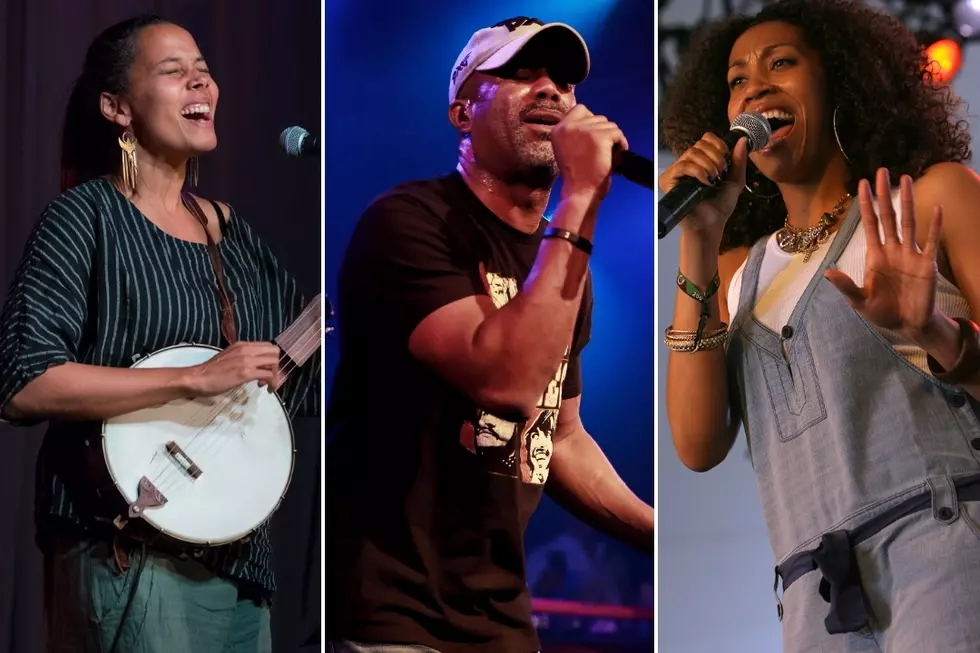
The Black Contributions ot Country Music
Many people still don't know that black people have been involved in the history of country since the genre's inception. Back in the day, many of us never heard of anyone black playing country music except for Charlie Pride and Darius Rucker (from the group Hootie and the Blowfish). Yet, there were tons of black artists playing country music for a long time. The vocalist and historian Queen Esther spoke her words in TED Talk to document this history. Country music has always been part of many cultures including black culture. We know that the blues and jazz are part of American culture. We know that West African music traditions influence the music today in our time. Our ancestors came from Western and Central Africa mostly. The African plants, fruits, vegetables, and music spread globally including the Americas. The banjo is a key part of the country music being a powerful instrument. The banjo came from Africa. The banjo has been called the banjar, bangie, banjer, and banza. It came to America by the 17th century. Many black musicians taught early country music artists too. Tee Tot Payne was a guitarist and street performer form Louisiana. He was a teacher to Hank Williams, teaching him passing chords and how to write sounds. Musician Lesley Riddle helped the Carter family. Fiddler and guitarist Arnold Shultz – the son of a former slave, from a family of musicians and performers – played a pivotal role in the life of Bill Monroe, the father of bluegrass. He gave him his first gig, introduced him to the blues and taught him a Kentucky “thumb style” guitar technique that would make musician Chet Atkins famous. Bill Monroe said that Arnold Shultz was his best friend, and always spoke of him fondly. DeFord Bailey was the first black artist to perform at the Grand Ole Opry back in 1927, making history. Tina Turner played a country song before too which was DeFord Bailey's Pan American Blues (from 1941). In our modern times, we have Mickey Guyton who loves country music and has toured the world to celebrate life and the black contributions in country music in full detail. Cowboy Troy came after Darius Rucker to have a country and even hip hop type of sound too. Linda Martell was a black woman who was an innovator of country music during the 1970s. There are artists like Stoney Edwards, Howdy Glenn, The Pointer Sisters (yes, they did country music along with R&B music), Frankie Staton, Aaron Neville, Cleve Francis, Jake Blount, Kane Brown, Rhiannon Giddens, Rissi Palmer, Shaboozey, Tanner Adell, Chapel Hart, Willie Jones, Miko Marks, Beyonce, Don Flemons, Adia Victoria, Valerie June, Julie Williams, Amythyst Kiah, Allison Russell, Breeland, Reyna Roberts, Alice Randall, Brittney Spencer, Blanco Brown, and other human beings who made country music then and now. Many younger people know about the country music duo War and Treaty.

In Closing
For centuries and millennia, music has been a universal language. Country music has been around for a long time in America. It is known for its ballads, dance tunes, folk influences, and other components that has inspired people of every nationality and color. Country music represents a massive cultural aspect of people living in rural areas, suburban areas, and urban areas. People who perform country music love to use instruments like banjos, fiddles, harmonicas, guitar, and other types of forms of expression. In music, there are at least six major instrument families. There are strings filled with violins, guitars, and cellos. There is the woodwinds that uses a tube like flutes, clarinets, and saxophones. There is the brass that includes trumpets, trombones, and tubas. There is the percussion that is filled with drums and xylophones. We know about the keyboards filled with pianos, organs, and synthesizers. There are electronic devices like synthesizers, drum machines, electric guitars, etc. Country music legends back in the day and now are hugely respected and acknowledged like Charlie Pride, Dolly Parton, Loretta Lynn, George Jones, Johnny Cash, Hank Williams, Kenny Rogers, Buck Owens, Jimmie Rodgers, Keith Urban, Linda Martell, Darius Rucker, Reyna Roberts, Aaron Neville, Cleve Francis, and so many other human beings who sacrificed their lives to show their stories to the populace. Themes in country music are diverse from focusing on love, resiliency, overcoming challenges, and embracing a rural cultural environment. The rural area represents the origin of all human life, so we have a customary love for rural locations genetically. One major turning point in country music history is the release of the Beyonce album of Cowboy Carter. That album inspired debate, discussion, and caused Beyonce to have the highest selling country music tour in history. The same ones who say that Beyonce is not country omit that Dolly Parton and Kenny Rogers did pop records for decades, but no one say that both people weren't truly country. We know why they are hypocrites. We don't need to spell out the reason. Therefore, country music has been an artform that continues to inspire younger artists from Jellyroll to Brit Taylor.
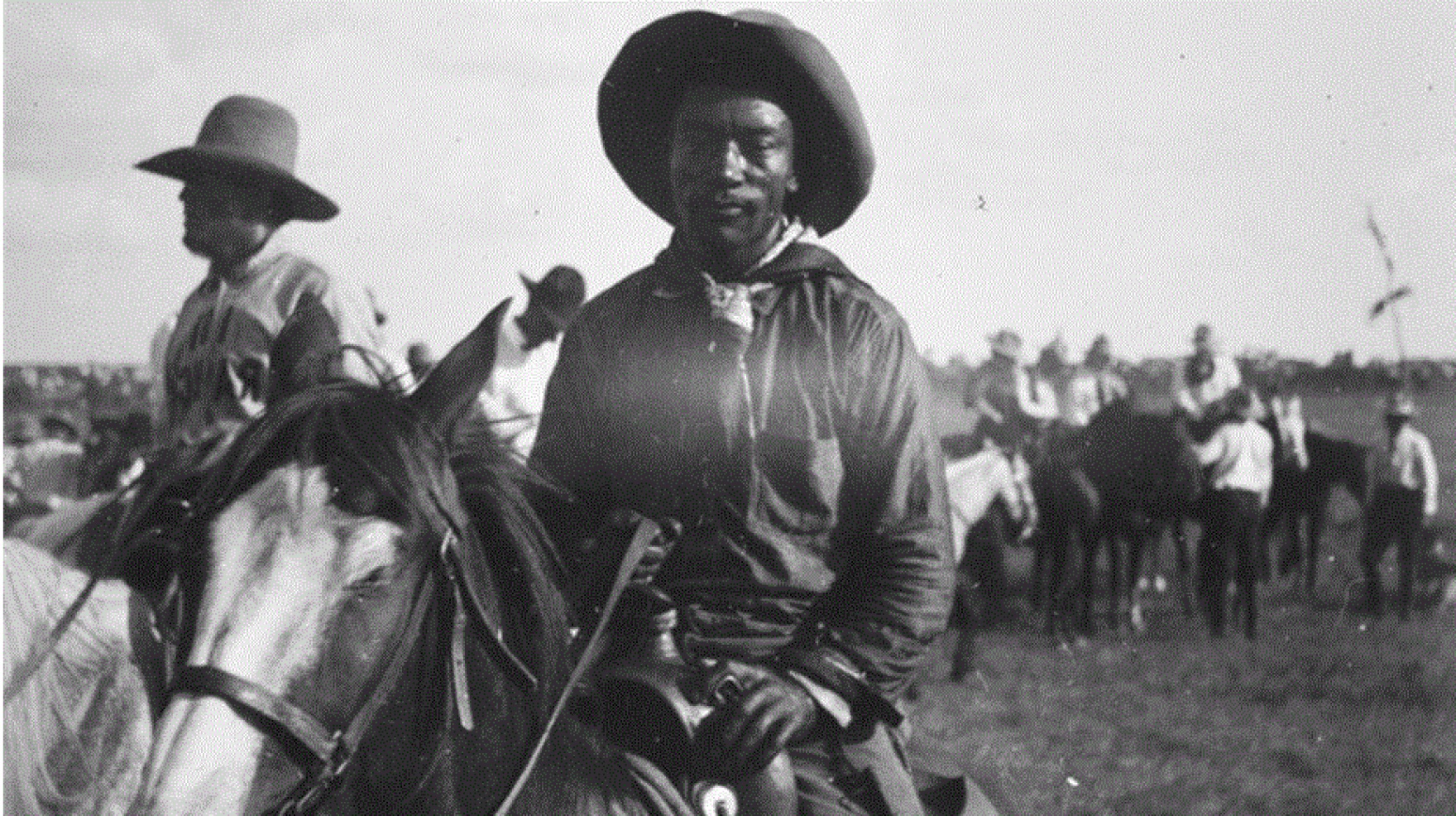
Texas
Texas is a state filled with a lot of history and culture. From cowboys to steaks, Texas has been a cultural beacon of American society. There have been activists like Barbara Jordan who desired civil rights back in the day. Today, Jasmine Crockett has risen up to defend our human rights and confront the nefarious agenda of the Trump movement. Texas is a state with a stronghold of conservative people, and its urban communities especially have dedicated progressive people. Also, many rural and suburban areas in Texas have progressives too. Texas is a place that has major technological industries and is one major epicenter of country music culture. It has massive hip hop expansion, rock influences, jazz, gospel (The Moriah Sisters, Tamela Mann, Les Beasley, Guy Penrod, Yolanda Adams, Kirk Franklin, and other gospel artists are from Texas), and it's a place where other genres of music are fully shown to the public. Texas have been involved in the civil rights struggle for justice, Texas has cultural issues debated, and it has famous political campaigns in a changing world. Texas represents America, because Texas is America. The same discussions about political policies, the same diverse cultures, and the diversity of Americans in general are found in Texas, including the other areas of the United States of America, too. Permanently, we believe in justice, liberty, and equality for all people. We know when Texas goes down the right path of progressive values, the rest of America and the world will follow suit greatly.

The History of Texas
The state of Texas has a long history. Native Americans or indigenous people have lived in Texas for more than 10,000 years. There is the discovery of the remains of the prehistoric Leanderthal Lady. In 1519, the arrival of the first Spanish conquistadors in the region of North America now known as Texas found the region occupied by numerous Native American tribes. The name Texas derives from táyshaʼ, a word in the Caddoan language of the Hasinai, which means "friends" or "allies." As time went on, more Native American ethnic groups lived in Texas. There were ancestral Pueblo people in the upper Rio Grande region, around the western part of Texas. The Mound Builders of the Mississippian culture spread across the Mississippi Valley and its tributaries, including the Caddo nation being among its descendants. There were the indigenous peoples of Aridoamerica in the southern and western Texas region of Aridomamerica. Some tribes have trade and cultural ties to the densely populated Mesoamerica in Mexico and Central America. There was the influence of the city of Tenochtitlán in Mexico City, which peaked in ca. 500 A.D. and declined over the 8th and 10th centuries. The Paleo-Indians who lived in Texas between 9,200 and 6,000 BC may have had links to the Clovis and Folsom cultures; these nomadic people hunted mammoths and bison using atlatls. They extracted Alibates flint from quarries in the panhandle region. Beginning during the 4th millennium BC, the population of Texas increased despite a changing climate and the extinction of giant mammals. Many pictograms from this era, drawn on the walls of caves or on rocks, are visible in the state, including at Hueco Tanks and Seminole Canyon. Native Americans in East Texas began to settle in villages shortly after 500 BC, farming and building the first burial mounds. They were influenced by the Mississippian culture, which had major sites throughout the Mississippi basin. In the Trans-Pecos area, populations were influenced by Mogollon culture.
Early Ceramics date back to ca. 500 BC. In Eastern Texas, the Tchefuncte tradition of ceramics flourished from around 500 to 100 BC. Local hunters adopted bows and arrows around the 8th century, replaced the long-distance but less accurate atlatl. Native peoples hunted bison for food, clothing, shelter, and more. They imported obsidian from suppliers in Mexico and the Rocky Mountains. Texas has been conquered by the French and Spanish Empires. After Spanish explorers entered the area, Texas was largely divided between six cultural groups. Caddoan language-speaking peoples occupied the area surrounding the entire length of the Red River, and at the time of European contact, they formed four collective confederacies of the Wichita, Natchitoches, the Hasinai, and the Kadohadocho. Along the Gulf Coast region were the Atakapa tribes. Southward from the Atakapa, along the Gulf Coast to the Rio Grande river, at least one Coahuiltecan tribe (a culture group primarily from Northeast Mexico) was located. The Puebloan peoples, situated largely between the Rio Grande and Pecos river were part of an extensive civilization of tribes that lived in what are now the states of Texas, New Mexico, Colorado, and Utah. While the northernmost Ancestral Pueblo groups faced a cultural collapse due to drought, many of the southern tribes survive to the present. North of the Pueblos were the Apache peoples, who included several tribes with distinct languages.
By the late 17th century, in Texas Panhandle region, the Comanches settled and later expanded their territories. Native Americans determined the fate of European explorers and settlers depending on whether a tribe was kind or warlike. Friendly tribes taught newcomers how to grow indigenous crops, prepare foods, and hunting methods for the wild game. Warlike tribes made life difficult and dangerous for explorers and settlers through their attacks and resistance to European conquest. Many Native Americans died of new infectious diseases, which caused high fatalities and disrupted their cultures in the early years of colonization.
The first European to see Texas was the Spanish person Alonso Alvarez de Pineda, who led an expedition for the governor of Jamaica, Francisco de Garay, in 1520. While searching for a passage between the Gulf of Mexico and Asia, Álvarez de Pineda created the first map of the northern Gulf Coast. This map is the earliest recorded document of Texas history. Between 1528 and 1535, four survivors of the Narváez expedition, including Álvar Núñez Cabeza de Vaca and Estevanico, spent six and a half years in Texas as slaves and traders among various native groups. Cabeza de Vaca was the first European to explore the interior of Texas. In 1543, the Hernando de Soto expedition entered Texas from the east, becoming the first Europeans to visit the Caddo peoples. Searching for an overland path to Mexico, the expedition turned back to the Mississippi River after leaving Caddo territory and finding nomadic tribes without food stores to sustain the Spanish.
Although Álvarez de Pineda had claimed the area that is now Texas for Spain, the area was essentially ignored for over 160 years. Its initial settlement by Europeans occurred by accident. In April 1682, French nobleman René-Robert Cavelier, Sieur de La Salle had claimed the entire Mississippi River Valley for France. The French colonization of Texas took place from 1684 to 1689. The following year, he convinced King Louis XIV to establish a colony near the Mississippi, essentially splitting Spanish Florida from New Spain. La Salle's colonization expedition left France on July 24, 1684, and soon lost one of its supply ships to Spanish privateers. A combination of inaccurate maps, La Salle's previous miscalculation of the latitude of the mouth of the Mississippi River, and overcorrecting for the Gulf currents led the ships to be unable to find the Mississippi. Instead, they landed at Matagorda Bay in early 1685, 400 miles (644 km) west of the Mississippi. In February, the colonists constructed Fort Saint Louis. René-Robert Cavelier, Sieur de La Salle founded the French colony in Texas.
After the fort was constructed, one of the ships returned to France, and the other two were soon destroyed in storms, stranding the settlers. La Salle and his party searched overland for the Mississippi River, traveling as far west as the Rio Grande and as far east as the Trinity River. Disease and hardship laid waste to the colony, and by early January 1687, fewer than 45 people remained. That month, a third expedition launched a final attempt to find the Mississippi. The expedition experienced much infighting, and La Salle was ambushed and killed somewhere in East Texas. The Spanish leaned of the French colony in late 1685. The Spanish believed that the French colony was a threat to Spanish mines and shipping routes. King Carlos II's Council of war wanted the removal of the French colony from Texas. They made 10 expeditions. The Frenchman guided the Spanish to the French fort in late April 1689. The French fort was destroyed. By March 1690, Alonso De Leon led an expedition to form a mission in East Texas. Mission San Francisco de los Tejas was completed near the Hasinai village of Nabedaches in late May, and its first mass was celebrated on June 1.
On January 23, 1691, Spain appointed the first governor of Texas, General Domingo Terán de los Ríos.On his visit to Mission San Francisco in August, he discovered that the priests had established a second mission nearby, but were having little luck converting the natives to Catholicism. The Indians regularly stole the mission cattle and horses and showed little respect to the priests. When Terán left Texas later that year, most of the missionaries chose to return with him, leaving only three religious people and nine soldiers at the missions. The group also left behind a smallpox epidemic. The angry Caddo threatened the remaining Spaniards, who soon abandoned the fledgling missions and returned to Coahuila. For the next 20 years, Spain again ignored Texas. Spain used the French to help build missions in Texas in trying to convert Native Americans to Catholicism. By the 1700s, missions grew in Texas. The following year, the War of the Quadruple Alliance pitted Spain against France, which immediately moved to take over Spanish interests in North America. In June 1719, seven Frenchmen from Natchitoches took control of the mission San Miguel de los Adaes from its sole defender, who did not know that the countries were at war. The French soldiers explained that 100 additional soldiers were coming, and the Spanish colonists, missionaries, and remaining soldiers fled to San Antonio.
The new governor of Coahuila and Texas, the Marquis de San Miguel de Aguayo, drove the French from Los Adaes without firing a shot. He then ordered the building of a new Spanish fort Nuestra Señora del Pilar de Los Adaes, located near present-day Robeline, Louisiana, only 12 mi (19 km) from Natchitoches. The new fort became the first capital of Texas, and was guarded by six cannons and 100 soldiers. The six East Texas missions were reopened, and an additional mission and presidio were established at Matagorda Bay on the former site of Fort Saint Louis. By the late 1720s, the viceroy of New Spain had many soldiers. The Spainish were friends with the Hasinai, but they couldn't convert them to Catholicism. The Hasinai were enemies of the Lipan Apache. The Apaches shunned the mission but appeared to be friends of the Spanish. So, the Apache's enemies of the Hasinai, Comanche, and Tonkawa tribes destroyed the missions. Native Americans had battles among each other in Texas. During the American Revolution, Texas and the Tejanos helped the Americans in the fights in British West Florida. Unlike East Florida, Texas supported U.S. independence by also fighting in New Orleans and other campaigns in the Gulf of Mexico.
In 1799, Spain gave Louisiana back to France in exchange for the promise of a throne in central Italy. Although the agreement was signed on October 1, 1800, it did not go into effect until 1802. The following year, Napoleon sold Louisiana to the United States. The original agreement between Spain and France had not explicitly specified the borders of Louisiana, and the descriptions in the documents were ambiguous and contradictory. The United States insisted that its purchase also included most of West Florida and all of Texas. The Spainish and America had an agreement on land in the Adams Onis Treaty of 1819. In 1808, Napoleon forced the Spanish king to abdicate the throne and appointed his brother Joseph Bonaparte as the new monarch. A shadow government operated out of Cadiz during Joseph's reign. Revolutionaries within Mexico and the United States unsuccessfully combined to declare Texas and Mexico independent.
Spanish troops reacted harshly, looting the province and executing any Tejanos accused of having Republican tendencies. By 1820, fewer than 2,000 Hispanic citizens remained in Texas. The situation did not normalize until 1821, when Agustin de Iturbide launched a drive for Mexican Independence. Texas became a part of the newly independent nation without any violence or physical conflict, ending the period of Spanish Texas. So, Spain ruled Texas for a time until Mexico ruled Texas. The 1821 Mexican War for Independence caused Spain to lose control of Mexico, Texas, and the rest of New Spain. The 1824 Constitution of Mexico joined Texas with Coahuila to form the state of Coahila Tejas. The same year, Mexico enacted the General Colonization Law, which enabled all heads of household, regardless of race or immigrant status, to claim land in Mexico. Mexico had neither manpower nor funds to protect settlers from near-constant Comanche raids and it hoped that getting more settlers into the area could control the raids. The government liberalized its immigration policies, allowing for settlers from the United States to immigrate to Texas. German immigrants came to Texas too. Starting in 1821, and in spite of growing Mexican limitations on slavery, U.S. immigrants brought an increasing number of slaves into Texas. By 1825, 69 slave owners owned 443 slaves. Mexico granted Texas a one-year exemption from the national edict of 1829 outlawing slavery, but Mexican president Anastasio Bustamante ordered that all slaves be freed in 1830. To circumvent the law, the colonists converted their slaves into indentured servants "for life." By 1836 there were 5,000 enslaved African Americans in Texas.
Bustamante outlawed the immigration of United States citizens to Texas in 1830. Several new presidios were established in the region to monitor immigration and customs practices. The new laws also called for the enforcement of customs duties, angering both native Mexican citizens (Tejanos) and Anglos. In 1832, a group of settlers in East Texas led a revolt against customs enforcement in Anahuac. These Anahuac Disturbances coincided with a revolt in Mexico against the current president. Texans sided with the federalists against the current government and after the Battle of Nacogdoches, drove all Mexican soldiers out of East Texas. So, while Mexico banned slavery, many of the white Texan settlers including Stephen F. Austin wanted slavery in Texas.

Texans took advantage of the lack of oversight to agitate for more political freedom, resulting in the Convention of 1832. Among other issues, the convention demanded that U.S. citizens be allowed to immigrate into Texas, and requested independent statehood for the area. Many Americans wanted to own slaves in Texas using independence rhetoric as a cover. The following year, Texians reiterated their demands at the Convention of 1833. After presenting their petition, courier Stephen F. Austin was jailed for the next two years in Mexico City on suspicion of treason. Although Mexico implemented several measures to appease the colonists, President Antonio Lopez de Santa Anna's measures to transform Mexico from a federalist to a centralist state led the Texan colonists to revolt. The vague unrest erupted into armed conflict on October 2, 1835, at the Battle of Gonzales, when Texans repelled a Mexican attempt to retake a small cannon. This launched the Texas Revolution, and over the next three months, the Texian Army successfully defeated all Mexican troops in the region. On March 2, 1836, Texans signed the Texas Declaration of Independence at Washington-on-the-Brazos, effectively creating the Republic of Texas. The revolt was justified as necessary to protect basic rights and because Mexico had annulled the federal pact. The majority of the colonists were from the United States; they said that Mexico had invited them to move to the country, but they were determined "to enjoy" the republican institutions to which they were accustomed in their native land. Santa Anna fought back. Santa Anna led the bulk of the troops to San Antonio de Bexar to besiege the Alamo Mission, while General Jose de Urrea led the remaining troops up the coast of Texas. Urrea's forces soon defeated all the Texian resistance along the coast, culminating in the Goliad massacre, where they executed 300 Texian prisoners of war. After a thirteen-day siege, Santa Anna's forces overwhelmed the nearly 200 Texians defending the Alamo, and killed the prisoners. "Remember the Alamo! Remember Goliad!" became a battle cry of the Texas Revolution. The Texans came back to defeat the Mexican forces commanded by General Sam Houston. They defeated Santa Ana's forces near Houston at the Battle of San Jacinto by April 21, 1836.
The Republic of Texas existed from 1836 to 1845. The 1st Congress of the Republic of Texas convened in October 1836 at Columbia (now West Columbia). Stephen F. Austin, known as the Father of Texas, died in December 27, 1836, after serving two months as Secretary of State for the new Republic. In 1836, five sites served as temporary capitals of Texas (Washington-on-the-Brazos, Harrisburg, Galveston, Velasco and Columbia) before President Sam Houston moved the capital to Houston in 1837. In 1839, the capital was moved to the new town of Austin by the next president, Mirabeau B. Lamar. The internal politics of the Republic were based on the conflict between two factions. The nationalist faction, led by Mirabeau B. Lamar, advocated the continued independence of Texas, the expulsion of the Native Americans, and the expansion of Texas to the Pacific Ocean. Their opponents, led by Sam Houston, advocated the annexation of Texas to the United States and peaceful co-existence with Native Americans. Mexico refused to support Texas independence. On March 5, 1842, a Mexican force of over 500 men, led by Ráfael Vásquez, invaded Texas for the first time since the revolution. They soon headed back to the Rio Grande after briefly occupying San Antonio. 1,400 Mexican troops, led by the French mercenary general Adrian Woll launched a second attack and captured San Antonio on September 11, 1842. A Texas militia retaliated at the Battle of Salado Creek. However, on September 18, this militia was defeated by Mexican soldiers and Texas Cherokee Indians during the Dawson massacre. The Mexican army would later retreat from the city of San Antonio. America made Texas a slave state in 1845. The Mexican American war happened as America via President James K. Polk viewed the border at the Rio Grande and Mexico thought the border was on the Nueces River. Fundamentally, this war was about disputes in borders, economic and political power, and slavery.
On April 25, 1846, a 2,000-strong Mexican cavalry detachment attacked a 70-man U.S. patrol that had been sent into the contested territory north of the Rio Grande and south of the Nueces River. The Mexican cavalry routed the patrol, killing 16 U.S. soldiers in what later became known as the Thornton Affair. Both nations declared war. In the ensuing Mexican–American War, there were no more battles fought in Texas, but it became a major staging point for the American invasion of northern Mexico. America won the war, and America annexed tons of lands from New Mexico to Wyoming. The Texas population by 1860 was quite diverse, with large elements of European whites (from the American South), African Americans (mostly slaves brought from the east), Tejanos (Hispanics with Spanish heritage), and about 20,000 recent German immigrants. Irish immigrants were in Texas too. Cowboys of every color were in Texas, there were Western towns, and massive zeal for adventure in Texas back then too. There were Czech immigration to Texas too.

By 1860, there has been the antebellum period near the time of the American Civil War. In the summer of 1860, a slave panic erupted in North and East Texas amid rumors of arson by slaves and abolitionists. Between 30 and 100 black people and whites were lynched by vigilantes in the so-called "Texas Troubles." The events were used to arouse support for secession. Yet at least one fire was proven at the time to be due to a new kind of match that self-ignited in that season's unusual heat and wind, stopping the Denton lynch mob in that case. Texas was a major slave state. Slave labor was used in Texas to promote the southern cotton industry. In 1860, 30% of the total state population of 604,215 were enslaved. Slave owners were also politically dominant: During the 1860s, between 60 and 80% of state legislators came from a slave owning family, and 10–15% belonged to the Planter class. In the statewide election on the secession ordinance, Texans voted to secede from the Union by a vote of 46,129 to 14,697 (a 76% majority). The Secession Convention immediately organized a government, replacing Sam Houston when he refused to take an oath of allegiance to the Confederacy. Texas declared its secession from the United States on February 1, 1861, and joined the Confederate States of America on March 2, 1861. With few battles in its territory, Texas was mainly a "supply state" for the Confederate forces until mid-1863, when the Union capture of the Mississippi River made large movements of men, horses or cattle impossible. Texas regiments fought in every major battle throughout the war. After the capture of New Orleans in 1862, slave owners with means to move forced the resettlement of enslaved people to Texas to escape the Union Army's reach. The last battle of the Civil War, the Battle of Palmito Ranch, was fought in Texas on May 12, 1865. The 2nd Texas Cavalry Battalion (U.S.) (one of only two from the state) took part. There is the history of how Mexico, Mexican Americans, and other people dealt with the Union and Confederate Civil War military operations.
Many Texan unionists supported the Confederacy after the war started, but many stuck with unionism during the war like in the northern coutnies, the German districts in Texas Hill County, and the Mexican areas. Local officials harassed unionists and engaged in large-scale massacres against unionists and German immigrants. In Cooke County, 150 suspected unionists were arrested; 25 were lynched without trial and 40 more were hanged after a summary trial. Draft resistance was widespread, especially among Texans of German or Mexican descent; many of the latter went to Mexico. Potential draftees went into hiding, Confederate officials hunted them down, and many were shot. On August 1, 1862, Confederate troops executed 34 pro-Union German Texans in the "Nueces Massacre" of civilians. Texas's most famous unionist was state Governor at the time, Sam Houston. After refusing to take an oath of allegiance to the Confederacy, he was deposed as governor. Even after news of the Emancipation Proclamation arrived in Galveston on June 19, 1865, creating the celebration of Juneteenth, slave owners withheld the news. It was not uncommon for them to delay telling the formerly enslaved people until after the harvest, according to historian Elizabeth Hayes Turner in her comprehensive essay, "Juneteenth: Emancipation and Memory."
The state suffered little during the war, but trade and finance were disrupted. Angry returning veterans seized state property, and Texas went through a period of extensive violence and disorder. Most outrages took place in northern Texas; outlaws based in the Indian Territory plundered and murdered without distinction of party. President Andrew Johnson appointed Union General A. J. Hamilton as provisional governor on June 17, 1865. Hamilton had been a prominent politician before the war. He granted amnesty to ex-Confederates if they promised to support the Union in the future, appointing some to office. On March 30, 1870, although Texas did not meet all the requirements, Congress restored Texas to the Union. Many free blacks were able to become businessmen and leaders. Through the young Republican Party, blacks rapidly gained political power. Indeed, blacks comprised 90% of the Texas Republican Party during the 1880s. Norris Wright Cuney, an African American from Galveston, rose to the chairmanship of the Texas Republican Party and even the national committeeman. Like other Southern states, by the late 1870s white Democrats regained control of the state legislature. They passed a new constitution in 1876 that segregated schools and established a poll tax to support them, but it was not originally required for voting. Within the Republican Party the Lily-white movement emerged, a movement to wrest control of the party by whites and eliminate black influence altogether. The movement had its origins in Texas but spread across the nation. This in addition to wider efforts to restrict the influence of non-whites rapidly reversed the fortunes of the black population.
The history of Texas from 1876 to 1899 saw massive racism and oppression against black people. Still, the freedmen created educational systems, organized new churches and fraternal organizations, entered politics, and won local offices. By the 1890s, more than 100,000 blacks were voting in state elections. In 1896 and 1898, Republican Robert B. Hawley was elected to Congress from the state by a plurality, when most white voters split between the Democratic and Populist parties. Democrats were determined to end competition by Republicans and Populists, and reviewed what other Southern states were doing to disenfranchise blacks and poor whites. Mississippi's new constitution of 1890 had survived a Supreme Court case, although in practice it was highly discriminatory against freedmen. There were land politics during this time too. There was the federal Morill Act, and then Texas sold public lands to gain funds to invest in higher education. In 1876, the Agricultural and Mechanical College of Texas opened, and seven years later the University of Texas at Austin began conducting classes. There were more land policies that were drafted during the time of Governor John Ireland. Now, people in Texas could accumulate land like forming cattle ranches. Many ranchers ran barbed wire around public lands, to protect their access to water and free grazing. This caused many range wars. Governor Lawrence Sullivan Ross guided the Texas Legislature to reform the land use policies. The railroads grown in Texas by the 1880s. That ended the famous cattle drives and allowed ranchers to market their cattle after a short drive, and farmers move their cotton to market cheaply. They made Dallas and other cities the centers of commercial activity. Ft. Worth became the gateway to the west, via the Fort Worth and Denver Railway. However the passenger trains were often the targets of armed gangs.
.jpg)
Governor Lawrence Sullivan Ross had to personally intervene to resolve the Jaybird-Woodpecker War (1888–1889) among factions of Democrats in Fort Bend County; at bottom, it was a racial conflict. The majority population was black by a large margin, and had been electing county officers for 20 years. But, the white elite Democrats wanted their own people in power. Conflict became violent and the Jaybirds ordered several black people out of town. Tensions increased and a total of seven people were killed. In the fall of 1889, the Democratic Party created "white-only pre-primary elections," which in practice were the only competitive contests in the county, and thus disenfranchised the black human beings. This situation lasted until the U.S. Supreme Court ruling in Terry v. Adams (1953) declared it unconstitutional in the last of the white primary cases. Under Jim Hogg, the state turned its attention toward corporations violating the state monopoly laws. In 1894, Texas filed a lawsuit against John D. Rockefeller's Standard Oil Company and its Texas subsidiary, the Waters-Pierce Oil Company of Missouri. Hogg and his attorney-general argued that the companies were engaged in rebates, price fixing, consolidation, and other tactics prohibited by the state's 1889 antitrust act. The investigation resulted in a number of indictments, including one for Rockefeller. Hogg requested that Rockefeller be extradited from New York, but the New York governor refused, as Rockefeller had not fled from Texas. Rockefeller was never tried, but other employees of the company were found guilty.
By September 8, 1900, there was the Hurricane that destroyed Galveston or Texas's fourth largest city during that time. It had a 20 ft. storm surge. Water covered the whole island, killing between 6,000 and 8,000 people, destroying 3,500 homes as well as the railroad causeway and wagon bridge that connected the island to the mainland. To help rebuild their city, citizens implemented a reformed government featuring a five-man city commission. Galveston was the first city to implement a city commission government, and its plan was adopted by 500 other small cities across the United States. In the aftermath of the Galveston disaster, action proceeded on building the Houston Ship Channel to create a more protected inland port. Houston quickly grew once the Channel was completed, and rapidly became the primary port in Texas. Railroads were constructed in a radial pattern to link Houston with other major cities such as Dallas-Fort Worth, San Antonio, and Austin.
By 1900, the Dallas population reached 38,000 as banking and insurance became major activities in the increasingly white-collar city, which was now the world's leading cotton center. It was also the world's center of harness making and leather goods. Businessmen took control of civic affairs; with little municipal patronage, there was only a small role for the Democratic Party to play. The predominantly black Republican Party was essentially closed out of politics by the disenfranchisement in 1901 of most blacks through imposition of a poll tax (see below). The Democrats in 1901 wanted to end the political power of Republicans, Populists, and black people. So, the Democratic dominated state legislature passed a poll tax as a requirement for voting. Given the economic difficulties of the times, the poll tax caused participation by African Americans, poor whites, and Mexican Americans to drop sharply, effectively disenfranchising more than one-third of the population of the state. The Democrats used a white primary to harm the rights of minorities. . By 1906, the number of black voters had dropped from more than 100,000 in the 1890s to 5,000. The state also passed a law for white primaries. In 1896, 86.6% of all voters in Texas voted in the presidential election; following disenfranchisement, voter turnout in 1904 was 29.2% and in 1920 was 21.6%.
When the Supreme Court ruled in 1923 that white primaries established by political parties were unconstitutional, in 1927 the Texas state legislature passed a bill that authorized political parties to establish their internal practices. The Democratic Party reinstated the white primary. That law survived until 1944 before another Supreme Court case ruled that it was unconstitutional. After 1944, the NAACP and other organizations worked to register black voters and participation increased. But the major disenfranchisement continued until passage in the mid-1960s of civil rights legislation, including the Voting Rights Act of 1965, to provide for federal oversight in areas in which historically minorities did not vote in expected numbers based on population. Texas reached 4 million population in 1910, making it the fifth largest state, and continued to grow. It remained primarily rural, based on cotton farms and ranches, with 30% living in numerous villages and towns and a few cities. Later, the populations of Galveston, Dallas, Houston, San Antonio, El Paso grew their populations, had cars, and increased their infrastructure. In 1911 an extremely bloody decade-long civil war broke out in Mexico. Hundreds of thousands of refugees fled to Texas, raising the Hispanic population from 72,000 in 1900 to 250,000 in 1920. The number reached 700,000 in 1930, 1,400,000 in 1960, and 4 million in 1990. The black population grew in numbers but declined as a proportion. There were massive lynchings in Texas too. Of the 468 lynching victims in the state between 1885, the peak, and the last episode in 1942, 339 were black, 77 white, 53 Hispanic, and 1 Native American. There was improved law enforcement after 1920 meant the violence rapidly died out, but segregation only ended in 1964.
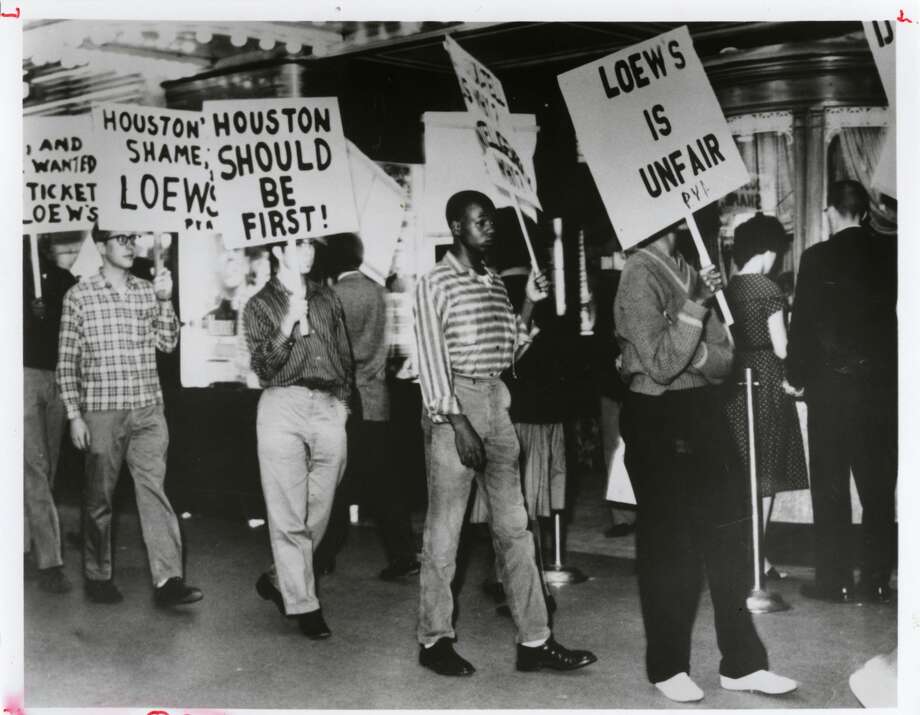
By the early to mid 1900s, there were oil industries growing, high skyscrapers, and then the Great Depression happened. The economy, which had experienced significant recovery since the Civil War, was dealt a double blow by the Great Depression and the Dust Bowl. After the Stock Market Crash of 1929, the economy suffered significant reversals. Thousands of city workers became unemployed, many of whom depended on federal relief programs such as FERA, WPA and CCC. Thousands of unemployed Mexican citizens received one-way bus tickets to their home villages in Mexico. The Dust Bowl happened form 1934 to 1939. Many people left Texas. Many of the New Deal helped some people, and some minorities didn't benefit from the New Deal because of discriminatory reasons. Federal money came into Texas during the World War II era. Texas saw the growth of military bases, factors, Army hospitals, and POW detention camps. There were tons of military bases in Texas from Fort Sam Houston to Camp Mabry. People of many races participated in WWII form Texas to fight fascism overseas. Tens of thousands of new migrants streamed in from rural areas, straining the city's housing supply and the city's ability to provide local transit and schools. For the first time, high-paying jobs went to large numbers of women, black people and Hispanic people. The city's African-American community, emboldened by their newfound prosperity, increased its agitation for civil rights; they backed and funded the legal case of Smith v. Allwright (1944), in which the Supreme Court ruled against the latest version of the white primary in support of voting rights. Jim Crow still existed including the Texas drought from 1949 to 1957. Because of the drought, a system of water conservation existed via the Texas Water Development Board form 1957. There was more of an access to groundwater, lakes, and rivers. By the early 1960s, times would change. More black civil rights leaders fought for their human rights including other ethnic groups like Latino Americans.
By the 1960s, Texas changed. The Civil Rights Movement has grown in society. On Friday, November 22, 1963, in Dallas, Texas, at 12:30 pm Central Standard Time (18:30 UTC), President John F. Kennedy was assassinated. The Texas Governor, John B. Connally, was also shot but survived. The episode caused a national outrage focused on right wing elements in Dallas that had long been hostile to Kennedy. However, Oswald was a pro Castro Marxist revolutionary and had no discernable connection to any right-wing organizations. In fact, no organizations related to low level groups were implicated in the assassination. Many people believe that Oswald acted alone, and others believe that President John F. Kennedy was killed by a conspiracy. This debate continues to this day. In the aftermath, many in media and on the political left attempted to call the city and its citizens with accusations that "Dallas is a deceased city" or "Dallas is a city of hate " Nevertheless, for a half-century and more the people of Dallas still struggle with being branded as having some responsibility. The Sixth Floor Museum at Dealey Plaza, located where the assassin is believed to have fired the shots, has become a historic tourist site. During World War II the main universities like University of Texas and Texas A&M University gained a new national role. The wartime financing of university research, curricular change, campus trainee programs, and postwar veteran enrollments changed the tenor and allowed Texas schools to gain national stature.
From 1950 through the 1960s, Texas modernized and dramatically expanded its system of higher education. Under the leadership of Governor Connally, the state produced a long-range plan for higher education, a more rational distribution of resources, and a central state apparatus that managed state institutions with greater efficiency. Because of these changes, Texas universities received federal funds for research and development during the John F. Kennedy and Lyndon B. Johnson administrations.
The Culture of Texas
The culture of Texas is much more diverse than people think. It has been influenced by massive migration from the North, West, East, and the Deep South. It has been a mixture of diverse cultures from African Americans, Native Americans, Tejanos, Cajuns, Irish people, German Texans, people of British heritage, etc. To understand Texas culture, you have to know the different regions of Texas. Texas has five major regions. they are East Texas, Central Texas, North Texas, South Texas, and West Teas. These regions are defined by urban centers and varying cultural characteristics. The Texas Triangle, formed by Houston, Dallas-Fort Worth, and San Antonio, is an interstate corridor between the three major Texan cities closest to the geographic center, each representing distinct cultural areas. Texas is bordered by the western prairies, the Deep South, and Mexico, incorporating Hispanic, African, and Anglo traditions. Texas also includes communities with origins in Germany, Czechoslovakia, Poland, Mexico, Southern African American and White Southern populations, as well as Native Americans. Texas is placed in the Southern United States by the United States Census Bureau. Texas culture is heavily influenced by agriculture as Texas has the most farms and highest acreage in America. The state is ranked No. 1 for revenue generated from total livestock and livestock products. It is ranked No. 2 for total agricultural revenue, behind California. At $7.4 billion or 56.7 percent of Texas's annual agricultural cash receipts, beef cattle production represents the largest single segment of Texas agriculture. This is followed by cotton at $1.9 billion (14.6 percent), greenhouse/nursery at $1.5 billion (11.4 percent), broiler chickens at $1.3 billion (10 percent), and dairy products at $947 million (7.3 percent).


Texas produces the most cattle, horses, sheep, goats, wool, mohair, and hay in the United States. Texas produces the most cotton in America, which is the number one crop grown in the state in terms of value. The state grows a lot of cereal crops and produces a lot of food. There is obviously a ranch and cowboy culture in Texas. Ranching has been part of Texas culture for years and centuries. Cowboys back in the day would guard farms, be sheriffs, and act in many ways. Cowboys back then and now include people of every color and sex. The rodeo culture is prominent today. Texas is regularly identified as one major aspect of Westerns and country western music. Texas has been promoted by numerous shows, including the TV series Dallas and Walker, Ranger, offering a diverse range of content from oil tycoons to moral lessons. The annual Houston Livestock Show and Rodeo is the world's largest known rodeo. It is held over 20 days, from late February through early March. The event begins with trail rides that originate from several points throughout the state, all of which convene at NRG Park for a barbecue cook-off. The rodeo includes typical rodeo events, as well as, concert performances from major artists, and carnival rides. The Fort Worth Livestock Show and Rodeo lasts three weeks in late January and early February. It has many traditional rodeos, but also a cowboy rodeo and a Mexican rodeo in recent years, which both have large fan bases. Many state fairs exist, and college football games are staples of Texas culture (like the University of Texas Longhorns, etc.). Many state and national holidays are found in Texas, like Juneteenth, Texas Independence Day, Lyndon Baines Johnson Day, and San Jacinto Day (for the celebrate the defeat of Mexico for Independence). The Dallas Cowboys is one of the most popular football teams in the world, too.
There are tons of art and architecture in Texas, from the John Fitzgerald Kennedy Memorial Plaza to the Mustangs of Las Colinas. The music of Texas is dominated by many forms of music, like country music, R&B, hip hop, jazz, rock, etc. There is a live music scene in Austin, Texas. Austin, Texas, is the city with the most music venues per capita of any other U.S. city. That is why Austin is called The Live Music Capital of the World. There are Austin nightclubs on 6th Street with the music and multimedia festival called South by Southwest. The longest-running concert music program on American television, Austin City Limits, was videotaped at the University of Texas at Austin campus. Austin City Limits and Waterloo Records run the Austin City Limits Music Festival, an annual music and art festival held at Zilker Park in Austin.
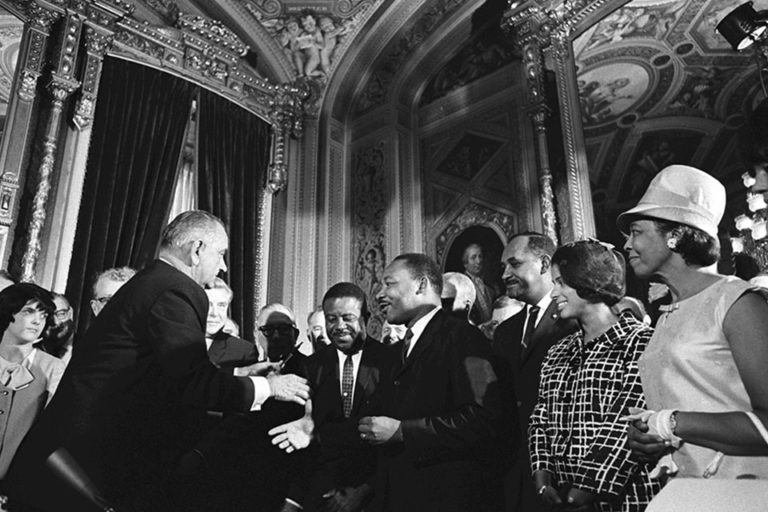
In Houston, the annual Free Press Summer Fest is a major draw as well as the entertainment lineups at the annual Houston Livestock Show and Rodeo. Notable music venues for Houston are Fitzgerald's, Warehouse Live, and Walter's among others. Many renowned musicians' origins are in Houston including Lyle Lovett, Beyoncé, Clint Black, The Crusaders, Lightnin' Hopkins, and Kenny Rogers as well as groups including D.R.I., Helstar, La Mafia, the Geto Boys, and ZZ Top. The Houston Symphony and Houston Grand Opera are both attractions of the Houston Theater District. San Antonio has deep Mexican American roots with Tejano and conjunto music. There is music from the Panhandle and West Texas with artists like Buddy Holly and Roy Orbison. Dallas, meanwhile, boasts a thriving blues and jazz scene, historically rooted in Deep Ellum, a neighborhood once frequented by legends like Blind Lemon Jefferson and T-Bone Walker. Together, these cities illustrate the incredible diversity and influence of Texas’s music landscape. Literature, Japanese anime, and other forms of culture is popular in Texas. Basketball is another popular sport in Texas. The state has three NBA teams, the Houston Rockets, San Antonio Spurs, and Dallas Mavericks, which have all won league titles. Fishing, marching bands and auto racing are also found in Texas. The Texas Motor Speedway in Fort Worth is a large motorsport track, hosting both domestic and international events. People eat Texas barbecue, Tex-Mex cuisine like sizzling fajitas, cheesy enchiladas, and crispy nachos with bold spices. Texas culture has a long history filled with power and inspiration indeed.
Beginning around the mid-20th century, Texas began to transform from a rural and agricultural state to one that was urban and industrialized. The state's population grew quickly during this period, with large levels of migration from outside the state. As a part of the Sun Belt Texas experienced strong economic growth, particularly during the 1970s and early 1980s. Texas's economy diversified, lessening its reliance on the petroleum industry. By 1990, Hispanics overtook black people to become the largest minority group in the state. Prior to the mid-20th century, Texas was essentially a one-party state, and the Democratic primary was viewed as "the real election". The Democratic Party had conservative and liberal factions, which became more pronounced after the New Deal. Additionally, several factions of the party briefly split during the 1930s and 40s.
The state's conservative white voters began to support Republican presidential candidates by the mid-20th century. After this period, they supported Republicans for local and state offices as well, and most white citizens became Republican Party members. The party also attracted some minorities, but many have continued to vote for Democratic candidates. The shift to the Republican Party is much attributed to the fact that the Democratic Party became increasingly liberal during the 20th century and thus was increasingly thought to be out-of-touch by the average Texas voter. For the record, there are many progressive Texans to be clear. As Texas was always a conservative state, voters switched to the GOP, which now more closely reflected their beliefs. Commentators have also attributed the shift to Republican political consultant Karl Rove, who managed numerous political campaigns in Texas in the 1980s and 90s. Other stated reasons included court-ordered redistricting and the demographic shift in relation to the Sun Belt that favored the Republican Party and conservatism.
The 2003 Texas redistricting of Congressional districts led by Republican Tom DeLay, was called by the New York Times "an extreme case of partisan gerrymandering." A group of Democratic legislators, the "Texas Eleven", fled the state in a quorum-busting effort to prevent the legislature from acting, but was unsuccessful. The state had already redistricted following the 2000 census. Despite these efforts, the legislature passed a map heavily in favor of Republicans, based on 2000 data and ignoring the estimated nearly one million new residents in the state since that date. Career attorneys and analysts at the Department of Justice objected to the plan as diluting the votes of African American and Hispanic voters, but political appointees overrode them and approved it. Legal challenges to the redistricting reached the national Supreme Court in the case League of United Latin American Citizens v. Perry (2006), but the court ruled in favor of the state (and Republicans).
In the 2014 Texas elections, the Tea Party movement made large gains, with numerous Tea Party favorites being elected into office, including Dan Patrick as lieutenant governor, Ken Paxton as attorney general, in addition to numerous other candidates, including conservative Republican Greg Abbott as governor. In the late 20th century, Native American tribes regained federal recognition by organizing under the Indian Reorganization Act. They have been able to expand their government-to-government relationships with the U.S. federal government under the Indian Self-Determination and Education Assistance Act of 1975. Three federally recognized Native American tribes are headquartered in Texas today. They are: Alabama-Coushatta Tribe of Texas, Kickapoo Traditional Tribe of Texas, and Ysleta del Sur Pueblo. The state formed the Texas Commission for Indian Affairs in 1965 to oversee state-tribal relations; however, the commission was dissolved in 1989. The state of Texas confirmed its first case on February 13, 2020, and many of the state's largest cities recorded their first cases throughout March. As of late May 2021, there were 50,198 COVID-19 related deaths reported in that state. The death rate in Texas was 175 for every 100,000 people, while national COVID-19 death rate was 179 per 100,000.
On March 13, 2021, Governor Abbott declared a state of disaster for all counties in Texas, invoking emergency powers for his administration, and ordered state employees to remote work. Day cares, nursing homes, and prisons were asked to limit visitations. The state's first mobile testing center for COVID-19 opened in San Antonio. Colleges and universities throughout the state extended spring breaks with some transitioning to online instruction, including Baylor University, the University of Houston, the University of North Texas, the University of Texas at Austin, Texas State University, and Texas Tech University. School districts also announced temporary suspensions of classes statewide.
The Heroes of Texas
There are a lot of heroes in the history of Texas. One person was Barbara Jordan who wasn't just a U.S. House of Representative Congressional leader. She was a lawyer and civil rights activist who fought for the defense of the rights of the people. She was the first southern African American woman elected to the U.S. House of Representatives. She was in the House from 1973 to 1979. She was a member of the Texas Senate from 1967 to 1973. She earned her BA from Texas Southern University and a LLB from Boston University. She gave a powerful, eloquent speech to condemn the corrupt action of then President Richard Nixon during the impeachment hearings. She promoted Texas' first minimum wage law and fund programs to fight hate crimes. Juanita Craft was a civil rights leader and politician in Texas who was a member of the Dallas City Council in Texas. She worked in the Dallas NAACP to fight against Jim Crow apartheid. She protested discrimination throughout her life. Julia Catherine Thomas Hester was a teacher and community activist in Houston. She worked in Houston's Fifth Ward to save lives. She and her husband were active in Payne Chapel African Methodists Episcopal Church in Houston. Beulah Ann Shepard had a long career of political activism and community service. Shepard worked in Houston to allow the existence of a swimming pool, a library, better roads, parks, and infrastructure improvements for the underserved community. She was a member of Missionary Baptist Church.
Bill Pickett was born and raised in Texas. He was born and raised in Texas, and he was a cowboy and rodeo performer. In 1972, he was the first African American man to be inducted into the National Rodeo Hall of Fame. Later in 1989, Pickett was inducted into the ProRodeo Hall of Fame. He was an actor too. He loved his wife, Maggie Turner, and the couple had nine children. He invented bulldogging or the skill of grabbing cattle by the horns and wrestling them to the ground. He was very popular among his peers and fans. There are more Texas heroes like Holly Hogrobrooks, Christine Abel Nix, Jasmine Crockett, and other people.
Political Realities (and Progressive Inspiration)
Texas Governor Greg Abbott said that he has more bullets in his belt involving the gerrymandering controversy. His comments are evil and inappropriate. It's sick and shows the desperation of many Texas Republicans who care more for raw political power than freedom, justice, and equality for all people. Texas House voted on the GOP redistributing plan. This effort by the GOP is not only against voting rights after this is not a census year. It relates to how the GOP in Texas is stealing the votes in Texas unjustly for the sake of growing political power. The hypocrisy is that the Republicans claim to love individual rights, but they want to strip away the legal representation of mostly black and brown citizens in Texas in increasing the GOP power base. That is why people must be in the offensive to defend voting rights and support courageous people who reject the corruption found in the status quo. Some said that the actions of the GOP violate the Title II section of the 1965 Voting Rights Act. Like always, this is not a time for moderation as centrists never caused revolutionary change in a meaningful way. That was done by progressives and revolutionaries who sacrifice their time and their lives to promote voting rights, civil rights, and human rights in general along with economic justice. Kamala Harris (who was a DA, Attorney General of California, a Senator, and a Vice President proving her experience in government) gave words of encouragement to Texas state legislature Nicole Collier. Nicole Collier was being held hostage in the Texas chamber, because she rightfully refused to sign a document to be escorted and stalked by DPS officers. Nicole Collier was a victim of kidnapping, and this is truly anti-democratic.
Epilogue
Texas represents so much in America. It is a location that has been the heart of rural and country culture of the United States. Many ranches, rodeos, and cowboys have a long history in Texas. Also, Texas is a state with some of the greatest urban metropolitan locations in America. For example, Houston is found in Texas being home to Beyonce Knowles Carter and a strong cultural influence in the world. Austin is Texas's capital filled with a large progressive movement. We know about El Paso, San Antonio, Fort Worth, Arlington, Corpus Christi, Plano, Laredo, and Irving, Amarillo, Grand Prairie, and other locations found throughout the state too. Many of my relatives do live in Texas, and many of my relatives have visited Texas before too. We see a diverse population in Texas filled with almost 270,000 square miles of land and over 31 million people being the largest state in the Union in terms of population. Also, we can't be naive about Texas either. Texas's legislature is dominated by far-right Republicans who recently signed a redistricting plan that harms the representation of African Americans and Latino people. We have a governor Greg Abbott of Texas and the Lieutenant Governor Dan Patrick who make it their mission to nearly unconditionally support the nefarious bigoted and xenophobic policies of the Trump regime. Therefore, we have to acknowledge reality and also commend the progressive heroes of Texas who are fighting for a future Texas filled with justice for all. This is not a time to give in or give up. This is the perfect opportunity to stand up for our principles like economic justice, a cleaner environment, housing rights, an end to racism, an end to sexism, the rights of immigrants maintained, the dignity of black people promoted, health care being used as a human right not as a privilege, and strengthening our voting rights. Amen.
By Timothy
Subscribe to:
Comments (Atom)