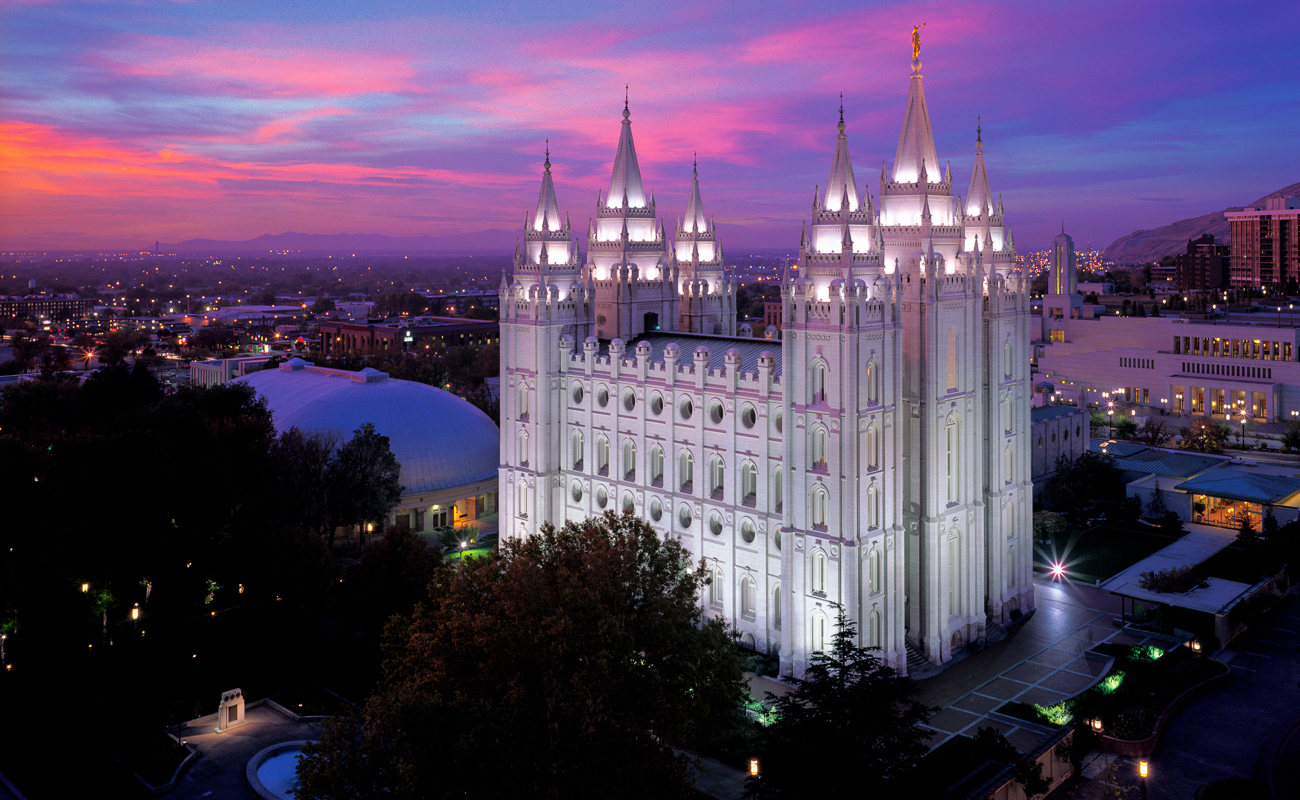
Mormonism
Mormonism is one of the unique and mystical religions in human history. To this day, tons of people don't a single thing or iota about what the creed of Mormonism is all about. It has been misunderstood, bashed, and celebrated. Yet, one thing is true. We live in a new generation, and truth about Mormonism must be shown to the people as the people are entitled to the unvarnished truth. Mormonism is popular in the West and throughout the world. Mormons have a large younger demographic of young men and young women with the emblems around their necks (that signifies their adherence to the Mormon faith). Many Mormons go out of their way to perform charity and many acts of sincere kindness. Although, morality and almsgiving never justify false teachings. There is nothing wrong with morality and respect shown to human beings, but we must rebuke false teachings. Mormons love to spread their religious views via commercials and movies. They also found new converts among some black people and persons of color, which is shocking to me (as Mormonism has a long history of racism; Mormons didn't allow black people in their priesthood until 1978). Mormonism is not related to mainstream Christianity for many reasons. Mormonism teaches that the church was in total apostasy until Mormonism transpired, and they believe that the Bible must add their books of the Book of Mormons, Doctrine and Covenants, Pearl of Great Price, etc., as equivalent in authority to the Bible. Mormonism teaches that God the Father has a physical body, and atonement was completed on Golgotha. These views of Mormonism are what I don't subscribe to at all. Many Mormons indeed outline outstanding moral character and are nice neighbors. Yet, Mormons are deceived by a false gospel. We have to keep it real during these latter days. Fundamentally, the theologies of Christianity and Mormonism are diametrically opposed to each other. The founder of Mormonism was a Freemason named Joseph Smith. Later, another innovator of Mormonism was another Freemason named Brigham Young. Joseph Smith lived in Illinois. Brigham Young lived in Utah, as Utah to this day is a major state in the Union filled with Mormon members and Mormon political plus cultural influences. This doesn't mean we become bigots and hate Mormons or practice discrimination. We believe in the freedom of religion, the Golden Rule, and treating people with dignity and respect. Although, we have the God given right to disagree with Mormonism peacefully and inspire souls to be saved.
Joseph Smith, founder of Mormonism
Joseph Smith lived a very short life, but his life story has influence for a long time after his life. He was a religious and political leader being the founder of Mormonism and the Latter-day Saint movement. Many people don't know about his life chronologically, but we saw see what his life was all about. He lived from December 23, 1805, to June 27, 1844. He was born in Sharon, Vermont. One of eleven children, Smith was a descendent of the influential colonial minister John Lothropp (1584–1653). Joseph's maternal grandfather, Solomon Mack (1732 – 1820), self-published a memoir about his own conversion experience. Smith's childhood was marked by hardship. Joseph Sr.'s drunkenness was a source of embarrassment. When seven-year-old Joseph Jr. underwent painful surgery for a leg bone infection, the boy refused alcohol. He used crutches for three years and walked with a slight limp thereafter. After Joseph Sr. fell for a ginseng swindle followed by years of crop failures, the Smiths lost the family farm and were forced to travel 300 miles west to frontier Western New York, where they took out a mortgage on a small farm. The Smiths engaged in folk magic, a relatively common practice in that time and place. Joseph, his father, and his older brother Alvin hunted for treasure under the direction of a seer named Luman Walters. Before Walters left professing he lacked sufficient power, he singled out young Joseph Smith as the young man who might be able to find the treasure. After Walters left, the Smiths continued using folk magic and a seer stone to look for buried treasure. Joseph, his family, and his acquaintances consistently listed September 21, 1823, the equinox, as a pivotal night in his life; the next day, he told his father that he had been visited in the night by a supernatural being who revealed the location of a nearby treasure. The Smith family believed in prophetic dreams or visions; both parents and his maternal grandfather had previously reported such dreams.
Weeks later, Alvin died of mercury poison when he was 25 years old due to medical error. He complained of stomach pains and called for a doctor who treated him with mercury salts. It was in his digestive system, and many doctors were helpless to dislodge it. Joseph Sr. and Jr.'s trust in authorities was further shaken when the Presbyterian minister presiding over the funeral suggested Alvin had gone to hell. The family became divided by faith: Joseph and his father refused to join the church, while Joseph's mother and siblings joined. One year after Joseph's dream, the Smiths reportedly attempted and failed to obtain the treasure. On September 29, 1824, Joseph Sr. published a notice in the paper announcing that he had briefly disinterred Alvin's body to confirm it had not been removed. Rumors spread that the Smiths had exhumed Alvin's body for use in magical treasure-seeking. In the wake of Alvin's death, the family faced further financial hardships and worked odd jobs. Smith and his father achieved a reputation as treasure seers for hire. In 1825, Joseph's friend Josiah Jr. told his father Josiah Stowell about the two Smiths, and Josiah Sr. hired them to locate for a lost mine he believed might be on his property in Pennsylvania. While boarding in Pennsylvania, Smith met Emma Hale, his future wife. After about a month in Pennsylvania, the company disbanded and Smith returned to Chenango, New York where he worked for Stowell and his friend Joseph Knight Sr., along with making trips to court Emma Hale.
In New York, Smith directed further treasure digs for Knight and Stowell until March. That month, Josiah Stowell's nephew Peter Bridgeman filed a complaint against Joseph Smith, alleging he was taking advantage of the elder Stowell by engaging in "glass-looking", or using fortune-telling to attempt to find treasure. Smith was arrested and taken to trial, where Josiah Stowell testified that he believed Smith had the ability to find treasures by use of a seer stone. While the precise result of the proceeding remains unclear, Smith was freed and returned home to Palmyra. Smith and Emma eloped and married on January 18, 1827, over the objections of her father Isaac Hale who regarded Smith as a charlatan. The couple began boarding with Smith's parents in Manchester, but after Smith promised to abandon treasure seeking, Hale offered to let the couple live on his property in Harmony and help Smith get started in business. Josiah Stowell and Joseph Knight, Smith's patrons, travelled to Palmyra for the anticipated recovery on the treasure on September 22, 1827. Smith, with Emma, left home that night, returning with a report that treasures had been recovered, but that he had hidden them inside a hollow log for safekeeping. Days later, he returned home with a set of plates which could be hefted but not viewed. Smith explained he had been commanded not to show the plates to anyone else. Upon hearing Smith had obtained a treasure, Smith's former treasure-seeking partners believed he had double crossed them and kept all the treasure to himself. After they ransacked places where they believed the plates might have been hidden, Smith decided to leave Palmyra
By October 1827, Joseph Smith and Emma moved to Pennsylvania. They were funded by a rich neighbor, Martin Harris, in exchange for a share in Smith's upcoming book. Joseph Smith dictated a text to his wife until April 1828, and Harris took over the dictation. Harris had the copy of the first 116 pages of manuscript. It was lost. Smith ended the dictation process and said that an angel taken away the plates as punishment for having lost the manuscript pages. On June 15, Emma and Joseph's first child, a son, was born but died the same day. Joseph joined his wife's church, the Methodists, becoming an "exhorter" for the group. He continued as a Methodist until one of his wife's cousins objected to inclusion of a "practicing necromancer" on the Methodist class roll, and Smith left the group. Smith's first revelation, which he and followers interpreted as a direct communication from God, announced that the material covered in the lost pages, which had been translated from the plates of Lehi, would be replaced by new translation drawn from the plates of Nephi. Smith resumed dictation of the book to Emma in September 1828, In April 1829, he was joined by Oliver Cowdery, a distant cousin from Vermont who had also dabbled in folk magic. This is witchcraft to be clear. The two worked on the manuscript, later moving into the home of Cowdery's friend Peter Whitmer, where they completed it. Joseph Smith dictated most of the Book of Mormon by looking into a seer stone placed in a stovepipe hat. This is pure witchcraft, forbidden in the OT and NT.

Joseph Smith dictated by using the same chocolate-colored seer stone he had used previously for treasure hunting placed in a hat. Dictation was completed about July 1, 1829. The completed work, titled the Book of Mormon, was published in Palmyra and first advertised for sale on March 26, 1830. Less than two weeks later, on April 6, 1830, Smith and his followers formally organized the Church of Christ, and small branches were established in Manchester, Fayette, and Colesville, New York. As in 1826, he was arrested and charged with being a "disorderly person." Although he was acquitted, he was again arrested, this time transported to Broome County, where he was again acquitted by a three-judge panel. He and Cowdery fled to escape a gathering mob. Cowdery, Peter Whitmer, and others traveled west on mission to proselytize to the Native Americans. The era of 1831 to 1837 changed Mormonism forever. Church co-founder Oliver Cowdery and others left New York for Ohio. There they encountered the hugely-popular Campbellite minister Sidney Rigdon. Rigdon, who had long preached a Restoration of the true church, converted to the new movement, bring along over a hundred followers. Rigdon's conversion dramatically swelled the ranks of the new organization. Rigdon visited New York, where he had extensive personal conversations with Smith. With growing opposition in New York, Smith announced a revelation that his followers should gather at Kirtland, Ohio.
Smith moved to Kirtland in January 1831. There, many of Rigdon's followers practiced Christian communism by sharing "From each according to his ability, to each according to his needs." In 1831, Smith began to privately teach the practice of polygamy, according to a variety of sources, including apostles Brigham Young, Orson Pratt, and Lyman E. Johnson. Levi Lewis, Emma's cousin, who had known Smith and Harris in Harmony, accused Smith of trying to seduce local girl Eliza Winters. According to Lewis, he had heard both Smith and Harris say that "adultery is no crime." That year, Smith told twelve-year-old Mary Rollins that God had commanded him to take her as a wife (which is a perversion done by Joseph Smith, as God Almighty never told that man to do such an act, period); she would later be recognized by the church as one of Smith's plural wives in February 1842 at the age of 23. The John Johnson family was baptized into Smith's church, including fifteen-year-old Marinda Johnson. For seven months, Smith and Rigdon lived at the Johnson farm. On March 24, 1832, a mob dragged Smith and Rigdon from their beds, beat them badly, and then tarred and feathered them. Simonds Ryder, writing in the 1860s, argued the attack was precipitated by recent converts having learned their property was to be placed under the church's control, a motivation corroborated in by S.F. Whitney.
Unlike Rigdon, Smith was tied to a board and stripped naked so a doctor could perform a castration. When the doctor refused to go through with the procedure, the mob tried to force poison down Smith's throat, chipping a tooth in the process. Despite the attack, Smith preached to his congregation the following morning and performed baptisms. His infant adopted son Joseph Murdock died of measles, the fourth child the Smiths had lost; his family linked his death to him being exposed to the cold during the attack. In the 1880s, minister Clark Braden repeated a rumor that claimed Smith practiced polygamy in Kirtland and was intimate with Marinda, a claim later popularized by Fawn Brodie in her psychobiography of Smith. Though the theory has largely been rejected by later scholarship, Mormon polygamy historian Todd Compton speculates on the timing of the 1832 attack: "The castration attempt might be taken as evidence that the mob felt that Joseph had committed a sexual impropriety... they had planned the operation in advance, as they brought along a doctor to perform it. The first revelations on polygamy had been received in 1831... Also, Joseph Smith did tend to marry women who had stayed at his house or in whose house he had stayed..:" In 1842, Marinda, age 26, became one of Smith's wives. Joseph Smith drew up a comprehensive city plan for Zion (Independence), calling for 24 Mormon temples and a grid of streets along with cardinal directions.
.jpeg)
Converts poured into Kirtland. By the summer of 1835, there were fifteen hundred to two thousand members in the vicinity, many expecting Smith to lead them shortly to the Millennial kingdom. In July 1831, Smith visited Independence, Jackson County, Missouri, and announced a revelation that the frontier hamlet was the "center place" of Zion. Smith again visited Missouri again in early 1832 to prevent a rebellion of prominent church members who believed the church in Missouri was being neglected. In Jackson County, existing Missouri residents resented the Latter-Day Saint newcomers for both political and religious reasons. Additionally, their rapid growth aroused fears that they would soon constitute a majority in local elections, and thus "rule the county." Tension increased until July 1833, when non-Mormons forcibly evicted the Mormons and destroyed their property. Smith advised his followers to bear the violence patiently until after they had been attacked multiple times, after which they could fight back. Armed bands exchanged fire, killing one Mormon and two non-Mormons, until the old settlers forcibly expelled the Mormons from the county. After petitions to the Missouri governor were unsuccessful, in May 1834 Smith organized and led a 200-man paramilitary expedition, called Zion's Camp, to aid church members in Jackson County, Missouri. As a military endeavor, the expedition was a failure. The men of the expedition were disorganized, a cholera outbreak killed 14, and they were severely outnumbered. By the end of June, Smith deescalated the confrontation, sought peace with Jackson County's residents, and disbanded Zion's Camp. Nevertheless, Zion's Camp transformed Latter Day Saint leadership because many future church leaders came from among the participants.
After the Camp returned to Ohio, Smith drew heavily from its participants to establish various governing bodies in the church. He gave a revelation announcing that in order to redeem Zion, his followers would have to receive an endowment in the Kirtland Temple, which he and his followers constructed. In March 1836, at the temple's dedication, many who received the endowment reported seeing visions of angels and engaged in prophesying and speaking in tongues. In 1836, Smith traveled to Salem, Massachusetts, to search for a trove of coins there. Smith announced a revelation that God had "much treasure in this city." After a month, he and his companions returned to Kirtland empty-handed. In 1837, a series of internal disputes led to the demise of the Kirtland community. In 1836, church apostle Orson Hyde was sent to the Ohio legislature to request a bank charter, while Oliver Cowdery went to Philadelphia and acquired plates to print notes for the proposed bank. On January 2, Hyde returned to Kirtland empty-handed, unable to persuade any legislator to sponsor a bill for a bank charter; Smith and other bank leaders proceeded with their plans, calling their organization an 'anti-banking society' and issuing bank notes. "Anti" and "ing" were engraved before and after "Bank"—in smaller typeface—on the printing plates Cowdery had previously purchased in Philadelphia. Smith encouraged his followers to buy the notes, in which he invested heavily himself. The bank failed within a month.
As a result of the bank failure, Mormons in Kirtland suffered losses and intense pressure from debt collectors. Smith was held responsible for the failure, and there were widespread defections from the church, including many of Smith's closest advisers. Construction of the Kirtland Temple had only added to the church's debt, and Smith was hounded by creditors. Smith and Rigdon were charged with illegally operating a bank; both were found guilty and fined. In June 1837, Smith was arrested on a charge that he had conspired to have critic Grandison Newell murdered. Solomon Denton and Orson Hyde testified for the prosecution. Smith was acquitted.
Also in 1837, Oliver Cowdrey, who was then assistant president of the church, accused Smith of engaging in a sexual relationship with a teenage servant in his home, Fanny Alger. Smith, who was married to Emma at the time, said little of the relationship, but he did specifically deny being guilty of adultery. Indeed, contemporaries of Smith agree that he had likely married Alger as a polygamous wife. Cowdrey was subject to excommunication proceedings for "seeking to destroy the character of President Joseph Smith, Jun., by falsely insinuating that he was guilty of adultery", but in 2014, the LDS church admitted Smith had had a marital relationship with Alger. By 1838, Smith was facing widespread dissension from high-profile church leaders, accusing him of being a fallen prophet, as well as mounting lawsuits. That night, he and Sidney Rigdon fled Kirtland to join up with the Mormons in Far West, Missouri. Smith's critics in Kirtland took control of the temple, but many Kirtland Mormons eventually followed Smith to Missouri. By 1838, Smith had abandoned plans to reclaim the city of Independence and instead declared the town of Far West as the new "Zion." In Missouri, the church also took the name "Church of Jesus Christ of Latter-Day Saints", and construction began on a new temple. In the weeks and months after Smith and Rigdon arrived at Far West, thousands of Latter-Day Saints followed them from Kirtland. Smith encouraged the settlement of land outside Caldwell County, instituting a settlement in Adam-ondi-Ahman, in Daviess County.
.jpg)
Later, Joseph Smith and his followers claimed to see visions and worked in Missouri. There were more tensions between Mormons and non-Mormons in Missouri. There was an event on August 6, 1838, when non-Mormons in Gallatin, Missouri, tried to prevent Mormons from voting, and a brawl ensued. The election day scuffles initiated the 1838 Mormon War. Non-Mormon vigilantes raided and burned Mormon farms, while Danites and other Mormons pillaged non-Mormon towns. In the Battle of Crooked River, a group of Mormons attacked the Missouri state militia, mistaking them for anti-Mormon vigilantes. Governor Lilburn Boggs then ordered that the Mormons be "exterminated or driven from the state." On October 30, a party of Missourians surprised and killed seventeen Mormons in the Haun's Mill massacre.
The following day, the Mormons surrendered to 2,500 state troops and agreed to forfeit their property and leave the state. Smith was immediately brought before a military court, accused of treason, and sentenced to be executed the next morning, but Alexander Doniphan, who was Smith's former attorney and a brigadier general in the Missouri militia, refused to carry out the order. Smith was then sent to a state court for a preliminary hearing, where several of his former allies testified against him. Smith and five others, including Rigdon, were charged with treason, and transferred to the jail at Liberty, Missouri, to await trial. During his imprisonment, Smith wrote a personal defense and an apology for the activities of his followers. Though he directed his followers to collect and publish their stories of persecution, he also urged them to moderate their antagonism toward non-Mormons. On April 6, 1839, after a grand jury hearing in Daviess County, Smith and his companions escaped custody, almost certainly with the connivance of the sheriff and guards. Later, Joseph Smith lived in Nauvoo, Illinois. The state of Illinois accepted Mormon refugees who gathered along the banks of Mississippi River, where Joseph Smith purchased high-priced, swampy woodland in the hamlet of Commerce. He attempted to portray the Mormons as an oppressed minority and unsuccessfully petitioned the federal government for help in obtaining reparations. He had many rich allies like John C. Bennett, the Illinois quartermaster general. Joseph Smith lived in a city named Nauvoo. The city had religious liberty. The charter also authorized the Nauvoo Legion, a militia whose actions were limited only by state and federal constitutions. Bennett and Smith became its commanders and were styled Major General and Lieutenant General respectively. As such, they controlled by far the largest body of armed men in Illinois. Smith appointed Bennett as Assistant President of the Church, and Bennett was elected Nauvoo's first mayor. Joseph Smith promoted baptism for the dead in 1840 and started the building on the Nauvoo Temple as a place of recovering lost ancient knowledge in 1841.
An 1841 revelation promised the restoration of the "fullness of the priesthood"; and in May 1842, Smith inaugurated a revised endowment or "first anointing." The endowment resembled the rites of Freemasonry that Smith had observed two months earlier when he had been initiated "at sight" into the Nauvoo Masonic lodge. At first, the endowment was open only to men, who were initiated into a special group called the Anointed Quorum. For women, Smith introduced the Relief Society, a service club and sorority within which Smith predicted women would receive "the keys of the kingdom." Smith also elaborated on his plan for a Millennial kingdom; no longer envisioning the building of Zion in Nauvoo, he viewed Zion as encompassing all of North and South America, with Mormon settlements being "stakes" of Zion's metaphorical tent. Zion also became less a refuge from an impending tribulation than a great building project. In the summer of 1842, Smith revealed a plan to establish the millennial Kingdom of God, which would eventually establish theocratic rule over the whole Earth. In Nauvoo, Smith secretly practiced plural marriage. He introduced the doctrine to a few of his closest associates, including Bennett. When rumors of polygamy (called "spiritual wifery" by Bennett) got abroad, Smith forced Bennett's resignation as Nauvoo mayor. In retaliation, Bennett left Nauvoo and began publishing sensational accusations against Smith and his followers. Many people turned against Mormons in Illinois by mdi 1842.
After one unknown assailant shot and wounded former Missouri governor Lilburn Boggs in May 1842, anti-Mormons promoted rumors that Smith's bodyguard, Peter Rockwell, was the gunman. In July, the recently excommunicated John C. Bennett published a letter claiming Smith had admitted sending Rockwell to 'fulfill prophecy' by killing Boggs; Bennett's claims were widely viewed as an attempt at vengeance for his recent excommunication, with even Gov. Ford later wrote that Bennett "everywhere accounted the same debauched, unprincipled and profligate character." Though the evidence was circumstantial, the new governor of Missouri petitioned Illinois for Smith's extradition, and Illinois Governor Carlin issued an arrest warrant. Certain he would be killed if he ever returned to Missouri, Smith went into hiding twice during the next five months, until the U.S. Attorney for Illinois argued that his extradition would be unconstitutional. Rockwell was later freed after a Missouri grand jury declined to indict him for the shooting. In May 1843, Smith married Helen Mar Kimball, age 14, the daughter of apostle Heber C. Kimball, who himself had two wives at that time and had encouraged his daughter to accept the marriage. In June 1843, Illinois Governor Thomas Ford issued a warrant to extradite Smith to Missouri on the outstanding charge of treason. Two law officers arrested Smith but were intercepted by a party of Mormons before they could reach Missouri. Smith was then released on a writ of habeas corpus from the Nauvoo municipal court. The events caused significant political fallout in Illinois.
On July 12, 1843, Joseph Smith dictated a revelation about polygamy; Hyrum read the revelation to the High Council on August 12, dividing the hierarchy into polygamist and anti-polygamist factions. On August 1, Smith assaulted County assessor Walter Bagby; Smith pleaded guilty, a fine was imposed, and it was paid. In September, Smith was charged with assault and battery against a Warsaw resident by the name of Bennett [not John C. Bennett]; arriving in Nauvoo with a warrant for Smith's arrest, Constable James Charles was informed that Smith had been tried and acquitted by the Nauvoo municipal court. On November 5, Smith became ill and suspected he had been poisoned, perhaps by wife Emma. In December 1843, Smith petitioned Congress to make Nauvoo an independent territory with the right to call out federal troops in its defense. Smith then wrote to the leading presidential candidates, asking what they would do to protect the Mormons. After receiving noncommittal or negative responses, he announced his own independent candidacy for president of the United States, suspended regular proselytizing, and sent out the Quorum of the Twelve and hundreds of other political missionaries. Smith launched a presidential campaign in 1844 on a platform which proposed gradually ending slavery, protecting the liberties of Latter Day Saints and other minorities, reducing the size of Congress, reestablishing a national bank, reforming prisons, and annexing Texas, California, and Oregon.
By early 1844, a rift developed between Smith and a half dozen of his closest associates. Robert D. Foster, a physician and general in the Nauvoo Legion, returned home to find Smith with his wife Sarah; She later confessed that Smith had preached polygamy and attempted to seduce her. After Joseph Smith made similar proposals to William Law's wife Jane, Law threatened to expose Smith unless he went before the High Council to confess and repent. On January 8, 1844, Smith removed Law from the First Presidency.
In March 1844, Smith secretly organized the Council of Fifty and tasked it with deciding which national or state laws Mormons should obey, establishing its own government, and finding a site where Mormons could live under theocratic law beyond the control of other governments—perhaps in Texas, Oregon, or Mexican-controlled California. On March 9, Smith preached a sermon on the plurality of gods—a doctrine the dissenters regarded as polytheistic blasphemy. On April 18, the Council unanimously elected Smith as "Prophet, Priest, and King"—a common description of Jesus Christ's offices.
Also on April 18, Smith excommunicated the dissenters from the church, alleging they were plotting to kill him. In response, Law and others formed the True Church of Jesus Christ of Latter-Day Saints, which taught that Smith was once a true prophet but had since fallen into sin. On May 23, Law and Foster testified before the grand jury in Carthage, which issued indictments against Smith for "adultery, fornication, and perjury." On May 26, Smith responded with another public denial.
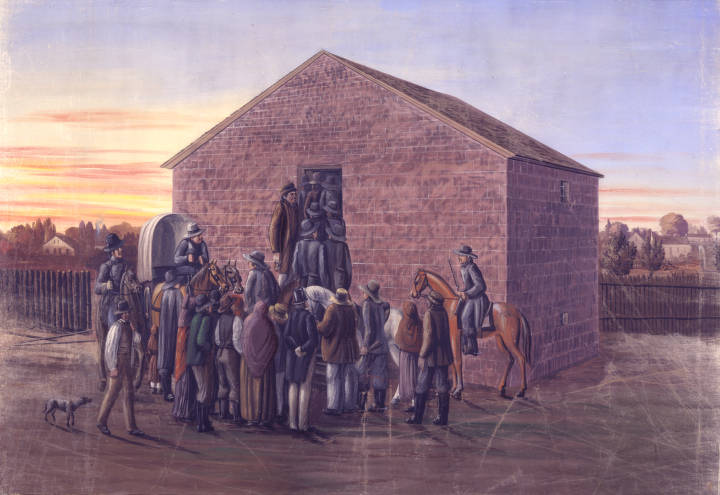
On June 7, the dissidents published the first issue of the Nauvoo Expositor, a four-page tract which "exposed" Smith's secret practice of polygamy and his intention to establish a theocracy. The paper similarly decried Smith's recent doctrine of "many Gods." Arguing the Expositor would provoke a new round of violence against the Mormons, the Nauvoo City Council declared the newspaper a public nuisance, and Smith ordered the Nauvoo Legion to assist the police force in destroying its printing press. During the council debate, Smith vigorously urged the council to order the press destroyed, not realizing that destroying a newspaper was more likely to incite an attack than any of the newspaper's accusations. On June 11, a warrant was issued for Smith's arrest on the charge of inciting a riot resulting in the destruction of the Expositor. Destruction of the newspaper provoked a strident call to arms from Thomas C. Sharp, editor of the Warsaw Signal and longtime critic of Smith.
On June 12, Constable David Bettisworth arrived in Nauvoo to place Joseph Smith under arrest and convey him to Carthage, but Smith was again freed by the municipal court. Bettisworth left but promised to return. Fearing further arrest attempts and mob violence, Smith mobilized the Nauvoo Legion on June 18 and declared martial law. Officials in Carthage responded by mobilizing a small detachment of the state militia, and Governor Ford intervened, threatening to raise a larger militia unless Smith and the Nauvoo City Council surrendered themselves. Smith initially fled across the Mississippi River to avoid arrest, but shortly returned and surrendered to Ford after he was given assurances of his safety. On June 25, Smith and his brother Hyrum arrived in Carthage to stand trial for inciting a riot. Once the Smiths were in custody, the charges were increased to treason, preventing them from posting bail. John Taylor, Willard Richards, and Dan Jones voluntarily joined the Smiths in the Carthage Jail. John S. Fullmer and Cyrus H. Wheelock visited the prisoners in jail, smuggling two pistols to Joseph in the process.
On June 27, 1844, Smith and the other prisoners were staying in the jailer's bedroom, which did not have bars on the windows. Although Smith both faced death threats and had a history of successful jailbreaks, he and the other prisoners were left guarded by only six men. Upon learning that Smith was relatively unguarded, an armed mob with blackened faces stormed the jail. Smith, mistaking the mob for the Nauvoo Legion, initially told a jailer: "Don't trouble yourself ... they've come to rescue me." The guards reportedly feigned defense of the jail by firing shots or blanks over the attackers' heads, and some of the Greys even reportedly joined the mob, who rushed up the stairs. The mob first attempted to push the door open to fire into the room, though Smith and the other prisoners pushed back and prevented this. Hyrum, who was trying to secure the door, was killed instantly with a shot to the face. Smith fired three shots from the smuggled pepper-box pistol, wounding three men, before he sprang for the window. He was shot multiple times before falling out of the window, crying, "Oh Lord my God!" He died shortly after hitting the ground, but was shot several more times by an improvised firing squad before the mob dispersed. Smith was the first U.S. presidential candidate to be assassinated. Immediately following Smith's death, non-Mormon newspapers were nearly unanimous in portraying Smith as a religious fanatic. Conversely, within the Latter Day Saint community, Smith was viewed as a martyred prophet.
After a public funeral and viewing of the deceased brothers, Smith's widow—who feared hostile non-Mormons might try to desecrate the bodies—had their remains buried at night in a secret location, with substitute coffins filled with sandbags interred in the publicly attested grave. The bodies were later moved and reburied under an outbuilding on the Smith property off the Mississippi River. Members of the Reorganized Church of Jesus Christ of Latter Day Saints (RLDS Church), under the direction of then-RLDS Church president Frederick M. Smith (Smith's grandson), searched for, located, and disinterred the Smith brothers' remains in 1928 and reinterred them, along with Smith's wife, in Nauvoo at the Smith Family Cemetery. These are the events of the controversial life of Joseph Smith, the founder of Mormonism.
.jpg/250px-Charles_William_Carter_-_Brigham_Young_-_Google_Art_Project_(3x4_cropped).jpg)
Brigham Young
Brigham Young was the famous religious and political leader of Mormonism. He was the 2nd President of the Church of Jesus Christ of Latter-Day Saints (the LDS church) from 1847 until his passing in 1877. He also was the first governor of Utah Territory from 1851 until his resignation in 1858. He was born on June 1, 1801, in Whitingham, Vermont. He was the 9th child of John Young and Abigail "Nabby" Howe. His father was a farmer, and the family moved into upstate New York at Chenango County. Young had little formal education. His mother taught him how to read and write. When Brigham Young was 12-year-old, his parents moved to the township of Genoa, close to Cayuga Lake. His mother died of Tuberculosis in June 1815. After her death, he moved with his father to Tyrone, New York. His father remarried a widow named Hannah Brown. Brigham Young learned a trade to be a carpenter, glazier, and a painter. He worked all over the place. Later, he experienced the Panic of 1819 and lived to Port Byron, which was Bucksville back then. Brigham Young married Miriam Angline Works, whom he had met in Port Byron in October 1824. They lived in a small house. They had a daughter, Elizabeth, who was born on September 26, 1825. He was a Reformed Methodist member at first. He studied the Bible and was baptized by immersion instead of sprinkling (as the NT never mentions sprinkling for baptism). His family lived in Oswego, New York in 1828. Later, he heard teachings from LDS leader Heber C. Kimball. Young worked as a carpenter and joined. He built and operated a saw mill. Later, he learned about the Book of Mormon by 1830. Young listened to Mormon missionaries and joined the Church of Christ or Mormons on April 9, 1832, after meeting Joseph Smith. Brigham Young preached the Book of Mormon all over the North and New England regions of America. Brigham Young was ordained a member of the Quorum of the Twelve Apostles at a conference on February 14, 1835.
Brigham Young continued in his LDS service. By May 4, 1835, Young and other apostles tried to convert people in the East Coast, especially in Pennsylvania and New York. He wanted to convert indigenous people, who he called "remnants of Joseph." In August 1835, Young and the rest of the Quorum of the Twelve issued a testimony in support of the divine origin of the Doctrine and Covenants. He oversaw the completion of the Kirtland temple and spoke in tongues at its dedication in 1836. He and his brother went on a mission to New York and New England. He visited the family of his aunt, Rhoda Howe Richards. They converted to the church, including his cousin Willard Richards. In August 1837, Young went on another mission to the eastern states. He then returned to Kirtland where he remained until dissenters, unhappy with the failure of the Kirtland Safety Society, forced him to flee the community in December 1837. He then stayed for a short time in Dublin, Indiana, with his brother Lorenzo before moving to Far West, Missouri, in 1838. He was later joined by his family and by other members of the church in Missouri. He became the oldest member of the Quorum of the Twelve Apostles when David Patten died after the Battle of Crooked River. When Joseph Smith arrived in Far West, he appointed Young, along with Thomas Marsh and David Patten, as "presidency pro tem" in Missouri.
Under Young's direction, the quorum organized the exodus of Latter Day Saints from Missouri to Illinois in 1838. Young also served a year-long mission to the United Kingdom. There, he showed a talent for organizing the church's work and maintaining good relationships with Joseph Smith and the other apostles. Under his leadership, members in the United Kingdom began publishing Millennial Star, a hymnal, and a new edition of the Book of Mormon. Young also served in various leadership and community organization roles among church members in Nauvoo. He joined the Nauvoo city council in 1841 and oversaw the first baptisms for the dead in the unfinished Nauvoo temple. He joined the Masons in Nauvoo on April 7, 1842, and participated in an early endowment ritual led by Joseph Smith that May and became part of the Anointed Quorum. Young and the other apostles directed the church's missionary work and the immigration of new converts from this point forward. Young served another mission to the Eastern seaboard. Brigham supported Joseph Smith's endorsement of plural marriage among church members. Brigham Young disagreed with Martha Brotherton who said that she was pressured by Young and Smith to accept polygamy. Young convinced Hyrum to accept polygamy too. Brigham Young married Lucy Ann Decker in June 1842. That was his first plural wife. Young knew her father, Isaac Decker, in New York. Lucy was still married to William Seeley when Young married her. Young supported her and her two children while they lived in their own home in Nauvoo. Lucy and Young had seven children together. Young was one of the first men in Nauvoo to practice polygamy, and he married more women than any other polygamist while in Nauvoo. While in Nauvoo, he married Clarissa Decker, Clarissa Ross, Emily Dow Partidge, Louisa Beaman, Margaret Maria Alley, Emmeline Free, Margaret Piece, and Zina Diantha Huntington. These wives bore him children after they moved to Utah. He also married in Nauvoo, but did not have children with Augusta Adams Cobb, Susannah Snively, Eliza Bowker, Ellen A. Rockwood, and Namah K. J. Carter. Eight of Young's plural marriages in Nauvoo were to Joseph Smith's widows.

In March 1844, Brigham Young was an inaugural member of the Council of Fifty, which later organized the Mormon exodus from Nauvoo. Young supported Joseph Smith's presidential campaign in 1844. After Joseph Smith was killed by a mob, Brigham Young was the acting church's president. Young led the church as president of the Quorum of the Twelve until December 5, 1847, when the quorum unanimously agreed to organize a new First Presidency with Young as president of the church. A church conference held in Iowa sustained Young and his First Presidency on December 27, 1847. Many Mormons left Young. Rigdon became the president of a separate church organization based in Pittsburgh, Pennsylvania, and several other potential successors emerged to lead what became other denominations of the movement. Later, Brigham Young condemned the counterfeiting after some Mormons counterfeited American and Mexican money. Young moved from Nauvoo after anti-Mormon violence. Brigham Young moved into Salt Lake Valley, which was part of Mexico back then (before it became Utah). Young organized the journey that would take the Mormon pioneers to Winter Quarters, Nebraska, in 1846, before continuing on to the Salt Lake Valley. By the time Young arrived at the final destination, it had come under American control as a result of war with Mexico, although U.S. sovereignty would not be confirmed until 1848. Young arrived in the Salt Lake Valley on July 24, 1847, a date now recognized as Pioneer Day in Utah. Two days after their arrival, Young and the Twelve Apostles climbed the peak just north of the city and raised the American flag, calling it the "Ensign of Liberty."
Brigham Young helped to form the city of Salt Lake, re-baptize and re-dedicate people, and led the church as the President of the Quorum of the Twelve Apostles, Young reorganized a new First Presidency and was sustained as the second president of the church on December 27, 1847, at Winter Quarters. Young named Heber C. Kimball as his first counselor and Willard Richards as his second. Young and his counselors were again sustained unanimously by church members at a church conference in Salt Lake City in September 1850. The Utah Territory was formed by Congress as part of the Compromise of 1850, and Young was the Governor of Utah Territory. Mormons built bridges, roads, forts, and irrigation projects. They made public welfare. The problem was that many Mormons formed a militia to issue a selective "extermination" order against male Timpanogos. After many wars, they made peace with the Native Americans.
Young supported slavery and its expansion into Utah and led the efforts to legalize and regulate slavery in the 1852 Act in Relation to Service, based on his beliefs on slavery. Young said in a racist 1852 speech, "In as much as we believe in the Bible ... we must believe in slavery. This colored race have been subjected to severe curses ... which they have brought upon themselves." Seven years later in 1859, Young stated in an interview with the New York Tribune that he considered slavery a "divine institution ... not to be abolished." So, Brigham Young was an anti-black racist. In 1856, Young organized an efficient mail service known as the Brigham Young Express and Carrying Company, which transported mail and passengers between Missouri and California. In 1858, following the events of the Utah War and Mountain Meadows Massacre, he stepped down to his gubernatorial successor, Alfred Cumming. Young was the LDS Church president for 29 years. He funded educational services for children. There was the Brigham Young Academy in 1876 and later there was the Brigham Young Unviersity. Young also organized a committee to refine the Deseret alphabet—a phonetic alphabet that had been developed sometime between 1847 and 1854. At its prime, the alphabet was used in two Deseret News articles, two elementary readers, and in a translation of the Book of Mormon. By 1870, it had all but disappeared from use. Young supported Mormon temples being built in Utah. There is the famous Salt Lake Tabernacle, St. Geroge, Manti, and Logan temples. His teachings are found in the 19 volumes of transcribed and edited sermons in the Journal of Discourses. The LDS Church's Doctrine and Covenants contains one section from Young that has been canonized as scripture, added in 1876. Brigham Young believed in heresies like blood atonement that excuses Jesus Christ's power to redeem eternal sin, Adam being the biological father of Jesus, and didn't want priesthood for men of black African descent. Young didn't want black people to participate in Mormon temple rites like endowment or sealings. These racist policies ended by 1978 by church president Spencer W. Kimball. There were the Utah War and the disputed role of Young in the Mountain Meadows Massacre (when over 120 men, women, and children were killed). Young was the richest man in Utah during his time (being involved in business ventures from banks to gas works) being worth $600,000 or $18,100,000 in 2025. Mormons were involved in some of the largest migrations of American cities creating about 350 towns in the Southwest. They traveled from the Rockies to the Sierra Nevada.
Before his death in Salt Lake City on August 29, 1877, Young suffered from cholera morbus and inflammation of the bowels. It is believed that he died of peritonitis from a ruptured appendix. His last words were "Joseph! Joseph! Joseph!", invoking the name of the late Joseph Smith Jr., founder of the Latter Day Saint movement. On September 2, 1877, Young's funeral was held in the Tabernacle with an estimated 12,000 to 15,000 people in attendance. He is buried on the grounds of the Mormon Pioneer Memorial Monument in the heart of Salt Lake City. A bronze marker was placed at the grave site June 10, 1938, by members of the Young Men and Young Women organizations, which he founded. Therefore, this concludes the long, controversial life of Brigham Young.
False Doctrines in Mormonism
The religion of Mormonism has many false doctrines that contradict mainstream Christianity, history, and other themes. Mormonism (or the Church of Jesus Christ of Latter-Day Saints, LDS) claims to be the true gospel and a revelation of the true God. Joseph Smith claimed that the Book Of Mormon was the most correct book of any book on Earth: “I told the brethren that the Book of Mormon was the most correct of any book on earth, and the keystone of our religion, and a man would get nearer to God by abiding by its precepts, than by any other book.” (History of the Church, Vol. 4, page 461). Yet, the Book of Mormon says that Jesus Christ was born in Jerusalem as found in Alma 7:10. The Bible clearly states that Jesus Christ was born in Bethlehem. The verse of 1 Nelpi 20: 1 (the 1964 edition) and the 1981 edition have changes. Many editions of the Book of Mormon have been edited in a massive level. Mormons like Brigham Young said that the Garden of Eden was in the United States, but the Pearl of Great Price 3:10-14 claims that the Garden of Eden was in the area of Assyria. Joseph Smith said he saw God the Father (and Jesus) in the first vision in 1820. Smith said he received the priesthood in 1829. In the Doctrine and Covenants 84:21-22 Smith said that you cannot see the face of God and live without the authority of the priesthood. How did Joseph Smith see God when he didn’t have the priesthood? The Bible says that the Father cannot be seen (1 Tim. 6:16). John 6:46, mentions that, “Not that anyone has seen the Father, except the One who is from God; He has seen the Father." If the book of Mormon is true, why have both National Geographic and the Smithsonian Institute rejected it as being archaeologically unreliable? What does the book of Mormon contain the word “church” in 1 Nephi 14:3, 9, 10, 12 which was set around 600 BC, yet the word church was not used until the time of Jesus (Matt. 16:18)?
Joseph Smith and Mormons claim that the present Christian Church church is false and Smith restored the "truth." Yet, the Bible says that the enemy shall not completely prevail over the church as believers in God have existed for over 2,000 years from the apostles, Claudius of Turin, the Waldensians, and other people. Christianity teaches that there is only one God. Mormonism teaches polytheism or that there are many gods. The Bible says that there are no other gods besides God (Isaiah 43:10; 44:6,8), Christianity teaches that humans can't become a god with their own parents and spirit wives. Mormonism teaches that you can. In fact, Mormonism teaches that God used to be a man on another planet who became a god and brought one of his wives with him to this world: “The Father has a body of flesh and bones as tangible as man’s..." (D&C 132:20). God warned us to not serve false gods (Exodus 20), which are really not gods by nature (Gal. 4:8). He warned us to believe in the true Christ–not the false ones of the cults (Matt. 24:24). Joseph Smith, Orson Pratt, Brigham Young, and other Mormons can't save us. Only God Almighty can save us. Mormons teach that Jesus Christ paid for all of our sins in the Garden of Gethsemane, but the Bible is clear that Jesus Christ paid for all of our sins on the Cross. Mormons teaches baptism for the dead including non-Mormons, but the Bible says that baptism is only reserved for living human beings. After we pass away physically, we are judged by God for our actions. No baptism can save us after death. Mormons believe in the old heresy that Jesus and Lucifer were spirit brothers (as found in Doctrines and Covenant 76:25-27) when the Bible says in the NT that Jesus created the world. Lucifer was originally an angel, possibly the first sentient being God created. Mormons believe that the Trinity is three separate Gods when the Trinity is one God in three distinct persons. In one exception, the second-largest Latter Day Saint denomination, the Community of Christ, is Trinitarian and monotheistic. Mormons believe that the people of the Book of Mormon lived in the western hemisphere, that Christ appeared in the western hemisphere after his death and resurrection, that the true faith was restored in Upstate New York by Joseph Smith, that the Garden of Eden was located in North America, and that the New Jerusalem would be built in Missouri. In the earliest days of Mormonism, Joseph Smith taught that the Indigenous peoples of the Americas were members of some of the Lost Tribes of Israel. Later, he taught that Mormons were Israelites, and that they may learn of their tribal affiliation within the twelve Israelite tribes. Members of the LDS Church receive Patriarchal blessings which declare the recipient's lineage within one of the tribes of Israel. The lineage is either through true blood-line or adoption. This view is similar to the old lie and heresy of British Israelism as Joseph Smith (whose ancestors came from Western Europe) was not a direct descendant of ancient Hebrews. Mormons believe that they must receive baptism, obey God's commandments, and all ordinances to be saved. Mormons teach that we must accept the teachings of the false prophet, Freemason, occultist, and polygamist Joseph Smith. We don't need to follow Smith, but God alone.
Masonic and Kabbalic Ties to Mormonism
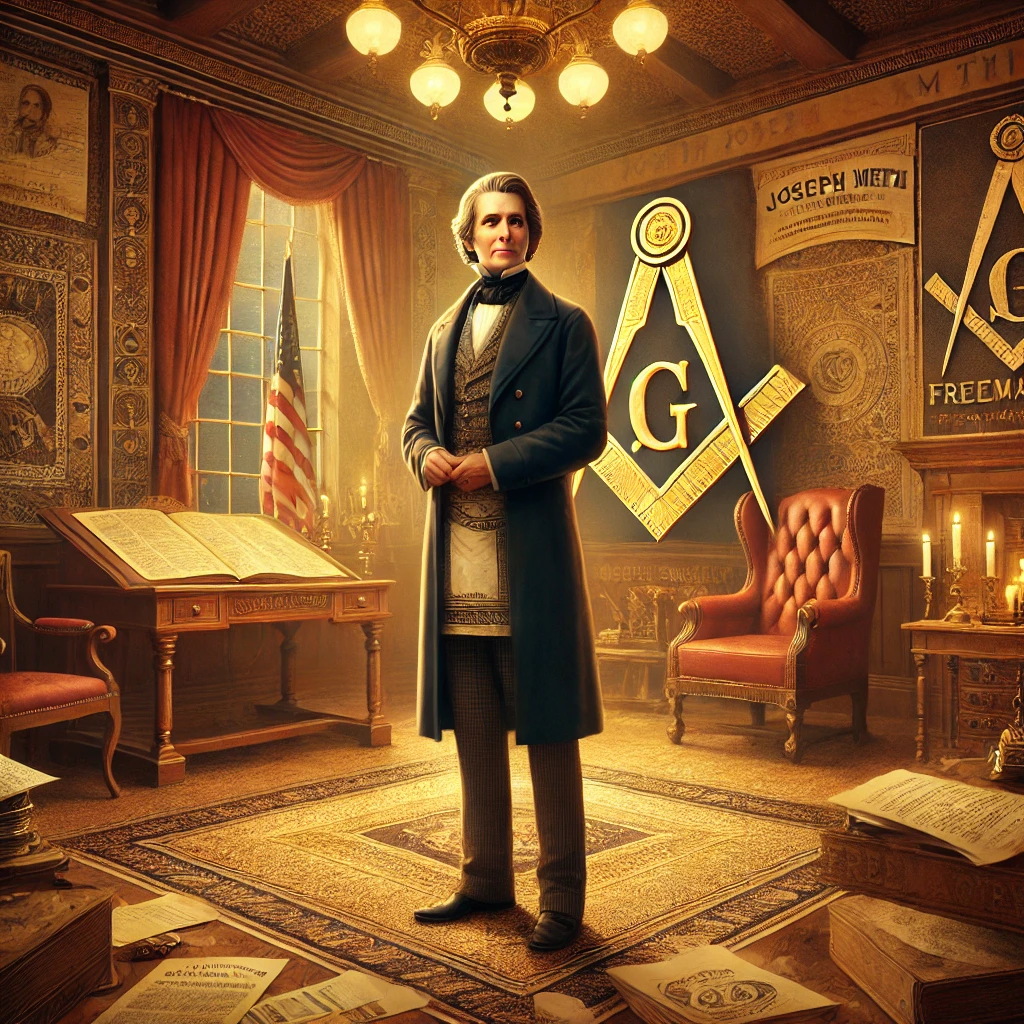
The religion of Mormonism has tons of connections to Freemasonry. Many members of Mormons are Freemasons like the founder of the Letter Day Saint movement Joseph Smith. Brigham Young was a Freemason. Also, there are many similarities between Mormon and Masonic rituals like the elements of the endowment ceremony and the stories of recovered ancient records. Smith was claimed to have stated that Mormonism had "true Masonry"; other leaders like Brigham Young said Masonic rituals were an "apostate endowment" corrupted from the rites given in Solomon's Temple that Smith had restored to its original form. Smith's older brother Hyrum joined Masonry in the 1820s, and his father, Joseph, Sr., may have been one as well while the family lived near Palmyra, New York. In the late 1820s, the western New York region was swept with anti-Masonic views after the murder of former Freemason William Morgan. The Anti-Masonic Party outlined dissent with Freemasonry too back in the 19th century. By the 1840s, Smith and most Latter Day Saints (including but not limited to many in Church leadership) had become Freemasons and joined the Masonic lodge in Nauvoo, Illinois. Soon after joining Freemasonry in March 1842, Smith introduced the temple ceremony referred to as the endowment which included a number of symbolic elements that were very similar to those in Freemasonry. Smith remained a Freemason until his death. In modern times, the Church of Jesus Christ of Latter-day Saints (LDS Church) has stated that its members may become Freemasons, and Freemasonry allows them to join. Early Mormons like Heber C. Kimball and John C. Bennett were Masons.
On October 15, 1841, Abraham Jonas (then the Grand Master of the Grand Lodge AF&AM of Illinois) issued a dispensation empowering a Lodge in Nauvoo and appointing the following Latter Day Saints to be its officers: George Miller as its first Worshipful Master, John Parker as its first Senior Warden, and Lucius Scovil as its first Junior Warden. The Lodge met on December 29, 1841, and accepted this dispensation. Officers were elected and appointed, and bylaws written and adopted. On February 17, 1842, the Lodge voted to hold off on installing its officers until March 15; a request was also sent to Grand Master Jonas for him to preside over that Installation, which he accepted. Joseph Smith Jr (who was not yet a Mason) was appointed to serve in a pro-tempore position as Grand Installing Chaplain for this Installation. He and Sidney Rigdon were initiated as Entered Apprentices in the evening after the Installation, thereby becoming members of the newly-formed Nauvoo lodge; Abraham Jonas presided over that degree ceremony. John C. Bennett helped to spread Freemasonry among the Mormons. There were over 300 Masons in the Nauvoo Lodge. Later, over 1,500 Mormon men in the city of Nauvoo were participating Masons. The Relief Society had Mormon women in it with degrees and rituals. Mormonism became so Masonic that Brigham Young, the 2nd President of the LDS Church was pictured with a Masonic Square and Compasses stickpin in the middle of his shirt. At least the first five presidents of the LDS Church have gone through the first three degrees of Freemasonry being the Entered Apprentice, Fellowcraft, and Master Mason.

LDS Church temple worship shares a number of symbols with Freemasonry, including concepts of aprons, tokens, ritualistic raising of the arms, etc. Many of these symbols have been adopted and adapted from Masonry to illustrate the principles taught in the movement. For example, whereas Masons exchange secret tokens to identify fellow Freemasons, the church has taught that these tokens must be given to sentinel angels so that disciples of Jesus Christ may be exalted to the highest glory of the kingdom of heaven. The LDS Church's temple garments also bear the symbols adopted and adapted from Masonry: those of the Square and Compass; although the movement has imbued these symbols with religious meaning that wholly differs from the meaning of the symbols as used in Freemasonry. The Square and Compasses were a part of the first Angel Moroni statue, hanging above a horizontal Moroni (which doubled as a weather vane). Additionally, the symbols of the square and compasses exist in other ancient traditions far older than Masonry such as in Christian art and the Chinese legend Fuxi and Nüwa. According to historian Richard Lyman Bushman, "Portions of the temple ritual resembled Masonic rites that Joseph had observed when a Nauvoo lodge was organized in March 1842 and that he may have heard about from Hyrum, a Mason from New York days. The Nauvoo endowment was first bestowed just six weeks after Joseph's induction. The similarities were marked enough for Heber Kimball to quote Joseph saying that Freemasonry 'was taken from the priesthood but has become degen[e]rated. but many things are perfect.'"
Brigham Young is quoted as describing the origin of the temple rituals in a fashion that directly relates to the story of Hiram Abiff from Masonic folklore. Although Young changed some of the key Masonic aspects about Abiff to fit better with the view of LDS Church temples, the story is the same. The LDS Church allows Mormons to be Masons if they desire. People who are Christians and disagree with Mormonism and Freemasonry are Ed Decker, part of the Saints Alive Ministries, William Schnoebelen, and other people. William Schnoebelen's Masonry: Beyond the Light in 1991 conclusively prove that Masonry is not compatible with Christianity.
In recent years, many people have found many links between Mormonism and the Kabbalah. The Kabblah is an occult philosophical movement that believes that 10 emanations from God (to Kabbalists, God is called Ein Sof or the infinite with a number of divine forms or gods that emanated from Ein Sof. The Ein Sof is part of the Sefiroth of the faces of God in the Kabbalic Tree of Life) were involved in creating the physical Universe as we know it. The Kabbalah is a mystical interpretation of the religion of Judaism. They have other tenets too. Such information has been found in articles like "Joseph Smith and Kabbalah: The Occult Connection" by Lance S. Owens. This work was originally published in Dialogue: A Journal of Mormon Thought, Vol. 27, No. 3, Fall 1994, pp. 117-194. The paper received considerable notice, and in 1995 the Mormon History Association recognized Joseph Smith and Kabbalah: The Occult Connection with its annual award for the best article in Mormon studies. The paper now has an extensive citation history. Joseph Smith knew of the Kabbalah and his sermon "King Follett Discourse" had theosophic themes. In Kabbalah, God has dual form of male and female allied Hokmah and Binah (God's first emanated forms). In Gnosticism, Kabbalah, Rosicrucianism, etc., there is the concept of the sacred wedding between the masculine and feminine energies. There is a Christian Kabbalah during the Renaissance era of history. Freemasonry has long praised the Kabbalah too from Albert Pike to Manly P. Hall. Occultist Arthur Edward Waite wrote in his 1923 Encyclopedia of Freemasonry that much of the heart of Masonry came from Kabbalah. Mormon author Joe Sampson believed that Joseph Smith's writings is similar to the structure of the Kabbalistic Tree of Sefiroth. He believed that Smith's Book of Abraham translation from Egyptian papyrus was a Kabbalistic work. Joseph Smith's friend and convert to Mormonism Alexander Neibaur had Kabbalistic writings.
Racism in Mormonism
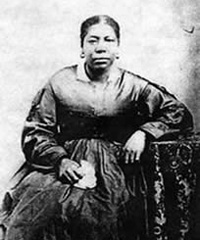
It is no secret that Mormonism has a long history with racism. Not all Mormons are racists, but many of the founders and early members of Mormonism were stone cold racists. Mormonism has a long history of enslavement, exclusion, and discrimination of black people. In recent decades, Mormons have changed their policies to promote more inclusion of black people and people of color. To this day, I don't know how any black person can be a Mormon, but black people have been involved with the Latter Day Saint movement since its inception in the 1830s. From the mid-1800s to 1978, Mormonism's largest denomination – the Church of Jesus Christ of Latter-day Saints (LDS Church) – barred Black women and men from participating in the ordinances of its temples necessary for the highest level of salvation, and excluded most men of Black African descent from ordination in the church's lay, all-male priesthood. During that time the LDS Church also opposed interracial marriage, supported racial segregation in its communities and church schools, and taught that righteous Black people would be made white after death. The temple and priesthood racial restrictions were lifted by church leaders in 1978. In 2013, the LDS Church disavowed its previous teachings on race for the first time.
The priesthoods of most other Mormon denominations, such as the Bickertonite and Strangite churches, have always been open to members of all races. The same is true in Mormonism's second-largest denomination, the Community of Christ (formerly known as the Reorganized Church of Jesus Christ of Latter Day Saints or the RLDS), except for a few years in which Black people were barred from the priesthood. More conservative denominations, such as the Fundamentalist Church of Jesus Christ of Latter-Day Saints (FLDS), the Apostolic United Brethren (AUB), and the True and Living Church of Jesus Christ of Saints of the Last Days (TLC), continue to exclude Black people as of 2018.
The LDS Church's views on Black people have alternated throughout its history. Early church leaders' views on Black slavery went from neutrality to abolitionism to a pro-slavery view. As early as 1844, church leaders taught that Black people's spirits were less righteous in premortal life (before birth). Mormonism founder Joseph Smith and his successor as church president with the most followers, Brigham Young, both taught that the skin color of Black people was the result of the curses of Cain and Ham. From the beginning, Black people have been members of Mormon congregations and Mormon congregations have always been interracial. When the Mormons migrated to Missouri, they encountered the pro-slavery sentiments of their neighbors. Joseph Smith upheld the laws regarding Black enslavement, and affirmed the curse of Ham as placing his descendants into slavery, "to the shame and confusion of all who have cried out against the South." After the Mormons were expelled from Missouri, Smith took an increasingly strong anti-slavery position, and several Black men were ordained to the LDS priesthood.
The first reference to dark skin as a curse and mark from God in Latter Day Saint writings can be found in the Book of Mormon, published in 1830. It refers to a group of people called the Lamanites and states that when they rebelled against God they were cursed with "a skin of blackness" (2 Nephi 5:21).
The mark of blackness was placed upon the Lamanites so the Nephites "might not mix and believe in incorrect traditions which would prove their destruction" (Alma 3:7–9). The Book of Mormon records the Lord as forbidding miscegenation between Lamanites and Nephites (2 Nephi 5:23) and saying they were to stay "separated from thee and thy seed [Nephites], from this time henceforth and forever, except they repent of their wickedness and turn to me that I may have mercy upon them" (Alma 3:14). However, 2 Nephi 26:33 states: "[The Lord] inviteth them all to come unto him and partake of his goodness; and he denieth none that come, black and white, bond and free, male and female...and all are alike unto God, both Jew and Gentile." Although the Lamanites are labelled as wicked, they actually became more righteous than the Nephites as time passed (Helaman 6). Throughout the Book of Mormon narrative, several groups of Lamanites did repent and lose the curse. The Anti-Nephi-Lehies or Ammonites "open[ed] a correspondence with them [Nephites], and the curse of God did no more follow them" (Alma 23:18). There is no reference to their skin color being changed. Later, the Book of Mormon records that an additional group of Lamanites converted and that "their curse was taken from them, and their skin became white like unto the Nephites… and they were numbered among the Nephites, and were called Nephites" (3 Nephi 2:15–16). In the Mormon verses of Jacob 3:8-9, it condemns prejudice against people with dark skin, but Joseph Smith promoted the myth of the curse of Ham and Cain tied to dark skin. Many Mormons early on had black people, both free and enslaved people. The first known Black Latter-day Saint was "Black Pete", who joined the Church in Kirtland, Ohio, and there is evidence that he held the priesthood. Other African Americans, including Elijah Abel in 1832, Joseph T. Ball in 1835 or 1836 (who also presided over the Boston Branch from 1844–1845), and Walker Lewis in 1843 (and probably his son, Enoch Lovejoy Lewis), were ordained to the priesthood during Smith's lifetime. William McCary was ordained in Nauvoo in 1846 by Apostle Orson Hyde. Two of the descendants of Elijah Abel were also ordained Elders, and two other Black men, Samuel Chambers and Edward Leggroan, were ordained Deacons. Joseph Smith, before he died wanted a gradual end to slavery against black people by 1850 during his Presidential campaign.
Joseph Smith said that Black and white people would be better off if they were "separate but legally equal", advocating segregation: "Had I anything to do with the negro, I would confine them by strict law to their own species, and put them on a national equalization." He also said, "They have souls, and are subjects of salvation. Go into Cincinnati or any city, and find an educated negro, who rides in his carriage, and you will see a man who has risen by the powers of his own mind to his exalted state of respectability." Brigham Young believed in the racist view of that the curse of Ham (which isn't mentioned in the Bible) justified black enslavement. Joseph Smith believed that dark skin on people like me (with black African ancestry) as cursed by God which is a lie. Young said that God's curse on Black people would someday be lifted, and they would be able to receive the priesthood after death. In 1978, when the church ended the temple and priesthood bans, apostle Bruce R. McConkie taught that the ancient curses of Cain and Ham were no longer in effect. Church leaders disavowed the idea that black skin was the sign of a curse for the first time in 2013. Several Black Mormons were told that they would become white. Hyrum Smith told Jane Manning James that God could give her a new lineage, and promised her in his patriarchal blessing. The LDS Church published a 2013 essay refuting these ideas, describing prior church teachings justifying the restriction as racial "folk beliefs." It said that Blackness in Latter-day Saint theology is a symbol of disobedience to God, and not necessarily a skin color. This is of course nonsense.A Sunday School teacher was removed from their position for teaching from this essay in 2015.
On February 6, 1835, an assistant president of the church, W. W. Phelps, wrote a letter theorizing that the curse of Cain survived the deluge by passing through the wife of Ham, son of Noah, who according to Phelps was a descendant of Cain. (Messenger and Advocate 1:82). In addition, Phelps introduced the idea of a third curse upon Ham himself for "marrying a black wife". (Messenger and Advocate 1:82) This Black wife, according to Phelps, was not just a descendant of Cain, but one of the pre-flood "people of Canaan", not directly related to the Biblical Canaanites after the flood.
Many prominent church members enslaved people, including William H. Hooper, Abraham O. Smoot, Charles C. Rich, Brigham Young and Heber C. Kimball. Members bought and sold people, gave the church enslaved people as a tithe, and recaptured those who escaped their enslavers. In California, Black enslavement was illegally tolerated in the Mormon community of San Bernardino despite California laws banning the practice. After the Civil War, the US government freed enslaved people and allowed many Black adults to vote. By the early 1920s, there were hundreds of members of the Ku Klux Klan (KKK) in Utah. Although Church leaders opposed the KKK, several LDS members were Klan members. The NAACP criticized the church's position on civil rights, led anti-discrimination marches and filed a lawsuit against the church in response to its practice of not allowing Black children to be Boy Scout troop leaders. Students from other schools protested against BYU's discriminatory practices and the church's racial restrictions. The church issued a statement supporting civil rights, and changed its Boy Scout leader policy. The apostle Ezra Taft Benson criticized the civil rights movement and challenged accusations of police brutality. Black athletes protested against BYU's discriminatory practices by refusing to play against the school's teams. After the reversal of the temple and priesthood ban in 1978, LDS leaders were relatively silent about civil rights and eventually formed a partnership with the NAACP. BYU, apostle Dallin H. Oaks denounced racism, endorsed the message that "Black lives matter" (discouraging its use to advance controversial proposals), and called on church members to root out racist attitudes, behavior and policies. Politician Stewart Udall wrote a strongly-worded public letter in 1967 criticizing the church's racial restrictions.
During the 20th century, many LDS leaders opposed the civil rights movement. In recent decades, the church has condemned racism and increased its outreach efforts in Black communities. It is still accused of perpetuating implicit racism by not apologizing for, acknowledging, or adequately counteracting the effects of its past beliefs and discriminatory practices like segregation. Church leaders have worked with the National Association for the Advancement of Colored People (the NAACP) since the 2010s, and have donated millions of dollars to Black organizations. What began during founder Smith's lifetime as an estimated 100 free and enslaved Black Mormons, has grown to an estimated 400,000 to one million Black LDS Church adherents worldwide as of 2019, and at least five LDS Church temples in Africa. Fourteen more temples are at some stage of development or construction on the continent, in addition to several temples among communities of the African diaspora such as the Dominican Republic and Haiti. The Community of Christ has congregations in twelve African nations, with membership increasing. In 2017, the LDS Church released a statement condemning racism in response to the white-nationalist Unite the Right rally in Virginia. According to a 2016 survey of self-identified Mormons, over 60 percent said that they know (37 percent) or believe (25.5 percent) that the priesthood and temple ban was God's will; another 17 percent said that it might be true, and 22 percent said that they know (or believe) that it was not God's will. A 2023 survey of over 1,000 former church members in the Mormon corridor found race issues in the church to be one of the top three reported reasons why they had disafilliated. Famous Black Mormons now include people like singer Gladys Knight, Ezekiel Ansah, Alan Cherry, the late Eldridge Cleaver, Alvin B. Jackson, Thurl Bailey, Burgess Owens, Catherin Stokes, Winston Wilkinson, and other people.
As of 2026, the church officially has not apologized for its past racist teachings and policies around Black people. How can anyone be part of a religion like Mormonism when its founder, Joseph Smith, was a stone cold racist (along with Brigham Young)? It doesn't make any sense.
Prominent Mormon Influence and Mormon Figures
Mormonism have massive powerful influence in America and worldwide. Many of them are billionaires and own lands globally. They have a massive evangelism institution. Mitt Romney is one of the most famous Mormons in human history. He was once a moderate decades ago and became a Reagan conservative as time came about. His father was a moderate Republican too. Mitt Romney ran for President famously in 2012 to compete against President Barack Obama. He lost to Obama, and Romney recently retired from being a U.S. Senator. Mitt Romney is a fifth generation Mormon who was once the governor of Massachusetts. He was a missionary in France. He and his wife are parents of five sons. He helped to rescue the scandal filled Salt Lake City Olympics Games back in 2002. There are many members of the Mormon church who are leaders in government, economics, entertainment, science, education, and sports. The Mormon Bill Marriot owns the Marriott International led family restaurant business. Other famous Mormons who lived and passed are Clayton Christensen, Harry Reid, Mike Lee, Jason Chaffetz, Jon Huntsman, the late Mia Love, Kim B. Clark, and Marie and Donny Osmond.
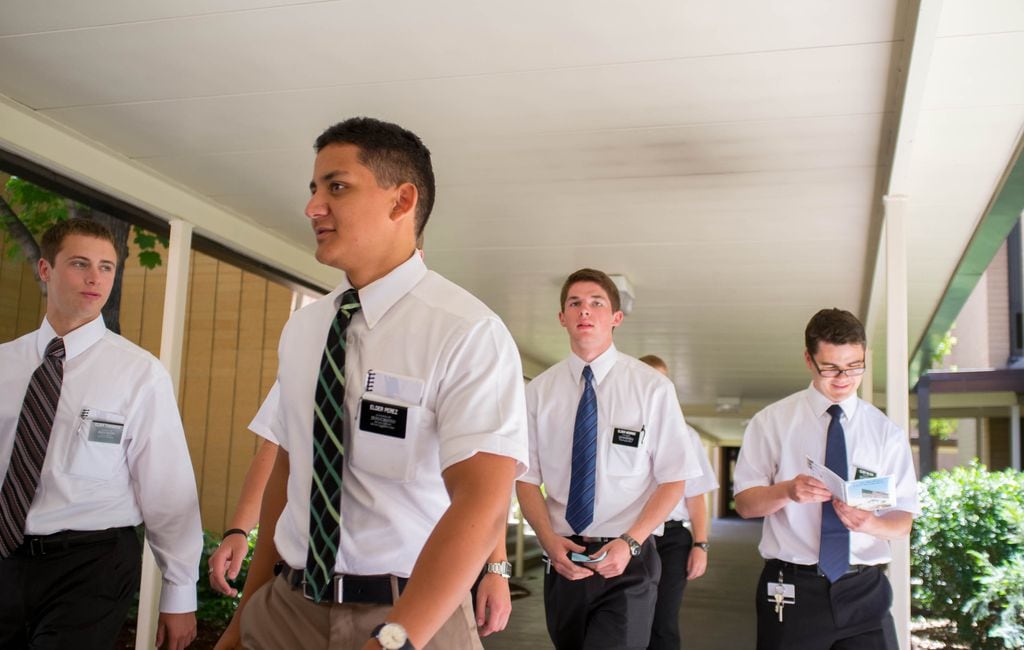
The Culture of Mormons
The culture of Mormonism is a very conservative culture. Family is preeminent in their cultural essence. That is why Mormons have large families in the nuclear family structure. They spread their faith worldwide. Mormons follow strict lifestyle changes, repents of sins, and have a strict code of conduct. Many of them pray, fast, and study the Bible and Mormon books, and they attend Sunday worship services regularly. Cultural isolation has inspired many Mormons to be very much community oriented. By 2010, 13-14 percent of Mormons live in Utah. Utah is more politically and cultural conservative than people living in cosmopolitan urban cetners in America. Utah Mormons often emphasize pioneer heritage more than international Mormons, who generally are not descendants of the Mormon pioneers. Many Mormons help the poor and build churches. Many Mormons contribute 10 percent of their income to the church as tithing. Paying tithing is one of the prerequisites for entrance into Mormon temples. Many LDS young men, women, and elderly couple go to proselyting missions. Some ride bicycles to spread their religious views too. Mormons adhere to the Word of Wisdom, a health law or code that is interpreted as prohibiting the consumption of tobacco, alcohol, coffee and tea, while encouraging the use of herbs, grains, fruits, and a moderate consumption of meat. The Word of Wisdom is also understood to forbid other harmful and addictive substances and practices, such as the use of illegal drugs and abuse of prescription drugs. Mormons are encouraged to keep a year's supplies, including food and financial reserves. Mormons also oppose behaviors such as viewing pornography and gambling. Many practicing adult Mormons wear religious undergarments that remind them of covenants and encourage them to dress modestly. Latter-day Saints are counseled not to partake in any form of media that is obscene or pornographic in any way, including media that depicts graphic representations of sex or violence. Tattoos and body piercings are generally discouraged. There are diverse Mormons like LDS (or Latter Day Saints), Fundamentalist Mormons, Liberal Mormons (or progressive Mormons), and Cultural Mormons.
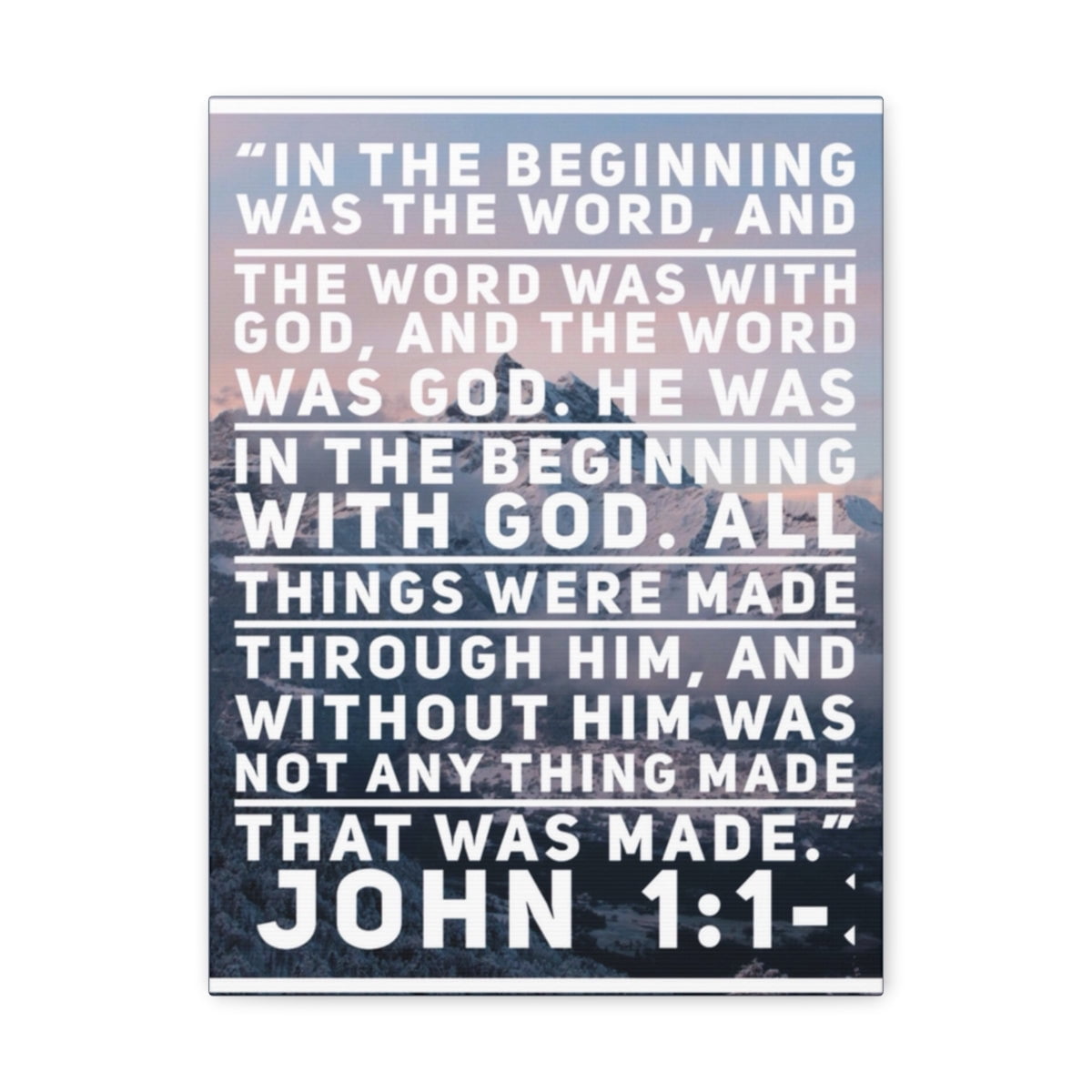
Verses to Witness to Mormons
In our time, we have to show the truth in love. The following are some of the false doctrines in Mormonism and rebuttals to them.
1. False Doctrine: Mormonism teaches that the Godhead is made up of three separate Gods.
Truth: The Bible teaches the there is only one God in 3 distinct, separate person (the Father, the Son, and the Holy Spirit as the Holy Trinity). God created man in our image. That means that man is a creation of God, not being God. Humans are also tri-partite. In our words, we humans are made up of three distinct persons of body, mind, and spirit. Yet, we are still one human being with our body, mind and spirit. In the Bible, the Father sent the Son as found in John 5:36, the Son was the propitiation (payment) for our sin (as mentioned in 1 John 4:10), and the Holy Spirit reproves us, teaches us, guides us and testifies of Jesus Christ (as mentioned in John 14:26). As the Bible says,
"For there are three that bear record in heaven, the Father, the Word, and the Holy Ghost: and THESE THREE ARE ONE."
-I John 5:7
Matthew 28:19 mentions that, "Go ye therefore, and teach all nations, baptizing them in the name of the Father, and of the Son, and of the Holy Ghost."
2. False Doctrine: Mormonism teaches that God the Father was once a man.
Truth: The Bible mentions that the Creator of the University Father God is Spirit, not man. Only Jesus Christ, the Son of the living God, is both man and God:
Numbers 23:19 says that "God is not a man that he should lie; neither the son of man that he should repent."
3. Mormons teach that humans can become gods and goddesses ruling their own realms or planets.
Truth: There is no spiritual, scientific, or social evidence of humans being gods and goddesses. Human beings are fallible creatures.
4. False Doctrine: Mormon doctrine teaches that salvation is made by works and ordiances like tithing, temple marriage, commandments along with grace.
Truth: The Bible teaches that salvation is by faith through grace, not of works. Works comes after salvation to be a sign of a person being saved.
5. False Doctrine: Mormonism teach that all humans lived as spirits with the Heavenly parents before they were born on Earth.
Truth: The Scriptures teach that all souls existed from God, and God knew of these souls before all humanity's births, but there are no heavenly parents: The human soul existed with the establishment of the human body. Jeremiah 1:5 – “Before I formed you in the womb I knew you, before you were born I set you apart; I appointed you as a prophet to the nations.”
6. False Doctrine: Mormonism teach the baptism for the dead in temples in finding deceased ancestors.
Truth: Baptism is immersion for the living alone who are confessed believers, not for the dead. Paul teaches that people shouldn't be obsessed with endless genealogies, and after death, all humans experience judgement from the Lord. For example, Hebrews 9:27 states that: "And just as it is appointed for man to die once, and after that comes judgment."
7. False Doctrine: Mormonism teaches that the current President of the Mormon Church is a prophet and direct mouthpiece of God holding authority equal or greater than the Bible.
Truth: The truth is clear that a root filled with deception can't produce good fruit. Therefore, Joseph Smith promoted false doctrines, so his fruit can't have authority equal or greater than the Bible. Joseph Smith shown heresies, tried to escape jails for allegations of criminal acts, and contradicted himself. As the Bible declares, "To the law and to the testimony: if they speak not according to this word, it is because there is no light in them." (Isa. 8:20)

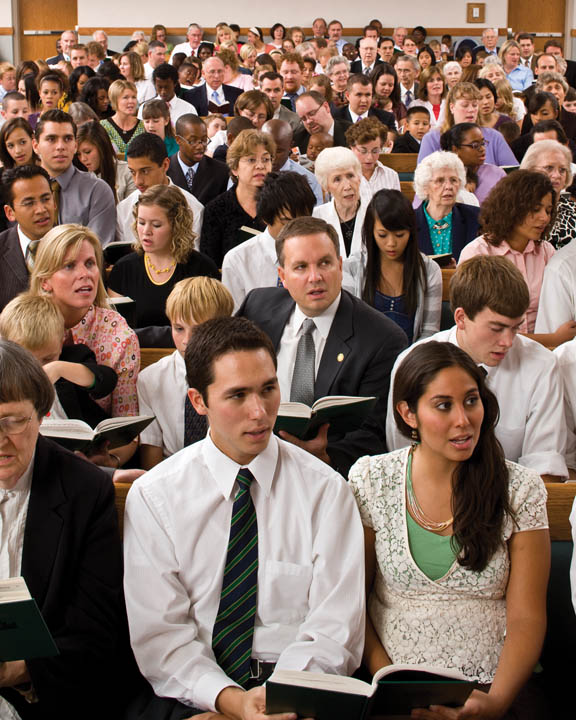
Epilogue
One of the most popular religions on Earth is Mormonism. It has been around for a very long time, and it's divided into different types like many creeds. It was founded by the Freemason Joseph Smith who lived a short life of controversy, spiritual deception, and being a deluded soul unfortunately. His family suffered many illnesses and emotional pain. Followers of Mormonism went to Utah and other places in America. The Freemason Brigham Young was a one innovator of Mormonism too. The Mormon religion has mystical and unique spiritual heresies like calling humans Gods with the chance of creating their own spiritual children in other planets and following the baptism of the dead ceremonies. To this day, Mormonism has grown to be one of the most powerful religions on Earth. Many famous people in Mormonism are Mitt Romney, the late Mia Love, Gladys Knight, Brandon Flowers, Donny and Marie Osmond, David Archuleta, and other human beings. The good news is that numerous individuals have left Mormonism to be born again. To be clear, dissent with Mormonism peacefully and with logical explanations is not bigotry. Bigotry is irrational, evil hatred of Mormonism because some people are Mormons, it is any form of discrimination of Mormons because they are Mormons. Bigotry is also dehumanization of Mormon people. I reject hatred, discrimination, and dehumanization of Mormon people. Mormons like all people have the right to work, live their own lives, and be free without oppression. Yet, I do believe in peaceful dissent with the doctrines or theological views of Mormonism. At the end of the day, we want the truth to be embraced by all people in the world.
By Timothy

No comments:
Post a Comment