Monday, September 06, 2021

Fall 2021 Part 4


The Glory of Africa Part 11


I always love Africa a great deal as a black American. After almost 40 years of me living on this Earth, my core convictions have remained. I always believe in the truth. In 2021, it is the perfect time to describe the Glory of Africa again. In this new decade of the 2020's, more movements are in abundance. Technology has evolved in a great measure from Zoom to new versions of the iPhone. There are new statistics coming out. Yet, we have the same goal of black liberation in our minds and souls. After all of these years, I certainly have a great appreciation of the global black African Diaspora. Long ago, the Afro-Argentine leader Maria Remedio Del Valle fought for the independence of Argentina from Spanish rule. She helped soldiers on the field. She was brave, and by 2013, Argentina declared November 8 as the nationally recognized day to honor Afro-Argentines (and Black Culture). She (who is a black woman) is the mother of modern day Argentina. Black women are the mothers of the human family period. 

Portia White was an Afro-Canadian operatic contralto who was an international singing super star. Her mother were descendants of the Black Loyalists, and her paternal grandparents were slaves in Virginia before moving into Canada. She sang at the church at an early age. The black man Jaime Hurtado Gnzalez was an Afro-Ecuadorian social activist and politician. He promoted social justice. Victoria Santa Cruz was an Afro-Peruvian activist and artist who championed Black Peruvian identity and visibility globally. She promoted dance. Her poem of Me Gritaron Negra was a Black pride anthem across Latin America. Patrice Lumumba fought imperialism in the Congo and fought for liberation in Africa. Patrice Lumumba stood up courageously for freedom for African people in opposition to injustice. In America, the hero Malcolm X spoke out against racism and advanced Pan-African unity without apology. So, Africa and the African Diaspora have a long legacy of advancing creativity, resiliency, activism, love, and justice. During this era of our time, we will continue to stand for  environmental justice, black liberation, Black Love, economic justice, social justice, human rights, environmental justice, truth, and integrity. Africa is our Homeland as part of Humanity. From Africa, humanity traveled all over the world. The Glory of Africa is always in our DNA, in our thinking, and in our spirits. That is why I have an eternal love of Africa, Blackness, and freedom. 


Diverse African Cultures


There are tons of African cultures in Africa. The Yoruba people have a large amount of culture in Africa. They live in Nigeria, Benin, Togo, and other parts of Western Africa. 35 million of the Yoruba people live in Africa.  Most Yoruba people spoke with a Niger-Congo language. They are known to be involved in the Empire of Oyo. They are known to create terracotta, stone, and copper alloy structures (for purposes of art, architecture, music, and for other methods). Oral tradition is a big part of their way of life. Today, most of the Yoruba are Christians or Muslims. They have a traditional religion that have songs, histories, and belief in Orisa. Orisa or Orisha to the traditional religion are about manifestations of God. Some are known as Ogun (a god of metal, war, and victory), Shango (a god of thunder), Esu Elegbara, etc. To the traditional religion, the supreme God's principal manifestation if Olorun. The two other principal forms of the supreme God are Olodumare—the supreme creator—and Olofin, who is the conduit between Òrunn (Heaven) and Ayé (Earth). Oshumare is a god that manifests in the form of a rainbow, also known as Òsùmàrè in Yoruba, while Obatala is the god of clarity and creativity. Christianity and Islam have a huge influence in the Yoruba people too. Involving festivals, the Yoruba use percussion and other celebrations (they have ofada rice, amala, akara, and other foods eaten in their culture). The bata drum is found in the Yoruba people. 


The Xhosa people are found in southern Africa. They live in South Africa, Zimbabwe, etc. They number in over 8 million people. Xhosa-speaking peoples (the amaXhosa, amaMpondo, abaThembu and amaMpondomise) inhabited South Africa and were well-established in the region prior to Dutch colonization. Their traditional homelands included large portions of eastern South Africa from the Gamtoos River to the region south of the modern-day city of Durban. Xhosa is an agglutinative tonal language of the Bantu family. While the Xhosas call their language "isiXhosa", it is usually referred to as "Xhosa" in English. Historically, the Xhosa follow oral traditions, follow the praise of ancestral heroes, and advances the use of herbalists. Rites of passage are always found in Xhosa culture. For example, the Xhosa community allows boys and girls to go through stages in figuring his or her role in society. Boys do rituals to transition from a boy to a man. The Xhosa settled on mountain slopes of the Amatola and the Winterberg Mountains. Many streams drain into great rivers of this Xhosa territory, including the Kei and Fish Rivers. Rich soils and plentiful rainfall make the river basins good for farming and grazing making cattle important and the basis of wealth. Traditional foods include beef (Inyama yenkomo), mutton (Inyama yegusha), and goat meat (Inyama yebhokwe), sorghum, milk (often fermented, called "amasi"), pumpkins (amathanga), Mielie-meal (maize meal), samp (umngqusho), beans (iimbotyi), vegetables, like "rhabe", wild spinach reminiscent of sorrel, "imvomvo", the sweet sap of an aloe, or "ikhowa", a mushroom that grows after summer rains. Today, we know of famous Xhosa people like John Knox Bokwe, Desmond Tutu, Phyllis Ntantala-Jordan, Nelson Mandela, Zenani Mandela, Ndaba Mandela, and other people. 


The Luo people are found in East Africa. They are related to Nilotic ethnic groups. They live in Kenya, Sudan, southern Sudan, and other locations as far as Tanzania. The Luo are part of the Nilotic group of people. The Nilotes had separated from the other members of the East Sudanic family by about the 3rd millennium BC. Within Nilotic, Luo forms part of the Western group. Some live in Ethiopia too. The Luo in Kenya, who call themselves Joluo (aka Jaluo, "people of Luo"), are the fourth largest community in Kenya after the Kikuyu, Luhya and Kalenjin. In 2017 their population was estimated to be 6.1 million. In Tanzania they numbered (in 2010) an estimated 1,980,000. Famous Luo people today are Professor Henry Odera Oruka, Lupita Nyong'o, John Akii-Bua, Grace Ogot, James Orengo, and other human beings. It is important to praise Lupita Nyong'o for her acting work, for her social activism, and her words to refute colorism. She is a great human being. 


The San people live in Southern Africa. They are among the most ancient people of human history. They live in Namibia, South Africa, Zimbabwe, and other nations. The San people number in about 105,000 people. They created some of the oldest cultures on Earth whose ancestors were hunter gatherers. Today, many of them are farming. Scholars involved in genetics and anthropology found out many facts about them. One broad study of African genetic diversity completed in 2009 found that San people were among the five populations with the highest measured levels of genetic diversity among the 121 distinct African populations sampled. Certain San groups are one of 14 known extant "ancestral population clusters"; that is, "groups of populations with common genetic ancestry, who share ethnicity and similarities in both their culture and the properties of their languages." Culturally, the San people act as a community. Children play and have leisure. The San people have music, dances, and women are given a high status in San society. Their society is egalitarian. Various Y chromosome studies show that the San carry some of the most divergent (oldest) human Y-chromosome haplogroups. These haplogroups are specific sub-groups of haplogroups A and B, the two earliest branches on the human Y-chromosome tree. Mitochondrial DNA studies also provide evidence that the San carry high frequencies of the earliest haplogroup branches in the human mitochondrial DNA tree. This DNA is inherited only from one's mother. The most divergent (oldest) mitochondrial haplogroup, L0d, has been identified at its highest frequencies in the southern African San groups. Rock paintings are done by the San people too.


The Malagsy ethnic group  of Madagascar in Africa is made up of a combination of continental African Bantu-speaking peoples who migrated from the Eastern coast of mainland Africa, and the Southeast Asian migrants of Austronesian heritage, who migrated from Borneo and other islands of Indonesia of Maritime Southeast Asia. So, the Malagsy people have a mixture of African and Asian ancestry. But the proportion of ancestral genes differs. Coastal Malagasy populations, including the Temoro, Vezo, and Mikea, etc. have approx. 70% African ancestry and 30% Asian ancestry, while highlander tribes tend to have lower African ancestry at around 45%.In a recent island-wide survey the male-only Y chromosomes of African origin are more common than those of East Asian origin but it varies depending on the study (70.7 vs. 20.7 or 51% vs 34%).  However the mtDNA lineages, passed down from mother to child, are the opposite (42.4% African origin vs. 50.1% East Asian origin). The Malagasy diaspora in the United States includes those descended from people who, slave or free, came during the 18th and 19th centuries.  Other Americans of Malagasy descent are recent immigrants from Madagascar. Some notable Americans of Malagasy descent include Andy Razaf, Katherine Dunham, Regina M. Anderson, William H. Hastie, George Schuyler, Philippa Schuyler, Robert Reed Church and Mary Church Terrell. Other human beings with that descent also include: Frederick D. Gregory,  Thomas P. Mahammitt, Paschal Beverly Randolph, Maya Rudolph,  Claude McKay, Jess Tom, Ben Jealous, and Keenan Ivory Wayans. Yes, there were black slaves in America from Madagascar. The first recorded African slave in Canada, Olivier Le Jeune, was taken from Madagascar to New France in 1628.


Ancient Nubia


To understand about ancient African civilizations fully, you have to study the civilization of Nubia. It is found in a region between the first cataract of the Nile (south of Aswan in southern Egypt), and the confluence of Blue and White Niles (in Khartoum at Central Sudan or Al Dabbah). It was one of the first civilizations of ancient Africa. The name of Nubia came from the name of the Noba people, who lived in the area during the 300's A.D. The Noba spoke a Nilo-Saharan languages related to Old Nubian. Nubia is known as Kush and Aethiopia (or Ethiopia to the ancient Greek people). The people of Nubia spoke at least 2 varieties of the Nubian language including Nobiin, Kenuzi-Dongola, and Midob. Nomadic cattle herders lived in the prehistoric times in Nubia. They made sophisticated pottery. By 5000, B.C., Nubia was in the Neolithic revolution. The Sahara became drier and people domesticated sheep, goats, and cattle. Nubian rock art depicts hunters using bows and arrows in the Neolithic period, which is a precursor to Nubian archer culture in later times.


Megaliths discovered at Nabta Playa are early examples of what seems to be one of the world's first astronomical devices, predating Stonehenge by almost 2,000 years. This complexity as expressed by different levels of authority within the society there likely formed the basis for the structure of both the Neolithic society at Nabta and the Old Kingdom of Egypt. In Upper Nubia, there was the A Group culture from 3500 to 3000 B.C. Nubia is one of the oldest civilizations on Earth. A Group Culture was in Lower (Northern Nubia) too. They traded with the Egyptians and exported gold. The city of Qustul had done of social developments like pottery, incense burners, and other parts of living. Writing developed in Egypt around 3300 BC. In their writings, Egyptians referred to Nubia as "Ta-Seti", or "The Land of the Bow," as the Nubians were known to be expert archers.  Early Kerma culture was from 3000 to 2400 B.C. 


We know of ancient Nubia from the Kerma culture which lasted from ca. 2500 B.C. to its conquest by the New Kingdom of Egypt under Pharaoh Thutmose I in ca. 1500 B.C. The C-Group civilization was found in Upper and Lower Nubia. By 1650 B.C., Egyptian texts started to refer to only two kingdoms in Nubia: Kush and Shaat.  Relations between the Egyptians and Nubians showed peaceful cultural interchange, cooperation, and mixed marriages. Nubian bowmen that settled at Gebelein during the First Intermediate Period married Egyptian women, buried Egyptian style, and eventually could not be distinguished from Egyptians. Some Egyptian pharaohs may have had Nubian ancestry:  Mentuhotep II of the 11th Dynasty "was quite possibly of Nubian origin" and Amenemhet I, founder of the 12th Dynasty, "may have had a Nubian mother." However, according to F. J. Yurco, "Egyptian rulers of Nubian ancestry had become Egyptians culturally; as pharaohs, they exhibited typical Egyptian attitudes and adopted typical Egyptian policies." Also, the Nubians and Egyptians had conflicts too.  Sesotris III relentlessly expanded his kingdom into Nubia (from 1866 to 1863 BC) and erected massive river forts including Buhen, Semna, Shalfak and Toshka at Uronarti to gain more control over the trade routes in Lower Nubia. They also provided direct access to trade with Upper Nubia, which was independent and increasingly powerful during this time. These Egyptian garrisons seemed to peacefully coexist with the local Nubian people, though they did not interact much with them. The Kerma kingdom of Nubia developed its military. Napata was the location of a major Nubian city. 

After Upper Nubia annexed Lower Nubia around 1700 BC, the Kingdom of Kush began to control the area. At this point, C-group Nubians and Egyptians began to proclaim their allegiance to the Kushite King in their inscriptions. Egypt conquered Lower and Upper Nubia from 1500 to 1070 BC. However, the Kingdom of Kush survived longer than Egypt. The ancient Egyptians conquered Lower and Upper Nubia during the days of the Thutmose I. They controlled both areas until 1070 B.C. Nubian Prince Heqanefer bringing tribute for King Tutankhamun, 18th dynasty, Tomb of Huy. Circa 1342 – c. 1325 BC. The Napatan Empire lasted from 750-542 B.C. This was during the 25th Dynasty.  

The Napatan Empire ushered in the age of Egyptian archaism, or a return to a historical past, which was embodied by a concentrated effort at religious renewal and restoration of Egypt's holy places. The Nubian leader Piye expanded the Temple of Amun at Jebel Barkal by adding "an immense colonnaded forecourt." Shabaka restored the great Egyptian monuments and temples, "unlike his Libyan predecessors." Taharqa enriched Thebes on a monumental scale."  At Karnak, the Sacred Lake structures, the kiosk in the first court, and the colonnades at the temple entrance are all built by Taharqa and Mentuemhet. In addition to architecture, the Kingdom of Kush was deeply influenced by Egyptian culture.  By 780 BC, Amun was the main god of Kush and "intense contacts with Thebes" were maintained. Kush used the methods of Egyptian art and writing.  The Nubian elite adopted many Egyptian customs and gave their children Egyptian names. Although some Nubian customs and beliefs (e.g. burial practices) continued to be practiced,  Egyptianization dominated in ideas, practices, and iconography.  The cultural Egyptianization of Nubia was at its highest levels at the times of both Kashta and Piye. The Nubian Kingdom conquered ancient Egypt during the 25th Dynasty. 


Nubia was home to several empires, most prominently the Kingdom of Kush, which conquered Egypt in eighth-century BC during the reign of Piye and ruled the country as its 25th Dynasty (to be replaced a century later by the native Egyptian 26th Dynasty). Kashta peacefully became King of Upper and Lower Egypt with his daughter Amendiris as Divine Adoratrice of Amun in Thebes. The city state of Napata was the capital of Kush. Nubian King Taharqa, was crowned in Memphis in 690 BC. Taharqa conquered many lands, and worked with his army to aid Judah and King Hezekiah in fighting the Assyrians ran by King Sennacherib. The Assyrians later defeated Taharqa. Taharqa's successor, Tantamani, sailed north from Napata with a large army to Thebes, where he was "ritually installed as the king of Egypt." From Thebes, Tantamani began his reconquest and regained control of Egypt as far north as Memphis. The Assyrians ruled Egyptians forcing the Nubians outof Egypt. The heirs of the Kushite empire established their new capital at Napata, which was also sacked by the Egyptians in 592 BC. The Kushite kingdom survived for another 900 years after being pushed south to Meroë. The Egyptianized culture of Nubia grew increasingly Africanized after the fall of the 25th Dynasty until Queen Amanishakhete acceded in 45 BC.  She temporarily arrested the loss of Egyptian culture, but then it continued unchecked.


The Meroitic era lasted from 542 B.C. to 400 A.D. Meroe was the southern capital of the Kingdom of Kush. Merotic language had written scripts too. Meroë is mentioned in first-century AD Periplus of the Erythraean Sea: "farther inland, in the country towards the west, there lies a city called Meroe." In fifth-century BC, Greek historian Herodotus described it as "a great city...said to be the mother city of the other Ethiopians." Together, Musawwarat es-Sufra, Naqa, and Meroë formed the Island of Meroe. The town's importance gradually increased from the beginning of the Meroitic Period, especially from the reign of Arakamani (c. 280 BC) when the royal burial ground was transferred to Meroë from Napata (Jebel Barkal). Excavations revealed evidence of important, high ranking Kushite burials, from the Napatan Period (c. 800 – c. 280 BC) in the vicinity of the settlement called the Western cemetery. They buried their kings in small pyramids with steeply sloped sides that were based on New Kingdom Viceroy designs. Meroe traded with India and China. The Lion Temple was constructed by Arnekhamani and bears inscriptions in Egyptian hieroglyphs, representations of elephants and lions on the rear inside wall, and reliefs of Apedemak depicted as a three-headed god on the outside walls. The Great Reservoir is a hafir to retain as much as possible of the rainfall of the short, wet season. It is 250 m in diameter and 6.3 m deep. Sisters of the King and Queens in Nubia were called Kandace. 


According to scholar Basil Davidson, at least four Kushite queens — Amanirenas, Amanishakheto, Nawidemak and Amanitore — probably spent part of their lives in Musawwarat es-Sufra. Pliny writes that the "Queen of the Ethiopians" bore the title Candace, and indicates that the Ethiopians had conquered ancient Syria and the Mediterranean.  In 25 BC the Kush Kandake Amanirenas, as reported by Strabo, attacked the city of Syene (known as Aswan today) within the territory of the Roman Empire; Emperor Augustus destroyed the city of Napata in retaliation. In the New Testament biblical account, a treasury official of "Candace, queen of the Ethiopians", returning from a trip to Jerusalem, met with Philip the Evangelist and was baptized. Darius I invaded Kush before. The ancient Romans invaded Nubians, but both sides signed a peace treaty promoting trade. The Nubian Queen Amanirenas lived during that time period. Meroe would be defeated by the rising Kingdom of Aksum. 


Around 350 AD, the area was invaded by the Kingdom of Aksum and the Meroitic kingdom collapsed. Three smaller Christian kingdoms replaced it: the northernmost was Nobatia (capital Pachoras; now modern-day Faras, Egypt) between the first and second cataract of the Nile River; in the middle was Makuria (capital Old Dongola), and southernmost was Alodia (capital Soba). King Silky of Nobatia defeated the Blemmyes and recorded his victory in a Greek language inscription carved in the wall of the temple of Talmis (modern Kalabsha) around 500 AD. Christianity was powerful in the Nubian region by the 300's A.D. Nubia was conquered by the Mamluk rulers in 1272. Today, Nubians speak mostly the Arabic language with the retention of their own cultures. Now, the region of Sudan is divided into Sudan and Southern Sudan. 


From the 3rd century BC to 3rd century AD, northern Nubia would be invaded and annexed to Egypt, ruled by the Greeks and Romans. This territory would be known in the Greco-Roman world as Dodekaschoinos. Kush's collapse in the fourth century AD was preceded by an invasion from Ethiopia's Kingdom of Aksum and the rise of three Christian kingdoms: Nobatia, Makuria and Alodia. Makuria and Alodia lasted for roughly a millennium. Their eventual decline started not only the partition of Nubia, which was split into the northern half conquered by the Ottomans and the southern half by the Sennar sultanate, in the sixteenth century, but also a rapid Islamization and partial Arabization of the Nubian people. Nubia was reunited with the Khedivate of Egypt in the nineteenth century. Today, the region of Nubia is split between Egypt and Sudan.



The Demographics of Africa


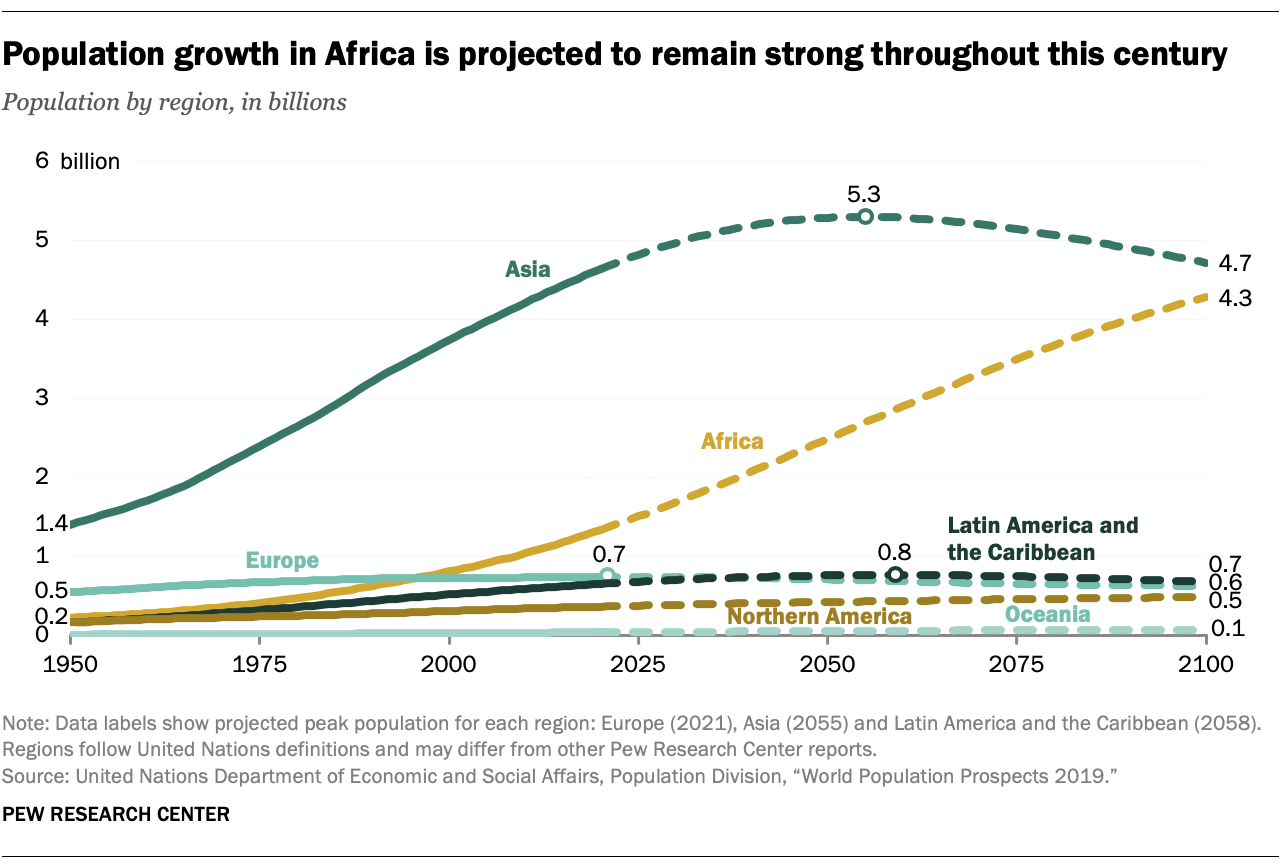
The demographics of Africa is very diverse. Africa's population has increased rapidly in the past 40 years. Its population is very young in many African nations. Some African nations have more than half of the population being under 25 years of age. Africa has a population of 1.3 billion people in 2018. Back in 1950, it was 229 million and 630 million in 1990. Africa's population is larger than Europe. The babies being born in Africa may reach 37% by 2050 The Bantu language speakers are found mostly in southern, central, and southeast Africa. There are many Swahili speakers in East Africa. There are Bantu, Capoid, Berber, the Copts, and other groups of African people. Arabic people came into North Africa heavily by the 7th century. During ancient times, North Africa was populated by the Phoenicians (who founded Carthage), the Hyksos, the Indo-Iranian Alans, the Greeks, the Romans, and the Vandals. Africans profess many religious views. About 45% of Africans are Christians, and 40% of Africans are Muslims. There are 10 percent who follow traditional African religions. The rest are Hindu, Buddhist, Confucianist, Bahai, followers of Judaism, and irreligious. Over one thousand languages are spoken in Africa. The major languages spoken in Africa are Afroasiatic, Nilo-Saharan, Niger-Congo (including Bantu languages), Khoisan, Indo-European, and Austronesian. To this day, many Africans have dealt with health issues, and many activists are using public policies around the clock in helping African lives to reach their highest potentials as human beings. 


Updates on the African Diaspora


I always love to research and write about this issue of the black African Diaspora for years. For over 10 years, I have learned about the African Diaspora in a higher level. Scholars like Runoko Rashidi from Los Angeles certainly have motivated me in this journey. Like always, forever, I will be pro-black. As Africans, people of black African descent do live in the four corners of the Earth. I have mentioned the following for years. You can't love black people without loving black Africans and the black African Diaspora. If someone claims to believe in black liberation, but he or she has xenophobic views about the African Diaspora, he or she is a liar (and anti-black). So, I reject so-called social movements who seek division in the Diaspora instead of black liberation. You know which social movements that I writing about (i.e. FBA and ADOS xenophobic movements). Black people live globally, and all black people are entitled to freedom and justice by birthright without exception. 2 DNA Tests prove that my ancestors came mostly from Nigeria and Congo. I am obviously an African American. During this generation, we understand so many diverse black people making a difference in the lives of humanity. The African Diaspora is global being found in America, Brazil, Haiti, Saudi Arabia, Peru, Turkey, and other nations of the world. We speak many languages. Many of us are Christians, Muslims, follow traditional African religions, etc. We exist in different ages. We live in urban, rural, and suburban locations. We are still part of one black African family regardless of our diverse cultures and nationalities. That truth ought to be wholeheartedly cherished. 


Afro-Europeans


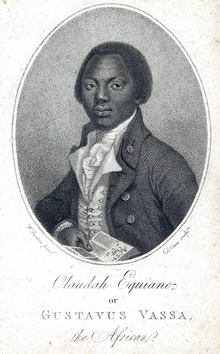
Afro-Europeans are found all over Europe and other places in the world. There are almost 10 million of them in the world today. The Afro-British people are about 2 million in the United Kingdom. They have a long, rich history. Many of them have Afro-Caribbean heritage. New research have shown that black people lived in the UK spanning thousands of years. Many Berber North African people came into the UK along with the Phoenicians who traded with British people. We know of DNA evidence of both North African and Sub-Saharan black African peoples in the UK long before the Middle Ages. In 2013, a skeleton was discovered in Fairford, Gloucestershire, which forensic anthropology revealed to be that of a sub-Saharan African woman. Her remains have been dated between the years 896 and 1025. By the 1500's, there were black musicians like John Blanke. Many Africans like Ellen More (who was a black woman) was in the court of James IV of Scotland. Some black people back then were business owners. Afro-British people fought the slave trade and helped to end slavery in the UK. These human beings are people like Ignatius Sancho and Olaudah Equiano. Afro-British people fought in wars, was part of the British Civil Rights Movement, and made many contributions in society. 

Afro-French people are heavily found in Paris, Lyon, Marseilles, Martinique, Guadeloupe, French Guiana, Saint Martin, Reunion, Mayotte, New Caledonia, etc. They speak French and African languages including other language. Most worship God in Christianity, many of Muslims, some are irreligious, and others follow traditional African religions. Scholars believe that between 3 and 5 million Afro-French people are in France. Some organizations, such as the Representative Council of France's Black Associations (French: Conseil représentatif des associations noires de France, CRAN), have argued in favor of the introduction of data collection on minority groups but this has been resisted by other organizations and ruling politicians. There are many black French people in high levels of French government like Roger Bambuck, Laura Flessel-Colovic, Laetitia Avia, Maxette Grisoni-Pirbakas, Maurice Ponga, and other human beings. Frantz Fanon lived in France, but he renounced his French citizenship later on. Famous Afro-French athletes are Christine Arron, Yannick Noah, Francis Ngannou, and other people. 

There are over 1 million Afro-Italian people. Thousands of years ago, black people were in the Roman Empire. They live today in Rome, Milan, Turin, Palermo, Bologna, Brescia, Bergamo, Florence, etc. Many Afro-Italians are emigrants, and they speak many languages. They worship in diverse creeds too. Some have left from Libya to go into the nation. Also, many come from Ghana, Senegal, Nigeria, Eritrea, and Syria. Famous Afro-Italians are Toni Iwobi, Zahra Bani, and other human beings. 


Afro-Spanish people are found everywhere in the Iberian Peninsula. Juan Latino was a poet and Renaissance humanist. Juan De Pareja was a famous scholar. The singer Concha Buika is one of the greatest international singers of our generational. Historian and Pan-African activist Antumi Toasije has done tons of research on black people too. The Sister Elvira Dyangani Ose is a famous curator from Spain. Today, there are Afro-Spanish journalists like Francine Galvez, Lucia Mbomio, Desiree Ndjambo, and other people. Athletes of black African Spain in Span are Ismael Althuman, Maria Bernabeu, Vanessa Ble, etc. 


The Afro-German human beings have a long history. They number in about 1 million people. They live in Berlin, Hamburg, Frankfurt, Darmstadt, Munich, Bremen, and Colonge. During the 1720s, Ghana-born Anton Wilhelm Amo was sponsored by a German duke to become the first African to attend a European university; after completing his studies, he taught and wrote in philosophy. Many Germans were involved in the slave trade too. Germany exterminated the Nama people in 1907. During ancient times, Afro-Germans existed like Ignatius Fortuna. During Nazi Germany, many Afro-German people were discriminated against, some were sterilized by force, and others were terrorized by the Nazis. For an autobiography of an Afro-German in Germany under Nazi rule see Hans Massaquoi's book Destined to Witness. Theodor Michael, main witness in the documentary Pages in the Factory of Dreams published 2013 his autobiography Deutsch Sein Und Schwarz Dazu. The end of World War II brought Allied occupation forces into Germany. American, British and French forces included numerous soldiers of African American, Afro-Caribbean or African descent, and some of them fathered children with ethnic German women. Today, Afro-Germans are here with Steffi Jones being the President of the Organizing Committee of the 2011 FIFA Women's World Cup (and head coach of the Germany women's national football team from 2016 to 2018). Audre Lorde lived in Germany for years to promote the Afro-German community. She encouraged Black German women such as May Ayim and Ika Hügel-Marshall to write and publish poems and autobiographies as a means of gaining visibility. Black people regularly immigrant into Germany from Nigeria, Ghana, etc. Ika Hügel-Marshall is one of the greatest activists of the Afro-German community. Alex King, Amewu Mensah, Linda Kisabaka, and others are famous athletes in Germany. Leila Negra is a famous actress along with Florence Kasumba. Boris Kodjoe, and others are people from Germany too. 


She is the Afro-Dutch singer Ruth Jacott. 


Afro-Dutch black people are widespread in the world indeed. Many of them came from the Caribbean from the area of Suriname.  There is also a sizable population of Cape Verdean, Ghanaian, Nigerian, Somali, Angolan and other African communities of more recent immigrants. The majority of Afro-Dutch people migrated to the Netherlands from the 1970s onward. Most of the recent migrants arriving either as political refugees seeking freedom or, more often, to escape regional conflicts, such as from Eritrea. Afro-Portuguese people are very common in Portugal. Black people in Portugal are still fighting for racial justice. Black people live in Belgium like Romelu Luaku, Elodie Ouedraogo, and other people. There are about 220,000 black people in Sweden too. African immigrants have been living in Sweden since the 17th century, but in very few numbers. In 1900, there were 79 Africans in Sweden, of which 5, all South Africans, were citizens. One of the early documented Africans in Sweden was Gustav Badin, (1747 or 1750 to 1822), a black court-servant and diarist, originally a slave, butler of Queen of Sweden, Louisa Ulrika and later Princess Sophia Albertine of Sweden.  Badin was not the only African swede during the 18th century. There were black people in the royal regiments, one of them was the trumpeter Richard Abramsson who was born in the US. Most of the descendants to the African servants face poverty in Sweden. 


These human beings are Yahya Kalley (who lives in Sweden), Khaddi Sagnia (who lives in Sweden), and Ezinne Okparaebo (who lives in Norway)


In the 1880s, a circus performer named John Hood moved from the US to Sweden. It is unclear if John Hood was of complete African descent or if he was half-European. Hood was the great-great-grandfather of Frederik Reinfeldt, who was prime minister of Sweden from 2006-2014. With either 1/16 or 1/32 African blood, Reinfeldt was the first head of state in any European country to be known to have black ancestry. The 1970s, 1980s and 1990s saw increasing immigration from Africa, often as a consequence of civil wars. Swedish statistical data show that the African-born population has grown from 596 in 1960 to 4,149 in 1970, to 10,025 in 1980, 27,343 in 1990, 55,138 in 2000 and 103,077 in 2009. Many Africans in Sweden came form Ethiopia, Eritrea, Gambia, Morocco, Nigeria, Egypt, etc. Joe Frans, Ann-Sofie Galman, Seinabo Sey, Gladys del Pilar, and other famous Afro-Swedish people are in the modern era. There are black people in Austria too. Estimate making use of current Sub-Saharan born population (68,843), Caribbean born (21,730) for total foreign born black population (90,573) and approximate progeny born and their descendants based on historical migration and birth statistics. There are black people in Denmark and Finland. In Finland, a black woman named Rosa Lemberg came to Finland in 1888. She received Finnish citizenship in 1899. Many Afro-Finnish people are from Nigeria and Ethiopia. Today, Afro-Finnish people include people like Nosh A. Lody, Seth Ablade, Sara Bejedi, Bella Forsgren, etc. Black people are in Luxembourg, Poland, Hungary, Romania, Greece, and the Czech Republic. 


Even when I was younger, I remembered Samantha Mumba singing songs. She is from Dublin, Ireland. Her hit song of Gotta Tell You was released on June 2, 2000.  


There is an African Diaspora in Ireland for a long time. Rachael Baptist was a famous black Irish singer who lived from 1750 to 1775. Back then, ca. 1,000-3,000 black people lived in Ireland. She was in the stage at Dublin.  From 1750 to 1753, Baptist performed regularly in Dublin. Many people visited Ireland before like Olaudah Equiano and Frederick Douglass. Today, black Irish people live mainly in Limerick, Cork, and Dublin areas. Lord Edward FitzGerald, who was seriously wounded in the American Revolutionary War, was saved in 1781 by Tony Small, who had been enslaved, after the Battle of Eutaw Springs in the Carolinas. Small returned with Lord FitzGerald to Ireland, and in 1786 his portrait was painted by John Roberts. Many Afro-Irish people were musicians, soldiers, tradesmen, musicians, and had other occupations. Osmond Tisani lived in Ireland too. Today, many black people in Ireland fight racism, and unequal treatment in education. Many black immigrants into Ireland come from North, East, and Central Africa like the Congo, Burundi, Sudan, Somalia, Eritrea, Sudan, etc. In 2007, Nigerian refugee and politician Rotimi Adebari was elected as mayor of Portlaoise, the first black mayor in Ireland. The poem 'For Our Mothers', by Nigerian-Irish poet Felicia Olusanya (FeliSpeaks) is featured on the 2023 Leaving Certificate curriculum. Author Emma Dabiri is one of a number of black Irish authors. In July 2021, the team from Maynooth University, consisting of Rí Anumundu and Chikemka Abuchi-Ogbonda became the first Black Irish team to win the prestigious Irish Times Debating Competition.


Afro-Asians


One of the most important, not too known members of the black African Diaspora is the Afro-Asian people. They live from Israel and Palestine to Australia. Centuries ago, the Chinese explorer Zheng He used his fleet of ships to trade with black people of Eastern Africa. In India, there are the Siddi people. These human beings are also called Siddhi. They arrived in India at ca. 628 A.D. at the port of Bharuch. Others came after the Muslim conquests starting in 712 A.D. Some Siddis escaped slavery to establish communities in forested areas, and some also established the small Siddi principalities of Janjira State on Janjira Island and Jafarabad State in Kathiawar as early as the twelfth century. A former alternative name of Janjira was Habshan (i.e., land of the Habshis). In the Delhi Sultanate period prior to the rise of the Mughals in India, Jamal-ud-Din Yaqut was a prominent Siddi slave-turned-nobleman who was a close confidant of Razia Sultana (1235–1240 A.D.). The Siddis are Bantu peoples from Southeast Africa along with Habesha immigrants. The Siddi people live in Pakistan too. A Y-chromosome study by Shah et al. (2011) tested Siddi individuals in India for paternal lineages. The authors observed the E1b1a1-M2 haplogroup, which is frequent among Bantu peoples, in about 42% and 34% of Siddis from Karnataka and Gujarat, respectively. Around 14% of Siddis from Karnataka and 35% of Siddis from Gujarat also belonged to the Sub-Saharan B-M60. The remaining Siddis had Indian associated or Near Eastern-linked clades, including haplogroups P, H, R1a-M17, J2 and L-M20.  Narang et al. (2011) examined the autosomal DNA of Siddis in India. According to the researchers, about 58% of the Siddis' ancestry is derived from Bantu peoples. The black Siddi people in India and Pakistan continue to fight discrimination. Many Afro-Filipinos in the Philippines were born from African American G.I.s and Filipino people. Most Afro-Filipinos live in and around Metro Manila, Calabarzon, Metro Cebu, or in Olongapo, Clark or Angeles cities in Central Luzon around the former American bases. We know many of people who have both black and Asian heritages like Jhene Aiko, Amerie, Chanel Iman, Benson Henderson, Kelis, Anderson.Paak, Tyson Beckford, Crystal Kay, Naomi Osaka, Aja Kong, Joe Yamanaka, Kamala Harris, Will Demps, Tae Heckard, Bryan Clay, and other human beings. 


Afro-Arabic people live in Saudi Arabia and in Palestine. Black people have migrated from Africa to Saudi Arabia for thousands of years. The Afro-Arabian Tihama culture, which originated in Africa, began in the 2nd millennium. This cultural complex is found within Africa in countries such as Eritrea, Ethiopia, and Sudan, as well as in Yemen and the Saudi coastal plains.  The Afro-Palestinians live in a closely nit community. People whose ancestors came from Nigeria, Sudan, Senegal and Chad make up most of the community, and most of these came to Palestine during the British Mandate. The Afro-Palestinians are staunch supporters of the Palestinian national cause, and most of the community has spent time in Israeli prisons for engaging in protest demonstrations against the occupation. Black Palestinians heavily live in Jericho too. There are black people in Jordan, Iran, Iraq, and in other places of the Middle East. Black people in Israel include Beta Israel, other Africans, and African Americans. Many black people in Israel fight against police brutality and discrimination too. Afro-Iranans are people of African Zanj heritage. The Indian Ocean slave trade begun in the 6th century BC and was multi-directional and changed over time. To meet the demand for menial labor, black slaves captured by Arabic slave traders were sold in cumulatively large numbers over the centuries to the Persian Gulf, Egypt, Arabia, India, the Far East, the Indian Ocean islands and Ethiopia. Others came as immigrants throughout the centuries or from Portuguese slave traders who had conquered southern Iran. Famous Afro-Iranians are people like Dennis Walker and the twins of Malika and Khadijah Haqq. Many Africans live in China and Japan too. 


Black People in the North America (African Americans, Afro-Canadians, Afro-Latinos, Afro-Caribbeans, etc.)


In North America, the African Diaspora is powerful. The most well known members of the African Diaspora include African Americans. I am black African American. We (who are black Americans) have lived in the Americas since the 1500's. We have been scientists, political leaders, artists, teachers, musicians, athletes, judges, lawyers, librarians, and other contributors to society. Most of my African American people live in the South, the North, the Midwest, and the West Coast of the United States of America. We set trends, we have swagger, and we have been courageous in setting up a foundation where our sacrifice has helped other human beings in their legitimate fights for human liberation. Most of us are of West African/Central African descent. Most of my DNA is from West and Central Africa (i.e. Nigeria and Congo). My ancestors were sold as slaves and sent into North America. My black ancestors fought in Africa, on the ships, and in the Americas. Black Americans lived on all of the 13 colonies centuries ago. Black people fought on the Tories and on the Patriot side during the American Revolution War. Black people were still enslaved in America after 1783. Slavery was banned after the American Civil War by 1865. The abolitionist movement and many religious circles were headed by black people. Religious black people and others have always been on the front-lines for justice. By Reconstruction, the good news was that many black people were in positions in power like Congress, forming homesteads, and being free from slavery. The bad news was the white racist backlash harmed black people in the form of the Klan and other white racist terrorists groups. Black people during and after Reconstruction were lynched, raped, homes burned, black churches were burned, and black people were disenfranchised of human rights nationwide, not just in the South. Black people used the 2 Great Migrations to escape tyranny basically that was found in the South. From WWI to WWII, the Harlem Renaissance, the Chicago Renaissance, jazz, blues, and other cultural powerhouses flourished with scholars as diverse as Booker T. Washington, W.E.B. DuBois, Mary McLeod Bethune, Zora Neale Hurston, etc. The Civil Rights movement and the Black Power Movement of the 1950's and 1960's inspired confidence in tons of black Americans. After 1968, we saw both the growth of black excellence and new forms of racist tactics from evil people (like gentrification, the War on Drugs, the prison industrial complex, and cutting of the social safety net or austerity). Economic inequality grew. Yet, black people have fought back then and now in 2021. With events like BLM, the Presidency of Barack Obama, the continued fight for voting rights in 2021, we have a long way to go as black Americans. Yet, right is on our side. We, as black Americans, are still here. The African American story will flourish forever and ever. 


Afro-Canadians lived in Canada for centuries. Some have came from America to escape slavery. Others have came from the Caribbean. Yet, they are people who desire justice and love of the truth. Afro-Canadians live from Nova Scotia to Toronto. There are almost 1.2 million black Canadians. Thomas Peters is a famous black Canadian who came into Canada. About 10-30 thousand fugitive black Americans came into Canada from the South. They were assisted by members of the Underground Railroad. Black/African Canadians have contributed to many areas of Canadian culture.  Many of the first visible minorities to hold high public offices have been Black, including Michaëlle Jean, Donald Oliver, Stanley G. Grizzle, Rosemary Brown, and Lincoln Alexander, in turn opening the door for other minorities.  Large populations of Afro-Canadians are in Hamilton, Waterloo, Windsor, Ontario, Montreal, Halifax, Edmonton, Winnipeg, Brooks, Ottowa, etc. Mathieu da Costa was the first recorded free black person to come into Canada, and he passed away in 1606. The first known Black person to live in what would become Canada was an enslaved man from Madagascar named Olivier Le Jeune, who may have been of partial Malay ancestry. He was first given to one of the Kirke brothers, likely David Kirke, before being sold as a young child to a French clerk and then later given to Guillaume Couillard, a friend of Champlain's. Le Jeune apparently was set free before his death in 1654, because his death certificate lists him as a domestique rather than a slave. The Black Canadian Anderson Ruffin Abott was a licensed physician who fought in the American Civil War. He attended the deathbed of Abraham Lincoln. Rev. Samuel Ringgold Ward escaped into Canada to have freedom. Viola Desmond was a Civil Rights leader in 1946 who fought unjust laws in Nova Scotia. Jean Augustine is a Grenadian-Canadian, the first Black Canadian woman elected to the House of Commons.  Canadian lawyer, Lincoln Alexander, was the first black Member of Parliament in the House of Commons. Black Canadians continue to fight police brutality in Toronto and all over Canada. On June 5, 2020, approximately 9,000 demonstrators gathered at the Alberta Legislature Building for the "Fight for Equity" rally which took place in response to the May 25, 2020 murder of George Floyd—an African-American who was killed during a police arrest. There were George Floyd protests in Canada in all the provinces and territories. ME Lazerte teacher, Andrew Parker's spoke at the Alberta Legislature rally.


Black people live all over Mexico and Central America including the Caribbean. About 3.2% of Mexico's population has significantly large African ancestry, with 1.38 million self-recognized during the 2015 Inter-census Estimate. Numerous Afro-Mexicans in the 21st century are naturalized Black immigrants from Africa and the Caribbean. A black man named Gaspar Yanga formed a freetown of escaped slaves in Yanga, Veracruz. Mexico became a destination for some Black slaves and mixed-race Black Seminoles fleeing enslavement in the U.S. They were free once they crossed into Mexican territory. Today, more Afro-Mexicans are speaking their minds and affirming their identities as black people. Black people in the Caribbean gave the world Marcus Garvey, reggae, Claudia Jones, and more contributions. Black people in Central America are commonly vast too. 


The gorgeous, beautiful Sister on the far left is the athlete (involved in the triple jump) from Venezuela named Yulimar Rojas. Benedita da Silva is the Afro-Brazilian woman in the center, and the women on the far are Afro-Colombian women. 


Black People in South America


Brazil has the largest number of black people in South America. There are more than 14 million Afro-Brazilians. They have been part of a large influence from the Congo, as tons of Congolese black people were kidnapped and forced to go into Cuba. Brazil's language is mostly Portuguese. They live in Bahia, Sao Paulo, Rio de Janeior, Minas Gerais, etc. Many African Americans go into Brazil and many Afro-Brazilians go into America. Benedita da Silva is the Ella Baker of Brazil in her civil rights activism. Capoeira is popular in Brazilian culture. Also, Afro-Brazilians continue to fight for justice and human liberation. There is a large black population in Colombia, Paraguay, and Argentina. There are black people in Chile, Venezuela, the Dominican Republic, Ecuador, Uruguay, Bolivia, and other locations. 


Afro-Australians


Afro-Australians exist in Australia. There are many black people in Australia in places like Melbourne, Sydney, Brisbane, and other places. There was trade between Africa and Australia as early as the 12th century. There were coins minted by the Tanzanian medieval kingdom of Kilwa Sultanate have been found on the Wessel Islands. Other people descended from African emigrants later arrived indirectly via the First Fleet and 19th century multicultural maritime industry. Notable examples are Billy Blue, John Caesar, and Black Jack Anderson. In 2005–2006, permanent settler arrivals to Australia included 4,000 South Africans and 3,800 Sudanese, constituting the sixth and seventh largest sources of migrants, respectively. Most black people in Australia come from southern and eastern Africa. Many famous Afro-Australians are Gabriel Akon, Faustina Agolley, Tkay Maidza, Waleed Aly, Janice Petersen, N'fa, and other people. I can't mention Australia without mentioning Australian Aboriginals. There are many Pan-African people who consider Aboriginals, the Aeta, and those of Oceania as black people. What is the truth? The truth is complicated. The Aboriginal people (including the Aeta and those of Oceania) deserve respect, equality, justice, and equality. As a black American, they know what it is like to be oppressed. In that sense, we black people expressed solidarity with them always. Also, it is important to note that Aboriginals (including the Aeta and those of Oceania) are not black Africans technically. They are descendants of black Africans from thousands of years ago. They are non-African black people of color. In other words, they are like our distant cousins who migrated from Africa thousands of years ago. While, we (who are of black African descent) know that our black ancestors stayed in Africa for thousands of years. That is a great analogy to describe us.  


More African Heroes


There are many modern day African heroes and leaders. Kumi Naidoo of South Africa has fought for change for decades. He was appointed secretary general of Amnesty International by August 2018. He was a youth activist during apartheid South Africa. He was the first African head of Greenpeace. Naidoo opposes environmental crimes and human rights abuses. He helps out political prisoners and desires safety given to refugees. He wants children to reunite with their parents, to have soap including toothbrushes, and asylum. Denis Mukwege is a surgeon who have helped victims of sexual assault in the DRC. He has publicly spoke out in favor of justice, care, and compassion for survivors of sexual assault in Africa. Winnie Byanyima has promoted equality in Uganda among the sexes. Graça Machel was born on October 17, 1945) is a Mozambican politician and humanitarian. She is the widow of former President of Mozambique Samora Machel (1975–1986) and former President of South Africa Nelson Mandela (1998–2013). Zindziswa "Zindzi" Mandela (23 December 1960 – 13 July 2020), also known as Zindzi Mandela-Hlongwane, was a South African diplomat and poet, and the daughter of anti-apartheid activists and politicians Nelson Mandela and Winnie Madikizela-Mandela. Zindzi was the youngest and third of Nelson Mandela's three daughters, including sister Zenani Mandela. 


Conclusion


After so many years, I have learned so much about the Motherland of Africa. As you get older, we learn the truth that Africa is never monolithic. There are massive technological advancements, urban centers, and strong economies transpiring in Africa indeed. Africa is a diverse nation with Igbo people, Berbers, Xhosa people, and other human beings with different cultures, religions, and nations. Yet, there is still one African continent. Africa is the Mother of Humanity, and no one can love humanity without loving Africa. Africa has taught me so much about my black African heritage, about the beauty of music, and about the glory of human excellence. There is great beauty in Africa from the long rivers, the plant life, the animals, and the concepts of living that exists in the souls of humanity. For all of the days of my life and beyond, I will always appreciate the glory of Africa. Nothing will change that. It is important to reiterate the fact that we must oppose imperialism. There is no freedom for anyone without  rejection of imperialism, economic inequality, sexism, xenophobia, racism, and other evils that still plague our globe. These evils have nothing to do with true spirituality or true morality. These evils have to do with violating human dignity and believing in anti-human doctrines. We are clear that justice for all is part of our sacrosanct credo. Africa has inspired the whole world in enumerable ways from art to STEM fields. I was born in America, but I am of black African descent. I am African. No human on this Earth will make me deny my black African heritage. No human on this Earth will make me deny my black African Bantu roots. The struggle continues, and we will be victorious in the end. 


God Bless Africa Forever. 


By Timothy

Fall 2021 Part 3


STEM Part 1: Ancient History (from the Days of B.C. to 1600 A.D.)


I have written about liberal arts for many years, and I love to do that. I will continue to do this for years and decades into the future, Lord Willing. Yet, it is always vital to write about this issue, because this issue relates to modern society in a myriad of ways. How broadband is constructed, how new homes are formed, and how more technological advances are cultivated relate to this subject matter indeed.  All  over the world, STEM exists. It is found in how we utilize I Pads and smartphones (with settings, advance cameras and battery systems). It is also we gauge the weather and cook our foods. It represents how important science, technology, engineering, and mathematics are important in our lives. For thousands of years, humans have used STEM to not only invent objects or decipher natural laws. In a new generation, we live in a time where more young human beings should have the right to learn about space travel, building buildings, and growing the research into coding. Young people, older people, and the rest of the human family appreciate the glory of STEM. That glory is found in the weather people understanding shifting rain and snow patterns, the further innovations of the I-Phone, the video games that people enjoy, and the creation of architecture that has facilitated human lives for thousands of years. The beauty of STEM is that it is not static. 

It constantly to evolve with the times of the globe. More schools from elementary schools to universities worldwide have incorporated STEM in their diverse curriculum. Exploration also is great apart of science, technology, engineering, and mathematics. The acronym of STEM was adopted by Rita Colwell and other science administrators in the National Science Foundation (NSF) in 2001. However, the acronym STEM predates NSF and was used by a variety of educators including Charles E. Vela, the founder and director of the Center for the Advancement of Hispanics in Science and Engineering Education (CAHSEE). In the early 1990s, CAHSEE started a summer program for talented under-represented students in the Washington, DC area called the STEM Institute. Seeing space and going into the oceans requires understanding of STEM. In our time, human beings should respect agriculture, manual labor, manufacturing, the liberal arts, construction, engineering, and other facets of human existence as these fields are inter-related to STEM completely.  


Ancient STEM contributions


During the start of human history, the human race existed from Africa. The journey of humanity has been researched constantly to this very day. Stone tools were existence to cut objects and to eat foods back then. More than 100,000 years ago, modern human beings started to have clothing on. Modern humans spread quickly from Africa into Europe and Asia by ca. 60,000 years ago. Some humans traveled from Africa into Saudi Arabia, the Middle East, India, Southeast Asia, Oceania, and then into North America. By the Upper Paleolithic to Early Mesolithic Age, we see mines and shoes. This (or human travel from Asia to the Americas) took place by the climax of the most recent ice age. Tools already existed, and the Neolithic Revolution took place by ca. 10,000 B.C. Human beings used cereal crop cultivation and animal domestication existed in the Middle East. In ca. 4,000 B.C., people had plumbing at the Temple of Bel at Nippur, Babylonia. Plumbing including urban draining was found in the Indus Valley in ca. 2700 B.C. We know that the Sumerian civilian had potter wheels in vehicles. Ancient STEM devices were commonplace in the ancient world. 

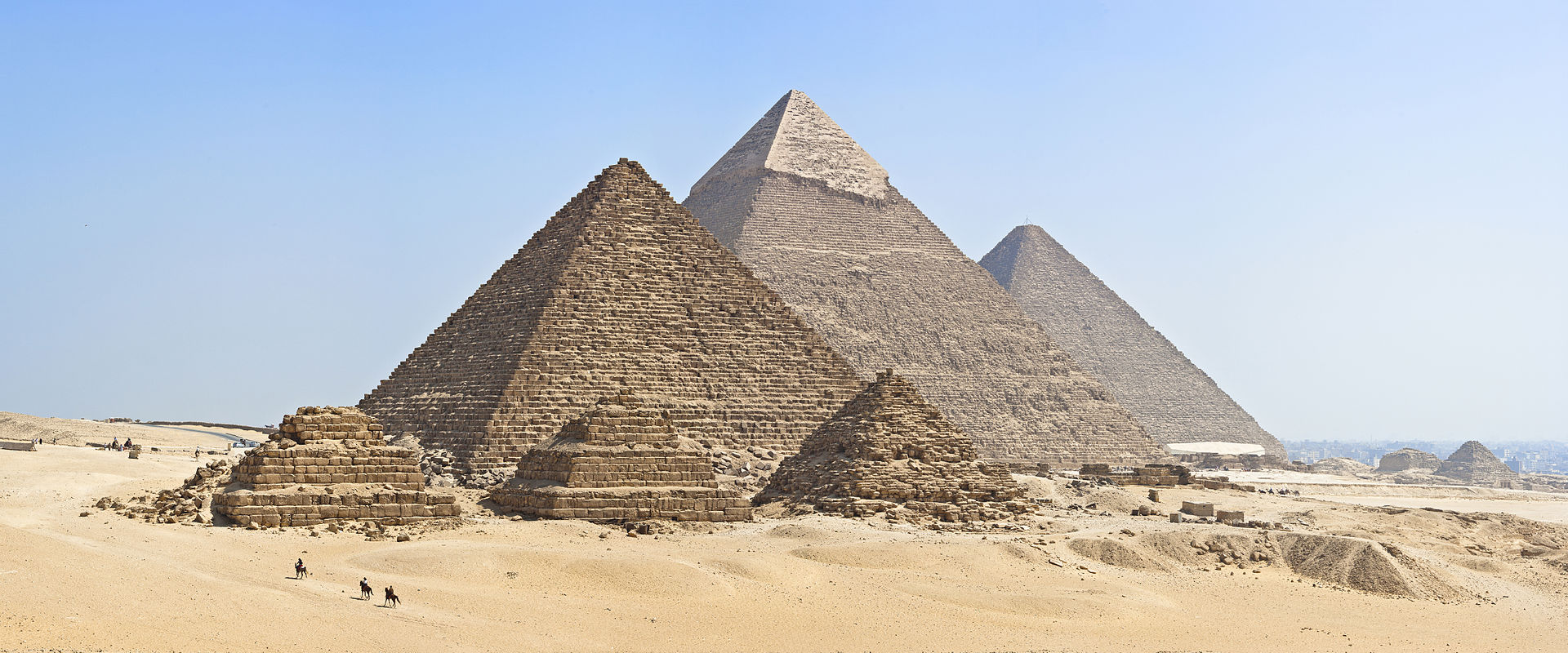
The Great Pyramid complex is one of the most stunning feats of STEM in human history. The complex shows the Great Pyramid of Giza, the Pyramid of Khafre, and the Pyramid of Menakaure. It is also associated with the Great Sphinx of Gaza. The Great Pyramid and the Pyramid of Khafre are the largest pyramids built in ancient Egypt. They were popularized in Hellenistic times, when the Great Pyramid was listed by Antipater of Sidon as one of the Seven Wonders of the World. It is by far the oldest of the Ancient Wonders and the only one still in existence. The pyramids, according to researchers, was created by using techniques over time. They would use bedrock to have a stable foundation. Stones were moved. Thousands of workers had to go to the quarry in order for them move stones plus sculpture the stones. According to archaeologist Mark Lehner, the complex would took place to be built in 35-40 years. The Great Pyramid complex was built in ca. 2500 B.C. The pyramids of Giza and others are thought to have been constructed to house the remains of the deceased pharaohs who ruled over Ancient Egypt. A portion of the pharaoh's spirit called his ka was believed to remain with his corpse. Proper care of the remains was necessary in order for the "former Pharaoh to perform his new duties as king of the dead." It is theorized the pyramids not only served as a tomb for the pharaoh, but also as a storage pit for various items he would need in the afterlife. The people of Ancient Egypt believed that death on Earth was the start of a journey to the next world. The embalmed body of the King was entombed underneath or within the pyramid to protect it and allow his transformation and ascension to the afterlife (according to ancient Egyptian religious views). Some people believe that the pyramids relates to the Orion constellation, and some don't. 


The Antikythera mechanism was one of the most developed ancient computers of world history. It has a large gear in it. It's found in Ancient Greece too. So far, it is the oldest example of an analogue computer. It is hand powered being an orrey. The ancients used it to predict astronomical positions and eclipses decades in advance. The device can track the 4 year cycle of athletic games which is similar to an Olympiad or the cycle of the ancient Olympic Games. It was found off the coast of the Greek island of Antikythera in 1901. 


On May 17, 1902 it was identified as containing a gear by archaeologist Valerios Stais.  The device, housed in the remains of a 34 cm × 18 cm × 9 cm (13.4 in × 7.1 in × 3.5 in) wooden box, was found as one lump, later separated into three main fragments which are now divided into 82 separate fragments after conservation efforts. Four of these fragments contain gears, while inscriptions are found on many others.  The largest gear is approximately 13 centimetres (5.1 in) in diameter and originally had 223 teeth. In 2008, a team led by Mike Edmunds and Tony Freeth at Cardiff University used modern computer x-ray tomography and high resolution surface scanning to image inside fragments of the crust-encased mechanism and read the faintest inscriptions that once covered the outer casing of the machine. This suggests it had 37 meshing bronze gears enabling it to follow the movements of the Moon and the Sun through the zodiac, to predict eclipses and to model the irregular orbit of the Moon, where the Moon's velocity is higher in its perigee than in its apogee. This motion was studied in the 2nd century BC by astronomer Hipparchus of Rhodes, and it is speculated that he may have been consulted in the machine's construction. There is speculation that a portion of the mechanism is missing and it also calculated the positions of the five classical planets. The complexity of this clock has never been seen until the mechanical astronomical clocks in Europe during the 1300's. All known fragments of the Antikythera mechanism are now kept at the National Archaeological Museum in Athens. There are a number of artistic reconstructions and replicas to demonstrate how it may have looked and worked. 


Early Schools of STEM


Woodblock printing was invented during the Han Dynasty China at sometime before 220 AD. This made China become the world's first print culture.  Water turbine in the Roman Empire in modern-day Tunisia was created by the 300's A.D. Ancient inventors like Archimedes and Ctesibius were prominent in the ancient world. There was the physician Galen who practiced eye and brain surgery 2,000 years ahead of his time. Heron of Alexandria created automatic doors and coin operated machines. There was ancient robotics like  the automata of ancient China, the Hellenistic engineers Heron and Philon. By the 5th century, A.D., there is the invention of numerical zero in Ancient India. The concept of zero as a number, and not merely a symbol for separation is attributed to India. In India, practical calculations are carried out using zero, which is treated like any other number by at least the time of Aryabhata, even in case of division.


There was the  inventions of the Kurdish engineer Al-Jazari. He lived in Iraq and Turkey. His designs included automated water-lifting mechanisms, water based clocks, and other geared mechanisms. By 1286, modern eyeglasses was invented in Italy. One scholar who was involved in STEM Fields and inventions plus art was Leonardo da Vinci. Da Vinci was a polymath which means that he studied a vast diversity of subjects like art, engineering, science, botany, mathematics, etc. He was a Renaissance painter, scientist, engineer, sculptor, architect, theorist, and draughtsman. His notebooks shown his artistic and other intellectual skills in full display. He was educated by the renowned Italian painter and sculptor Andrea Del Verrocchio. As one of the greatest painters in human history, his artwork is well known. He knew of the future as many of his writing described flying machines, armored fighting vehicles, concentrated solar power, and an adding machine. This was more than 5 centuries before these machines are commonplace in our 21st century world. Studying anatomy (involving the creation of drawing detailing the human brain, the skulls, and various organs of the human body) was his other huge contribution too. His aerial screw drawing from ca. 1489 (looking like a helicopter) was certainly ahead of it time (from Codex Atlanticus). Leonardo da Vinci was always a great engineer. 

In terms of STEM, the 1439 creation of the printing press changed the game. It was created by the German Johannes Gutenberg. It used screw presses. By the 1950's, Gerardus Mercator created the Mercator Projection map that was crated in 1569. 


Basic STEM Terminology


In the world of STEM, there are tons of words and phrases that lovers of STEM know about. STEM deals with using research, creativity, and analysis in order to make sense of the physical world. Also, STEM is so common in our daily lives, that it can be simple as turning on a light switch. Also, it does deal with complex procedures like creating rockets to send human beings into space. In our time, more people of every background have increase their interests in STEM related careers and STEM topics in order to express their gifts found within their human souls. Now, here are some words that describe basic STEM terminology that are widespread in our Universe:

1. Engineer: These human beings use mathematics, physics, and other subjects in order to design and build machines or structures. From the ancient times to the 2020's, engineers are among many leaders of STEM research. 

2. Critical Thinking: This is the mental process of acquiring information and evaluation it to reach a logical conclusion. 

3. Distance Learning: This is about the delivery of instruction via multimedia computers, satellite or teleconferencing with the teacher is in one place and the students in another. Zoom is a common program that allows for distance learning with sharing parts, video cameras, and audio devices. 

4. Higher Order Thinking Skills (HOTS): HOTS is a set of cognitive skills beyond the basic acquisiton and memorization of facts. This broad terms including items like: critical thinking, creative thinking, problem solving, decision making, and reasoning. 

 5. Computer Science: This is a branch of engineering science that studies (with the aid of computers) computable processes and structures. 

6. Fulcrum: The pivot about which a lever turns

7. Hydraulics: The study of the mechanics of fluids. 

8. Qualitative:It helps to distinguish attributes.

9. Quantitative: It is about the expression of the amount that can be measured. 

10. Abutment: It is a masonry support the touches and directly receives thrust or pressure of an arch or bridge.

11. Caisson: It is a large watertight chamber used for construction under water.

12. Cantilever: It is a projecting horizontal beam fixed at one end only.


An Introduction to Coding


Coding deals with using computers to create designs, games, videos, and other parts found in the computer screen. It is an attribute used by the younger people and older people. It is very popular in the computing world. Coding helps to form computer programming all of the time. Tasks are done too. To do coding is to follow algorithms, and use source as well. Many proficient programming requires skills in subjects like the application domain, specialized algorithms, and formal logic. Programming has existed for thousands of years like the music sequencer created by the Persian Banu Musa brothers, who described an automated mechanical flute player in the Book of Ingenious Devices. In 1206, the Arabic engineer Al-Jazari formed a programmable drum machines where a musical mechanical automation would play different rhythms and drum patterns, via pegs and cams. Modern programming have indent styles, comments, decomposition, and naming conventions. 

There are many places to help people understand and create codes like Codecademy, free Code Camp, Coursera, edX, Codewars, Code Conquest, GA Dash, Khan Academy, MIT Open Courseware, The Odin Project, Udacity, ColoLearn, etc. One simple example of a code is found in drawing circles with the code of JavaScript and ProcessingJS. One code (in forming a simple circle) starts in that format is ellipse (212, 206, 283, 318);. The circle is drawn using the ellispe command. Ellipse is typed in the editor. It's followed by a semicolon. The first number controls how far the eclipse is from the left side of the canvas. The 2nd number goes up and down on the canvas, the third number makes the ellipse wider, and the fourth number changes the height. So, the first two numbers control the position of the ellipse, and the second 2 control the size of the ellipse. These numbers of the parameters of the ellipse command or function. It has 4 parameters. The first parameter is X. The second parameter is Y. Y controls the direction that goes down. It starts at 0 to 400. The third shows width and the fifth shows height.  To make a mouth you can use ellipse (212, 250, 100, 73); . To make eyes, you can use ellipse (150, 150, 30, 30); . To make the other eye is make ellipse (278, 150, 30, 30); .  There are tons of unique coding activities too. 


Basic Tools of Engineering and Construction


Involving construction, one of the popular aspects of construction is the home. Housing represents a real issue in our world, as homelessness remains a huge problem in our world. Homes have existed throughout human history. Before any home is built, zoning laws and plans from architects are established. Lawyers are common to make sure that the location of a home is legally acquired, whether the buyers did all the proper procedures in buying the home, and other matters. Many homeowners have to take classes on housing before purchasing a home too. Many people have to get lawyers to pay for contracts and other fees before acquiring any home. There are civil site plans, architectural drawings and specification. This makes up of the document set needed to build a new home. Architects know about the precise descriptions of the materials necessary in construction. People from diverse trades are experts in constructing a home too. The planning stage comes when the architect creates the plan. The plan is approved by the client and any regulatory authority. After the site cleared, the foundations are created. Construction workers create trenches for connections to services like sewerage, water, and electricity. If the house is wooden framed, a framework is constructed to support the boards, siding, and roof. If the house is of brick construction, then courses of bricks are laid to construct the walls. Floors, beams and internal walls are constructed as the building develops, with plumbing and wiring for water and electricity being installed as appropriate. Once the main structure is complete, internal fitting with lights and other fitments are done. Workers later do decorate the home and furnished it with furniture, cupboards, carpets, curtains and other fittings.  Homeowners always inspect the house to make sure that everything is functioning properly. Not to mention that housing warranties  and documents with insurance have helped homeowners for generations. Some people join homeowning organizations to develop protections for their resources. 


To quickly outline how homes are built, here are facts about a summary on how engineers and construction human beings build a house. The first step was the preparation of the construction site and pouring the foundation. People have to apply and get permits to make that a reality. Before a shovel is in the ground, the local government must approve the design and provide permits for everything like zoning and grading. There must be permits for septic systems, home construction, electrical work, and plumbing. Once the permits are gotten, the physical construction can start. A construction crew clear out trees, debris, and other things to prepare to create the house. A hole is dug if a full basement would exist in the house. The foundational walls are formed and poured. Sometimes footings are drug, formed, and poured. The area between them is leveled and filled with utility runs like plumbing drains and electrical chases, and then the slab is poured. Construction crew levels the site. Also, people put up wooden forms for the temporary foundation. Footings are installed too. Then, the slab is poured with concrete. Then, the area must have a cure. There is no activity temporarily on the site. Once the concrete is cured, the crew uses a waterproofing membrane to the foundation walls, installs drains, sewer, and water taps, and any plumbing that needs to go into the first floor slab or basement floor. There is the backfills excavated dirt into the hole around the foundation wall.


The city inspector inspects the foundation components to make sure that everything is up to code and installed properly. The inspection may be repeated. The 2nd major step in building a house is the complete rough framing. This is when floor systems, walls, roof system are completed. People use sheathing applied to exterior walls covered with protective wrap. The floor systems, walls, and roof system are part of the skeleton of the house. People use plywood or oriented strand board (OSB) sheathing to the exterior walls and roof plus windows (including the exterior doors) are installed. The sheathing is then covered with a protective barrier called a house wrap. This will stop liquid water from infiltrating the structure while allowing water vapor to escape. This action reduces the chances of mold and wood rot. The third major part of building a home is the complete rough plumbing actions and electrical HVAC (that means that pipes, wires, sewer lines, vents, water supply lines, bathbubs, shower units, ductwork for HVAC system, and HVAC vent pipes are installed). The shell is done, then siding and roofing can be installed. During this time, the electrical and plumbing contractors start running pipes and wires in the interior walls, ceilings, and floors. Workers use the ductwork to have heating, ventilation, and air conditioning or a furnace. HVAC vent pipes are found in the roofs, insulation is installed in the floors, walls, and ceiling. Once the roofing goes on, the house is dried in. An electrician then installs receptacles for outlets, lights, switches, and run wires form the breaker panel to each receptacle.s Wiring for telephones, cable TV, and music systems is part of this work too. Usually, cable TV or any satellite TV is installed after the whole house is finished. HVAC ducts and plumbings are usually installed before wiring, because it's easier to run wires around pipes and ducts than vice versa. 


Inspectors inspect rough framing, plumbing, and electrical including mechanical systems to make sure that they comply with building codes. By this time, dryall or plasterboard is delivered to the building site. The fourth major part of housing construction deals with insulation. The insulation can be fiberglass, cellulose, foam mineral wool, concrete blocks, insulation concrete forms, spray foam, structural insulated panels, and foam board or ridged foam. Insulation helps to improve a home's energy efficiency. Insulation can be found in the walls, attics, floors, crawl spaces, basements, etc. The fifth procedure is the complete dryall and inferior fixtures being made as the start exterior finished. Drywall is hung and tape. Texturing is completed. Primary coat of paint is applies. Exterior finishes like Brick, stucco, stone, etc. are installed. The drywall is hung and taped, so the seams between the boards aren't visible. The 6th part of house building deals with the interior trim being done. Later, people install exterior walkways and a driveway. Doors, window wills, and decorative trim are installed. Cabinets, vanities, fireplace amenities, and the final coat of paint are installed. Many builders wait until the end of the project before pouring the driveway, because heavy equipment like a drywall delivery truck can damage concrete. The final procedures are hard surface flooring are installed, couplets are created, exterior grading is done, mechanical trims are created, and bathroom fixtures are installed. Mirrors, shower doors, flooring (i.e. the carpet is finished) are put in place. Next, exterior landscaping comes about. Flooring can be ceramic tile, vinyl, and wood, etc. The electrical panel is completed with light fixtures, outlets, and switches. HVAC equipment comes to the house. Sinks, toilets, and faucets are in place. Workers have a final cleanup of the house. Trees, shrubs, and grass are planted including other exterior landscaping being completed. The building code officials established a final inspection, and they issue a certificate of occupancy. If any defects are found during the inspection, a follow up inspection may exist to ensure that everything has been corrected. The builder (or a real estate provider) will walk a homeowner into the home to tell you about the features of the homes, the responsibilities of owning it, and other parts of the home. Homes are inspected all of the time during the construction. Talking to the builder is important, and housing organizations are there to help any homeowner to have a great experience in owning any home. Housing insurance and other housing protections are key for any new homeowner to protect his or her property. 


The cost of building a house varies by country widely. According to data from the National Association of Realtors, the median cost of buying an existing single-family house in the United States is $274,600, whereas the average cost to build is $296,652. Several different factors can impact the cost of building a house, including the size of the dwelling, and the availability of resources, the slope of the land, the quality of the fixtures and fittings, and the difficulty in finding construction and building materials talent. Some of the typical expenses involved in a site cost can be connections to services such as water, sewer, electricity, and gas; fences; retaining walls; site clearance (trees, roots, bushes); site survey; soil tests. Any home must adhere to building codes. These regulations help construction workers and the homeowners alike. These rules set standards on which materials are used, how they can be used, and things like fire alarm systems in homes. Building codes are generally intended to be applied by architects, engineers, interior designers, constructors and regulators but are also used for various purposes by safety inspectors, environmental scientists, real estate developers, subcontractors, manufacturers of building products and materials, insurance companies, facility managers, tenants, and others. Codes regulate the design and construction of structures where adopted into law. Back decades ago, modern housing codes were formed after earthquakes, floods, and fires like the Great Baltimore Fire of 1904. Building codes deal with parking, wall assemblies, floors, flammable substances, requirements for weather resistance, fire codes, etc.


Conclusion


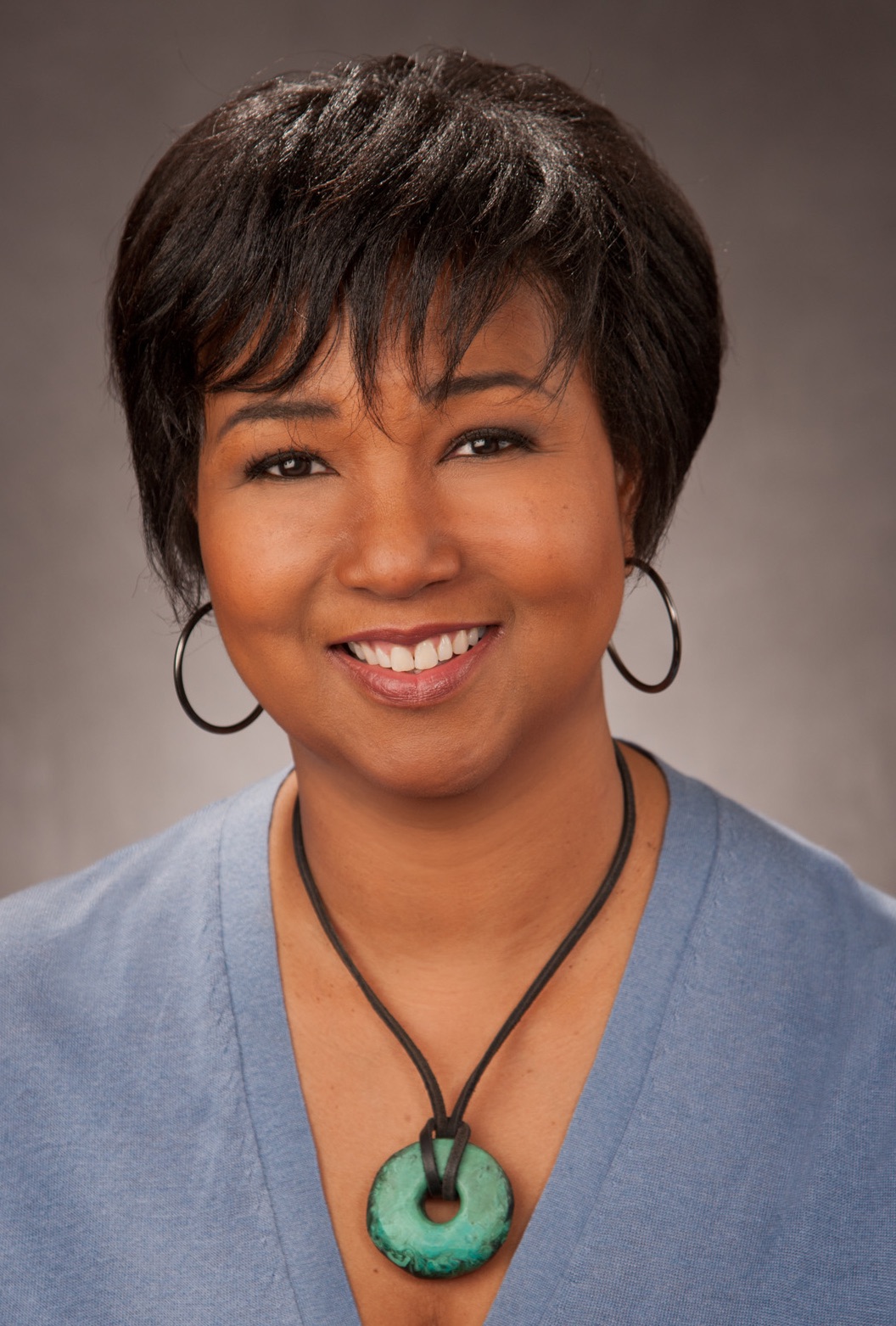
For thousands of years, human beings have always been in awe of STEM fields. From turning on lights to building complex machines that travel all over the Universe, STEM fields are a permanent reflection of the power of inquiry. For the course of time, humans have used formulas, inventions, and other items of research to define theories, to build institutions, and to help humanity reach their highest potentials in existence. I want to recognize 2 legendary human beings involving STEM named Benjamin Banneker and Mae Jemison. Benjamin Banneker (1731-1806) was not only a free African American almanac author. He was a surveyor, a landowner, and a farmer. He had extensive understanding of mathematics and engineering. Largely self-taught, he was a genius. He worked with Major Andrew Ellicot in a survey that contributed to the creation of Washington, D.C. His father was a free African American man named Robert (who was a freed slave from Guinea who died in 1759). His mother was named Mary Banneky. By the time he was 21, Benjamin Banneker created a wooden clock that stuck on the hour. He lived in Baltimore for years. Banneker was an expert in astronomy too. He used almanacs to predict eclipses and planetary conjunctions. He also had journals that dealt with his dreams and astronomical observations. Banneker wrote a letter to condemn Thomas Jefferson's owning slaves, and Banneker promoted equality in opposition to the notorious evil of slavery. A statue of Benjamin Banneker exists in the Smithsonian Institution's National Museum of African American History and Culture found at Washington, D.C. 


Sister Mae Jemison is 64 years old, and she is an icon of the STEM fields and of our culture in general. For years and decades, she has encouraged black people, women,and other people of color to pursue STEM and space exploration. She is the first African American woman to travel in space in world history. As an engineer, physician, and former NASA astronaut, her legacy is set in stone. Decatur, Alabama is the place of her birth. Later, she was raised in Chicago. She was a fan of Star Trek and the actress Nichelle Nichols' portrayal of Lieutenant Uhura. Her parents and teachers encourage her to pursue a career revolving around science. Mae Jemison studied ballet, jazz, and modern dance. She graduated from Chicago's Morgan Park High School in 1979. She was at Stanford University when she was 16. She graduated from Stanford in 1977 with a B.S. in chemical engineering and a B.A. degree in African American studies. She attended Cornell Medical School and helped people overseas form Africa, Cuba, to Thailand. She always loved dance, was on the Peace Corps, and did many great things to save lives. She was in space in 1992. Today, Mae Jemison has her own Foundation called the Dorothy Jemison Foundation. For years, she was a professor environmental studies at Dartmouth College. She is a member of many groups. To this very day, Mae Jemison is an advocate for black people, women, and other minorities to join STEM field related careers. From the ground on Earth to the area of space, Mae Jemison (who want people to recognize the grassroots people on the ground who made space exploration possible) has constructively outlined her gifts and contributions to world society. I have mentioned summaries of 2 amazing heroes of the past and the present in order to make the point that everyone of every color have that right to dream and fulfill their own aspirations legitimately. Another great form of advice for those who desire STEM related careers is to get legitimate certifications and licenses in order to be the best at what you do. We are in this together, and we are part of the community desiring the dream of justice for all.  


The 2021 Tokyo Olympics


Today, the 2020 Tokyo Summer Olympics is over. The Summer Olympics transpiring at Japan in 2020 has been a long time coming. It was previously cancelled in 2020 because of the pandemic. Yet, the athletic competitive mentality still remained among the myriad of sports performers. The pandemic is still spreading, and the initial ceremony was completely finished. The human being who lighted the flame was the young tennis player Naomi Osaka. Osaka is one of the greatest tennis players of her generation. Naomi has been brave to publicly discuss her mental health issues when dealing with public media conferences. She has Haitian and Japanese heritages. Also, some athletes couldn't join the Olympics because of catching the virus. Other athletes couldn't be a part of it because of, in my opinion, excessive rules in dealing with certain things like Sha'Carri Richardson, who admitted her errors. Richardson has been sincere in her words involving the marijuana issue.  Yet, after that, Sha'Cari liked a post disrespecting black Jamaican women track and field winners, and Sha'Cari disrespected the black American legend Allyson Felix. She is wrong for that, and she needs to apologize to the Jamaican athletes and Allyson Felix completely. At the end of the day, you have to critique Sha'Cari Richardson on her mistakes (as there are no excuses for her errors), so her mentors can stir her into the right direction. I believe in compassion, but I reject xenophobia and any form of bigotry. We certainly desire that Sha'Cari Richardson to experience growth and existing in a more blessed life. Also, Gwen Berry courageously protested against racial injustice similar to the 1968 Olympic fisted protest done by Tommie Smith and John Carlos. The IOC has been strident in their anti-activism policies, which I absolutely disagree with. The drones (during the opening Tokyo Olympic ceremony) making a design of the world's continents, the music, and the process of nations were certainly significant. I'm a black American, so the American team certainly came in ready to compete at the highest level. The events of swimming, track and field, basketball, tennis, soccer, baseball, golf, volleyball, and other sports have caused the world to see that despite our differences, we love the strength of human camaraderie. The sport of skateboarding is now the first sport of its kind having Olympic representation, and that is certainly great news. 


The Opening Ceremony


The opening ceremony of the 2020 Olympics Games was historic on July 23, 2021. It was formally opened by Emperor Naruhito. The Olympic Charter mandated that the proceedings had to have formal and ceremonial opening including welcoming speeches, the hoisting of the flags, the parade of athletes, and the mention of the host nation's culture including its history. The vast majority of the event was pre-recorded. There were some live segments expressed on television too. This ceremony is the 125th anniversary of the 1896 Summer Olympics at Athens, Greece (which was the inaugural edition of the modern Olympic Games). The theme of the Olympic Ceremonies is Moving Forward, referencing the global COVID-19 pandemic. There was the opening ceremony theme being the Tokyo 2020 slogan United by Emotion, which the organizers intend to "reaffirm the role of sport and the value of the Olympic Games." To this day, we are still fighting the pandemic virus which has caused many innocent human beings to lose their lives. Before the event started, there was a flight made by the Blue Impulse. This was the aerobatics squadron of the Japanese Air Self Defense Force. It marked the 57th anniversary of the 1964 Games in Tokyo. Later, doves were flown. There was video montage of the journey to allow the 2020 Games to come to Tokyo. 

The first performance of the ceremony, designed "[showcase] Japan’s forte in digital art and projection mapping technology," featured a digital graphics projection on the stadium floor. At the center of which nurse and boxer Arisa Tsubata  (who won a national championship only two years after taking the sport, however was unable to participate as an athlete after a qualifying match was cancelled) jogged on a treadmill, then was joined by performers on an exercise cycle, rowing maching, running in place. Other performers abstract danced, and colored ball of light were projected, "symbolizing the athletes’ plight in training during the pandemic for this event." The ceremony opened with dancers wearing white outfits connected by red strings, meant to "portray the inner workings of the body and heart." Many Japanese people honored the Japanese national flag.  The Olympics rings were revealed. They represents the continents (being Europe, Africa, Asia, the Americas, and Oceania) of the world involved in the Olympics. Greatness, athleticism, and courage aren't limited by a single continent. You always find a remnant of heroes in all of the continents of the world literally. Then, the Parade of Nations existed where team delegations from every nation involved existed. The Refugee Olympic Team, composed of refugees from several countries, was the second nation to enter, after Greece. For the first time ever in the opening ceremony, the countries that will host the next two Olympic Games, France (in 2024) and the United States (in 2028), marched immediately before the host nation Japan entered. A countdown from '21' referencing the postponement of games played, showing athletes overcoming the challenges of the past year. At 0, 694 fireworks then are then set off. 


For the first time, each team had the option to allow two flag bearers, one male and one female, in an effort to promote gender equality. As Russia had been banned to partake in sporting events by the World Anti-Doping Agency, Russian athletes marched under the ROC designation and flag. The United States of America expressed their large delegation too. According to the U.S. Olympic and Paralympic Committee (USOPC), Team USA has 613 members this year of 2021. Of them, 193 are returning Olympians. 

The cauldron was designed by Canadian-Japanese designer Oki Sato, who attended Waseda University, the same university as Yoshinori Sakai, the cauldron-lighter in 1964. The steps to reach the cauldron, symbolizing Mount Fuji, were "designed to evoke the image of a blooming flower." The music featured in the cauldron lighting included Boléro by Maurice Ravel, "Rise of the Planet 9" from Dr. Copellius, composed by Isao Tomita, followed by the fireworks featuring the music of Takashi Yoshimatsu's Symphony No. 2 "At terra."


The flame was brought into the stadium at the end of the torch relay by wrestler Saori Yoshida and judoka Tadahiro Nomura. It was carried by a trio of Japanese baseball greats (Shigeo Nagashima, Sadaharu Oh, and Hideki "Godzilla" Matsui), a doctor and a nurse, paralympian Wakako Tsuchida, and a group of students from Iwate, Miyagi, and Fukushima prefectures who were born shortly before the 2011 Tōhoku earthquake and tsunami. Finally Japanese tennis player Naomi Osaka carried it up the steps to light the Olympic cauldron. The flame was lit by Naomi Osaka. Naomi Osaka is one of the greatest tennis players of this generation who admitted her mental health issues courageously in public. She competed in the Olympics. Also, Naomi Osaka has pledged to give resources to the victims of the recent 2021 Haitian Earthquake at came about in August of 2021. Naomi Osaka is a great role model. 


The Early Days


The Olympics had many events going onward. On July 21, 2021 (on Wednesday), there were the first matches in the group stage of the women's tournament involving soccer. This day saw the group stage event of softball being played too. By July 22, the first matches of the group stage of the Men's tournament of soccer was played. The 2nd day of group stages of softball was played as well. On Friday, events like archery, rowing, and the opening ceremony took place at Japan National Stadium (on July 23, 2021). By Saturday of July 24, 2021, many awards came for numerous events like archery, cycling, judo, shooting, taekwondo, and weightlifting. Lee Kiefer won fencing for women's foil on July 25. For gymnastics, America won silver for Women's artistic team all-around (that includes Simone Biles too). The American Sunisa Lee won gold in gymnastics events. Carissa Moore won gold for women's surfing on July 27, 2021. Lydia Jacoby won women's 100m breaststroke in swimming. On July 2021, Women's 3X3 basketball gold winners are Stefanie Dolson, Allisha Gray, Kelsey Plum, and Jackie Young (from America). Russia won silver, and China won bronze. One the same day, Katie Ledecky won gold from America, Erica Sullivan from America won silver, and Sarah Kohler from Germany won bronze. On July 29, 2021, the American Sunisa Lee won gymnastics women's artistic individual all-around being gold, Rebecca Andrade won silver from Brazil, and Angeina Melnikova won bronze being from Russia. On July 29, 2021 Caeleb Dressel from America won gold from Men's 100m frestyle in swimming.


On Saturday of July 31, 2021, there was the historic victory for 3 black Jamaican women in the women's 100m. Elaine Thompson Herah won gold, Shelly-Ann Fraser-Pryce won silver, and Shericka Jackson won bronze. All 3 women are from Jamaica. Elaine Thompson Herah set up her legacy as the new generation's track and field legend. Shelly-Ann Fraser-Pryce is already this generation's top 5 greatest sprinters of our time already. Shericka Jackson is developing her career greatly as well. Daniel Stahl of Sweden won men's discus throw for gold, Sweden's Simon Pettersson won silver, and Lukas Weißhaidinger from Austria won bronze. For the mixed 4X400m relay, Poland won gold, the Dominican Republican won silver, and America won bronze. For the mixed relay of the triathlon, Great Britain won gold, America won silver, and France won bronze. Involving weightlifting, China won gold at 81kg with Lu Xiaojun, Dominican Republic's Zacarias Bonnat won silver, and Italy's Antonio Pizzolato won bronze. On August 1, 2021, Marcell Jacobs of Italy won gold in the 100m, Fed Kerley of America won silver, and Andre De Grasse from Canada won bronze. For the women's triple jump, Gon Lijiao won gold, Raven Saunders of America won silver, and Valerie Adams from New Zealand won bronze. For swimming (in the men's 4 X 100m medley relay), America won gold, Great Britain won silver, and Italy won bronze. 


Historic Wins


On Sunday of August 1, 2021, there were many results that took place in the 2020 Tokyo Olympics. For the 100m men's race, Marcell Jacobs of Italy won gold, Fred Kerley of the United States won silver, and Andre De Grasse won bronze being from Canada. In the men's high jump, Mutaz Essa Barshim of Qatar and Gianmarco Tamberi of Italy share gold medals. Maksim Nedasekau from Belarus won bronze. For the women's shot put, China's Cong Lijiao won gold, Raven Saunders from America won silver, and Valerie Adams from New Zealand from bronze. On Monday on August 2, 2021, the winners of the women's 100m hurdles are Jasmine Camacho-Queen from Puerto Rico (winning gold), Kendra Harrison from America (winning silver), and Megan Tapper from Jamaica (winning bronze). 


There are tons of Olympic news in Early August of 2021. We know that Simone Biles won bronze in the balance beam competition involving gymnastics. This comes after Simone Biles admitted her mental health issues to the public. It certainly takes bravery to describe emotional issues that the whole world knows. Biles remains the greatest gymnast in human history. For the 200 meters women race, Jamaica's Elaine Thompson adds to her legend by having the 2nd fastest time in 200m history with 21.53. She won gold. Elaine Thompson adds to her legend as the second Jamaican to won back to back 200m races in the Olympics (the first was Veronica Campbell-Brown). Namibia's Christine Mboma won silver, and the American Gabby Thomas won bronze with a time of 21.87. That 200m race was one with many of the greatest talented 200m track women runners of all time. Gabby Thomas is a living legend. As for the 400m hurdles for women, Sydney McLaughlin won gold with a new world record. Her time is 51.46 second. Silver was given to Dalilah Muhammad with a time of 51.58 seconds. Muhammad survived the pandemic virus and injury. Bronze was given to Femke Bol with a time of 52.03 seconds. The race had American Anna Cockrell in it too. The 2020 Tokyo Olympics have included some of the most talented athletes of all time indeed. Gwen Berry of America raised her fist in the air to defend free speech and promote solidarity with the oppressed.


USA's women volleyball team won gold during the 2020 Olympic Games. 


Belarusian sprinter Kristina Timanovskaya defected to Poland, because she criticized the dictator of Belarus. She lives in asylum after Belarusian team officials pulling her from the women's 200 meter sprint after she criticized the sport authorities on social media. Belgium's Nafissatou Thiam became the 2nd athlete ever to win back to back women's heptathlon titles after having the gold medal on Thursday. Thiam joins the American Jackie Joyner-Kersee to win 2 heptathlon titles at the Games with Joyner-Kersee winning in 1988 and 1992. Also, the American Katie Nageotte won the women's pole vault in gold. Silver was won by Russia's Anzhelika Sidorova. Great Britain's Holly Bradshaw won bronze.


There are many Olympic news now in early August of 2021. For the 200m Finals for men in the Olympics. De Grasse from Canada won gold. K. Bednarek from America won silver, and Lyles from America won bronze. After all of these years, the Afro-Canadian Andre De Grasse finally got his dream to win gold fulfilled. He ran the race of his life. For the 4 X 100 m relay for women race, Jamaica won gold, America won silver, and Great Britain won bronze. The Jamaican relay team had Briana Williams, Elaine Thompson-Herah, Shelly-Ann Fraser-Pryce, and Shericka Jackson. The American relay team had Javianne Oliver, Teahna Daniels, Jenna Prandini, and Gabreille Thomas. The Great Britain relay team had Asha Philip, Imani Lansiquot, Dina Asher-Smith, and Daryll Neita. For the 400m race, Shaunae Miller-Uibo from the Bahamas won gold, Jamaica's Stephanie Ann McPherson won silver, and America's Allyson Felix won bronze. Tamyra Mensah-Stock is the First Black Woman To Win Olympic Gold in Wrestling. She was born in Chicago on October 11, 1992. She grew up in Houston, Texas. 


Source on the image to the right: David Ramos / Getty Images


On Friday night of August 6, 2021, the USA men's basketball team won gold. This is their 4th straight gold medal. In the era of more international style of play being very commonplace, the American defeated France by 5 points. The leader of the American team is Kevin Durant. Durant has his 3rd Olympic gold medal, and he led the team in scoring and 3 point shooting. Weeks ago, many people questioned whether the American would win a gold medal, but they proved the doubts wrong again. The American team has shown offensive skills and defense. They blocked the shots of players from many teams like France, Australia, etc. Popovich was the coach of the team. Jayson Tatum, Damian Lillard, Bam Adebayo, June Holiday, Draymond Green, and other players were on the USA men's basketball team too. 


 SAITAMA, JAPAN – AUGUST 07: Team United States poses for photographs with their gold medals during the Men’s Basketball medal ceremony on day fifteen of the Tokyo 2020 Olympic Games at Saitama Super Arena on August 07, 2021 in Saitama, Japan. (Photo by Gregory Shamus/Getty Images) 


History is meant to be made all of the time. Allyson Felix made history on this year of 2021. She has her gold medal in the 4 X 400m relay. It was a product of her own dream. Allyson Felix survived so much to reach that gold. Now, she is the most decorated American track and field athlete in Olympic history with 11 medals. Felix recently had a daughter, she stood up for maternal leave, and she has rejected corporate exploitation. Her teammates winning the gold are Sydney McLaughlin, Dalilah Muhammad, and Athing Mu. They won the race in 3 minutes and 16.85 seconds. Poland won silver, and Jamaica won bronze. Allyson Felix is at peace as she has stated in the aftermath of the relay race. The men in the  4  X 400m relay race won gold too from America. Their names are: Michael Cherry, Michael Norman, Bryce Deadmon, Rai Benjamin, Trevor Stewart, Randolph Ross, and Vernon Norwood. Congratulations to the winners, including Allyson Felix. Felix has spoken out in public in favor of maternity leave, of equal rights, and respect given to pregnant women (especially black pregnant women and other pregnant women of color). Allyson Felix loves her husband and her daughter. That is always a blessing.


Team USA poses for photographs with their gold medals during the Women's Basketball medal ceremony on the final day of the 2020 Tokyo Olympics.
Mike Ehrmann/Getty Images. Congratulations to the 2020 USA Women's Olympic Basketball Team. 


A Finale to Remember


The end of the 2020 Tokyo Olympics is over. This Olympics in Tokyo is unlike any Olympics in my lifetime. You have new futuristic sports coming about like skateboarding. Also, you have historic firsts like the first Indian winning a gold medal. Not to mention that America has the most gold medals and the most overall medals in any nation during the 2020 Tokyo Olympics too. America proved once again that it can rise to the occasion like any other nation on Earth. The Olympics almost didn't exist, but it transpired in the midst of the horrendous pandemic. The American women volleyball team (with people like Foluke Akrinradewo, Jordan Thompson, Jordan Larson, etc.) won their first gold medal ever against Brazil. The American volleyball started to cry being emotional after their victory. The USA women's basketball team won gold too on August of 2021. They defeated Japan. Their team had the leaders of Sue Bird, Diana Taurasi, Britney Griner, Breanna Stewart, A'ja Wilson, Jewell Lloyd, Skylar Diggins-Smith, and other people who wanted to win. Diana Taurasi said that she wants to play for the Olympics at Paris in 2024. Japan won silver and France won bronze. The USA's women Olympic basketball has won gold for the 7th straight time since 1996. The WNBA has reached into new heights since the 1990's. 2022 will be the 25th year anniversary of the start of the WNBA too. The Tokyo Olympics have many athletics showing political stances against injustice and oppression too. America had 39 gold medals, 41 silver, and 33 bronze making a total of 113 medals in 28 different sports. After the Paralympic Games in Tokyo (from August to September of 2021), there will be the Winter Olympic Games in Beijing (in 2022), and the new Summer Olympic games in Paris by 2024. Times is going fast indeed. 2021 is almost over. I remember 1996 just like yesterday. Paris awaits.


Source: Fireworks are displayed over the Olympic Stadium during the closing ceremony of the Tokyo Olympics on August 8, 2021 in Tokyo, Japan. (Photo by Carl Court/Getty Images). 


The Conclusion


The last ceremonies of the 2020 Summer Olympics in Tokyo had many celebrations. They also made known that the next 2024 Olympics would be in Paris. It was a very historic Olympics. New events were introduced (during the 2020 Tokyo Olympics) like 3X3 basketball, freestyle BMX, and mixed gender team events like the return of madison cycling for men (and the introduction of the same event for women). New IOC policies also allowed the host organizing committee to add new sports to the Olympic program for just one Olympic Game. The disciplines added by the Japanese Olympic Committee were baseball and softball, karate, sport climbing, surfing, and skateboarding, the last four of which made their Olympic debuts. The United States of America topped the medal count by having the most total golds in 39 medals and the total medals being 113. America won 41 silver and 33 bronze. American athletes were very talented like other athletes in the world. China finished second by both respects (38 and 88). 


Host nation Japan finished third, setting a record for the most gold medals and total medals ever won by their delegation at an Olympic Games with 27 and 58. Great Britain finished fourth, with a total of 22 gold and 65 medals, becoming the first nation at the Summer Olympics to increase or equal their total medals won in the two Games subsequent to hosting them. The Russian delegation competing as the ROC finished fifth with 20 gold medals and third in the overall medal count, with 71 medals. Bermuda, the Philippines, and Qatar won their first-ever Olympic gold medals. Burkina Faso, San Marino, and Turkmenistan won their first-ever Olympic medals. 


The 2020 Summer Paralymics took place in Tokyo. It lasted from August 24, 2021 to September 5, 2021. They were the 16th Summer Paralympic Games as organized by the International Paralympic Committee (IPC). 162 nations participated in the games including the Refugee Paralympic Team and the Russian Paralympic Committee. The games had 4,403 athletes and 539 events in 22 sports. The Games were the second Summer Paralympics hosted by Tokyo since 1964, and the third Paralympics held in Japan overall since the 1998 Winter Paralympics in Nagano. The Games featured 539 medal events in 22 sports, with badminton and taekwondo both making their Paralympic debut to replace football 7-a-side and sailing. China topped the medal table for the fifth consecutive Paralympics, with 96 golds and 207 total medals. Great Britain finished second for the ninth time, with 41 golds and 124 total medals. The United States finished third, with 37 golds, their best finish since the 2008 games, and 104 total medals. The Russian Paralympic Committee finished fourth, with a total of 36 golds and 118 total medals, putting them in third place when ranked by total medals. Many volunteers helped the athletes constantly. The flames from each of the flame lighting festivals hosted in each prefecture were brought together in Tokyo on August 21, 2021 where the Paralympic Flame was officially lit. The last four days of the torch relay started in Tokyo. The locations in which the torch relay goes through were similar to the 2020 Summer Olympics torch relay. Badminton and taekwondo made their Paralympic debut in Tokyo, while classifications were added or realigned in other sports; canoe, shooting, table tennis, track cycling, and wheelchair fencing saw increases in the number of medal events held, while there were reductions in athletics and swimming.  Many of the athletes in the 2020 Paralympic Games are Uganda's Ritah Asiimwe, Ellie Simmonds, Jardiel Vieira Soares, and other human beings. 


*The 2020 Tokyo Olympics reminds us that working together matters. We should not forsake our core convictions of integrity, justice, and honor. We should realize that if we want the world to be better, then we have the responsibility in doing our parts in making it better. That's real talk. 


By Timothy