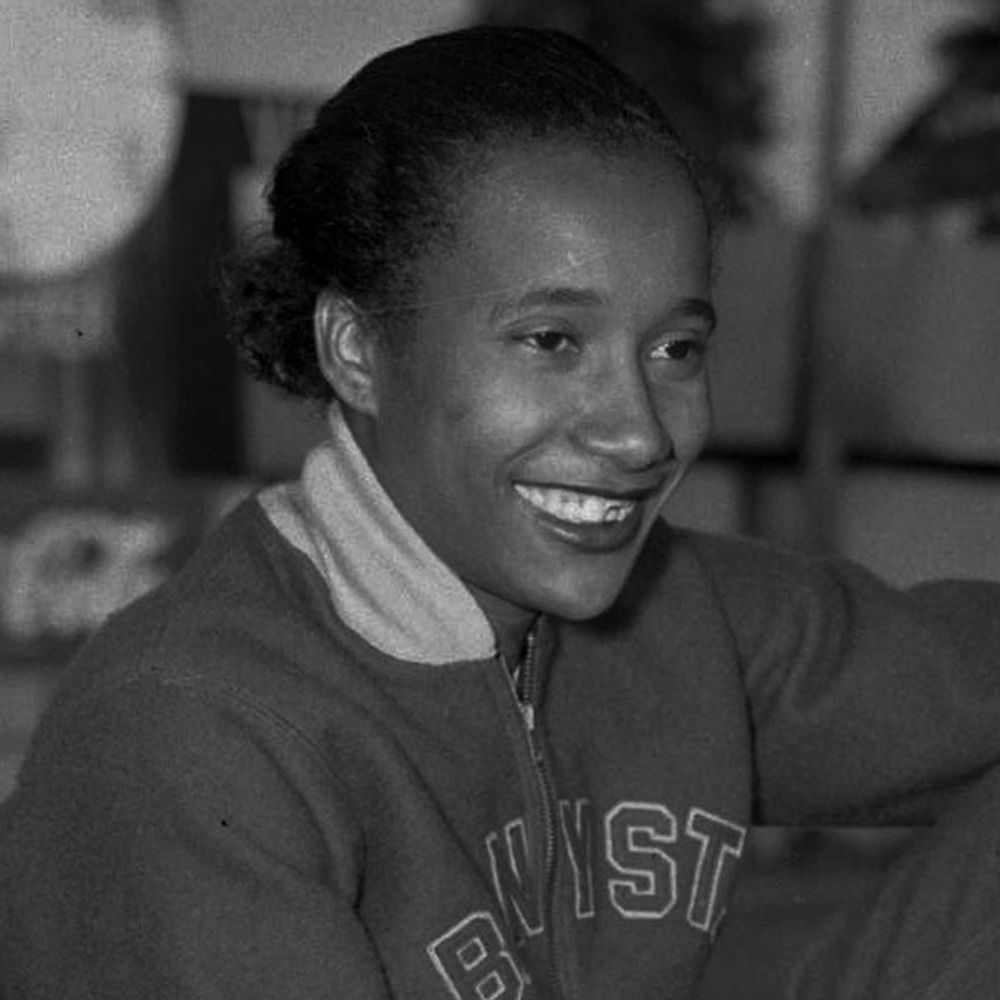
Alice Coachman
Unsung athletes are numerous in the longevity of human history. One unsung athlete, being one of the greatest athletes of all time, was Sister Alice Coachman. A lot of people don't know who she is, but she was a legendary human being. She was born and raised in the South to be the first black woman to win an Olympic gold medal. She lived to be exactly 90 years old. For almost one century, she has inspired the whole world with her talent, strength, and a sense of destiny to fulfill her own goals and aspirations. Involving track and field, Coachman loved to perform the long jump in athletic competition. She established a profoundly potent foundation where future black women athletes (and other athletes of every color) have shined like Nicola Adams, Serena Williams, Venus Williams, Jackie Joyner-Kersee, Gabby Douglas, Carmelita Jeter, Dominique Dawes, Simone Manuel, Shelly Ann Fraser-Pryce, Allyson Felix, Melissa Jefferson-Wooten, Simone Biles, Ibtihaj Muhammad, Florence Griffith Joyner, Wilma Rudolph, Syndey McLaughlin, Mo'ne Davis, Noami Osaka, Misty Copeland, and other human beings. At the end of the day, we have purpose in life. The present and the future are genuinely cultivated by the past. So, we honor Alice Coachman as a means to inspire us to move forward during out time in 2026 and beyond into the subsequent future. Alice Coachman was an icon of black culture and black history forever indeed.

Her Early Life
Alice Coachman was born on November 9, 1923, in Albany, Georgia. She was the fifth child of Fred and Evelyn Coachman's ten children. Coachman was unable to access athletic training facilities or participate in organized sports because of her skin color. Back then, there was massive widespread opposition to girls and women being involved in sports activities. Still, she rose. Coachman trained to use what was available to her. She ran shoeless along the dirt roads near her home. She used homemade equipment to practice her jumping. Her 5th-grade teacher, Cora Bailey (when Coachman was at Monroe Street Elementary School), and her aunt, Carrie Spry, encouraged Coachman to pursue her dreams. There were reservations from her parents. Upon enrolling at Madison High School in 1938, she joined the track team, working with Harry E. Lash to develop her skill as an athlete. Within a year she drew the attention of the Tuskegee Institute in Tuskegee, Alabama. In 1939 she joined the Tuskegee Preparatory School at the age of 16 after being offered a scholarship. The scholarship required her to work while studying and training, which included cleaning and maintaining sports facilities as well as mending uniforms.

Her Athletic Career
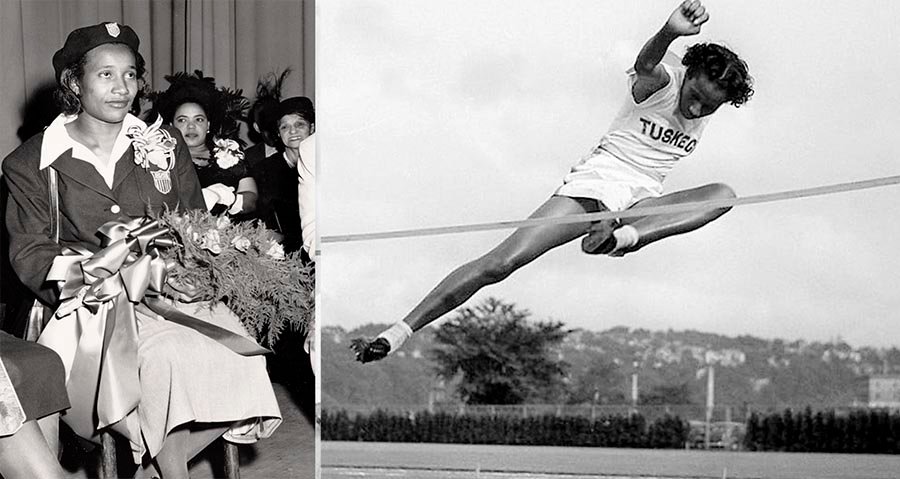
Coachman went on to graduate with a degree in dressmaking from the Tuskegee Institute in 1946. The following year, she continued her studies at Albany State College, receiving a B.S. in Home Economics with a minor in science in 1949. She became a teacher and track-and-field instructor. Her athletic career grew rapidly. Prior to arriving at the Tuskegee Preparatory School, Coachman competed in the Amateur Athletic Union's (AAU) Women's National Championships breaking the college and National high jump records while competing barefoot. Her unusual jumping style was a combination of straight jumping and western roll techniques. Coachman dominated the AAU outdoor high jump championship from 1939 through 1948, winning ten national championships in a row. Her success earned her the nickname the "Tuskegee Flash." In addition to her high jump accomplishments, she won national championships in the 50-meter dash, the 100-meter dash and with the 400-meter relay team as a student at the Tuskegee Institute. She won 26 national championships during her nine years of competition, more than any other woman with the exception of her Polish-American rival Stella Walsh. During the same period, Coachman won three conference championships playing as a guard on the Tuskegee women's basketball team. Despite being in her prime, Coachman was unable to compete in the 1940 and 1944 Olympic Games as they were canceled because of World War II. In the opinion of sportswriter Eric Williams, "Had she competed in those canceled Olympics, we would probably be talking about her as the No. 1 female athlete of all time."
Coachman's first opportunity to compete on a global stage was during the 1948 Olympic Games in London. She qualified for the US Olympic team with a high jump of 5 feet 4 inches (1.63 m) breaking the previous 16-year-old record by 3⁄4 in (19 mm). In the high jump finals of the 1948 Summer Olympics, Coachman leaped 1.68 m (5 ft 6 in) on her first try. Her nearest rival, Great Britain's Dorothy Tyler, matched Coachman's jump, but only on her second try. Coachman was the only American woman to win an Olympic gold medal in athletics in 1948. Her medal was presented by King George VI.
Life After Professional Athletics
Upon her return to the United States after the Olympics, Coachman had become a celebrity. Soon after meeting President Harry Truman and former First Lady Eleanor Roosevelt, she was honored with parades from Atlanta to Albany and was thrown a party by Count Basie. In 1952, she became the first African-American woman to endorse an international product when she was signed as a spokesperson by the Coca-Cola Company, which featured her prominently on billboards alongside 1936 Olympic winner Jesse Owens. In her hometown, Alice Avenue, and Coachman Elementary School were named in her honor. Even with her success, there was sexism. So, news coverage about Coachman as an athlete varied. The coverage of women compared to men was already stark in contrast, with men typically receiving full spreads with photos, while female athletes got short articles with no pictures. In 1942, she was mentioned in the Chicago Tribune in an article titled "Tuskegee Wins 6th Women's AAU Title in Track" and was reported on by the Boston Globe in an article titled "Tuskegee Girl Eclipses Stella in Title Meet". However, when the New York Times wrapped up reporting for the Olympics where she was the only American woman to win gold in track and field, the first African American to win a gold medal, and became a new Olympic record holder, they only wrote one sentence. When Coachman became a triple winner at the AAU Women's Nationals in 1945, beating Walsh, the Times only reported on Walsh's single win, ignoring Coachman's three victories. Despite this, she was praised in an interview with African-American reporter Sam Lacy by Walsh, who said Coachman was "the toughest opponent [she] had ever met" and the "finest runner [she] ever raced against."
Her Passing
Coachman's athletic career ended when she was 24. She dedicated the rest of her life to education and to the Job Corps. Coachman died in Albany, Georgia on July 14, 2014, of cardiac arrest after suffering through respiratory problems. She had a stroke a few months prior for which she received treatment from a nursing home. She had two children during her first marriage to N. F. Davis, which ended in divorce. Her second husband, Frank Davis, preceded her in death.
The Legacy of Alice Coachman
It is important to respect and honor unsung legends and icons involving athletics. One human being was Alice Coachman. She was a black woman of the South who made lifelong contributions to humanity. Albany, Georgia, was her birthplace and the place where she passed away, too. She helped to break down barriers as the first black woman of any nation to win an Olympic gold medal in 1948 (in the city of London). She opposed racism and discrimination throughout her life. Back then, she had to pick cotton, supply corn to local mills, and pick plums plus pecans to sell them. She did this to provide for her family when she was a teenager. She has been blessed with great athleticism. She loved to run track and field races and the long jump. She gave human beings inspiration. She said to people that, "when the going gets tough and you feel like throwing your hands in the air, listen to that voice that tell you ‘Keep going. Hang in there.’...Guts and determination will pull you through.” She loved to teach people about track and field. In fact, she formed the Alice Coachman Track and Field Foundation to help support younger athletes and provide assistance to retired Olympic veterans. By the 1996 Summer Olympic Games in Atlanta, Georgia, she was honored as one of the 100 greatest Olympians in history. She was later inducted into nine different halls of fame, including the National Track and Field Hall of Fame in 1975 and the U.S. Olympic Hall of Fame in 2004. Her peers during the 1940s were Joe Louis, Don Barksdale, Kenny Washington, Jackie Robinson, Tidye Pickett, Louise Stokes, Babe Didrikson Zaharias, Ora Washington, Matilda and Margaret Peters, etc. Alice Coachman paved the way for many athletes now, including Simone Biles, Melissa Jefferson-Wooden, Masai Russell, and Tara Davis-Woodhall, and other icons.

Anna Julia Cooper
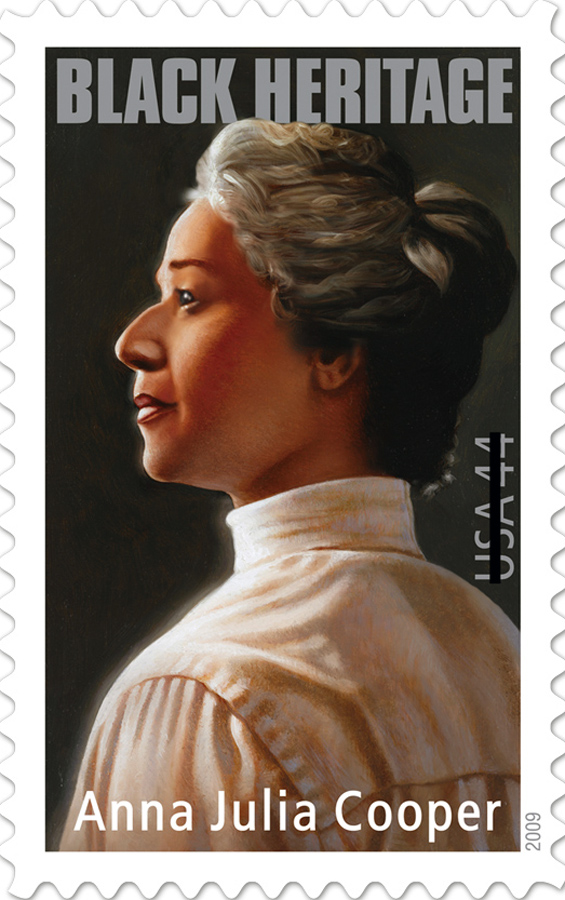
In our black community, we have tons of unsung, heroic, and intellectual giants. One such unsung hero was Anna Julia Cooper who lived from August 10, 1858, to February 27, 1964. She was a multifaceted woman who brought many gifts in the world atmosphere. She was not only in favor of black liberation which is a great thing to pursue. She was an author, educator, sociologist, speaker, black feminist leader, and African American scholar. She was born in the South in North Carolina. From being born enslaved to earning a Ph.D. back decades ago, she accomplished so much in the Earth. Her book of A Voice from the South: By a Black Woman of the South was one of the first works by a black woman to articulate black feminist views. Cooper also promote Pan-African unity and opposed the evil of colonialism. Colonialism is evil, because it is a nefarious philosophy that teaches that one nation has the right to steal the resources and dominate the people of another nation using unjust means. She spoke and studied at many universities, she helped the poor, and her work focused on intersectionality.
Her Early Life
Anna Julia Haywood was born as a slave in Raleigh, North Carolina in 1858. She and her mother, Hannah Stanley Haywood, were enslaved by George Washington Haywood, one of the sons of North Carolina's longest-serving state Treasurer John Haywood, who helped found the University of North Carolina. Either George, who enslaved her mother, or his brother, Dr. Fabius Haywood, who enslaved her older brothers, Rufus and Andrew, was probably Anna's father; Anna's mother refused to clarify paternity. George became state attorney for Wake County, North Carolina, and together with a brother owned a plantation in Greene County, Alabama. Julia Anna Haywood Cooper worked as a domestic servant in the Haywood home and had the two aforementioned older brothers. Andrew, enslaved by Fabius J. Haywood, later served in the Spanish–American War. Rufus was also born enslaved and became the leader of the musical group Stanley's Band.
In 1868, when Cooper was nine years old, she received a scholarship and began her education at the newly opened Saint Augustine's Normal School and Collegiate Institute in Raleigh, founded by the local Episcopal diocese to train teachers to educate the formerly enslaved and their families. The Reverend J. Brinton offered Cooper a scholarship to help pay for her expenses. According to Mark S. Giles, a Cooper biographer, "the educational levels offered at St. Augustine ranged from primary to high school, including trade-skill training." During her 14 years at St. Augustine's, she distinguished herself as a bright and ambitious student who showed equal promise in both liberal arts and analytical disciplines such as mathematics and science; her subjects included languages (Latin, French, Greek), English literature, math, and science. Although the school had a special track reserved for women – dubbed the "Ladies' Course" – and the administration actively discouraged women from pursuing higher-level courses, Cooper fought for her right to take a course reserved for men by demonstrating her academic ability. During this period, St. Augustine's pedagogical emphasis was on training young men for the ministry and preparing them for additional training at four-year universities. One of these men, George A. C. Cooper, would later become her husband. He died after only two years of marriage. Anna Julia Cooper's academic excellence allowed her to tutor to younger children. This tutoring helped her to pay for her educational expenses. After completing her studies, she remained at the institution as an instructor. In the 1883–1884 school year, she taught classics, modern history, higher English, and vocal and instrumental music; she is not listed as faculty in the 1884–1885 year, but in the 1885–1886 year she is listed as "Instructor in Classic, Rhetoric, Etc." Her husband's early death may have contributed to her ability to continue teaching; if she had stayed married, she might have been encouraged or required to withdraw from the university to become a housewife.

After her husband's death, Cooper entered Oberlin College in Ohio, where she continued to follow the study designated for men, graduating in 1884. Given her academic qualifications, she was admitted as a sophomore. She often attempted to take four classes, rather than three as was prescribed by the college; she also was attracted to Oberlin by its reputation for music, but was unable to take as many classes in piano as she would have wished. Among her classmates were fellow black women Ida Gibbs (later Hunt) and Mary Church Terrell. At Oberlin, Cooper was part of the "LLS", "one of the two literary societies for women, whose regular programs featured lectures by distinguished speakers as well as singers and orchestras." After teaching briefly at Wilberforce University, she returned to St. Augustine's in 1885. She then returned to Oberlin and earned an M.A. in mathematics in 1888, making her one of the first two black women – along with Mary Church Terrell, who received her M.A. in the same year - to earn a master's degree. In 1890–91 she published an essay on "Higher Education of Women", which argued for the benefits of black women being trained in classical literature, referring to both Socrates and Sappho among her examples, and demonstrated an interest in access to education which would inform much of her later career. In writing this essay, she preceded W. E. B. Du Bois' similar arguments in "Of the Training of Black Men" (The Souls of Black Folk, 1903) by almost a decade. In 1900, she made her first trip to Europe to participate in the First Pan-African Conference in London, and then toured Europe: After visiting the cathedral towns of Scotland and England, she went to Paris for the World Exposition. "After a week at the Exposition, she went to Oberammergau to see the Passion Play, thence to Munich and other German towns, and then to Italy through Rome, Naples, Venice, Pompeii, Mt. Vesuvius, and Florence."

Her Activism
Anna Julia Cooper moved to Washington, D.C. to promote more social activism. In 1892, Cooper, Helen Appo Cook, Ida B. Wells, Charlotte Forten Grimké, Mary Jane Peterson, Mary Church Terrell, and Evelyn Shaw formed the Colored Women's League in Washington, D.C. The goals of the service-oriented club were to promote unity, social progress, and the best interests of the African-American community. Cook was elected president. Cooper was a friend of Grimek. She later wrote a memoir about the Grimké Family, titled "The Early Years in Washington: Reminiscences of Life with the Grimkés," which appeared in Personal Recollections of the Grimké family and the Life and Writings of Charlotte Forten Grimké (privately published in 1951). She began as a tenured teacher, teaching Latin, math and science at M Street High School, becoming principal in 1901 or 1902. She later became entangled in a controversy involving the differing attitudes about black education, as she advocated for a model of classical education espoused by W. E. B. Du Bois, "designed to prepare eligible students for higher education and leadership", rather than the vocational program that was promoted by Booker T. Washington. This approach to the education of black students clashed with the backlash over Reconstruction gains in Black civil and political rights, and resulted in the D.C. School Board refusing to reappoint her in 1906. Later, she was recalled to M Street, and she fit her work on her doctoral thesis into "nooks and crannies of free time." The truth is that young people need both intellectual education and vocational education to be a jack of all trades. People need to know how to read, write, analyze information, and build things that are constructive to society. During her years as a teacher and principal at M Street High School, Cooper also completed her first book, titled A Voice from the South: By a Black Woman of the South, published in 1892, and delivered many speeches calling for civil rights and women's rights.
The book is widely viewed as one of the first articulations of black feminism and advanced a vision of self-determination through education and social uplift for African-American women. Its central thesis was that black women's educational, moral, and spiritual progress would improve the general standing of the African-American community. She says that men's violent natures often counter the goals of higher education, so it is essential to foster more women intellectuals because they will bring more elegance to education. This view was criticized by some as submissive to the 19th-century cult of true womanhood, but others label it as one of the most important arguments for Black feminism in the 19th century. The truth is that black women leaders and black men leaders are valuable in building up the black community in general. Cooper advanced the view that educated and successful black women must support their underprivileged peers in achieving their goals. The essays in A Voice from the South also touched other topics such as the socioeconomic realities of Black families and the administration of the Episcopal Church. A Voice from the South received significant praise from leaders in the black community. It was widely praised within the Black community and among intellectuals for its pioneering ideas on race, gender, and education.

Her Later Years
During Anna J. Cooper's later years, she continued to be an author, educator, and public speaker. In 1893, she gave the opening address at the World's Congress of Representative Women in Chicago. She was one of five African American women invited to speak at this event, along with Fannie Barrier Williams, Sarah Jane Woodson Early, Hallie Quinn Brown, and Fanny Jackson Coppin. In the 1902 speech, she said the following words: "...A nation's greatness is not dependent upon the things it make and uses. Things without thoughts [ sic] are mere vulgarities. America can boast her expanse of territory, her gilded domes, her paving stones of silver dollars; but the question of deepest moment in this nation today is its men and its women, the elevation at which it receives its "vision" into the firmament of eternal truth." (The Ethics of the Negro Question", September 5, 1902). In 1914, at 56, Cooper began courses for her doctoral degree at Columbia University. However, she was forced to interrupt her studies in 1915 when she adopted her late half-brother's five children upon their mother's death. Later, she transferred her credits to the University of Paris, which did not accept her Columbia thesis, an edition of Le Pèlerinage de Charlemagne. Over a decade, she researched and composed her dissertation, completing her coursework in 1924. Cooper defended her thesis "The Attitude of France on the Question of Slavery Between 1789 and 1848" in 1925. Cooper's retirement from Washington Colored High School in 1930 was not the end of her political activism.
The same year she retired, she accepted the position of president at Frelinghuysen University, a school founded to provide classes for D.C. residents lacking access to higher education. Cooper worked for Frelinghuysen for twenty years, first as president and then as registrar, and left the school only a decade before she died in 1964 at the age of 105. At the age of 65, she became the fourth Black woman in American history to earn a Doctor of Philosophy degree. Her work was eventually published in an anthology of medieval French literature and was requested for classes and the bookstore at Harvard. In 1929, Cooper was elected to succeed Jesse Lawson as president of Frelinghuysen University, a post she assumed in 1930. Under Cooper's leadership in the 1930s, Frelinghuysen University focused on increasing literacy among the African American working poor and providing liberal arts and vocational education for unskilled workers. Karen A. Johnson writes in "In Service for the Common Good" Anna Julia Cooper and Adult Education that Cooper practiced a "decolonizing pedagogy", further saying: "Cooper believed that the essential purpose for a "decolonizing" approach to adult education content was to assist her students in developing their abilities to question dominant thought ... Cooper's ultimate goal for her learning adults was their preparation for intellectual enlightenment as well as to equip them to battle for a better society at large." After the university found servicing its mortgage prohibitive, she moved the institution to her own house. Cooper retired from her position as president in 1940, but she continued her involvement with the university, taking a position as its registrar.
Her Passing
Anna Julia Cooper's educational philosophy was deeply rooted in the belief that education is a transformative tool for social change and racial uplift, particularly for African Americans. As an educator and later the president of Frelinghuysen University, Cooper championed a holistic approach to learning that went beyond mere vocational training. She emphasized that education should cultivate critical thinking, self-improvement, and active civic engagement, preparing students to be not only skilled but socially responsible individuals. Scholars argue that Anna Julia Cooper's work has been overshadowed by more celebrated figures like W.E.B. Du Bois, even though her contributions often preceded or paralleled his ideas. For example, Cooper addressed concepts akin to “double consciousness” and critiqued portrayals of Black Americans in literature well before Du Bois, who frequently referenced her ideas without providing proper attribution. On February 27, 1964, Cooper died in Washington, D.C., at the age of 105 from a heart attack. Her memorial was held in a chapel on the campus of Saint Augustine's College, in Raleigh, North Carolina, where her academic career began. She was buried alongside her husband at the City Cemetery in Raleigh.

The Legacy of Anna Julia Cooper
Bravery represents her legacy and cultural ethos. No one can question her commitment to human justice. Anna Julia Cooper was from the South and wrote literature that both racial equality and gender equality. Her life has been filled with adventure and overcoming challenges. That is self-evident by the characteristics of her life story. She was born a slave, but she never remained a slave. She didn't just earn a Bachelor's degree of Arts in 1884. She earned a master's degree in mathematics in 1879, and her doctorate degree came about at the University of Paris. She was the 4th African American woman to earn a Ph.D. She loved her children, Lula Love Lawson and John Love. Cooper had an expansive view of the world. For example, she promoted black feminism (that means equality and justice for black women is paramount to improve her education in general), she supported Pan-Africanism, she fought anti-black lynching (along with other pro-black freedom activists like Ida B. Wells, Frederick Douglass, and Lucy Ellen Moten). Cooper later lived in Washington, D.C, where she lived to be 105 years old. In that span of time, she had written glorious literature, fought for legitimate social change, and followed the august precept that a potent education is a key method in improving the intellectual, cultural, and other aspects of societal growth.
By Timothy

No comments:
Post a Comment