Laodicea
The current era of the history of Christianity is the Laodicean era. It has existed since 1945 or at the end of World War II. We live in the era of a paradox. In this era, we have massive technological development, an increase of better sanitation, the growth of fitness culture, the massively new inventions that allow people to communicate with each other over the span of thousands of miles simultaneously, and we have icons of acting, STEM, sports, political activists, etc. This has caused many human beings to not want anything to do with spiritual or transcendent matters. Yet, many people are completely void in their lives filled with anxiety, mental health issues, confusion about their life goals, and pain despite living in the world that is so advanced materially. The reason is complicated from the growth of A.I., the growth of social media, the debates about gender roles, and people seeking guidance in their own lives. Also, we have seen the growth of the lies of the New Age Movement. The New Age Movement is the biggest deception probably in human history (other than the MAGA movement), because it is more slick than overt false religions like Scientology, Heaven's Gate cult, etc. The New Age Movement is made up of different factions, but they are unified in many views like all humans have a potential to be God or gods, if God exists, he is just a force, many of them deny a literal Hell, and many have a hatred of mainstream spirituality. With all of the gifts found in human beings, humans still are not infallible or perfect, only Jesus Christ is a perfect human being. That is why New Age advocate mix truth with error to gain more people. New Agers readily mix witchcraft and occultic views to gain followers and claim to have "power." Yet, many of them follow a moral relativism and a historical revisionism about the history of Christianity. Also, there is a remanant in our time filled with people who love to spread the Gospel, who are saving souls to Jesus Christ, and who are going about being a living example of righteousness.
The Ecumenical Movement
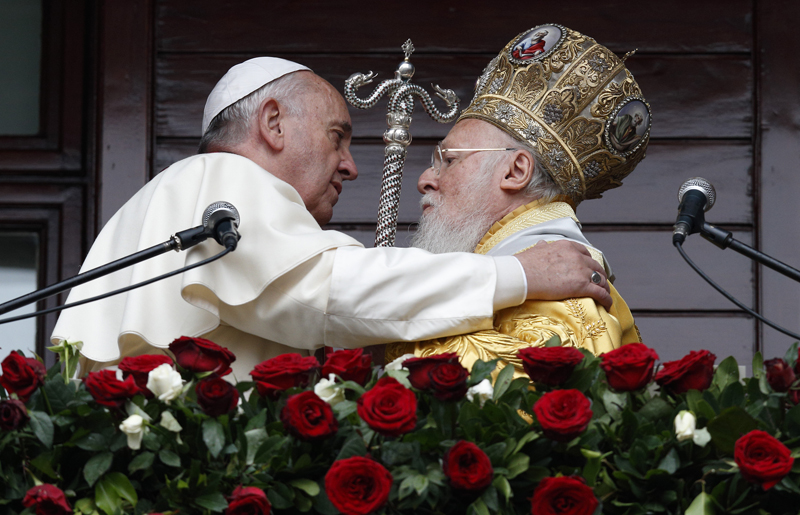
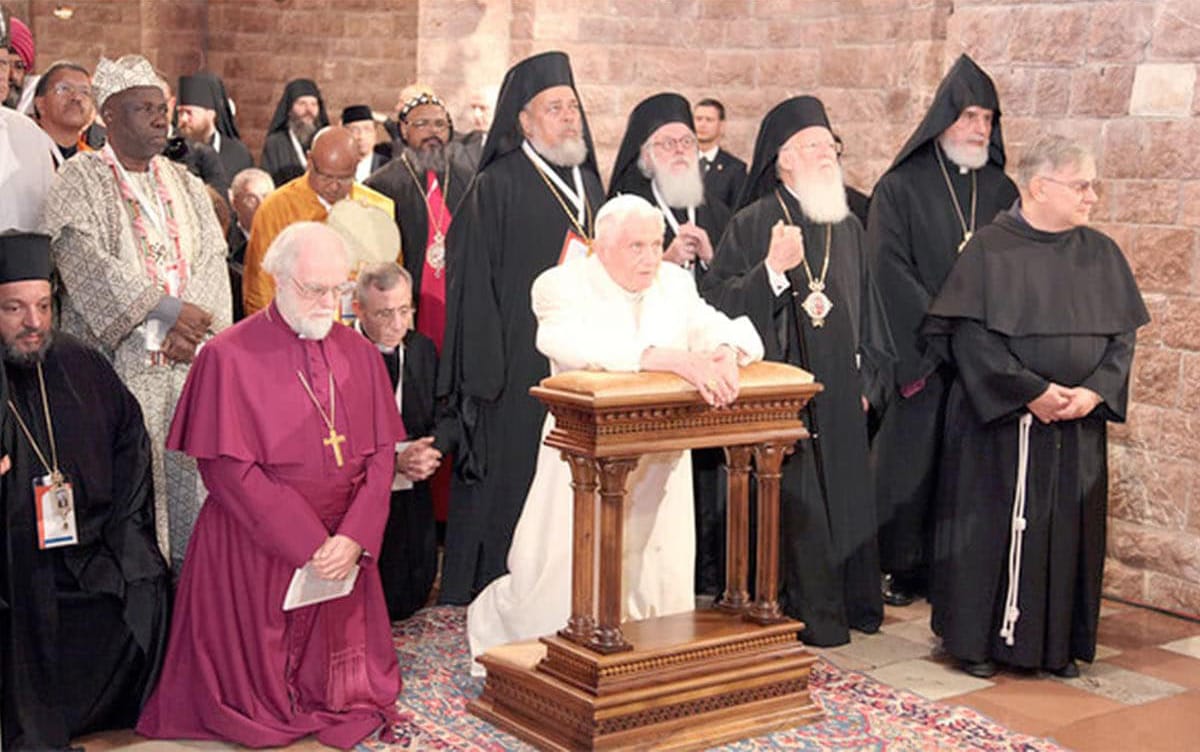
The Ecumenical Movement is one of the most unique, deceptive movements in the world. It believes in the view that nearly all denominations that claim to be "Christian" (even Jehovah Witnesses, Unitarians, Mormons, etc.) are all are one in the religion of Christianity. It views doctrinal differences as secondary to unity. There is a large call for unity, but unity must exist in truth and sound doctrine. The Ecumenical movement is a deception, because it has an unscriptural view of doctrine. Doctrine is found dozens of times in the Bible. Acts 2:42 says that the church at Jerusalem was steadfast in the apostles' doctrine. There is only one doctrine that Jesus Christ is the Son of God, he died and rose from the dead three days later, and he sits at the right side of God the Father. The church is required to contend to sound doctrine as found in Jude 1:3: "Beloved, when I gave all diligence to write unto you of the common salvation, it was needful for me to write unto you, and exhort you that ye should earnestly contend for the faith which was once delivered unto the saints." The Apostle Paul promoted Christians to embrace real doctrine found in 1 Timothy 1:3 and 1 Timothy 4:13. Doctrine is very important as it relates to baptism. Many denominations believe in the false doctrine that baptism is a substitute for the blood of Jesus Christ to forgive all sins, but the Bible says that baptism is immersion, an ordinance for only believers in God to follow, and that infants can't be baptized. Many in the Ecumenical movement ignore apostasy and how to deal with it. Jesus Christ predicted that before the time of the end, apostasy will exist as found in Matthew 13:10-11. 24-15, 33. The Apostle Paul called this apostasy embracing fables, lovers of oneself, being cold towards people, disobeying mothers and fathers (who are doing the right thing), and rebellion against righteousness. False doctrines like calling Mary the Queen of Heaven, transubstantiation (or the communion host becoming Jesus, which is blasphemy), purgatory, the intercession of the saints (which is overt necromancy), the world-faith heresy, etc. are commonly embraced by deceived human beings in our generation. The Ecumenical movement is wrong to ignore the call for believers in God to separate from heresies and heretics until they come home to embrace the light of God. True Christian unity is about being in one mind in embracing Jesus Christ, spreading the Gospel (as commanded by Jesus in his Great Commission), and follow the Holy Scriptures. The Ecumenical movement is controlled by major religious groups like the World Council of Churches, the Roman Catholic Church (especially after the Vatican II creation), the Rockefeller Foundation, Mormonism, etc. They are funded by the CFR, the Bilderberg Group, the Skulls and Bones, and numerous establishment organizations. The Ecumenical Movement existed back in the 19th century via cooperative, interdenominational missionary societies like the London Missionary Society, YMCA, and the YWCA. Later, the 1910 Edinburgh World Missionary Conference started the modern ecumenical movement to end denominational divisions in Protestants. the World Council of Churches was formed in 1948 to represent Protestant, Anglican, and Orthodox Churches. The Vatican II conference from 1962 to 1965 was created by Pope John XXIII to promote interfaith dialogue among Protestant, Orthodox, and Catholic Churches. You have the National Council of Churches and more council in the 20th and 21st centuries.
Vatican II
Vatican II was one of the most important events in religious history. It changed the Roman Catholic Church forever. It has been called The Second Ecumenical Council of the Vatican. It was the twenty first and most recent ecumenical council of the Catholic Church. This meeting was in St. Peter's Basilica in Vatican II from October 11, 1962, to December 1965. The two popes who presided over Vatican II were Pope John XXIII and Pope Paul VI. The Vatican II conference didn't compromise too much from Vatican documents. It promoted a renewal of Catholic life and discipline, had liturgical reform, promoted ecumenism, and dealt with the modern world. The part of ecumenism called Unitatis redintegratio (or the Restoration of Unity) made it very clear that they want all Christian denominations to be controlled by the Vatican. Its opening words of this decree were "The restoration of unity among all Christians is one of the principal concerns of the Second Vatican Council." Therefore, the Vatican wants all of Christendom to be under the unity of the Vicar of Christ or the Pope. On the other hand, real believers in God must be unity with God alone. Pope John Paul II decades later built on the teaching of unitatis Redintegratio in his encyclical letter of May 25, 1995 called Ut unum sint. Vatican II had four constitutions and nine decrees. The Vatican II event deals with ecclesiology, and the Church's approach to religious freedom. There were controversies of the Council among Protestants and Baptists who viewed it as promoting the heresies of Catholicism. Many traditionalist Catholics disagreed with the Vatican II conference as going too far in compromising in their minds and the traditionalists sought a more hardline approach to Catholic theology. The schematic Society of Saint Pius X (SSPX) was founded in 1970 by Archbishop Marcel Lefebvre who is against the Vatican II's decrees. Lefebvre was excommunicated from the Vatican in 1988 after consecrating bishops without papal approval. Pope Benedict XVI lifted the excommunications of the surviving bishops consecrated by Lefebvre, while stating the SSPX had no canonical status in the Church (and its ministers didn't exercise legitimate ministry). As of 2026, the SSPX in its entirety has been excommunicated.
The group called sedevantists believe that the Vatican has been vacant since the death of Pius XII or John XXII, while sedpreivationists hold that later popes are materially but not formally popes. The degree of Digitatis humanae (Of the Dignity of the Human Person) related to religious freedom issues. It spells out the church's support for the protection of religious liberty via a vote of 2,308 to 70. It was significant and promoted by Pope Paul VI on December 7, 1965. This was opposed by many traditionalist Catholics. The Vatican II's views dealt with the evolving world around all of us, but they didn't reject its core doctrines. The Roman Catholicism affirms the head of the church being the Pope, centralized power of the Vatican, the Roman priesthood being celibate by force, sacramentalism, veneration of Mary and the saints, and other false doctrines. The Vatican II Council was an official Catholic doctrinal convocation lasting more than three years and attended by more than 2,400 Roman Catholic bishops. Vatican II believes that the mass is a re-sacrificed, that Christ is present physically and spiritually in the Mass, and the mass's wafer Host must be adored in communion. This is heresy as Communion is symbolic to celebrate the sacrifice of Jesus Christ on the Cross. Vatican II is clear that they believe that the Catholic Church alone is where all Christians must get salvation through. Obviously, I don't subscribe to this view. Vatican II believes in the old heresy that Mary is the co-redemptress and intercessor. The Bible is clear that the only mediator between human beings and God is Jesus Christ. So, the Vatican II council have minor changes in some views, but the core doctrines of Roman Catholicism remain very firm.
New Age Deceptions
Other than MAGA, the New Age movement is the most deceptive spiritual movement in human history. It is so slick and diverse, that many people have trouble defining what it is. Yet, there are many characteristics that define the New Age Movement. The irony of the New Age movement is that it is not new. It has existed from the ancient Mystery schools and pagan religions that existed thousands of years ago. In essence, the New Age movement is a spiritual movement that combines Western and Eastern occult/pagan philosophies into one format in claiming that it will cause "human enlightenment" and be liberated spiritually. Where have we heard this proclamation before? We all heard this lie from the Adversary long ago. Many New Agers claim that we are God or we have God within our souls, denying that God exists completely different from human beings. Back over 120 years ago, New Age views were very limited in American society. Occultists like Madame H.P. Blavastky, Anne Besant, and Aleister Crowley spread views about spirituality and the occult constantly. Their work helped to spread New Age views like trying to contact spirits, going to harbor hatred of monotheism, scapegoating all of Christianity, experimenting with drugs in a recreational fashion, and using crystals in claiming "healing powers." Since the Cultural Revolution in the 1960s, the New Age Movement has expanded in unprecedented levels. For example, many people don't know that Elvis Presley followed New Age views, read New Age books, and read on stage words form H.P. Blavastky's The Voice book. Many rock musicians have praised or were influenced by Aleister Crowley (who was a hedonist, a drug abuser, and a notorious God-hater). Some of the Beatles followed Transcendental Mediation, and John Lennon in 1966 said that his group would be bigger than Jesus. Back in 1966, the country was more conservative, so John Lennon was heavily criticized for that statement, but now, blasphemy is so common in public that few bat an eye. Even now, many New Agers claim to disagree with the existence of one Creator God but believe that aliens created humans from hominids (which is completely ludicrous). The New Age movement is decentralized, and some believe that Jesus, Buddha, Muhammad, etc. are spiritual avatars sent to help humanity. The New Thought and Theosophy of the 1800s created a foundation for the modern-day New Age Movement of the 20th and 21st centuries. There are 3 major lies of the New Age movement. The first lie is that human beings can be God or is a God in training. There is no scientific and spiritual evidence that a human being is God. Human beings are wonderful created and chosen for a great destiny if that destiny is fulfilled, but humans can never be omnipotent, except the God the Son. The 2nd great lie of the New Age movement is that occultism and paganism can led into enlightenment. We know too many stories from former New Agers that occultism and paganism relate to experimentation to drugs, hedonism, sick rituals, and other spiritual practices that led into chaos, confusion, and deception. The third lie of the New Age movement is that any monolithic religious tradition is collectively trying to form an authoritarian, dictatorial, patriarchal supremacist empire to destroy the essence of humanity. What is the truth? The truth is that spirituality and religion are not monolithic. There were many pagan civilizations filled with imperialism, abuse, colonialism, human sacrifice, incest, and other evils. The monotheistic religions that promoted peace and justice exist too back then that has inspired the world for real social change.
Some of the biggest heresies now in our generation are the Prosperity Gospel movement and the Word Faith movement. The Prosperity Gospel believes in the old lie that wealth defines moral and spiritual character. We know that to be false as loving money is the root of all evil. For example, during the British imperialist invasion of China back in the 19th century, imperialists wanted money and wealth in a lustful, wicked fashion. We have many corporations have record profits while having disdain or an askance attitude towards the poor and working-class people. Diddy is one of the richest people in the world, but he is in prison for abusing innocent human beings multiple times. Jeffrey Epstein was one of the rich people who allied with other rich people, but he committed massive sexual abuse against little girls. He wasn't the only one guilty. Therefore, wicked people can be rich, poor, or middle class. Money is a tool that can be used for good or evil. Money should never be used as a false god to promote materialism, covetousness, and greed. For example, Jesus Christ never owned a mansion on Earth, but he healed the sick, got souls saved, and preached the Gospel without seeking payment from other human beings. The prophets Elijah, Isaiah, Ezekiel, the Apostle John, and others were never super wealthy, but their prophecies and inspirational teachings remain relevant in our time of late 2026. Therefore, the Lord wants us to have resources to live, but we shouldn't live by bread alone. We live by the words that proceeds from the mouth of God alone. Some former Prosperity Gospel leaders have renounced that false Gospel like even Benny Hinn. Being truly rich in spirit is about giving the wisdom and insights of the Lord to bless another person. That act doesn't cost any form of money. The World Faith Movement has massive heresies like some members believing that humans were created as exact duplicates of God and possess a divine nature. God alone is divine while human beings are wonderfully made in the image of God. World Faith adherents view faith as a mechanical force or law that operates independents. They believe that spoken words can control reality, force God to act, and command health or wealth. This is heresies as God is not a slot machine and words can't control all forms of reality. Some World Faith people teach that Jesus lost his divinity on the cross and was tortured by demons in hell which is blasphemy. Christianity teaches that Jesus Christ's sacrifice on the cross was fully sufficient and complete. The World Faith movement also believes in the old lie that poverty or physical sickness is ultimately a sign of a weak faith or sin and that financial prosperity is a guaranteed right for believers. The Bible teaches humility and that wealth is not definitive of salvation. That is why saved people include the rich, poor, and middle class as God is no respector of persons.
A Remnant Stands Up
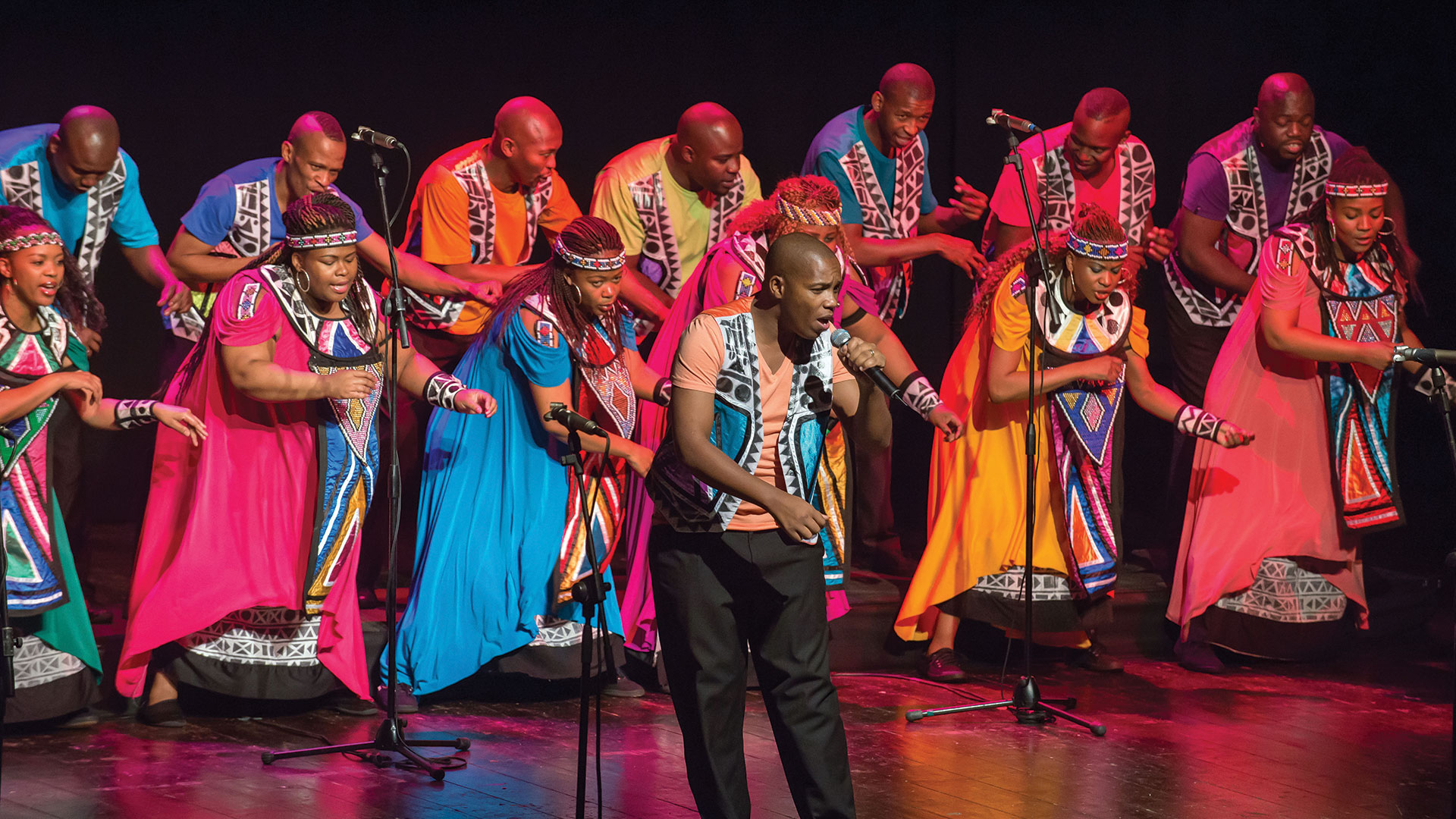
In any generation, there is always a remnant of people who not only spread the Gospel but stand up for righteousness too. There are many people who mention that they are the only people on Earth who has the truth or exposing certain things. That is certainly not true, because God always has a remnant globally speaking the same truths that we are speaking now. For example, Ed Decker was a former Freemason and former Mormon who embraced the Gospel after he left both Masonry and Mormonism. Decker said the story about he accused Masons in Scotland trying to poison him with arsenic over his public dissent of Freemasonry. Freemasonry has members like Albert Pike, who was a former Confederate general, a racist who didn't want voting rights for black Americans, and the author of Morals and Dogma, which is very influential in Scottish Rite Freemasonry and other Masonic orders. Masonic swear oath invoking death (even if not to be taken literally), claims that other false gods are just one expression of the one true God, and claims to have the true light (when Jesus Christ said that he is the light of the world). Many people spoke out against Masonry like Charles Finney and William Morgan. You have many prophets and other religious leaders speaking out against occult secret societies, against the recreational usage of drugs, against racial injustice, against notorious heresies (like amillennialism, works alone based salvation, anti-Trinitarianism, justifying adultery and other immoral actions, the veneration of images or statues, transubstantiation, etc.). Many of the remnant are in YouTube and outside of YouTube. You don't have to be famous to be great. You don't have to seek massive popularity to be loved by God. You just need a loving heart who seeks righteousness, holiness, justice, and saving souls globally. Saving souls global was a command from Jesus Christ before his ascension into Heaven almost 2,000 years ago.
Christianity in the 21st Century
Christianity in the 21st century has been filled with excitement, people being saved, and massive controversies in this continuing war on terror. Like in all religions and social movements, there are diverse Christians with divergent views on theology and political matters. By 2001, Armenia marks the 1700 anniversary of Christianity as its state's religion. The King of Armenia in 301 A.D. was the first country to adopt Christianity as its state religion. By 2003, Mission Province is formed in the Church of Sweden making a new era for confessional Lutheranism in Scandinavia. There is the publication of "Back to Jerusalem Called to Complete the Great Commission in 2003. By 2003, the Coptic priest Zakaria Botros started his television and internet mission to Muslims, resulting in thousands of conversions. By 2005, Pope John Paul II died, and Pope Benedict XVI was elected by the Vatican. Controversies exist involving Christians grow. In 2005, the United Church of Christ became the first Protestant denomination to support same sex marriage in America, and one of the first denominations worldwide to so do. In 2006, the World Methodist Council voted unanimously to adopt the Joint Declaration on the Doctrine of Justification. By 2006, Abdul Rahman, an Afghan Christian convert, was forced out of Afghanistan by local Muslim leaders and exiled to Italy. To this day in 2026, Christians are persecuted worldwide from Africa to Asia by terrorists and extremists who don't respect the legitimate, sacrosanct concept of religious freedom (which is a very vital human right). Another theological debate is the issue of Zionism. There are two groups. One group of Christians follow Christian Zionism or the belief that Christians must support Israel in fulfillment of Bible prophecy and doctrines found in the OT and NT. Many other Christians oppose Christian Zionism because they follow the replacement theology (or that Gentiles are grafted into Israel thereby the Church replaces Israel), some are opposed to the policies of the Israeli government, and some don't believe that Israel being a nation now is not prophetic. In 2006, there was the Jerusalem Declaration on Christian Zionism being signed by many Christian denominations in the Middle East that criticizes the doctrine as associating the Gospel with imperialism and militarism. What is the truth? The truth is more nuance. There are Christian Palestinians, and they are our brothers and sisters in Christ who should be treated with dignity and respect. Netanyahu's government in Israel using war crimes in Gaza, etc. have no justification. Yet, the war crimes by Netanyahu are not to be blamed on all Jewish people collectively (which is akin to blaming all Americans collectively for the war crimes in Iran and the Caribbean). Therefore, Israel is an imperfect nation, but God is not finished with the Jewish people as the book of Revelation cited 144,000 people from the tribes of Israel. If the Church replaced Israel completely, then that passage of the book of Revelation would have never existed. Pope Benedict XVI promoted personal ordinariates for Anglican Use Catholic. By January 1, 2011, there was a bombing of a church in Alexandria, Egypt, killing 21 people, mostly Christians. Many people like Shahbaz ZBhatti, a Pakistani politician was murdered. She was the only Christian elected member of the National Assembly and spoken openly against Pakistan's blasphemy laws as a violation of religious liberty rights. By the 2010s, Pope Francis was the Pope. Many Christians in the world, from across the political spectrum support conservative or liberal political causes. In the 2020s, there is growth of climate change, and many Christians have been outspoken on environmental issues too. Theological debates continue Christianity from once saved always saved, legalism, the Trinity, social issues, racial issues, gender issues, economic issues, free will, prophecy, and other matters. Yet, one thing is true. Christianity started with Jesus Christ who brought love, truth, and light in the world that all of humanity can be saved. It is important to have racial justice and economic justice plus equality. Along with that, people should repent of sins, live a holy life, and treat people with dignity and respect too. In other words, it is very great to have social justice, but we don't live by bread alone but by the words from the living God.

Inspiration
There is always spiritual inspiration in the Universe. Once upon a time, we didn't know of the truth, but the grace of God allowed to see the light, as the true light is from the triune Almighty God who created the Universe in general. Once upon a time, we didn't know about religious deception, about the sacrifice of the Lord Jesus Christ on the cross, and the importance of holiness, but we know about these concepts presently. This inspiration comes from the fact of human resiliency. William Tyndale knew of the risks of translating the Bible in the English language. Yet, he didn't succumb to fear or intimidation by the establishment. Tyndale proceeded to translate the Bible into English so the poor and anyone in general can have the opportunity to read the Bible free from theocratic tyranny. Back in the Middle Ages in Europe, mostly the clergy people, the upper middle class, and the rich had access to the Bible. Tyndale and others in Europe would help to change that reality. Harriet Tubman was a faithful follower of God who freed slaves and led an army to fight the Confederate enemy in Combahee, South Carolina, during the American Civil War. Harriet Tubman was strong and purely inspired by God to set people free from evil bondage. Harriet Tubman would stand up for civil rights, abolitionism, and women's suffrage in America. Later, we see the many leaders who fought against the evil of Nazism during World War, those religious voices who spoke out during the Civil Rights Movement, and people in our generation opposing racial injustice and opposing the illegal, excessive actions done by ICE (done not only against undocumented human beings but American citizens too). The fundamental truth is that all human beings will experience adversity among varying degrees. No one who lives on this Earth will escape death. That is why it is important to keep as much discernment during moments of adversity and never waver in our commitment to follow moral principles and God's moral truths. There are paraplegics who have world records at various events, there are people with massive diseases (with tons of pain) who have PhD.s, and there are those can't speak a word because of illness who know the cosmos in intricate detail. Therefore, that reality should never make us lose hope at all. We should never give up and grow our inspiration to help ourselves and others around us. Anyone can have all of the money in the world, but if that person's character is wicked, then that money doesn't mean a thing. Therefore, character and accountability matters. How we treat people in private matters, how we engage with society when the cameras aren't around matters, and blessings others without fanfare always matters. Therefore, will always fight for justice, we will always believe in the Dream, and we will have hope for the future:
-2 Chronicles 7:14
"And saying, The time is fulfilled, and the kingdom of God is at hand: repent ye, and believe the gospel."
In Closing
Are we living in the latter days? The answer to that question is a resounding yes. If you would have told me back in 1999, that the 21st century would have the original Twin Towers destroyed, Russia illegally invading Ukraine, the majority of the American public opposing Israel's policy in Gaza, the rise of the MAGA fascist movement headed by Trump, and a pandemic that killed millions of people worldwide including over 1 million people in America, I would have not believed that person. Yet, this is the reality that we live in, because since World War II, technology has increased rapidly. The seven churches are not only descriptions of prophecy. It relates to the many personalities found in churches to this day. Religion has been influenced by technology and vice versa. For example, back in ancient times, it would take weeks and months to record and duplicate long writings that were found in paper. That would change by the 1400s when Johannes Gutenberg would develop his movable type printing press that would allow the written text to be copies in a massive scale. By the mid-1450s, Gutenberg printed his famous 42-line Bible in Latin, the first book printed on a movable type of press in the West. By 1500, there were almost 20 million books in Western Europe, including Bibles. Today, we live in a new spiritual age. The spiritual paradox is that information is more available now in 2026 than in any other time in human history. The problem is that there is an increasing lack of reading among the human population. There are tons of benefits for reading, including mental development, concentration, and spiritual growth. It is so bad that a survey established by the National Endowment for the Arts found that fewer than half of all adults in America read a book in 2022. Another American Time Use Survey, which analyzed 236,000 responses, found that only 16 percent of Americans reported reading anything for pleasure on a given day, down from 28 percent in 2004. There are many younger people who struggle to understand the concepts of words in a story. Researchers at the American Bible Society (ABS) found in their 2026 State of the Bible report that 55 percent of Americans are Bible-disengaged and only 17 percent are Bible-engaged.
The Bible is clear that people have the right to examine the Scriptures, as stated in John 5:39: "Search the Scriptures; for in them ye think ye have eternal life: and they are they which testify of me." The Apostle Paul said the same thing in II Timothy 2:15, "All scripture is given by inspiration of God, and is profitable for doctrine, for reproof, for correction, for instruction in righteousness: That the man of God may be perfect, thoroughly furnished unto all good works." We have to be committed to serve the Lord. That means to show love to our neighbors, build in our communities, and be righteous. We all should spiritually and emotionally reject unnecessary anger, division, and other wickedness as found clearly in Colossian 3:8, "But now ye also put off all these; anger, wrath, malice, blasphemy, filthy communication out of your mouth." We should promote forgiveness. We, as human beings, will disagree on certain issues. That's normal, but we should never let our disagreements grow into anger, hatred, and wickedness. Also, we have to expose and reject false doctrines. The myth is that the status quo is enough. That is not the case as souls should be saved from the false doctrines and heresies of Freemasonry, Jehovah Witnesses, Mormonism, adultery, gender war nonsense, the MAGA cult, Scientology, Christian Science, witchcraft, etc. Repentance is free of charge. You only need an open heart and do it. That is why we all need to repent of our sins, do the right thing, save souls, and grow in our spiritual walk completely.
Infrastructure
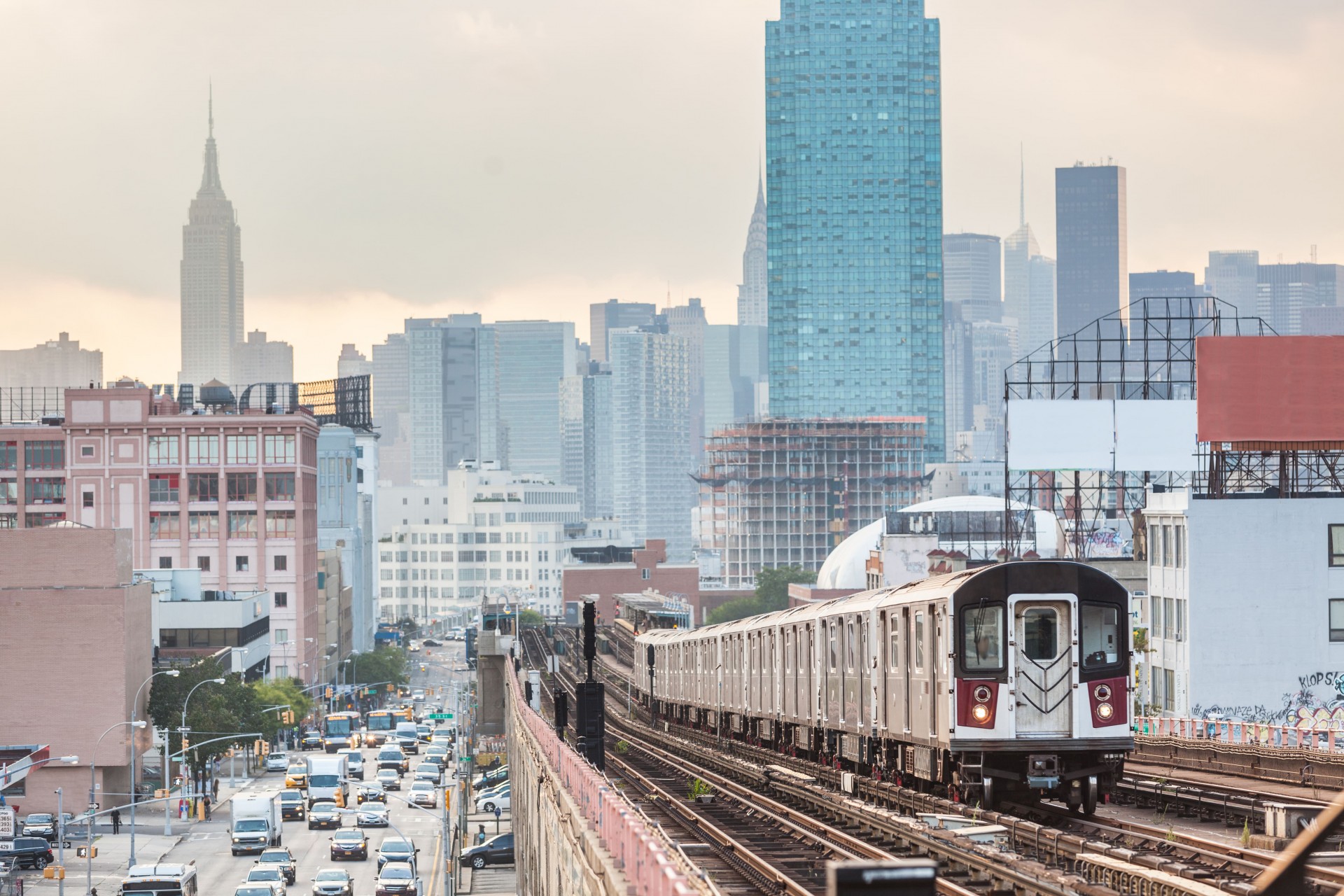
One of the most important concepts and institutions in the world is our infrastructure. With recent events in Iran, it is more vital than ever to evaluate infrastructure concretely. Infrastructure helps us get food in markets and groceries. It allows us to ride on roads nationwide and worldwide. It also allows us to read books in libraries, pray in religious centers, live in our homes, allows humans to travel into space, and witness the development of schools. Infrastructure is a set of facilities and systems that serve a country, city, or any other specific area. Infrastructure can be made up of services and places that deal with the economy, households, and firms to function. It is made up of both public and private physical structures like roads, railways, bridges, airports, public transit systems, tunnels, water supply, sewers, electrical grids, and telecommunications (like the Internet connectivity and broadband access). True infrastructure involves interrelated systems of power that provide commodities and services to sustain and enhance societal living conditions. It can maintain an environment if used properly. As the 21st century continues (as we approach the year 2030), infrastructure has to adapt or evolve to meet the needs of climate change and new inventions. That is why green infrastructure is more common than 20 years ago. Hard infrastructure related to plants and networks, like transport facilities, telecom networks, and industrial systems. Soft infrastructure refers to institutions that maintain the economic, health, social, environmental, and cultural standards of a place (such as parks, recreational facilities, emergency services, etc.).
Components of Building and Infrastructure
Building and infrastructure are made up of two main categories being substructure (items made below ground) and super structures (buildings made above ground). They have to have a combination of structural elements, utilities (or building services), and civil works to allow infrastructure to be safe, functional, and connected. There are three major groups of essential components of building and infrastructure. One part is called the structural components (or the skeleton). The skeleton has the foundation (or the lowest load bearing element that transfers the weight of the structure into the soil), columns and beams (or vertical columns supporting the weight from above, while horizontal beams connect them to support the floors and roof), slabs and floors (or flat, horizontal surfaces that act as ceilings, floors, or the foundation for the next level), and walls (or vertical structures that divide rooms, provide security, and support the roof. It can be called partitions or load bearing walls). The 2nd part of infrastructure is the architectural and finishing elements (with the shell and interior). This part has the DPC (or damp proof course being a waterproof layer typically found above the foundation to prevent ground moisture from seeping into the walls), doors and windows (giving access, natural light, and ventilation), staircases plus elevators (or vertical transportation systems connecting different levels), and finishes (or paint, plaster, ceiling tiles, and flooring that give the building its final, aesthetic appearance). The third part deals with utility services like the mechanical/HVAC (dealing with heating, ventilation, and air coordinating systems), pluming and sanitation, electrical and telecom (with power grids, lighting, internet connectivity, and broadband access), and fire and safety (with fire detection, suppression, systems, and emergency exits). The overall point that deals with the broader picture is that true infrastructure is filled with transportation, unities and energy, and water and waste (made up of infrastructure).

The Types of Infrastructure
Infrastructure has made the world go around for millennia among human history. Infrastructure is about the foundational physical and organizational systems that support a society's economy and daily functions. It is mainly divided into hard infrastructure (in dealing with tangible physical networks) and soft infrastructure (that deals with services and institutions that support human and economic development). In terms of hard infrastructure, people created these physical, capital-intensive structures to a keep daily events occurring. They can deal with transportation. That has systems that enable physical movements of people and goods such as roadways, railways, aviation hubs, ports, and bridges. Nowadays, we have plans that can break the sound barrier and light rails that came go above 300 mph (like Japan's L0 Series Maglev and the Shanghai Maglev). You have energy that has facilities and grids that generate transmit, and store power and energy (from coal, natural gas, nuclear, and renewables like wind and solar). Water and waste have networks for clean water supply, irrigation, wastewater treatment, sanitation, and waste management. There are telecommunications that has telecommunication lines, cellular towers, broadband internet, satellites. There is IT infrastructure like hardware, data, centers, and cloud computing architectures that support digital data exchange.
Social infrastructure deals with education, healthcare, public security and governance, and financial services. Education has infrastructure that deals with learning, skill development, and it is filled with locations like public schools, universities, and training centers. Healthcare has hospitals, clinics, and public health agencies that promote public health and physical wellbeing. Public security and governance have institutions that deal with order like police forces, fire departments, courts of law, and national defense. There are many financial services that handle monetary systems like banking networks, and other regulatory bodies that manage economic activity.

Famous Building Feats
There are massive building feats in human history like The Great Pyramids of Giza, the Great Wall of China, the Panama Canal, the Burj Khalifa, and the International Space Station. The Great Pyramid of Giza is the largest of the Egyptian pyramid and the most famous landmark of the Giza pyramid complex in Giza, Egypt. It is the oldest of the Seven Wonders of the Ancient World, and the only wonder that has remained largely intact. The Great Pyramid served as the tomb of Egyptian Pharaoh Khufu ("Cheops"), who ruled during the Fourth Dynasty of the Old Kingdom. It was built c. 2600 B.C. over a period of about 26 years. Researchers don't know every detail on how the structure was completed, but archaeologists know a lot about how the Great Pyramids including the Great Pyramid was built. First, the ancient Egyptians had to plan and survey the areas. The Egyptians first chose a solid limestone plateau and carefully leveled the site. They aligned the pyramid almost perfectly with the cardinal directions (north, south, east, and west), probably using observations of stars and the Sun. Later, the ancient Egyptians had to quarry the stone. Most of the roughly 2.3 million limestone blocks were quarried close to the pyramid site. The local limestone formed most of the pyramid. There were higher quality white limestone casing stones from Tura. The granite for the King's Chamber came from Aswan, which is about 500 miles away. The workers used copper chisels, stone hammers, wooden wedges, and other simple tools to complete the work. Workers used wooden sledges to transport the blocks. The works wetted the sand in front of the sledges, reducing friction and making heavy loads easier to move. Some used boats on the Nile during annual floods to bring stones close to the construction site. One large mystery is about raising the stones. Several ramp designs have been proposed like a straight ram (A long earthen ramp leading up one side. Simple in concept but would have required enormous amounts of material), zigzag ramp: ramps climbing along one face), spiral ramp (a ramp wrapping around the pyramid), and internal ramp (One hypothesis suggests ramps built inside the pyramid as construction progressed).
Many archaeologists think a combination of different ramp types was probably used. To build the blocks, workers laid blocks in horizontal courses, checking alignment constantly. As the pyramid grew taller, ramps were extended or modified. Once the structure was finished, the smooth white limestone casing stones were installed. A polished pyramidion (capstone) was placed at the top. Much of the casing was later removed over the centuries for reuse in other buildings. The Great Pyramids were built by largely of paid or otherwise skilled laborers and seasonal workers who were fed and housed by the state. Archaeologists found workers' villages, bakeries, medical facilities, and cemeteries for the laborers. Researchers estimate that about 20,000 to 30,000 workers may have been involved during peak construction. Construction of the Great Pyramid likely took about 20-30 years. To this day, we have no definitive answer to the exact design of the ramp system, the precise sequence used for lifting blocks to the highest levels, and some details of the workforce organization. Even so, there is broad agreement that the pyramids were built using human labor, careful engineering, simple machines (such as sledges, levers, and ramps), and exceptional planning.
Initially standing at 146.6 meters (481 feet), the Great Pyramid was the world's tallest human-made structure for more than 3,700 years. Over time, most of the smooth white limestone casing was removed, which lowered the pyramid's height to the current 138.5 meters (454.4 ft); what is seen today is the underlying core structure. Each side of the base was measured to be about 230.3 meters (755.6 ft) in length, giving a volume of roughly 2.6 million cubic meters (92 million cubic feet), which includes an internal hillock. The dimensions of the pyramid were 280 royal cubits (146.7 m; 481.4 ft) high, a base length of 440 cubits (230.6 m; 756.4 ft), with a seked of 5+1.

The Great Pyramid was built by quarrying an estimated 2.3 million large blocks, weighing 6 million tonnes in total. The majority of the stones are not uniform in size or shape, and are only roughly dressed. The outside layers were bound together by mortar, primarily local limestone from the Giza Plateau was used for its construction. Other blocks were imported by boat on the Nile: white limestone from Tura for the casing, and blocks of granite from Aswan, weighing up to 80 tonnes, for the "King's Chamber" structure. There are three known chambers inside of the Great Pyramid. The lowest was cut into the bedrock, upon which the pyramid was built, but remained unfinished. The so-called Queen's Chamber and King's Chamber, which contain a granite sarcophagus, are above ground within the pyramid structure. Hemiunu, Khufu's vizier, is believed by some to be the architect of the Great Pyramid. Many varying scientific and alternative hypotheses attempt to explain the exact construction techniques, but, as is the case for other such structures, there is no definite consensus. The funerary complex around the pyramid consisted of two mortuary temples connected by a causeway (one close to the pyramid and one near the Nile); tombs for the immediate family and court of Khufu, including three smaller pyramids for Khufu's wives; an even smaller "satellite pyramid"; and five buried solar barques. It is part of the UNESCO World Heritage Site "Memphis and its Necropolis." The Great Wall of China is a series of fortifications in China. They were built across the historical northern borders of ancient Chinese states and Imperial China as protection against various nomadic groups from the Eurasian Steppe. The first walls date to the 7th century BC; these were joined together in the Qin dynasty. Successive dynasties expanded the wall system; the best-known sections were built by the Ming dynasty (1368–1644). To aid in defense, the Great Wall utilized watchtowers, troop barracks, garrison stations, signaling capabilities through the means of smoke or fire, and its status as a transportation corridor. Other purposes of the Great Wall have included border controls (allowing control of immigration and emigration, and the imposition of duties on goods transported along the Silk Road), and the regulation of trade.
The collective fortifications constituting the Great Wall stretch from Liaodong in the east to Lop Lake in the west, and from the present-day Sino-Russian border in the north to Tao River in the south: an arc that roughly delineates the edge of the Mongolian steppe, spanning 21,196.18 km (13,170.70 mi) in total. It is a UNESCO World Heritage Site and was voted one of the New 7 Wonders of the World in 2007. Today, the defensive system of the Great Wall is recognized as one of the most impressive architectural feats in history. The Great Wall of China was created to defend against invasions from northern nomadic groups, guard trade routes, control border crossings, collect taxes, send military signals quickly using smoke by day and fire by night. It is one of the largest projects in human history. The Great Wall of China was created by using layers made up of sand, loess etc. Many layers were made up of brick too. Many people used ropes, wheel barrows, and basket and pulley systems to construct the Great Wall.
The Panama Canal helped to connect the Caribbean Sea with the Pacific Ocean. It cuts across the narrowest point of the Isthmus of Panama and is a conduit for maritime trade between the Atlantic Ocean and the Pacific Ocean. Locks at each end lift ships up to Gatun Lake, an artificial freshwater lake 26 meters (85 ft) above sea level, created by damming the Chagres River and Lake Alajuela to reduce the amount of excavation work required for the canal. Locks then lower the ships at the other end. The original locks are 33.5 meters (110 ft) wide and allow the passage of Panamax ships. A third, wider lane of locks was constructed between September 2007 and May 2016. The expanded waterway began commercial operation on 26 June 2016. The new locks allow for the transit of larger, Neopanamax ships. An average of 200,000,000 litres (52 million US gallons) of fresh water is used in a single passing of a ship. The canal is threatened by low water levels during droughts.
The Panama Canal shortcut greatly reduces the time for ships to travel between the Atlantic and Pacific oceans, enabling them to avoid the lengthy, hazardous route around the southernmost tip of South America via the Drake Passage, the Strait of Magellan or the Beagle Channel. Its construction was one of the largest and most difficult engineering projects ever undertaken. Since its inauguration on August 15, 1914, the canal has succeeded in shortening maritime communication in time and distance, invigorating maritime and economic transportation by providing a short and relatively inexpensive transit route between the two oceans, decisively influencing global trade patterns, boosting economic growth in developed and developing countries, as well as providing the basic impetus for economic expansion in many remote regions of the world. It has 3 locks up and 3 locks down per transit. It was opened in 1914 and expanded by June 26, 2016. The Panama Candal Authority has navigational authority. Before the Panama Canal, many ships went under South America to trade in Asia. That would changed.
Colombia, France, and later the United States controlled the territory surrounding the canal during construction. France began work on the canal in 1881, but stopped in 1889 because of a lack of investors' confidence due to engineering problems and a high worker mortality rate. The US took over the project in 1904 and opened the canal in 1914. The US continued to control the canal and the surrounding Panama Canal Zone until the Torrijos–Carter Treaties provided for its handover to Panama in 1977. After a period of joint American–Panamanian control, the Panamanian government took control in 1999. It is now managed and operated by the Panamanian government-owned Panama Canal Authority. Annual traffic has risen from about 1,000 ships in 1914, when the canal opened, to 14,702 vessels in 2008, for a total of 333.7 million Panama Canal/Universal Measurement System (PC/UMS) tons. By 2012, more than 815,000 vessels had passed through the canal. In that year, the top five users of the canal were the United States, China, Chile, Japan, and South Korea. In 2017, it took ships an average of 11.38 hours to pass between the canal's two outer locks. The American Society of Civil Engineers has ranked the Panama Canal one of the Seven Wonders of the Modern World.
The history of the jetpack has a long history from the 20th century to the present. It relates to modern turbine-powered and jet suited flight systems. In 1919, Russian inventor Alexander Andreev filed the first design concept for a rocket-motor backpack powered by oxygen and methane. It is never built. In 1928, the concept explodes into popular culture through pulp comic strips like Buck Rogers, promising a future of personal flight. During World War 2, the Nazi enemy experimented with the Himmelstürmer (Sky Stormer), a pulse-jet propulsion device designed to help soldiers leap over minefields and obstacles. By 1952, Thomas T. Moore develops the "Jetvest" using hydrogen peroxide. Funded briefly by the U.S. Army, it successfully lifts a human but is abandoned due to instability. In 1958, Engineers Garry Burdett and Alexander Bohr create the "Jump Belt", which utilizes compressed nitrogen to propel a runner 7 meters into the air. In 1961, Engineer Wendell F. Moore at Bell Aerosystems builds the legendary Bell Rocket Belt. Pilot Harold Graham completes the first successful untethered flight, flying for 21 seconds. In 1965, The Bell Rocket Belt achieves global fame in popular culture when it is featured in the James Bond film Thunderball. In 1969, Bell develops a "Jet Belt" using a miniature turbojet engine. It extends flight times to 5 minutes, but the military cancels funding because the machine is heavy, complex, and highly dangerous. In 1984, Pilot Bill Suitor flies the Bell Rocket Belt in front of 100,000 live spectators at the Los Angeles Olympic Games opening ceremony, cementing the device in aviation history.
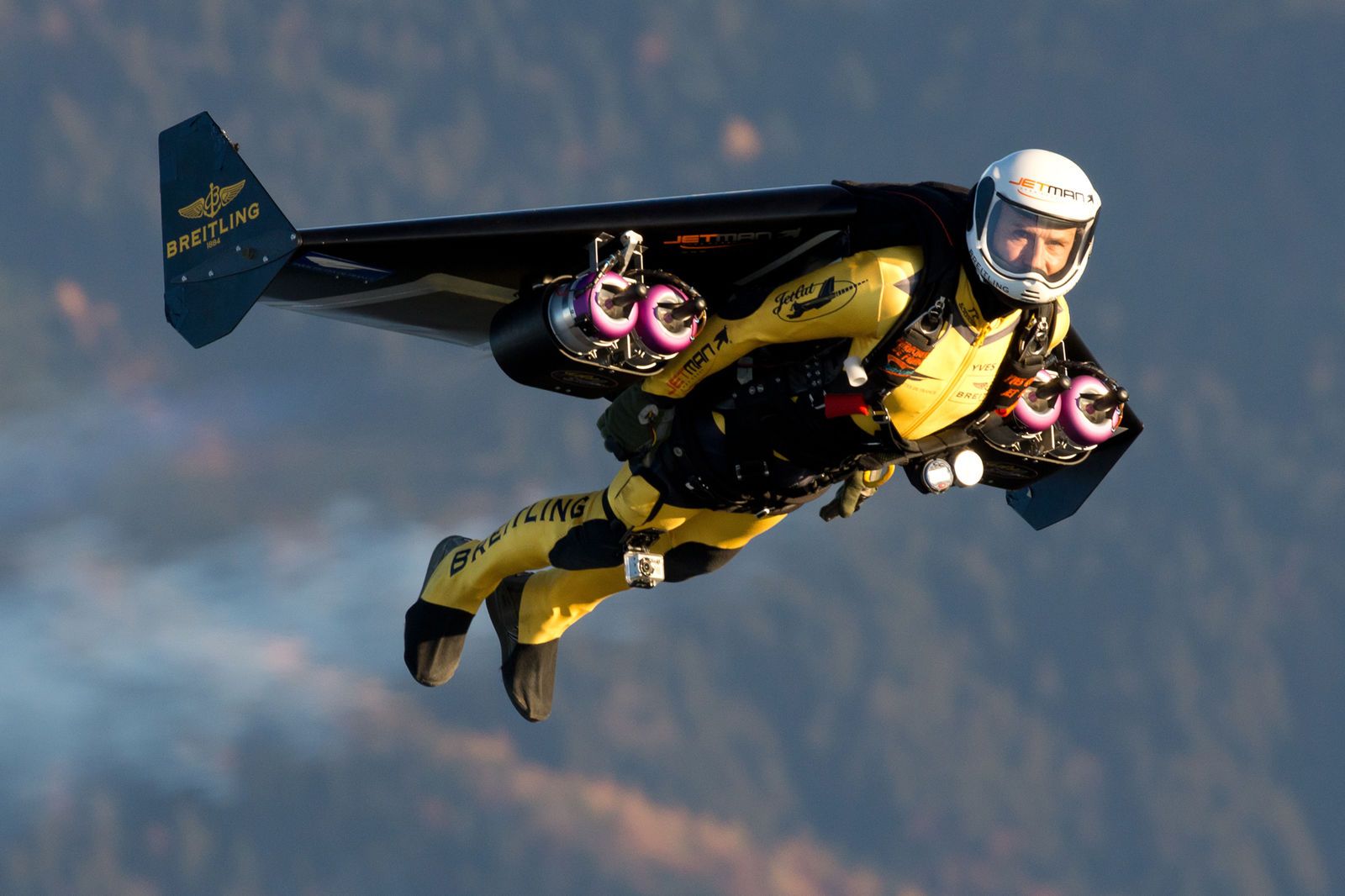
By 1984, NASA introduces the Manned Maneuvering Unit (MMU), an untethered, nitrogen-propelled backpack that allows astronauts to perform spacewalks completely free of the Space Shuttle. In 2000, Inventor Raymond Li introduces a new concept: the water jetpack. Instead of dangerous rocket fuel, a trailing hose pumps high-pressure water from a boat unit to propel a tourist-friendly backpack. In 2006, Swiss pilot Yves Rossy builds the "Jetman" wing—a rigid carbon-fiber wing equipped with four micro-turbine jet engines. While it requires a high-altitude drop from a plane, it reaches speeds exceeding 125 mph. In 2015, Jetpack Aviation introduces the JB9, a compact, kerosene-burning turbojet backpack. CEO David Mayman flies it around the Statue of Liberty, proving a true personal jetpack can be practical and maneuverable. In 2017, Richard Browning foundable Gravity Industries and reveals the Daedalus Jet Suit. This design distributes micro-jet engines across the pilot's back and arms, utilizing human body English for hyper-precise steering. In the 2020s, Modern tactical, paramedic, and competitive sports programs take off. The UK Royal Marines and paramedic units test Gravity jet suits for rapid response terrain navigation. In 2024, there was world's first Jetpack Racing Competition is held in Dubai. Pilots using Gravity Industries technology compete in an all-air obstacle course over water, reaching speeds of 128 km/h.
Engineering Ports

With the news about tariffs and the Iranian war, we realize the huge value of ports in the world. A port is a place on the coast or a river where ships dock to load and unload cargo or passengers. A terminal in a port is a specialized, dedicated facility where ships dock and load and unload cargo or passengers. Terminals deal with berthing, loading and unloading, storage, sorting, and intermodal transfer (or connecting ocean transport to land transport like trucks, cars, and trains). There are container terminals, bulk terminals, Ro-Ro (roll-on/roll-off) terminals (that cater to cars, trucks, and railway carriages that drive directly onto the vessel), and passenger or cruise terminals (that serve travelers boarding ferries or cruise ships). The largest ports in America are found in Los Angeles, Long Beach, New York City, and New Jersey. They deal with massive TEUs (or container volume). The largest ports on Earth are found in Shanghai, Singapore, and other places in China. Port engineering is a specialized branch of civil and marine engineering that deals with planning, design, construction, and maintenance of ports, harbors, wharves, and marine terminal facilities. It manages both waterside structures (like dredging, breakwaters, and docks), and landside infrastructure (like cargo yards, rail connections, and storage). Waterside design relates to building piers, wharves, quay walls, and mooring dolphins that safely handle large ship berthing forces. We know about coastal hydraulics that manage wave action, tidal motions, sediment transport, and channel dredging to maintain safe water depths. We have intermodal integration and design efficient landside connections for freight rail, trucking routes, and automated container handling equipment. There are port engineers using vessel maintenance that oversees the mechanical operations, repairs, and regulatory compliance for commercial marine fleets or barges. A port engineer manages the mechanical safety, maintenance, and repair of a fleet of ships. They fix broken parts, plan dry dock work in shipyards, handle budgets, and make sure that vessels follow Coast Guard and environmental laws.
Other Aspects of Infrastructure (STEM math formulas, etc.)
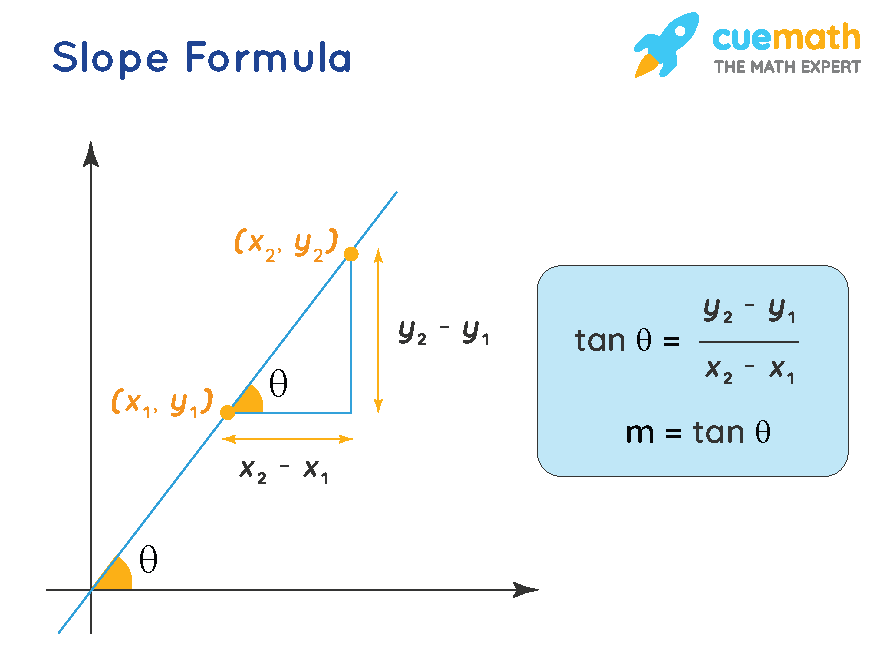
Engineering is the spice of life. We all remember back in the day, when he had to use CAD and other programs in engineering classes in high school and some did it in college too. CAD helped me in high school to create digital 2D and 3D technical drawings for engineering, architecture, and manufacturing. I took those high school classes back in 2000. There are always engineering formulas that are necessary to not only plan on constructing homes and other mechanical items. They are needed to learn about the functions of reality as mathematics is one major foundation needed to figure out how the Universe functions. Some formulas are basic like the volume of a cube being a side to the third power, and the surface area of a cube is 6 times a side squared. The volume of a cylinder is pi times the radius 2 times height (or h). There are tons of other formulas too. 1 atm of pressure is equal to 33.9 ft. of H2O, 220.02 in. of HG, and 14.7 psi. 1 J of energy is equal to 0.239 cal. There are units that engineers follow. Ten to the power of one is prefixed as deca-, to the power of 2 is hecto-, and 10 the power of 24 is Yotta-. There are fluid mechanics formulas like P (absolute pressure) is equal to F/A. F is force and A is area. Charles' Law is V1/T1 is equal to V2/T2. That means that V stands for volume and T stands for absolute temperature. In other words, Charles's Law is a gas law stating that the volume of a fixed mass of gas is directly proportional to its absolute temperature, provided the pressure remains constant. As a gas heats up, it expands, as it cools, it shrinks. 1 in the equation means the initial volume and temperature, and 2 stands for the final volume and temperature. The temperature must always be measured in Kelvin (add 273.15 to Celsius, not Fahrenheit or Celsius). The pressure and the amount of gas in moles (n) must always stay the same. This is related to hot air ballons, sports balls, and breaking bread.
Conclusion
Engineering is one of the most important topics of world history. From building buildings to studying mathematical formulas, engineering gives us wisdom about how many aspects of the world work. Engineering has helped STEM geniuses to process information and evaluate which forms of infrastructure will work best to help the human race. Engineering helps creative material substitution and design optimization via innovation. We know much of the history of some of the greatest engineers in human history. Imhotep of ancient Egypt designed the Egyptian Step Pyramid of Djoser around 2,700 B.C. as the world's first recorded architect and engineer. Archimedes invented the screw pump, compound pulleys, and many principles of hydrostatics and mechanics. Li Bing created the massive Djiangyman irrigation system in the 3rd century B.C. in China, which remains operational today. There was Mary Jackson was NASA's first black woman engineer. Even Leonardo da Vinci sketched visionary concepts for flying machines, bridges, and armored vehicles which look centuries ahead of their time. John Smeaton and Isambard Kingdom Brunel were expert engineers too. Annie Easley established coded software for the Centaur rocket stage and researched alternative energy conversion. Nikola Tesla, the Wright Brothers, Charles Babbage, Granville T. Woods, Lewis Howard Latimer, Elijah McCoy, and other people contributed a great deal in engineering plus STEM in general too. In our times filled with A.I. and climate change, we have to use engineering in a constructive fashion to better our world in a prodigious fashion.
By Timothy

No comments:
Post a Comment