Plants
Plants are very important in our Universe. They are living organisms that bring so much life to themselves and to the Earth in general. They are eukaryotic organisms. That means that they have a membrane-bound nucleus. In other words, all animals, plants, fungi, seaweeds, and many unicellular organisms are eukaryotes. Also, eukaryotic cells have membrane-bound organelles like the nucleus, the endoplasmic reticulum, and the Golgi apparatus. Eukaryotes may be unicellular or multicellular. Unicellular eukaryotes are sometimes called protists. Eukaryotes can reproduce both asexually via mitosis and sexually through meiosis and gamete fusion (via fertilization). Plants are part of the kingdom called Plantae. Most plants are photosynthetic meaning that they get their energy from sunlight. They use their green pigment called chlorophyll in their chloroplasts to produce sugars from carbon dioxide and water. Exceptions are parasitic plants that have lost the genes for chlorophyll and photosynthesis and get their energy from other plants and fungi. Most plants are multicellular, except for some green algae. There is a diversity of plants like angiosperms, charophytes, mosses, glaucophytes, conifers, red algae, ferns, and lycophytes. Green plants are known as the claude Viridiplantae. There are about 380,000 known species of plants, of which the majority (some 260,000 species) produce seeds. They can be single cells and include the tallest trees. Green plants give a massive proportion of the world's molecular oxygen, the sugars they create the supply the energy for most of the Earth's ecosystems (and other organisms including animals, who either eat plants directly or rely on organisms which do so). Grain, fruit, and vegetables are basic human foods and have been domesticated for millennia. People use plants for many purposes like building materials, ornaments, writing materials, and medicines in general. The scientific study of plants is known of botany, a branch of biology.
The Parts of a Plant Cell
There are many parts of plant cells, and many of these components differ greatly from those of animal cells. The cell wall is the tough outer layer. It is made up of mostly cellulose, which protects, supports, and provides shape to the plant cell. The cell membrane or plasma membrane is a semi-permeable barrier that controls the movement of substances (water, nutrients, and waste) in and out of the cell. The nucleus is the control center of the planet cell that has the cell's DNA and ordinated the activities like growth and reproduction. The cytoplasm is a gel like fluid that fills the cell and holds the organelles in place. The chloroplasts are the sites of photosynthesis. They contain chlorophyll, which captures sunlight to convert it into usable energy and sugars. The large central vacuole is a large sac that stores water and nutrients. It helps to maintain turgor pressure so the plant remains upright and firm. The ribosomes are tiny structures responsible for protein synthesis. The ER or endoplasmic reticulum is a network of membranes. The Rough ER is studded with ribosomes to produce and transport proteins while the Smooth ER produces lipids. The Golgi Apparatus acts as the packaging and distribution center, sorting, and modifying proteins for use inside and outside the cell. There are more parts of a plant cell like the amyloplast (or starch grain), raphide crystal, peroxisome, lysosome, plasmodesma, and the nuclear envelope.

The Plant Cycle
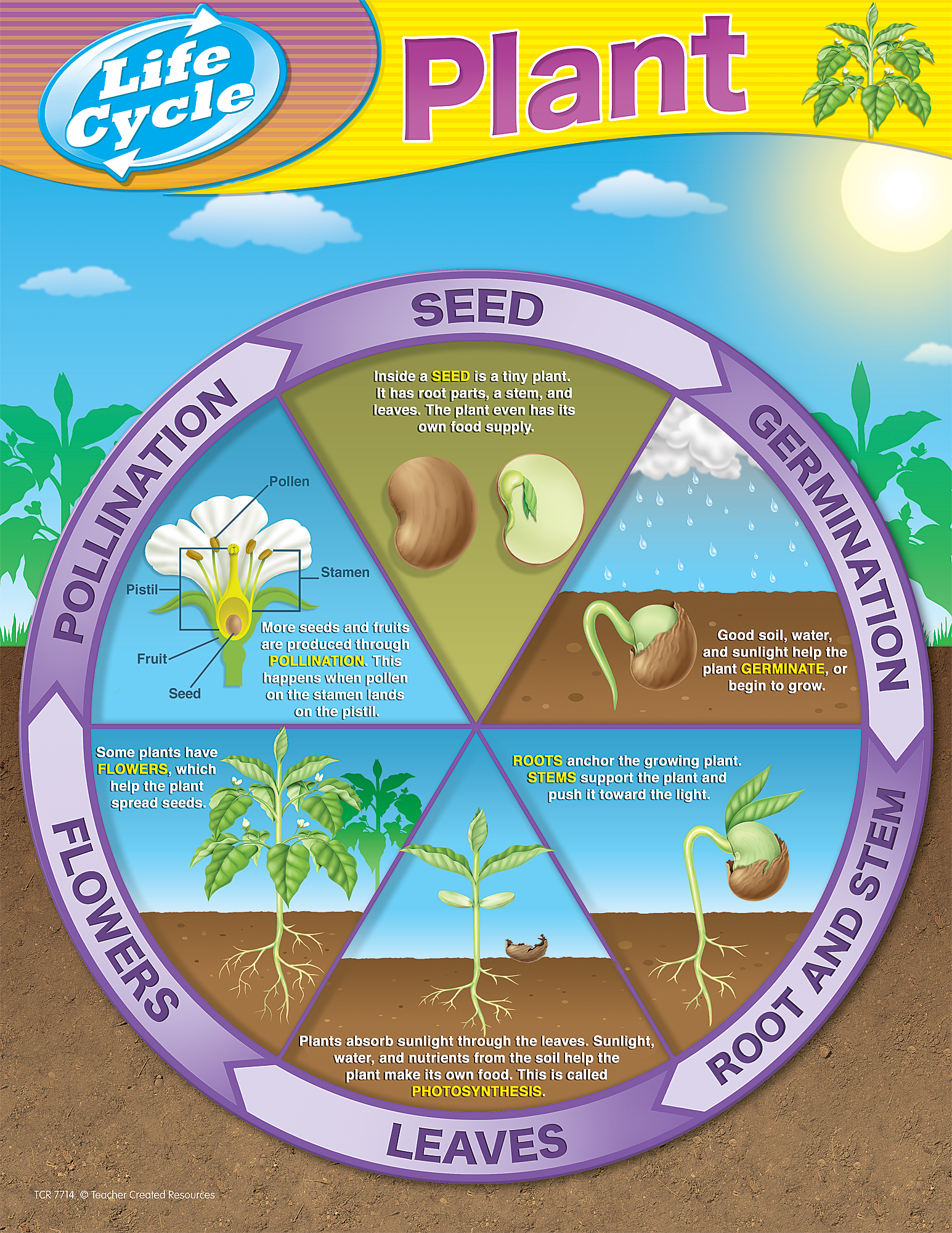
To learn about plants fully, people must comprehend about the components of the plant cycle. The plant cycle is a process where a plant grows from a seed, matures, reproduces, and produces new seeds to start the cycle agenda. Therefore, the plant cycle shows a plant's life from birth to reproduction, and to eventual death. This process helps to continue the species. The cycle varies slightly between flowering and non-flowering plants, the fundamental stages are similar. The first stage is the seed stage. A seed contains the embryo of the plant and a food supply called the endosperm, all protected by a seed coat. Seeds can remain dormant until environmental conditions—such as water, oxygen, sunlight, and suitable temperature—are favorable for growth. Seeds are dispersed by wind, water, animals, or humans, allowing plants to colonize new areas. The 2nd stage is about germination. When conditions are right, the seed germinates, and the embryo begins to grow. The root emerges first, anchoring the plant and absorbing nutrients, followed by the shoot and first leaves. This stage transforms the seed into a seedling. Later, you have the seedling stage. The seedling is a young plant that grows toward sunlight and develops roots, stems, and leaves. It relies on photosynthesis, using chlorophyll to convert sunlight into energy, and absorbs water and nutrients from the soil. Then, an adult plant exists. As the plant matures, it becomes an adult plant, capable of reproduction. Flowering plants develop flowers, while non-flowering plants may produce cones or spores. The adult stage is when the plant is fully functional and contributes to the ecosystem. In flowering plants, pollination occurs when pollen from the male anther reaches the female stigma, either through wind, insects, birds, or other animals. Fertilization follows, producing seeds that contain the next generation of plants. This stage completes the cycle and ensures species survival.
Plants also undergo a genetic cycle called alternation of generations, alternating between a haploid gametophyte phase (producing gametes) and a diploid sporophyte phase (producing spores or seeds). In flowering plants, the sporophyte is the dominant, visible stage, while the gametophyte is microscopic and dependent on the sporophyte. Some plants, like ferns and mosses, do not produce seeds but instead reproduce via spores. Despite this difference, they still follow a life cycle that includes growth, reproduction, and the production of new generations. Therefore, the plant cycle goes on with seed growth, germination, seedling, adult plant, reproduction, and new seeds.

Types of Plants
Plants are classified by their structure, stem type, and life cycle. One major type of plants is called trees. Trees are woody plants with single thick trunk like oak, maple, etc. There are plants called shrubs which are smaller woody plants with multiple stems branching near the ground like rose and lilac. Herbs are small plants with soft, non-woody, green stems like mint, basil, and rosemary. There are climbers and creepers. These are plants with weak steams. Climbers scale vertical supports like grapevine and ivy. Creepers spread horizontally across the ground like watermelon and strawberry. There are tons of other types of plants too. There are perennials. They come back year after year, making them a great choice for a low maintenance garden. They add color, texture, and structure to the space. Some of them are lavender, hosta, daylily, and peony. Annuals are plants that last for only one season. They are perfect for beds, borders, and containers like begonia, cosmos, marigold, and petunia. There are cactus and succulents which are water storing plants that are perfect for low-maintenance gardening. They come in all shapes and sizes. They are snake plants, aloe vera, jade plant, and prickly pear cactus. There are roses like hybrid tea roses, grandiflora roses, floribunda roses, and climbing roses. Vines can soften fences and wall like clematis, wisteria, honeysuckle, and ivy. There are bomboo plants like golden bamboo, black bamboo, and Buddha Belly bamboo. Orchids existed like vanilla, cattleya, and phalaenopsis. Houseplants are mostera, pothos, philodendron, peace lily, and Zz plant. Bulbs store energy underground and burst into bloom each season with various colors. They are daffodils, tulips, hyacinths, dhalias, lily, and gladiolus.
Trees
A tree is part of nature in many ways. A tree is a perennial plant with an elongated stem or trunk, usually supporting trees and leaves. In some usages, the definition of a tree may be narrower, e.g., including only woody plants with secondary growth, only plants that are usable as lumber, or only plants above a specified height. Wider definitions include taller palms, tree ferns, bananas, and bamboos. Trees are not a monophyletic taxonomic group but consist of a wide variety of plant species that have independently evolved a trunk and branches as a way to tower above other plants to compete for sunlight. The majority of tree species are angiosperms or hardwoods; of the rest, many are gymnosperms or softwoods. Trees tend to be long-lived, some trees reaching several thousand years old. The earliest trees evolved around 400 million years ago, and it is estimated that there are around three trillion mature trees in the world currently. A tree typically has many secondary branches supported clear of the ground by the trunk, which typically contains woody tissue for strength, and vascular tissue to carry materials from one part of the tree to another. For most trees the trunk is surrounded by a layer of bark which serves as a protective barrier. Below the ground, the roots branch and spread out widely; they serve to anchor the tree and extract moisture and nutrients from the soil. Above ground, the branches divide into smaller branches and shoots. The shoots typically bear leaves, which capture light energy and convert it into sugars by photosynthesis, providing the food for the tree's growth and development. Trees usually reproduce using seeds. Flowering plants have their seeds inside fruits, while conifers carry their seeds in cones, and tree ferns produce spores instead. Trees play a significant role in reducing erosion and moderating the climate. They remove carbon dioxide from the atmosphere and store large quantities of carbon in their tissues. Trees and forests provide a habitat for many species of animals and plants. Tropical rainforests are among the most biodiverse habitats in the world. Trees provide shade and shelter, timber for construction, fuel for cooking and heating, and fruit for food as well as having many other uses. In much of the world, forests are shrinking as trees are cleared to increase the amount of land available for agriculture. Because of their longevity and usefulness, trees have always been revered, with sacred groves in various cultures, and they play a role in many of the world's mythologies. In its broadest sense, a tree is any plant with the general form of an elongated stem, or trunk, which supports the photosynthetic leaves or branches at some distance above the ground. Trees are also typically defined by height, with smaller plants from 0.5 to 10 m (1.6 to 32.8 ft) being called shrubs, so the minimum height of a tree is only loosely defined. Large herbaceous plants such as papaya and bananas are trees in this broad sense. Many trees expand by growing more rings. Trees grow large to capture more sunlight.
Photosynthesis
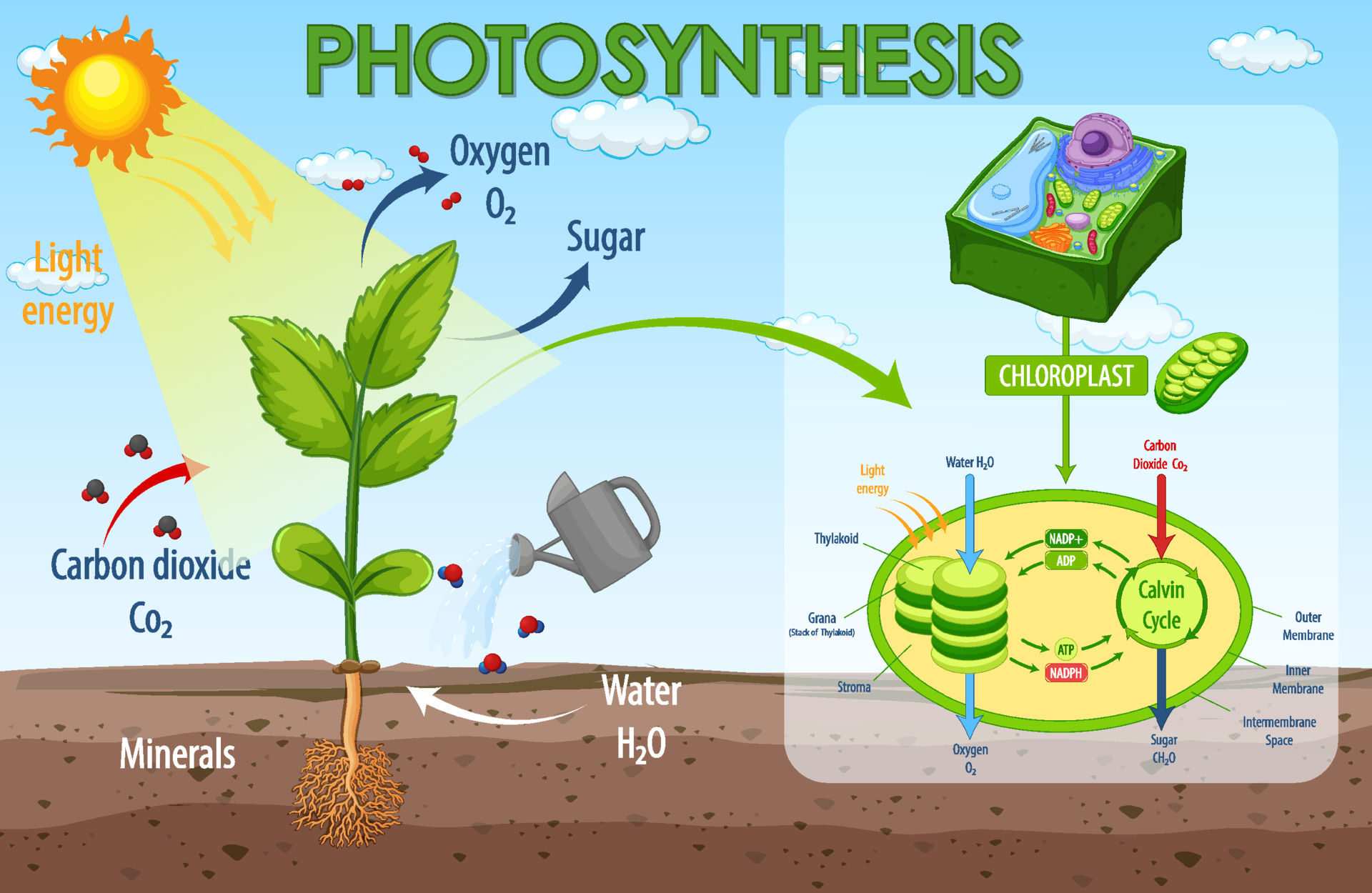
Photosynthesis is one of the most important natural processes in the Universe. We learned about this in elementary school, middle school, and high school science classrooms for generations. Photosynthesis is the process by which plants, algae, and certain bacteria (or photoautotrophic organisms) convert light energy into chemical energy, produce glucose and oxygen from cardon dioxide and water. This process is very critical for life on Earth, because it forms the base of nearly all food webs, supplies oxygen into the atmosphere, and drives the global carbon cycle. Without photosynthesis, most life forms won't survive, and the Earth's atmosphere would lack enough oxygen. The overall chemical reaction for oxygenic photosynthesis can be summarized as: 6CO₂ + 6H₂O + light energy → C₆H₁₂O₆ + 6O₂. This means six molecules of carbon dioxide and six molecules of water are converted into one glucose molecule and six oxygen molecules using light energy captured by chlorophyll. Photosynthesis occurs primarily in chloroplasts, specialized organelles in plant cells that contain chlorophyll, the green pigment responsible for absorbing light. The process can be divided into two main stages. The first process is light dependent reactions. These occur in the thylakoid membranes and require sunlight. Chlorophyll absorbs energy from light, which is used to split water molecules into hydrogen and oxygen. The energy is stored in molecules of ATP and NADPH. The 2nd process is light independent reactions (Calvin Cycle): These occur in the stroma of the chloroplast and do not require light. ATP and NADPH generated in the light-dependent reactions are used to convert carbon dioxide into glucose. The most common type of photosynthesis is called C3 photosynthesis that produces a three-carbon compound during the Calvin Cycle. C4 photosynthesis produces a four-carbon intermediate, which is later converted into glucose, often found in plants adapted to high light and temperature conditions. Photosynthesis has shaped the world's environment in many ways. The Great Oxidation Event was when photosynthetic cyanobacteria (about 2.4 billion years ago) increased oxygen in the atmosphere. It enabled the existence of complex aerobic life. The energy stored by photosynthesis over millions of years is the source of fossil fuels like coal, oil, natural gas. So, we human breathe out carbon dioxide and receive oxygen to survive. Plants give out oxygen and take in carbon dioxide to survive too.
Environmental Issues
Improving the environment is a paramount duty among us as human beings. Without a strong environment, we can't have adequate health care, adequate housing, and other human rights that so many people take for granted. The environmental movement in the modern era has existed for long decades. Environmental issues are not monolithic. For example, we know about the importance of dealing with climate change. Over the course of one century, the average temperature of the globe has increased. That is why there was a massive July heatwave in Europe from Paris to London. Triple digit temperatures have existed in those cities and other locations where air conditioning was not common to this day. In America, air conditioning systems are more common, because of hot climates and culturally, we have it more in buildings and homes. The ozone layer being more fragile is representative of climate change. Many organizations have planted more trees, used alternative energy, and done many recycling projects to fight climate change. Since the Johnson administration, the establishment has discussed about human induced climate change. Climate change has accelerated extreme weather from storms, floods, drought, and extreme high plus low temperatures. Polar ice caps have melted too. This reality has to do with how we eat foods, how resources are allocated in the world, and how we plan flooding prevention infrastructure in the globe. Another important environmental issue deals with radiation. Radiation fallout has existed globally. Radioactive substances are high dangerous and can damage human beings at the cellular level. We deal with air pollution, plastic waste, water contamination (like what happened in Flint, Michigan years ago), food waste, soil degradation, cobalt mining, clean water issues, agricultural problems, ocean acidification (which can cause coral reef loss) and other issues. There is massive deforestation in Brazil and other places of the Earth. Also, biodiversity loss is totally ruining animal and plant species. It is no secret that Donald Trump is the most anti-environmental President in American history. The Trump administration has eliminated legitimate environmental regulations. Also, the Trump administration has legalized the killing of near extinct animals, formerly protected by the Endangered Species Act. This truth refutes the lie that Trump is the greatest President or he sincerely cares for the environment in a comprehensive fashion. Animals on the list that don't have this legal protection are the Florida manatee, Monarch buttery, alligator snapping turtle, the California spotted owl, the Florida Keys mole skink, etc. These issues can't be solved just locally or nationally. It takes international cooperation to legitimately address these legitimate environmental issues.
Conclusion
One very important part of the environment relates to trees. Trees promote more life on Earth and promote more creativity around the lands of the Earth. Trees deal with photosynthesis, and they can hold onto carbon dioxide that helps with the global climate. Trees can clean the air, cool the streets, and save energy. Many people don't know that trees can manage stormwater, protect wildlife, and improve human mental plus physical health. Organizations like the Arbor Day Foundation highlight these diverse advantages. For example, trees can trap dust and absorb harmful gases like carbon dioxide, ozone, and sulfur dioxide. They can store carbon in wood and soil to slow down global warming. Roots stop soil from washing away and leaves catch rain to prevent heavy flooding. Branches and roots provide safe spaces for birds, bugs, and other animals. Shade from trees can lower city temperatures during the summer. Shade keeps buildings cool, which cuts down on air conditioning use. Trees can reduce noise. Trees exist in two main groups. They are deciduous trees, which drop broad flat leaves in autumn, and evergreen trees, which keep green needles or leaves all year. Deciduous trees can be oak, maple, birch, and willow. Evergreen trees can be pine, spruce, fir, and cedar. There are fruit and nut trees and palm trees too.
Conclusion (Fall 2026)
In our generation, there are a new generation of sellouts who are overt in not only making anti-black statements, but they are agreeing with Trump on nearly every issue, no matter who repugnant it is. For example, there is a far right MAGA commentator named Officer Tatum who has a known history (similar to Tommy Sotomayr) in degrading black women by insulting their hair and appearance. That is wrong as misogynoir is evil, and no woman should be degraded regardless of their color. Attacking black women is nothing more than agent behavior, and we, as black people, have every God given right to defend the dignity and humanity of black women. Without black women, no human on Earth would exist. Also, this Brandon Tatum made disrespectful comments about Michelle Obama. These haters must have forgotten that we, as black people, will stand up for ourselves and for the dignity of black women including the rest of the black community. This Tatum person degrades black women to elevate white women in a false sense of superiority. This is not preference, but it is total self hatred expressed by Tatum. When Tatum was asked if he agrees with black people being better off during slavery, Tatum agreed with view. Tatum has total self-loathing 100 percent. There is no other way around it. The reality is that we have sociological studies and other studies documenting the brutal realities of racism, colorism, misogynoir, sexism, imperialism, and other forms of oppression harming people globally. He has appeared in Turning Point events and other conservative functions. Tatum lied and said that there is no picture of Nolan hanging out with black people when photos exist of Nolan with many black people. The MAGA cult is not only anti-Christian but anti-God. MAGA wants massive cuts to the social safety net, the ending of birthright citizenship, xenophobia, the restriction of even mail-in voting, and glorifies destructive imperialism including unjust wars like in Iran. That is not what Jesus Christ taught or condoned at all period.
It is no secret that MAGA is filled with racism. Laura Loomer is one of the most racist members of the MAGA movement. Angie Nixon just said that Laura ate dog food on camera which is true. Loomer made a racist remark about Angie Nixon calling her a ghetto b word and mocked Ebonics. Loomer is ignorant and silly for many reasons. First, ghetto refers to a location, but it shouldn't be used to mock working class black people or any person. Second, Angie Nixon did nothing wrong, and she stated a fact. Third, no black woman should be called the b word, and Loomer's misogynoir is typical of many MAGA followers who are jealous of qualified, educated, and powerful black women. Tons of black women that I know in real life are filled with great character, and we have to call out anyone who makes racist and sexist remarks about black women. That is our job. Angie Nixon is running her political race, and she should be judged solely on her political views, not her color or sex. When you have even Marjorie Taylor Greene condemning Loomer's racist remarks months ago, you know that Loomer is a sick, lying, Trump follower who has no true integrity. Angie Nixon is a black woman who is running a historic progressive campaign, and we wish her the best in her endeavors.
We live in many unique times. The Iranian war was the biggest foreign policy disaster of the Trump administration. Trump was deluded to assume that his 300-billion-dollar attempt bribe could cause a peaceful resolution to the conflict. Today, there is a stronger alliance among Iran, Russia, China, and North Korea. There are two wicked factions who are very powerful in the world today. One faction involves MAGA extremists who seek war, imperialism, the spread of Islamophobia (beyond just disagreement of Islam but the unfair, unwarranted scapegoating of all Muslims collectively for terrorism in the world) and Western domination of the world for the purpose of profit, greed, and xenophobia. There is video shown on MS NOW showing Republican Congressional leaders saying that they won't disagree with Trump on any issue. This is representative of a cult, not a true liberating political movement.
We have a real problem of millions of Americans being purged from U.S. food stamp rolls as Wall Street interests disgracefully demand more cuts. The budget reconciliation law was signed by Trump on July 4, 2025, or H.R. 1, OBBBA. This law created the largest reduction in the history of the Supplemental Nutrition Assistance Program (SNAP), also known as food stamps. By cutting $187 billion from the program for over 10 years- a cut of about 20 percent- the legislation has harmed the social safety net in America in destructive ways. The Center on Budget and Policy Priorities (CBPP) puts the decline at about 5 million people or 12 percent since the law has been enacted. According to the U.S. Department of Agriculture numbers, 36.6 million people are now receiving benefits. That is down 5.7 million from May 2025, below the pre-pandemic level and the lowest number enrolled in 17 years. Children are suffering massively too in the heaviest share of the cuts. In the 25 states that report data on children, 1.2 million have been cut off since July 20025. U.S. citizens and others who are authorized to be in America (like refugees, people granted asylum, survivors of trafficking, and victims of domestic violence) have been stripped of eligibility completely. This attack is about cutting resources from the poor and working class to be used to fund the war and other interests of the oligarchy. Some in the Wall Street Journal are celebrating this cruelty as they are more in love with laissez-faire capitalism than economic justice. One Gallup poll said that Democrats outnumber the GOP ahead of the midterms. Regardless of your ideological views, please vote, as the MAGA movement is trying to suppress voting rights with their attacks on mail-in voting and other matters. Affordability of health care, childcare, housing, education, and other areas of our lives matter, and these issues must be addressed to improve American society indeed. We have to fight to strengthen Medicaid, Medicare, and Social Security without privatization. People want a government to address the needs of the people as the purpose of government subsequently is to improve the lives of the people progressively.
The other faction is slick. They hide behind the ethos of "anti-imperialism" and minimize oppression in Africa, Ukraine, and anti-Semitism (some even glorify Hamas killing thousands of innocent Jewish people in the October 7, attack. Some of them equate even condemning Hamas' murder and terrorism to the acquiesce to the war crimes committed by Netanyahu. That isn't true) in the world. In our time, we have a fusion of people like Tucker Carlson and many far-right people allying with Vladimir Putin when Putin promotes policies that violate human rights, executed an illegal war in Ukraine back in early 2022, and suppressed the rights of journalists in Russia who have criticized the policies of Putin. Tucker (he hosted the white racist and Holocaust denier Nick Fuentes on his show. He didn't check Fuentes's bigotry on his show) has flirted with the racist ideal of the Great Replacement Theory. The Roman Catholic Candace Owens (who claimed falsely that leftists created the October 2018 mail bombing attempts, she deleted her tweet without explanation) believes in Holocaust revisionism by denying that Nazi medical experiments were carried by Josef Mengele on concentration camp inmates. This nonsense is common on the far right and fake so-called "progressives" who care more for ideological purity than truth.
By Timothy

No comments:
Post a Comment