Thursday, November 27, 2025

Thanksgiving 2025 Part 2.


Islam


Over one billion people believe in Islam in the world, they worship Allah as God. Islam is the second largest religion in the world numerically. Its spread since the 600's A.D. has been wide ranging. It has a long history who starts with many people. Ultimately, Islam was created by a man from Saudi Arabia named Muhammad. To Muslims, Muhammad was a prophet who received a message from the angel Gabriel to establish a monotheistic spiritual movement. Obviously, I am not a Muslim for many reasons. Yet, it is important to know about Islam, because you can't realize your belief system without comprehending what other belief systems are. Being ignorant of other creeds only allows irrational behavior to reign in society. Being knowledgeable and agreeing to disagree with certain religions peacefully will make perfect sense. A lot of people already know that in the religion of Islam, you can't eat pork, you have to go to hajj to worship in Mecca (if a person is able to do it), you must follow zadat, and Muslims deny the existence of the Son of God. For me, I believe in the existence of the Son of the living God. Islam has been praised, maligned, and stereotyped. It's still here. Therefore, it is important to express our disagreements with Islam without bigotry or Islamophobia. Islamophobia is a very serious problem in the globe where many Muslims (along with Christians, Sikhs, Buddhists, Hindus, etc.) have been persecuted and murdered worldwide. We can show our dissent with concepts without malice and without hatred. Also, one important point is to be mentioned too. Many people are ashamed of the Gospel of the Lord Jesus Christ. We must never be ashamed of the Gospel which has saved souls for nearly 2 millennia. I wrote about Islam many years ago, so I decided to write a new work on Islam to completely outline views to a new generation of human beings. I have been on this Earth for almost a half of century, so my understanding of the world has increased. Still, we have the august responsibility to educate humanity on the truth concretely. 


The History of Islam


Many people give different interpretations of the origin of Islam, but one thing is true. The prominent founder of Islam was Muhammad. By the early 600s A.D., the Visigoths, the Sassanids, and the Byzantine Empire dominated much of the Middle East. Back in the early 600s, before Islam, Saudi Arabia was filled with Christians, Jewish people, and polytheists. Jewish people and Christians lived in northern Arabia, too. Religion in pre-Islamic Arabia may be summarized as follows; Judaism became the dominant religion of the Himyarite Kingdom in Yemen after about 380 A.D., while Christianity took root in the Persian Gulf. The second half of the 6th century A.D. saw political disorder in pre-Islamic Arabia, and communication routes were no longer secure. Religious divisions played an important role in the crisis. There was also a yearning for a more "spiritual form of religion", and "the choice of religion increasingly became an individual rather than a collective issue." Many Arabic people in Saudi Arabia were Christians or Judaism converts. There were other Arabic monotheists that didn't want to be in Abrahamic religions or traditional Arabic polytheism. They wanted a new view and focused on worshiping Allah as God. This movement became Islam which places a special emphasis on Mecca and Kaaba temple as a pilgrimage site, and other concepts. Muhammad was born in Mecca which was a caravan trading center in ca. 570 A.D. His family belonged to the Arab clan of Quraysh, which was the chief tribe of Mecca and a dominant force in Hejaz region. Muhammad followed Taḥannuth, spending time in seclusion at the Cave Hira in the mountain Jabal al-Nour and "turning away from paganism."


Muslims believe that when Muhammad was 40 years old, he started to receive at the mount Hira revelations delivered to him via the angel Gabriel on the the Laylat al-Qadr, which would later form the basis of the Quran. It is said that Muhammad might be a descendant of Ishamel, son of Abaraham. Muhammad believed that his monotheistic strict faith would be the final expression of Biblical prophetism earlier codified in the sacred texts of Judaism and Christianity; to warn his compatriots of the impending Judgement Day; and to castigate the social injustices of his city. Obviously this isn't the case, as the Bible predicted that during the latter days, God will pour out his Spirit to cause men and women to see visions and make predictions of the future. Muhammad's message won over a handful of followers (the ṣaḥāba) and was met with increasing persecution from Meccan notables. In 622 A.D., a few years after losing protection with the death of his influential uncle ʾAbū Ṭālib ibn ʿAbd al-Muṭṭalib, Muhammad migrated to the city of Yathrib (subsequently called Medina) where he was joined by his followers. Later generations would count this event, known as the hijra, as the start of the Islamic era. The surahs of this period emphasized his place among the long line of Biblical prophets but also differentiated the message of the Quran from the sacred texts of Christianity and Judaism. The Hadiths of Islam is akin to the writing of the early church leaders for Christians. There were soon armed conflict between  the Arabic Meccans and the Jewish tribes in the Yathrib area. After many military battles and political actions, Muhammad was able to secure control of Mecca and allegiance of the Quraysh in 629 A.D. Muhammad passed away in 632 A.D. Tribal chiefs across the Arabian peninsula entered into various agreements with him, some under terms of alliance, others acknowledging his claims of prophethood and agreeing to follow Islamic practices, including paying the alms levy to his government, which consisted of a number of deputies, an army of believers, and a public treasury. Muhammad established a constitutional state in Medina - on the basis of the Quran verses in line with the new concept, and of a treaty in which the rights and duties of the different communities in Medina were determined - and made radical reforms to create an Islamic society. There are debates among Muslims and non-Muslims alike about whether early Islam was spread violently or not. By 630 A.D., Muhammad and his followers returned to Mecca and took control of the city, cleansing the Kaaba of its idols and dedicating it solely to the worship of Allah. 


After the death of Muhammad, there was the caliph or successor. These early Islamic empires were known as caliphates, spread by the sword or by violence. There were a series of four caliphs who governed the early Islamic empire: Abū Bakr (632–634), ʿUmar ibn al-Khaṭṭāb (Umar І, 634–644), ʿUthmān ibn ʿAffān (644–656), and ʿAlī ibn Abī Ṭālib (656–661). These leaders are known as the rāshidūn ("rightly-guided") caliphs in Sunnī Islam. They oversaw the initial phase of the early Muslim conquests, advancing through Persia, the Levant, Egypt, and North Africa. 


In late 620s, Muhammad had already managed to conquer and unify much of Arabia under Muslim rule, and it was under his leadership that the first Muslim-Byzantine skirmishes took place in response to Byzantine incursions. Just a few months after Heraclius and the Persian general Shahrbaraz agreed on terms for the withdrawal of Persian troops from occupied Byzantine eastern provinces in 629, Arabic and Byzantine troops confronted each other at the Battle of Mu'tah as a result of Byzantine vassals murdering a Muslim emissary. Muhammad died in 632 and was succeeded by Abu Bakr, the first caliph with undisputed control of the entire Arabian Peninsula after the successful Ridda Wars, which resulted in the consolidation of a powerful Muslim state throughout the peninsula. 

The province of Syria was the first to be wrested from Byzantine control. Arabic-Muslim raids that followed the Ridda Wars prompted the Byzantines to send a major expedition into southern Palestine, which was defeated by the Arabic forces under command of Khalid ibn al-Walid at the Battle of Ajnadayn in 634. Ibn al-Walid had converted to Islam around 627, becoming one of Muhammad's most successful generals. Ibn al-Walid had been fighting in Iraq against the Sasanians when he led his force on a trek across the deserts to Syria to attack the Byzantines from the rear. In the Battle of the Mud fought at or near Pella (Fahl) and nearby Scythopolis (Beisan), both in the Jordan Valley, in December 634 or January 635, the Arabic people scored another victory. After a siege of six months, the Arabic forces took Damascus, but Emperor Heraclius later retook it. At the Battle of Yarmuk (636), the Arabic forces were victorious, defeating Heraclius. The Muslim Arabic forces traveled fast to conquer Jerusalem in 638 A.D., Caesarea in 640, and other places. 

After a two-year siege, the garrison of Jerusalem surrendered rather than starve to death; under the terms of the surrender, Caliph Umar promised to tolerate the Christians of Jerusalem and not to turn churches into mosques. True to his word, Umar allowed the Church of the Holy Sepulchre to remain, with the caliph praying on a prayer rug outside of the church. The loss to the Muslims of Jerusalem, the holiest city to Christians, proved to be the source of much resentment in Christendom. The city of Caesarea Maritima continued to withstand the Muslim siege—as it could be supplied by sea—until it was taken by assault in 640. The Muslim forces conquered Egypt from 639 to 642 A.D. The conquest was so rapid that it spread into Iran, all of North Africa, and parts of India. The Sassanian and Byzantine empires lost battles by many factors because of plagues, persecution of Christians who opposed the Chalcedonian creed, the zealous military attacks being organized, military support shown to the Muslim armies, etc. By 711, Muslims attacked Spain. After the Visigothic king of Spain Wittiza died in 710, the kingdom experienced a period of political division. The Visigothic nobility was divided between the followers of Wittiza and his successor Roderic. Akhila, Wittiza's son, had fled to Morocco after losing the succession struggle, and Muslim tradition states that he asked the Muslims to invade Spain. Starting in the summer of 710, the Muslim forces in Morocco had launched several successful raids into Spain, which demonstrated the weakness of the Visigothic state. 


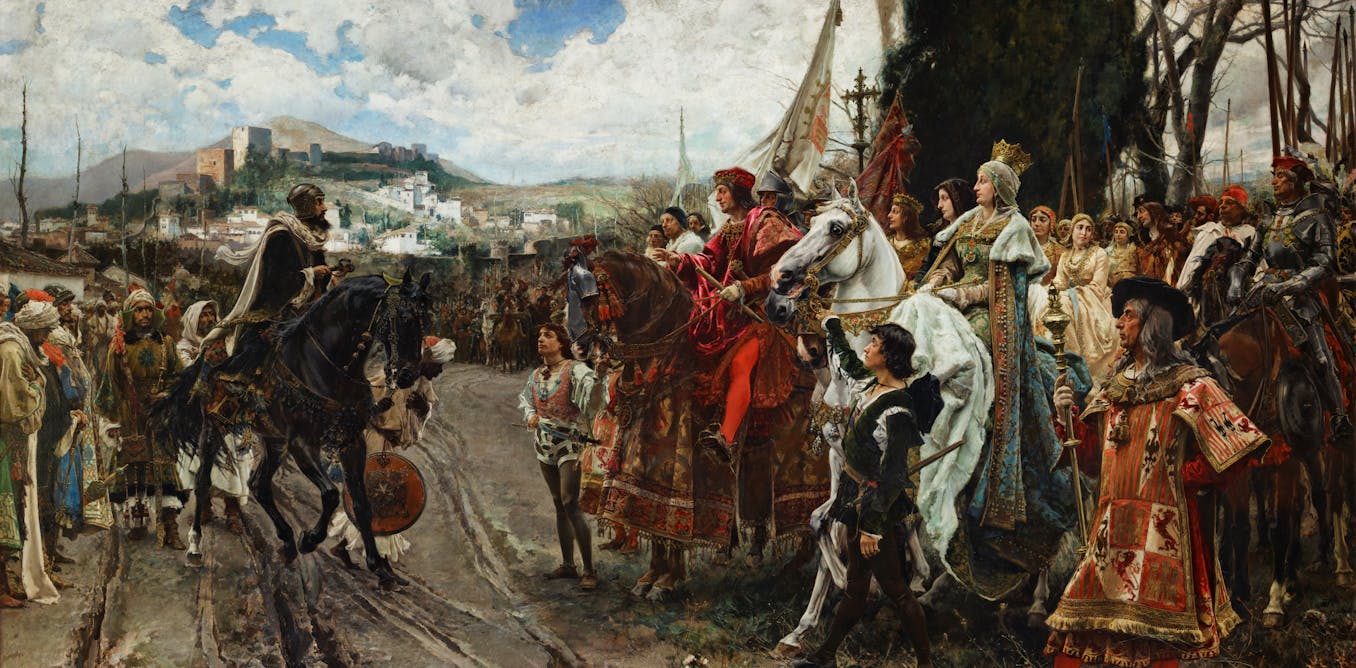
Taking advantage of the situation, the Muslim Berber commander, Tariq ibn Ziyad, who was stationed in Tangiers at the time, crossed the Strait of Gibraltar with an army of Arabic people and Berbers in 711. Most of the invasion force of 15,000 were Berbers, with the Arabic people serving as an "elite" force. Ziyad landed on the Rock of Gibraltar on April 29, 711. After defeating Roderic at the river Guadalete on July 19, 711, Muslim forces advanced, capturing cities one after another. The capital of Toledo surrendered peacefully. Some of the cities surrendered with agreements to pay tribute and local aristocracy retained a measure of former influence. The Spanish Jewish community welcomed the Muslims as liberators from the oppression of the Catholic Visigothic kings. In 712, another larger force of 18,000 from Morocco, led by Musa Ibn Nusayr, crossed the Strait of Gibraltar to link up with Ziyad's force at Talavera. The invasion seemed to have been on the initiative of Ziyad: the caliph, al-Walid, in Damascus reacted as if he was surprised to see him. By 713 Iberia was almost entirely under Muslim control. In 714, al-Walid summoned Ziyad to Damascus to explain his campaign in Spain, but Ziyad took his time travelling through North Africa and Palestine and was finally imprisoned when he arrived in Damascus. The events of the subsequent ten years, the details of which are obscure, included the capture of Barcelona and Narbonne, and a raid against Toulouse, followed by an expedition into Burgundy in 725. 


The Muslim invasion reached as far north as France, but the Muslims were defeated at the Battle of Tours by the Franks in 732 A.D. The victory of the Franks, led by Charles Martel, over 'Abd al-Rahman Ibn 'Abd Allah al-Ghafiqi has often been misrepresented as the decisive battle that stopped the Muslim conquest of France, but the Umayyad force had been raiding Aquitaine with a particular interest in sacking churches and monasteries, not seeking its conquest. These actions are of course wrong and evil. Many Muslims in diverse lands promoted religious pluralism. Before Muslims were ready to build mosques in Syria, they accepted Christian churches as holy places and shared them with local Christians. In Iraq and Egypt, Muslim authorities cooperated with Christian religious leaders. Numerous churches were repaired and new ones built during the Umayyad era. Yet, Muslims forced Jewish people and Christians to pay a tax or jizya to Muslims in places like the Levant and Egypt. Muslims grew their influence in many places. Some Muslim controlled places had religious pluralism, and other places were more authoritarian and oppressive. As Jerusalem grew in importance to Muslims and pilgrimages increased, tolerance for other religions declined. Many Christians were persecuted and some churches were destroyed. The Sixth Fatimid caliph, al-Hakim bi-Amr Allah, 996–1021, who was believed to be "God made manifest" by his most zealous Shiʻi followers, now known as the Druze, destroyed the Holy Sepulcher in 1009. This powerful provocation helped ignite the flame of fury that led to the First Crusade. The dynasty was later overtaken by Saladin of the Ayyubid dynasty. In Africa, many Arabic Muslims had black slaves in East Africa. Muhammad had multiple slaves. 


The Major Doctrines of Islam


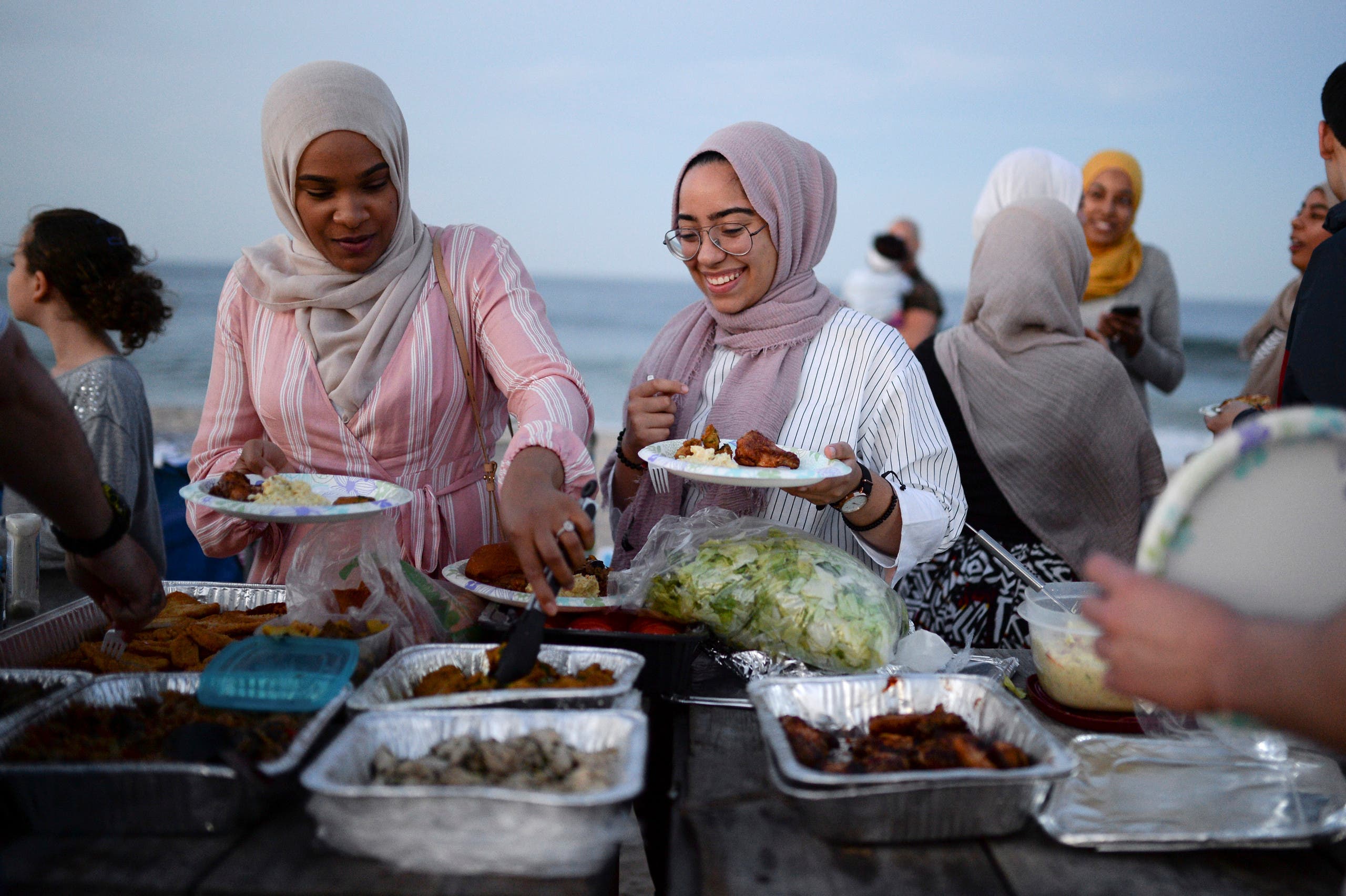
The doctrines of Islam have similarities and massive differences from Judaism and Christianity. Islam believes in the existence of one Creator who created the Universe called Allah. Allah's etymological origin has been debated by scholars for years. Some believe that the term Allah is a contraction from al- ilah (or the god) and is linguistically related to God's names in other Semitic languages like Aramaic (Alaha) and HEbrew (Eloah). The word "Allah" now conveys the superiority or sole existence of one God, but among the pre-Islamic Arabic people, Allah was a supreme deity and was worshipped alongside lesser deities in a pantheon. Many Jews, Christians, and early Muslims used "Allah" and "al-ilah" synonymously in Classical Arabic. The word is also frequently, albeit not exclusively, used by Bábists, Baháʼís, Mandaeans, Indonesian Christians, Maltese Christians, and Sephardic Jewish people, as well as by the Gagauz people. The majority of scholars consider Allah to be derived from a contraction of the Arabic definite article al- and ilāh "deity, god" to al-lāh meaning "the deity, the God." In some sources, the contracted and un-contracted forms are used interchangeably. The contraction of the terms is mirrored by the parallel contraction of al-ʾilāt to Allāt. Originally, ʾilāh was used as an epithet for the West Semitic creator god ʾIlu (the Ugaritic version of El), before being adopted as the proper name itself for this god. A minority hypothesis posits that Allah is a loanword from the Syriac Alāhā. However, this form is likely a phonetic adaptation of the Arabic.


In an inscription of Christian martyrion dated to 512, references to al-ilah (الاله) appear in both Arabic and Aramaic. The inscription opens with the phrase "By the Help of al-ilah." Pre-Islamic Meccans worshiped Allah alongside a host of lesser gods and those whom they called the "daughters of Allah." One major aspect of Islam is the Islamic belief that God is one, God is eternal, and God has no begotten Son. One major cornerstone of Islam is that God has no Son as found in chapter 112 of the Qur'an (Al-'Ikhlās, The Sincerity). Conversely, the New Testament is clear that God has a Son, "......the Father sent the Son to be the Saviour of the world." (1 John 4:14). 


1 Timothy 3:16 mentioned that, "And without controversy great is the mystery of godliness: GOD was manifest in the FLESH, justified in the Spirit, seen of angels, preached unto the Gentiles, BELIEVED ON in the world, RECEIVED UP into glory."


Isaiah 9:6 of the Old Testament is clear that, "For unto us A CHILD IS BORN, unto us a son is given: and the government shall be upon his shoulder: and his name shall be called Wonderful, Counsellor, THE MIGHTY GOD, THE EVERLASTING FATHER, The Prince of Peace." 


Islam teaches that Noah, Abraham, and Jesus Christ are prophets.  Alongside the Quran, Muslims also believe in previous revelations, such as the Tawrat (the Torah), the Zabur (Psalms), and the Injil (Gospel). They believe that Muhammad is the main and final of God's prophets, through whom the religion was completed. The teachings and normative examples of Muhammad, called the Sunnah, documented in accounts called the hadith, provide a constitutional model for Muslims. Islam is based on the belief in the oneness and uniqueness of God (tawhid), and belief in an afterlife (akhirah) with the Last Judgment—wherein the righteous will be rewarded in paradise (jannah) and the unrighteous will be punished in hell (jahannam). The Five Pillars, considered obligatory acts of worship, are the Islamic oath and creed (shahada), daily prayers (salah), almsgiving (zakat), fasting (sawm) in the month of Ramadan, and a pilgrimage (hajj) to Mecca. Islamic law, sharia, touches on virtually every aspect of life, from banking and finance, and welfare to men's and women's roles and the environment. The two main religious festivals are Eid al-Fitr and Eid al-Adha. The three holiest sites in Islam are Masjid al-Haram in Mecca, Prophet's Mosque in Medina, and al-Aqsa Mosque in Jerusalem. The Islamic creed (aqidah) requires belief in six articles: God (they believe in the oneness of God called tawhid), angels, revelation, prophets, the Day of Resurrection, and the divine predestination. Muslims use a shahadah to confess their faith. Those, who convert to Islam, are required to recite the shahada in front of witnesses. 

Prayer in Islam, called as-salah or aṣ-ṣalāt (Arabic: الصلاة), is seen as a personal communication with God and consists of repeating units called rakat that include bowing and prostrating to God. There are five timed prayers each day that are considered duties. The prayers are recited in the Arabic language and performed in the direction of the Kaaba. The act also requires a state of ritual purity achieved by means of either a routine wudu ritual wash or, in certain circumstances, a ghusl full-body ritual wash. Muslims worship in mosques or masjids. Many mosques have a shelter for the poor and minarets or to allow the adhan or vocal call time for prayer. Muslims do the hajj or pilgrimage to Mecca at least once in their lifetime to Mecca during the Islamic month of Dhu Al-Hijjah.  


The Islam and Roman Catholicism connection


There are many similarities and differences between Islam and Catholicism. There are some people who view Islam as coming from Catholicism as stated by the late Alberto Rivera has said and written about. I agree with Rivera on disagreeing with many doctrines of Roman Catholicism, but my research shows me that Catholicism didn't create Islam. Yet, there are similarities among both creeds. One similarity is that both Roman Catholicism and Islam use prayer beads. The prayer beads in Catholicism are called Rosary beads. The prayer beads in Islam are called Tashih or Misbaha. They are used for repetitive prayer. Both religious groups believe in a Day of Judgement, the resurrection of the dead, and an afterlife. Both religions follow a time of fasting during Lent for Catholics and during the month of Ramadan for Muslims. The Second Vatican Council had its declaration of Nosta Aetate for ending past conflicts among both groups. Both Muslims and Catholics venerate Mary to the point of carrying statues of Mary worldwide. Mary should be respected and honored for her contributions to the world, but she is not infallible. Catholics and Muslims view pilgrimages as a means of obtaining favor from God. Millions of Catholics yearly go to shrines globally; millions of Muslims yearly go on the Hajj to Mecca. Pope John Paul II in 1985 said that Roman Catholicism recognizes Allah as the God of the Bible. 


The Evil of Islamophobia


You can't talk about Islam without talking about Islamophobia. Islamophobia is certainly wrong and evil. Islamophobia is the irrational fear, hatred, and discrimination against Muslims or the religion of Islam There are many things that Islamophobia is not. Islamophobia is not when people express peaceful dissent with the religion of Islam. People have the right to agree or disagree with Islam. Islamophobia is not opposing terrorism and opposing authoritarian theocracy. Islamophobia is hatred of Muslims because they are Muslim, it is blaming Islam for all evils on Earth, it is promoting Muslim travel bans, it is about promoting false information about Islam for the reason of hatred, it is about discrimination against Muslims because they are Muslim, and it is about dehumanizing Muslim people. Also, Islamophobia is about lying about Koranic verses or taking verses out of context to promote hatred of Muslim people. Islamophobia is vandalizing mosques that have happened during the aftermath of 9/11. You know me. I cite Koranic verses to show my dissent with many doctrines of Islam without hating Muslims. One famous Islamophobe is the infamous Robert Morey. He made the prediction that Islam would cause WWIII, which isn't the case. 


According to an article in the Orange County Weekly, in November 2001, Morey told a San Diego church audience that he had advised the State Department to blow up Mecca and Medina (Muslim holy cities) to win the war on terror quickly. This is demonic behavior, as we can disagree with Islam without advocating the destruction of religious locations. Morey believed that Allah is the moon god Hubal, a deity worshiped in Kaaba in pre-Islamic Saudi Arabia, but that isn't the case. The truth is that in pre-Islamic Arabia, Allah was worshipped within a polytheistic system that included subordinate deities such as Hubal, Al-Lat, and Al-Uzza, who were seen as intercessors to Allah. One sign of Morey of being a total agent is how Morey defends Freemasonry. Robert Morey believes in the old heresy that Freemasonry was just a Christian gentleman group until the 19th century, which is false and a deceptive lie. Freemasonry, as we know it, existed in the late Middle Ages, with ties to occultism since its inception. Freemasonry swears an oath involving death, which Jesus never condoned, Freemasonry deceives Blue Lodge members, which Jesus Christ opposes, and Freemasonry merges mystery school secrecy with Theism in their lodges. Now, Robert Morey is a Reformed and pro-Reconstructionist, which is interesting as many Masons are part of those religious movements. Morey's book, Islamic Invasion, bashes not only Muslims but Arabic people. The problem with his book is that it is filled with inaccuracies. If you are going to disagree with Islam, you have to know what you're talking about with sources. Morey said, in his magazine The Truth Seekers, Sept-Dec, 1995 that, "...if the Muslims have their way, they will kill every Jew and every Christian on the planet." 

We know that to be a lie, because I have worked with Muslims, communicated with Muslims, and seen Muslims in real life who don't desire my death as a Christian. The prophet Isaiah mentions that Jewish people, Gentiles (including people of Arabic descent), and all people will come to praise the light of the Lord as found in Isaiah 60:1-7. Whether one is Jewish or Arabic, black or white, Asian or Latino, Native American or Aboriginal, man or woman, immigrant or migrant, if he or she does the right thing, treats people right, and follows the Lord's way, then he or she will be blessed by the Most High God of the Universe. There is no partiality with God. Also, Robert Morey lacks an emphasis of the Gospel. The Gospel is clear that if anyone believes on Jesus Christ, he or she shall be saved.  I John 1:7 says, But if we walk in the light, as he (Jesus) is in the light, we have fellowship one with another, and the blood of Jesus Christ his Son cleanseth us from all sin. I John 1:9 mentions that, "If we confess our sins, he is faithful and just to forgive us our sins, and to cleanse us from all unrighteousness." You can't bash people in order to cause people to believe in what you believe in. You have to come correct.  So, Islamophobia is not dissent peacefully with Islam. It's about the scapegoating and dehumanizing of Muslim people because they are Muslim. It is about hatred of Islam in a bigoted tone. For example, recently in Dearborn, Michigan (with a high percentage of Muslim people), far right extremists have harassed people near mosques and spewed hatred of Muslims in 2025. We have others like Nour Zeidan calling Kamala Harris the b word which is sexism and evil too. One bigot named Jake Lang slapped bacon over the Koran in front of Muslims in Dearborn. Some of these far-right extremists want to burn the Koran. This is insanity as burning the Koran is disgusting and evil. Islamophobia is the hatred of Muslims that some unfortunately use, which is a perversion of what the true Gospel message is. The Gospel is about believing that the Lord and Savior Jesus Christ died on the cross for our sins and rose from the dead to ascend at the right hand of God the Father. The Gospel is about saving souls, acknowledging the greatness of cultural differences, love your neighbor as yourself, doing the right thing, and making sure that human beings are free to do good. 


The Gospel and Islam Compared and Contrasted


The Gospel of Jesus Christ and Islam have many differences. We can't sugarcoat that reality. Also, it is clear that Christians and Muslims have the right to believe in what they believe in peacefully without oppression and discrimination. It is clear that we should make those differences clear. In the Gospel and the rest of the New Testament as found in Galatians 5:22-23, it reads that the fruit of the Spirit is the following: "...But the fruit of the Spirit is love, joy, peace, longsuffering, gentleness, goodness, faith, Meekness, temperance: against such there is no law." Also, Paul wrote that, "...There is neither Jew nor Greek, there is neither bond nor free, there is neither male nor female: for ye are all one in Christ Jesus." (Galatians 3:28). In the Koran, in Surah An-Nisa (4:1), it mentions that: "O mankind, fear your Lord, who created you from one soul and created from it its mate." This verse highlights the equality of men and women in their creation and in the eyes of God. Surah Al-Baqarah (2:228) mentions that: "And they (women) have rights similar to those (of men) over them in kindness, and men are a degree above them." Many years ago, I found out a verse in the Koran that condones beating women in Surah 4:34:"...Men are the managers of the affairs of women...Those you fear may be rebellious--admonish; banish them to their couches and beat them..." 

Also, the Koran says that the testimony of a woman is half of a man found in Quran (2:282 - (Court testimony) "And call to witness, from among your men, two witnesses. And if two men be not found then a man and two women." Also, the Koran mentions that in Surah 4:11 that, "The male shall have the equal of the portion of two females." Not even the Old Testament mentions that. Men and Women are not identical. We have biological, social, psychological, and emotional differences, but we are equal in worth and value created in the image of God. Also, the Bible is clear that when the Son sets a person free, he or she is free indeed. In Islam, their god of Allah has no Son, but the Bible is clear that God has a Son as mentioned in Pslam 2 and in the following verse: "...they shall call his name EMMANUEL, which being interpreted is, GOD WITH US." (MATTHEW 1:23). The Gospel is clear that in dealing with a heretic, you leave that person alone if they reject what you're saying peacefully. In Surah At-Tawbah, verse 5 states: "And when the sacred months have passed, then kill the polytheists wherever you find them and capture them and besiege them and sit in wait for them at every place of ambush. But if they should repent, establish prayer, and give zakah, let them [go] on their way." Jesus Christ never condoned killing polytheists. The Koran in Surah 11:44 said that the ark rested on Mount Judi, but the Bible says that it came to rest on Mount Ararat. The Koran said that Abraham's father was Azar in Surah 6:74, but the Bible says that it was Terah. The Bible is clear that God the Father is knowable, personal, trustworthy, and his only begotten Son used his sacrifice to save the souls of the human race. 


The Son of the Living God


The Son of God is Jesus Christ, Yeshua. He has been the most talked about person in religious circles. He has been praised, maligned, and supported. His life was filled with pain, resiliency, death, and resurrection. He rose up to talk with the rabbis, refuted the Prosperity Gospel by confronting the moneychangers in the Temple, and made many potent prophecies (like the destruction of the 2nd Temple which happened in 70 A.D., the spread of knowledge, and the rise of the fig tree in the latter days). Many of his followers exist today, and it has been almost 2,000 years after his crucifixion. He lived in Israel. One core tenet of Islam is to deny Jesus as God. One core tenet of Christianity is to view Jesus Christ as God in the flesh. The Bible is clear in Matthew 2:2,11 that the wise men worshiped the Christ child, the Archangel Gabriel said that Jesus Christ is Emmanuel or God with us as found in Matthew 1:23, and Jesus Christ said that he can forgive a person's sins in Matthew 8:2. In the New Testament, when men and women worshiped Jesus Christ as God, Jesus Christ never rebuked them for doing so. John 1:1 is clear that in the beginning was the Word, the Word was with God, and the Word was God. Jesus Christ called him the title of God in I Am as found in John 8:58. In John 10:30, Jesus Christ said that I and my Father one. Therefore, it is clear that the New Testament mentions that Jesus Christ is God. In Revelation 1:8, Jesus Christ called himself Alpha and Omega, the first and the last, and the Almighty. 


Conclusion


Islam has been around for almost 1400 years now. It has been a religion that has grown in many communities of the world with over 1 billion followers. Like other religions, it has diverse factions in it. Islam has Sunni, Shia, Sufis, and other different types of Islam. Islam appealed to many people, because many people want direction in life, discipline, and a sense of purpose in life. Islam believes in one God like Judaism and Christianity. Yet, all 3 monotheist religious movements have multiple differences too. Islam believes that God has no Son and there is no Trinity. Christianity teaches that God has a Son, and the Trinity is mentioned in many verses of the Bible, too. Judaism teaches about the Golden Rule and other important lessons of life. Islam teaches that Mount Ararat was in Saudi Arabia and Abraham's father was a different name than what is mentioned in the Bible. Islam denies the physical resurrection of the Lord Jesus Christ when the physical resurrection of the Lord Jesus Christ is one major cornerstone of the Christian faith. Islam is a works-based religion, which means that you have to do almsgiving to be accepted into Paradise (or Heaven). The reality is that no human is perfect. No amount of works alone can merit salvation. Only by the blood of the Lamb can the soul of human beings be saved. Works are important, but they don't merit salvation, as we are saved by the grace of God. We do good works after salvation, not to get saved. Also, it is important to condemn Islamophobia. We can disagree with Islam without dehumanizing Muslims. Likewise, it is clear that we ought to stand on our spiritual beliefs while maintaining religious freedom at the same time. In our generation, there is a large group of ex-Muslims who believe in the Gospel now voluntarily live holy lives. Many of these ex-Muslims say that they had visions from Jesus Christ. Numerous people who left Islam in many nations face persecution or death, but they are courageous to stand by their views by the power of the Holy Spirit. I am not a Muslim, because I won't deny the Son, I don't agree with many of its doctrines, and I have a commitment to Yeshua Ha Mashiach. Therefore, we are not babies anymore, and we have this august responsibility to send the Gospel in a holy, respectful way, so people can leave the religion of Islam (which is filled with many false doctrines) and follow the faith of the Lord Jesus Christ (Yeshua). In closing, here are inspirational views: 


"Let this mind be in you, which was also in Christ Jesus: Who, being in the form of God, thought it not robbery to be equal with God: But made himself of no reputation, and took upon him the form of a servant, and was made in the likeness of men: And being found in fashion as a man, he humbled himself, and became obedient unto death, even the death of the cross. Wherefore God also hath highly exalted him, and given him a name which is above every name: That at the name of Jesus every knee should bow, of things in heaven, and things in earth, and things under the earth; And that every tongue should confess that Jesus Christ is Lord, to the glory of God the Father. Wherefore, my beloved, as ye have always obeyed, not as in my presence only, but now much more in my absence, work out your own salvation with fear and trembling.  For it is God which worketh in you both to will and to do of his good pleasure. Do all things without murmurings and disputings: That ye may be blameless and harmless, the sons of God, without rebuke, in the midst of a crooked and perverse nation, among whom ye shine as lights in the world; Holding forth the word of life; that I may rejoice in the day of Christ, that I have not run in vain, neither laboured in vain. Yea, and if I be offered upon the sacrifice and service of your faith, I joy, and rejoice with you all.

-Philippians 2:5-17


1 John 5:20 KJV states: "And we know that the Son of God is come, and hath given us an understanding, that we may know him that is true, and we are in him that is true, even in his Son Jesus Christ. This is the true God, and eternal life."


“But if we walk in the Light as He Himself is in the Light, we have fellowship with one another, and the blood of Jesus His Son cleanses us from all sin” (1 John 1:7).


By Timothy


Thanksgiving 2025.


Thanksgiving 2025


Thanksgiving is a unique time of the year when people not only have human camaraderie. It is also a time when friends support each other, relatives support each other, and people eat a lot of food. Food makes Thanksgiving very powerful as this is the time of the year when men and women show out to represent their culinary skills in creating turkey, apple pie, sweet potato pie, cranberry sauce, macaroni and cheese, potato salad, hamburgers, other vegetables (like greens, broccoli, and other items), and a diversity of items. Regardless of how wild and harsh times are during the end of 2025, we should always fight for our dreams. We have tons of gifts as human beings, and we should never give up at all period. This time of Thanksgiving is very important. It is the time when we seriously evaluate ourselves and recognize things more important than just money alone. Many extreme materialists view money as the most important thing in life. Yet, we shall not live by bread alone but by the words commanded from the mouth of God. In other words, people using money constructively is legitimate and fine. Yet, money should never be used to defend our ultimate dignity, our character, our humanity. Our human spirit is priceless. Thanksgiving has been celebrated for centuries. It has been a modern American holiday since the days of Abraham Lincoln in 1863. The Pilgrims' 1621 harvest festival with Native Americans (that is, who we talk about Thanksgiving) has many events tied to it. The real story about Thanksgiving is complex, tragic, and long. During Thanksgiving dinner, people eat turkey, mashed potatoes, stuffing, various pies, cranberry sauce, macaroni and cheese, various cakes, sweet potatoes, corn, green beans, and other items. Many of these foods are native to America. There are massive parades in cities like New York City, Los Angeles, St. Louis, Boston, etc. Many professional American NFL Games commonly occurring during Thanksgiving as well. Historian Michael Gannon claimed that there was a Thanksgiving meal on September 8, 1565, in St. Augustine, Florida. There was a Jamestown Thanksgiving in Virginia in 1610. There was another Thanksgiving on December 4, 1619, by English settlers at Berkeley Hundred, Charles City (in Virginia on the James River). 


The Pilgrims and Native Americans' Thanksgiving event taking place in 1621, must be explained in detail. First, there is a distinction between the Pilgrims and Puritans of the United Kingdom. The Pilgrims came to New England first by 1620, most were working class and poor, there were Separatists from the Church of England; they settled in Plymouth. Many of their leaders were William Bradford and William Brewster. The Puritans were upper-middle-class and wealthy. They came to New England later by 1629. Many were educated; most were dedicated to supporting the Church of England. Many settled in Salem plus Boston, and their leaders were folks like John Winthrop, John Endicott, and the wicked Miles Standish. Both groups wanted to create their own government other than the UK. The Pilgrims had weapons and had more liberal ideals than the Puritans (who were more conservative, wanting a union of church and state). 

First, Europe was in a different era by the early 1600's. Monarchies dominated the European continent. Many people were arrested for expressing political and religious dissent with the authorities. The Reformation occurred a century ago, which caused a massive challenge to the Roman Catholic Church's monopoly of religious power in Europe. The leadership of the Roman Catholic Church promoted superstitions that have no basis in Scripture, like calling the Pope Holy Father, transubstantiation, purgatory, the veneration of images, prayers threw people (who passed away, which is akin to divination), the Rosary, etc. Therefore, the Pilgrims wanted religious freedom, separating from the English state church. The English state church was Anglican (which was headed by the British Royals). The Pilgrims were formed in 1605 when they were led by John Smyth, John Robinson, Richard Clyfton, etc. They wanted churches to be voluntary democratic congregations, not whole Christian nations. As The Lord Jesus Christ explicitly supported the separation of church and state too. The Church of England forced people to attend services or face fines or imprisonment.  This took place during the era of King James I. King James I was right to disagree with many of the doctrines of the Vatican, but even he was wrong to persecute dissidents like Baptists and Anabaptists (Baptists and Anabaptists refused to baptize infant babies). There is no biblical or moral basis to baptize babies as confession of faith must occur before baptism. The Puritans wanted to reform the Church of England. Many Pilgrims escaped to the Netherlands to escape the religious persecution done by the Church of England. They lived in Leiden, Holland (a city with 30,000 people). They worked hard in trades on textiles, printing, and brewing trades. Many Pilgrims were at Leiden University. William Bradford worked in Leiden, and William Brewster taught English at the university. Because of the different cultures and political issues in the Netherlands, the Pilgrims decided to go to America. Many were on the Speedwell to leave by July 1620 from Delfshaven. More left on the famous Mayflower ship.  


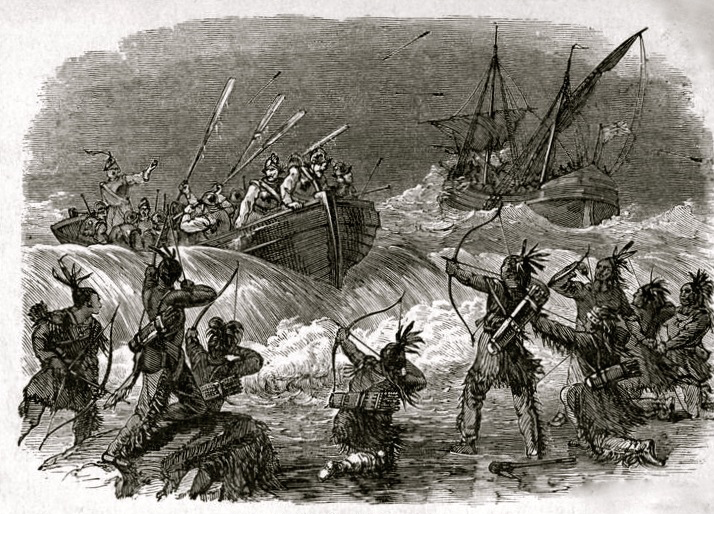
They were in Plymouth by November 1620 in America. The Mayflower Compact was a promise to make a colony vote by majority and set up their own affairs involving governing affairs. Later, they saw the Nauset Native Americans. Native Americans visited by Europeans before as British imperialist Thomas Hunt kidnapped 20 people from the Patuxet Native Americans. One of the Patuxet men was Squanto, who was an ally of the Plymouth colony. Squanto could speak fluently in English. He came to America from England to see his village dead from the plague. The Pilgrims built homes and a colony by January 1621. William Bradford was the governor of the Plymouth colony in 1621 after the death of John Carver. By March 22, 1621, the Pilgrims of Plymouth Colony signed a peace treaty with Massasoit of the Wampanoag. When the first house was finished, it immediately became a hospital for the ill Pilgrims. Thirty-one of the company were dead by the end of February, with deaths still rising. Coles Hill became the first cemetery, on a prominence above the beach, and they allowed grass to overgrow the graves for fear that the Native Americans would discover how weakened the settlement had actually become. 


The Plymouth colonists, today known as Pilgrims, had settled in a part of eastern Massachusetts formerly occupied by the Patuxet Native Americans, who had died in a devastating epidemic between 1614 and 1620. After the harsh winter of 1620-1621 killed half of the Plymouth colonists, two Native intermediaries, Samoset and Tisquantum (more commonly known by the diminutive variant Squanto, and the last living member of the Patuxet) came in at the request of Massasoit, leader of the Wampanoag, to negotiate a peace treaty and establish trade relations with the colonists, as both men had some knowledge of English from previous interactions with Europeans, through both trade (Samoset) and a period of enslavement (Squanto). Massasoit had hoped to establish a mutual protection alliance between the Wampanoag, themselves greatly weakened by the same plague that extirpated the Patuxet, and the better-armed English in their long-running rivalry with the Narragansett, who had largely been spared from the epidemic. The Wampanoag reasoned that, given that the Pilgrims had brought women and children, they had not arrived to wage war against them. Squanto taught the Pilgrims how to catch eel and grow corn and served as an interpreter for them until he too succumbed to disease a year later. The Wampanoag leader Massasoit also gave food to the colonists when supplies brought from England proved insufficient. Having brought in a good harvest, the Pilgrims celebrated at Plymouth for three days in the autumn of 1621. The exact time is unknown, but James Baker, a former Plimoth Plantation vice president of research, stated in 1996, "The event occurred between Sept. 21 and Nov. 11, 1621, with the most likely time being around Michaelmas (Sept. 29), the traditional time." Seventeenth-century accounts do not identify this as a day of thanksgiving, but rather as a harvest celebration.


John Two-Hawks, who runs the Native Circle web site, gives a sketch of the facts: “Thanksgiving' did not begin as a great loving relationship between the pilgrims and the Wampanoag, Pequot and Narragansett people.  In fact, in October of 1621 when the pilgrim survivors of their first winter in Turtle Island sat down to share the first unofficial 'Thanksgiving' meal, the Indians who were there were not even invited!  There was no turkey, squash, cranberry sauce or pumpkin pie.  A few days before this alleged feast took place, a company of 'pilgrims' led by Miles Standish actively sought the head of a local Indian chief, and an 11 foot high wall was erected around the entire Plymouth settlement for the very purpose of keeping Indians out!"


Dr. Apidta writes: “He [Myles Standish] went to the Indians, pretended to be a trader, then beheaded an Indian man named Wituwamat. He brought the head to Plymouth, where it was displayed on a wooden spike for many years, according to Gary B. Nash, ‘as a symbol of white power.’ Standish had the Indian man's young brother hanged from the rafters for good measure. From that time on, the whites were known to the Indians of Massachusetts by the name ‘Wotowquenange,’ which in their tongue meant cutthroats and stabbers.” These are the Wampanoag people of our time who experienced injustice.  

According to accounts by Wampanoag descendants, the harvest feast was originally set up for the Pilgrims alone (contrary to the common misconception that the Wampanoag were invited for their help in teaching the pilgrims their agricultural techniques). Part of the harvest celebration involved a demonstration of arms by the colonists, and the Wampanoag, having entered into a mutual protection agreement with the colonists and likely mistaking the celebratory gunfire for an attack by a common enemy, arrived fully armed. The Wampanoag were welcomed to join the celebration, as their farming and hunting techniques had produced much of the bounty for the Pilgrims and contributed their own foods to the meal. The Puritans came later to America. In 1630, the first ships of the Great Puritan Migration sailed to the New World, led by John Winthrop. From 1629 through 1643, approximately 21,000 Puritans immigrated to New England. The Puritans also believed they were in a national covenant with God. They believed they were chosen by God to help redeem the world by their total obedience to his will. If they were true to the covenant, they would be blessed; if not, they would fail. Many of the Puritans had a state religion. By the 1620s, most of the Patuxet people were wiped out before the Mayflower landed in America. The Massachusett Native Americans lived in the north of Plymouth Colony, led by Chief Massasoit, and the Pokaonet tribe being north, east, and south. Tisquantum was with the Patuxets. 


The Narragansett tribe lived in Rhode Island. Massasoit has to make a decision to either form an alliance with the Plymouth colonists (to protect himself from the rival Narragansetts) or form a tribal coalition to drive the colonists out. There was a temporary alliance between Massasoit and the colonists. There was Samoset, being a sachem being allied with Massasoit. Bradford and Tisquantum were friends. Bradford was taught by Tisquantum on survival skills. He taught him how to plant corn, to fish, and other actions. Later, the colonists learned that the Narrangsetts attacked the Pokanokets and took Massasoit. Many people rescued a Billington boy. Governor Bradford organized an armed task force of a dozen men under the command of Miles Standish to Corbitant. Corbitant made his peace via Massasoit. By the 1630s, more tensions existed among Native Americans and the colonists. John Winthrop was wrong to write that it was God's will for smallpox to cause the death of Native Americans. In a letter to England, Massachusetts Bay colony founder John Winthrop wrote, "But for the natives in these parts, God hath so pursued them, as for 300 miles space the greatest part of them are swept away by smallpox which still continues among them. So as God hath thereby cleared our title to this place, those who remain in these parts, being in all not 50, have put themselves under our protection." Before the Pilgrim colony, many British imperialists enslaved Native Americans. Another common practice among European explorers was to give "smallpox blankets" to the Native Americans. Since smallpox was unknown on this continent before the arrival of the Europeans, Native Americans did not have any natural immunity to the disease so smallpox would effectively wipe out entire villages with very little effort required by the Europeans. From 1615 to 1619 smallpox ran rampant among the Wampanoags and their neighbors to the north. The Wampanoag lost 70 percent of their population to the epidemic and the Massachusetts lost 90 percent.


The Pequot War started a new chapter when a further genocide of Native Americans in Massachusetts reached new heights of destruction. Bradford has an alliance with Massasoit and the nearby Pakanoket tribe. By August 14, 1621, Myles Standish led an attack in trying to kill Corbitant. When Pokanoet people tried to escape, Standish's men fired their muskets. This caused a Pokanet man and woman to be wounded. Standish stabbed Pecksuot (a member of the Massashcusett, a rival of Massasoit) with his own knife.  Standish ordered two more Massachuett warriors to be killed. The Pilgrims were allied with the Wampanoag since 1621. The Pequots allied with the Dutch colonists, and the Mohegans with the British colonies. Competition over the fur trade and conflicts inspired the Pequot War. The Pequot war had the deaths of colonists and massacres of Native Americans. The war ended with the Pequot's defeat. At the point where the Mystic River meets the sea, the combined force of English and allied Indians bypassed the Pequot fort to attack and set ablaze a town full of women, children, and old people.

William Bradford, the former Governor of Plymouth and one of the chroniclers of the 1621 feast, was also on hand for the great Mystic River massacre of 1637:

"Those that escaped the fire were slain with the sword; some hewed to pieces, others run through with their rapiers, so that they were quickly dispatched and very few escaped. It was conceived they thus destroyed about 400 at this time. It was a fearful sight to see them thus frying in the fire...horrible was the stink and scent thereof, but the victory seemed a sweet sacrifice, and they gave the prayers thereof to God, who had wrought so wonderfully for them, thus to enclose their enemies in their hands, and give them so speedy a victory over so proud and insulting an enemy."


King Philip's War took place from 1675 to 1676. This war happened after Massasoit's son Metacom saw that the colonists violated the alliance between the Wampanoags and the colonists. Metacom is Massasoit's son. Many Native Americans were hanged and murdered. Native Americans attacked homesteads and villages. After the Mystic Massacre, Narragansett leader Miantonomh united with Algonquian leaders in the 1640s to unite against the colonists all together. Negotiations fell apart as Puritans didn't recognize women leaders among Native American people which is sexism done by the Puritans. Massasoit and Metacom of the Wampanoags were prominent. The Wampanoags and settlers had issues as the settlers had intrusion of Wampanoag farms, food stores, and this continued despite complaints. Metacom didn't want his Wampanoag people to be forced to convert to Christianity. War happened, and the traitor Mammanuah signed a deed granting English colonizers the right to all the land from Pocasset Neck south to the sea. John Sassamon was a Native American convert to Christianity who wanted peace. Sassamon was later murdered. Metcomet fought the colonists, but the Mohawk, who were rivals of the Algonquian people, attacked Metacomet's forces causing a defeat. After King Philip's war, more than 1000 colonists and 3000 Native Americans died. Many Native Americans were sent to slave markets in the Caribbean from Bermuda to the Azores.   


The image above is a drawing of Metcomet. 


Many European colonists betrayed the Wampanoags, committing murder, scrapping, and genocide against them in New England. The genocide of Native Americans is completely evil and wrong. My black African ancestors were victims of slavery and genocide, too by the same European imperialists centuries ago. Therefore, we must separate truth and myth. The myth is that every Pilgrim and Puritan were just holy men who sought justice. The reality is that many Pilgrims and many Puritans were stone-cold murderers of Native Americans in a colonist enterprise. Also, many sincere people did desire religious freedom (as there is nothing wrong with believing in God), but the genocide of Native Americans and black Africans is completely unjustified.  During this time of the year, we are thankful for the blessings that we have in our lives. We know the real history of Thanksgiving in the Plymouth Colony. Likewise, diverse thanksgiving ceremonies existed for millennia across the corners of the Earth. We can both condemn the genocide of Native Americans in the Americas and acknowledge the legitimate blessings that we have in our lives at the same time. These two things are true. 


One lesson in life is to always move forward in live your life righteously. That truism is ever real. There are still millions and billions of people in the world who love their families, believe in respect for humanity, and desire a better world than the past or present. There are tons of redemption stories wherefore a human beings made bad decisions and go back on the road to recovery to be a living, shining example of righteousness. Regardless of what is going on in the world, we will still find our joy, our inspiration, express our humor, and be determined to stand up against fascism. I have no despair. I have wisdom and further motivation to support environmentalism, to stand up against racism, to oppose sexism (including manosphere bigoted propaganda), and to reject xenophobia. There are tons of people in the rural areas and small towns that believe like we believe it. They are just as dedicated to justice as we are. So, we should always realize that a remnant remains firm for freedom. The University of Virginia, USC, and MIT has refused to submit to the demands from the Trump administration to make their universities a pro-Trump front. Universities have every right to maintain their independent views and not be swayed by the political establishment or by the MAGA movement. We are in a battle against authoritarianism. White House Deputy Chief of Staff Stephen Miller said that Trump has "plenary authority" during his discussion about deployment of National Guard troops in Oregon. Plenary authority means that a single government official has absolute power on a particular matter. Obviously, Trump has no plenary authority over the National Guard. The President must have approval from the Governor to send National Guard troops and the 1878 law of the Posse Comitatus Act bans the military from law enforcement actions during times of peacetime in America. There is the separation of powers which occurs when all three branches of the government have co-equal powers. For example, the legislature can check the executive by vetoing law signed by the President. The Supreme Court can check the executive by making laws unconstitutional by its rulings too. We know of the corruption of the Trump administration when Bondi protects Homan when he took a $50,000 bribe by shutting down an investigation of Homan. Trump is filled with contradictions. Trump claims to want people to feel safer. Still, he has allowed ICE agents to use racial profiling and other aggressive, unwarranted tactics to terrorize communities plus detain even U.S. citizens, beyond just undocumented immigrants. Trump claims to want people to be healthier, but he supports ending legitimate regulations that protect us from being poisoned from the water, air, land, and food supply. Trump claims to support the law, but he has allowed officials to murder people without due process of law in the Caribbean. Even Republican Rand Paul has condemned that action as unconstitutional. Rand Paul is right on that issue. ICE harassing and terrorizing people in Chicago is evil too. 


The Era of Sardis


Time has moved forward in the history of Christianity in diverse ways. The age of Sardis saw a rejuvenated Protestant Reformation going into a capricious situation. There were many independent churches globally from Asia to the Americas by this time. The Protestants were here to say, and the Catholic Church also renewed its power. These 2 religious factions created a peace treaty in 1648 and spread worldwide. The paradox is that some people in both religious factions, at that time, spread their religious views via the notorious evils of slavery (i.e. the Maafa, religious deception), colonialism, racism, sexism, and other forms of religious deceptions like the myth of white racial superiority. Likewise, many legitimate followers of God spread the Gospel internationally with love, grace, and inspiration from the Holy Spirit to grow the influence of spirituality too (as the true fruits of the Holy Spirit deal with patience, temperance, holiness, fulfilling God's ordained destiny, and the Golden Rule). Many haters of religion and God in general omit that crucial fact of history too. By this time, there were massive kingdoms who developed mathematics, science, architecture, other forms of technology, art, and literature in Asia, in Africa, in Europe, in the Americas, and in Oceania. New religious denominations spread like the Baptists, the Methodists, Presbyterians, the Quakers, etc. Also, the slave trade used chattel slavery that accelerated. The Maafa or chattel slavery (which was racial anti-black terrorism and economic exploitation) was about kidnapping people, murdering people, rape, and abuse against black human beings. Some use the sacrilege of involving God in justifying these crimes against humanity. Yet, there is absolutely no excuse for rape, murder, abuse, splitting families apart, slavery, torture, sexism, and emotional terrorism inflicted on black African people (or anyone in the human race in general) period. There was an Arabic slave trade that ruined many black lives as well. So, the age of Sardis many developments on the eve of world revolutions that should shake monarchies at their core. 


The Spread of Protestantism


From 1648 to 1750, the Christian Church was completely different from the time of 33 A.D. at the time of the resurrection of the Lord and Savior Jesus Christ. We have now a multifaceted church with diverse peoples and doctrines. We see the Orthodox Church, the Ethiopian Church, the Asian churches, and other independent Christian movements in the world. The Protestants and the Catholics have numerous religious differences. Yet, their histories by this time will deal with the issues of missionaries, colonialism, and imperialism. The paradox of missionaries was that many missionaries sincerely wanted to promote healthcare, education, and other ways to help humanity. Yet, other missionaries and colonists had a different agenda to promote imperialism, control over people, and advance the falsehood of white racial superiority. Catholic missionaries spread from North and South America, Africa, and Asia from 1500-1800. Protestant missionaries have a similar spread too. By this time, we saw the discrimination of women and witch frenzy among many people who professed to be Christian. There were many Catholic women leaders were nunneries, exercising the same powers and privileges as their male counterparts, such as Hildegard of Bingen (d. 1179), Elisabeth of Schönau (d. 1164/65), and Marie d'Oignies (d. 1213). Hildegard began writing the first of her three-volume theology in 1141. Between 100,000 and 200,000 people were accused of being witches most often by fellow villagers. Approximately 80% of the accused were women; most were acquitted; most trials were civil trials. Inquisitions lessened the impact by requiring strict evidence. From 1561 to 1670, it is estimated that between 40,000 and 50,000 people were executed. For the record, it is wrong to murder people based on their ideological or spiritual beliefs. You can't claim to be moral and advocate persecution of those who disagree with your views. Anyone who does such evils have massive insecurities in their hearts. By the late 1600s, we see more people questioning religious authorities. There was the existence of political absolutism or kings having total control of the people. We saw another era during the Age of Enlightenment. This movement included Deists, atheists, and agnostics who not only rejected theocracy but desire scientific inquiry. They advocated for secularism, religious freedom, freedom of speech, religious toleration, and other ideologies. A lot of people don't know that back in the day in Europe, you could be locked up for using your free speech to oppose a policy of a king or ruler. Secular views spread and many Protestants allied with the Enlightenment principles. 


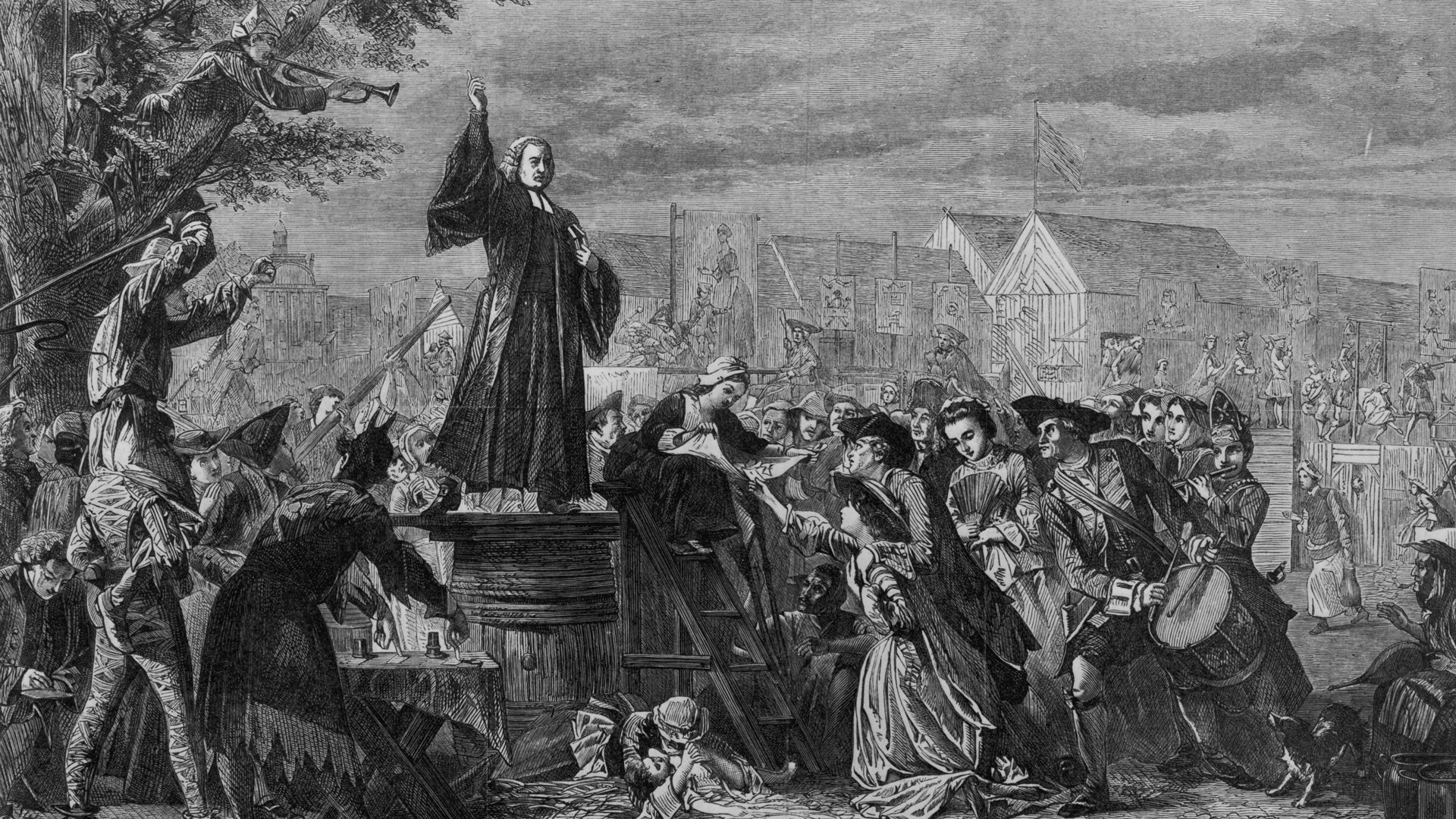
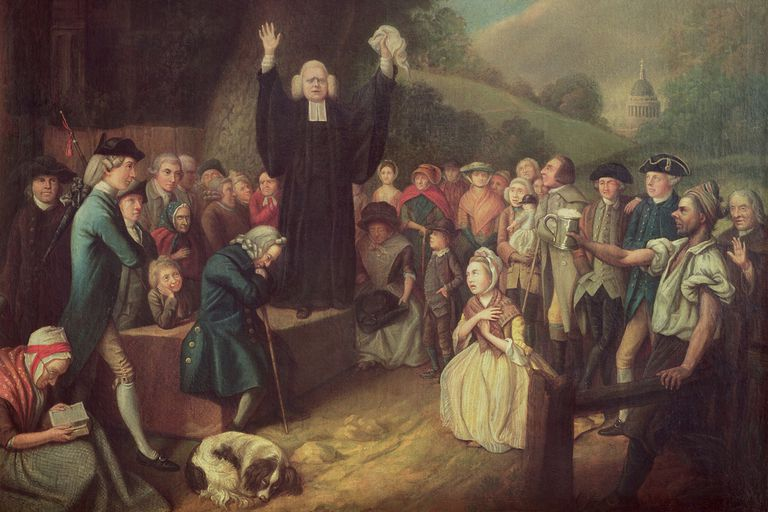
Pioneered by Protestants, Biblical criticism advocated historicism and rationalism to make study of the Bible more scholarly and secular in the 1700s. In reaction to rationalism, pietism, a holiness movement within Lutheranism, began in Europe and spread to the Thirteen Colonies where it contributed to the First Great Awakening, a religious revival of the 1700s. Pietist Moravians came to Georgia in 1732 where they influenced John Wesley, an Anglican missionary in Savannah, Georgia. After returning to England, Wesley began preaching in open-air meetings, leading to the creation of the Methodist church. In the colonies, Presbyterians and Baptists contributed to revival, and to divisions over it, which formed political parties and lent crucial support for the American Revolution. Some radical revolutionaries violently sought the dechristianization of France during the French Revolution leading the Eastern Orthodox Church to reject Enlightenment ideas as too dangerous to embrace. Many Protestants and Catholics in Europe promoted capitalism, urbanization, and industrialization. Some of them promoted aid to the poor, supported family welfare, offered medicine, and education. The problem is that many of them would be complicit in the Maafa, colonialism, and imperialism that would harm the lives of millions of innocent human beings. So, the Reformation originally was of God in my view that sparked spiritual people to find a way to try to cause the Roman Catholic church to end its false doctrines and superstitions. The Catholic Church leadership refused to change, and then Protestantism existed. The Protestant institution has been filled with strengths and weaknesses that changed how the world is forever. Many Protestants were faithful Christians who believed in God sincerely. Other professing Protestants were heretics, some were involved in the occult and secret societies, and some were heads of state. 


The Protestant history accelerated by the 1600s. It was just nearly a century after the Protestant Reformation when Arminius in 1603 believed in the view that predestination is based on foreknowledge. By 1603, King James I was the leader of the Kingdom of England. He was raised Presbyterian in the Church of Scotland. He was a Protestant who would commission the creation of a new Bible called the King James Bible. King James I was from the House of Stuart. He is loved and hated by tons of people back then and now. King James I was not perfect, but he wasn't evil incarnate. King James I was right to express theological disagreements with the Romanist church. He was right to write literature to condemn adultery. He made the mistake of persecuting many Baptists and religious dissidents. He wrote many books like Daemonologie in 1597, The True Law of Free Monarchies in 1598, and Basilikon Doron in 1599. He tried to stop religious wars and prevented the hawkish members of the Parliament from fighting Spain. He also survived the Jesuit-orchestrated Gunpowder plot when dissident Catholics like Guy Fawkes wanted to use explosives to kill him and members of the Parliament House. The Catholics should have religious liberty rights, but Guy Fawkes and his crew were wrong in trying to use murder to express dissent. Robert Catesby headed the plot. King James, I debated Puritans since the Puritans wanted King James I to make reforms to eliminate rituals from the Church of England that they felt were allied with Catholicism.


The Pilgrims or Separatists wanted no compromise with King James I and left England to the Netherlands and later to America. The King James Version of the Bible was a work of both the Pilgrims and Puritans that became the most famous Bible of the English language. The KJV was a compromise between Anglican and Puritan views. The King James Bible was not created by King James. King James authorized its creation. The creators of the King James Bible were Bible scholars, polyglots, experts in theology, and came from diverse backgrounds. It came from the Greek Textus Receptus works and was influenced by the previous Tyndale Bible. Also, it is important to be made clear that while the King James Bible is a great translation, it is not superior to the original translations of the OT and NT. Puritans and Calvinists grew. The Calvinists promoted the 5 Point Calvinism views by 1619 after the Synod of Dort from 1618-1619. After King James I died, many British people were divided on the role of the Monarchy in the lives of the people. Charles I disagreed with the Puritans. The Monarchy and the Parliament debated each other on how much control they should have. The Monarchy wanted to maintain huge power, and the Parliament wanted reforms to limit the power of the Monarchy in England. Charles wanted more money to fight France and Spain, and Parliament opposed this action. Charles was King James I's son, so Charles dissolved Parliament. The Parliament wanted due process, consent to taxes, soldiers not being allowed into private homes, and the King being banned from advancing martial law during peacetime. Sound familiar? This was a century before the American Revolution took place in America. History does rhyme. Charles I agreed with the petition, but he ignored it. 


By 1629, King Charles I dissolved the Parliament and refused to call it up again. King Charles I imposed taxes and fines on the English people (without permission from Parliament) to get money in order to fund his projects. His popularity declined. Charles I angered the Puritans by maintaining the rituals of the Anglican Church. By 1637, he wanted the Scottish Presbyterians Scots to follow an Anglican prayer book to make people to exist on one religious accord. The Scots threatened to invade England. He or Charles wanted money, and Parliament was ready to oppose him. Parliament limited royal power in the fall of 1641. King Charles was angry and threatened to arrest members of Parliament. Parliament members escaped arrest in January of 1642. People in London rallied to oppose Charles. He left London to go with his supporters in northern England. The English Civil War began, and it lasted from 1642 to 1649. It was between King Charles I and his supporters (called Cavaliers) vs. the Roundheads (or those who opposed King Charles I). The Roundheads included Puritans, too. Many of them wore their hair short over their ears, so the Cavaliers called them Roundheads. Each side had a stalemate in battles originally. Later, Oliver Cromwell, who was a general and allied with the Puritans in 1644, fought in the war. He started to defeat the Cavaliers. By 1647, he held King Charles I prisoner. In 1649, the Puritans and Oliver Cromwell tried King Charles I for treason. They found him guilty, and he or Charles I was executed. So, Charles I experienced a trial, and he was killed. Cromwell was the leader of England now. He formed a commonwealth. He abolished the monarchy and the House of Lords. His ally John Lambert formed a constitution, which was the first in English history. Later, Cromwell became a military dictator. He ended an Irish rebellion. Cromwell was right to disagree with Catholicism on many issues, but he went too far in his brutal response to end the crisis. Both sides (i.e. the British and the Irish) would cause a conflict resulting in the deaths of hundreds plus thousands of people. The Puritans (under Cromwell) restricted theaters, sporting events, and dancing in England for morality purposes. Obviously, this is extreme. Cromwell favored religious toleration for all except for Catholics. He allowed Jewish people to return since they were once expelled from England in 1290. That was a good thing. As for the Catholics, I don’t theologically agree with every aspect of Catholicism, but everyone (regardless of creed) should have the right to believe in what they want without suppression of their rights. Cromwell was the leader of England until his death in 1658. The Parliament ended the military rule as people were sick of it. Later, Charles II ruled England (or the son of Charles I). His reign was the Restoration or the time when the Monarchy was restored. Parliament passed habeas corpus. This means that anyone accused of a crime has the right to see a judge and the judge can decide if a prisoner is set free or not. Charles II wanted to rule like his cousin King Louis XIV (of France). He obtained funds from his rich French cousin Louis XIV.


Charles II was a very popular monarch in England. By February 6, 1685, Charles II died, and James II was on the throne. James II was an overt Catholic. He appointed Catholics to high office, which was a violation of English law. Parliament opposed him, and he dissolved Parliament. In 1688, James II’s wife gave birth to a son. English Protestants were afraid of a line of Catholic kings dominating England. James II’s older daughter was Mary. She was a Protestant. She married William of Orange (or a prince from the Netherlands). Many people from the Parliament invited William of Orange to overthrow James II, so that Protestantism can dominate English politics. By 1688, William and his army came into England. James II fled to France. This was a bloodless Revolution, and it was called the Glorious Revolution. Later, William and Mary promised to be a partner with Parliament in government. The government became a constitutional monarchy, which had laws to limit the powers of the monarchy. The Parliament drafted a Bill of Rights on 1689. This Bill of Rights bans suspending Parliament's laws, it allows Parliament to approve of taxing laws, it allowed for free speech in Parliament, and no one is punished if a citizen petitions a king about grievances. William and Mary agreed with these policies and other limits to their power. 


So, after 1688, no British monarch can rule without the Parliament’s consent. In essence, the Glorious Revolution resulted in a reduction of the power of the monarchy (which was in contrast to the absolutist agenda of the Stuarts). The Glorious Revolution and the English 1689 Bill of Rights influenced John Locke & the American Revolution. The Tories and the Whigs political parties grew in England. By the 1700’s and beyond, cabinet would govern political policies in England. More Puritans go into America from the 1600’s and beyond. Protestantism in America was filled with spiritual growth like universities being built and the Great Awakening with people like Jonathan Edwards preaching in New England. Also, many Protestants and many Catholics would promote the evil of slavery in the Americas, too. This evil would ruin lives, harm black people, and promote theological poison (that poison is promoting the evils that slavery is fine and racism is fine, which are lies) for many years to come. In 1685, King Louis XIV of France (1638-1715) revoked the Edict of Nantes (this edict promoted religious freedom and toleration). King Louis XIV was known for his extremism and his absolutism. This caused French Protestants (like the Huguenots, etc.) to exodus France and travel worldwide, including into America.


Imperialism Spreads Globally


European imperialism grew at the same time when absolutism came about. Imperialism is evil as it strips the resources from others unjustly by theft, war, colonization, and other wicked means to promote empire and domination against innocent populations in the world. European imperialism over the course of centuries stole lands in multiple continents, murdered millions of people, raped tons of human beings, and did other grotesque actions that I can't mention here. Many people, who professed to be Christian, are complicit in the atrocity of imperialism. England with the Anglican Church had members who promoted colonies overseas and used imperialism from the Americas to Africa and Asia. Spain via the Roman Church used imperialism in Africa, the Americas, and other locations for financial benefit and political power. Even many atheists were involved in such evils too along with radicals who claim to be Muslim being complicit in the slave trade in Africa. By this time of the 1600s, the French, British, and Spanish empires fought each other for global domination basically. Monopolies and monarchs controlled large portions of the world's lands and populations filled with force and wickedness. 


The Growth of Secret Societies.


There were many secret societies that grown during this time period like the Rosicurcians, the Freemasons, and the Hell Fire Club. The origin of the Rosicrucians are mysterious. The Rosicrucians included a spiritual and cultural movement that rose up in the early 1600s. Rosicrucianism is symbolized by the Rose Cross or Rosy Cross. There have been several Rosicrucian (or Rosicrucian-inspired) organizations since the initial movement was founded, including the Order of the Golden and Rosy Cross (1750s–1790s), the Societas Rosicruciana in Anglia (1865–present), and the Hermetic Order of the Golden Dawn (1887–1903). Between 1610 and 1615, two anonymous manifestos appeared in early modern Germany and soon after were published throughout Europe. The Fama Fraternitatis Rosae Crucis (The Fame of the Brotherhood of the Rosy Cross) was circulated in manuscript among German occultists since about 1610, and published at Cassel in 1614. Johannes Valentinus Andreae has been considered the possible author of the work. A literal reading narrates the travels and education of "Father Brother C.R.C." and his founding of a secret brotherhood of similarly prepared men. Names, numbers, and other details have Qabalistic allusions, in which the cognoscenti of that era were well-versed. The Confessio Fraternitatis (The Confession of the Brotherhood of RC), published in Frankfurt in 1615, responded to confusions and criticisms and elaborated the matter further. So, Rosicurcianism is a movement filled with occultists that wanted to merge Christian teachings with the occult to promote the "higher self" of consciousness. They want to research the physical universe, the spiritual realm, and many embraced Christian mysticism. They wanted to follow the holistic understanding of existence. They wanted spiritual alchemy, hermeticism (as above, so below, the law of correspondences, etc.), empathy towards people and the sacredness of all humanity (believing in the universal brotherhood) respected. Many Protestants allied with the Rosicrucians to oppose the Roman Catholic Church as the Catholic Church leadership back then persecuted occultists and pagans. The truth is that the Protestants are right to disagree with many of the false doctrines of Roman Catholicism, but many of them didn't have to ally with Rosicrucians to disagree with the views of Romanism. Freemasonry existed since the late Middle Ages. Back then, there were the operative masons who build cathedrals and buildings in Europe. The speculative masons were builders who merged mathematics with spiritual concepts that cause modern Freemasonry to exist. 


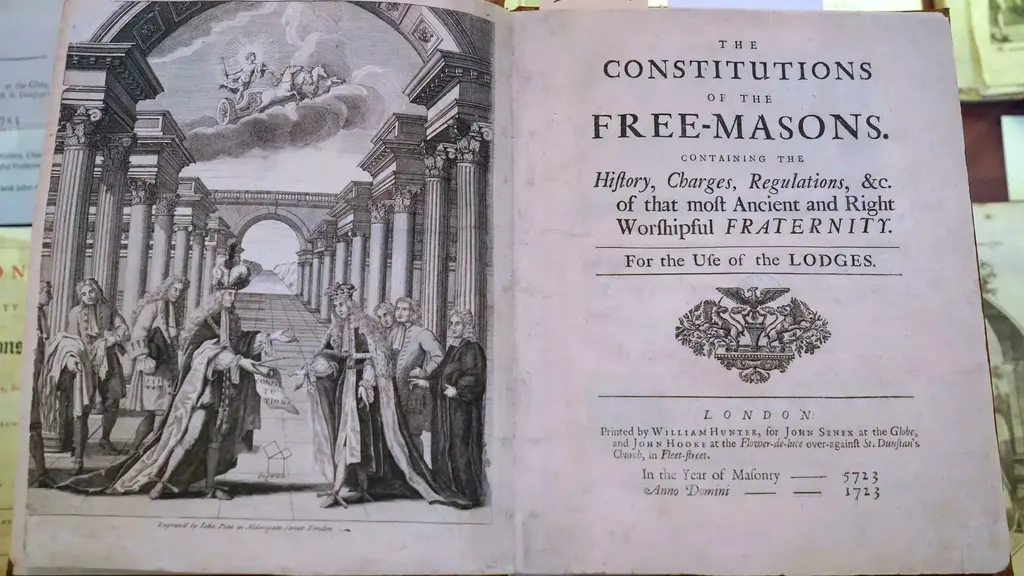
The earliest official English documents to refer to masons are written in Latin — "sculptores lapidum liberorum" (London 1212), "magister lathomus liberarum petrarum" (Oxford 1391) — or Norman French — "mestre mason de franche peer" (Statute of Labourers 1351 (25 Edw. 3. Stat. 2)). These all signify a worker in freestone, a grainless sandstone or limestone suitable for ornamental masonry. In the 17th century, building accounts of Wadham College the terms freemason and freestone mason are used interchangeably. he earliest surviving records of these are the laws and ordinances of the lodge at York Minster in 1352. These regulations were imposed by the Dean and Chapter of the Minster. The Cooke Manuscript, dating from about 1450, set the pattern for what Anderson called the "Gothic Constitutions", the older histories and regulations of the craft. By the 1400's, Masonry embraced the Solomon Temple and Boaz and Jachin imagery. Masons came from the guilds. By the 1500, Masonry spread into Scotland. Freemasonry spread into England heavily by the 1600s, and we know of the Grand Lodge of London being born in 1717.  In 1719, they elected John Theophilus Desaguliers, a clergyman, an eminent scientist, and a Fellow of the Royal Society to be Grand Master of the Grand Lodge of England. Desaguliers is often described as the "father" of modern freemasonry. It was Desaguliers who inscribed the dedication to Anderson's Constitutions, headed the committee which directed and approved them, and supplied the "Gothic Constitutions" from which they were formed. Although he only served one term as Grand Master, he was twice Deputy Grand Master under figurehead Grand Masters, and at other times behaved as if he was Grand Master, forming irregular lodges to conduct initiations. It seems to have been Desaguliers who insisted that ritual be remembered rather than written down, leading to a dearth of material on the development of English ritual until after the formation of United Grand Lodge. Many Protestants were Freemasons despite Freemasonry being completely in opposition to Christianity based on its doctrines and views. The Anderson Constitution of Freemasonry set a foundation for what modern day Freemasonry is. Today, Freemasonry is very diverse in the world. The Hells Fire Club was based in England. It included people ike Benjamin Franklin. It was a group when people did orgies, did rituals, and did other actions. Francis Dashwood was part of it too. Many members did activities that mock religious ceremonies, discussed politics, and had meals that mocked religion. The club motto was Fais ce que tu voudras (Do what thou wilt), a philosophy of life associated with François Rabelais's fictional abbey at Thélème and later used by Aleister Crowley.


The Gospel Spreads


From 1648 to 1750, the Gospel of Jesus Christ has spread globally. By 1675, the Lutheran Philipp Jakob Spener publishes Pia Desideria, which becomes a manifesto for Pietism. John Bunyan published Pilgrim's Progress. Pilgrim Progress has been very famous in English literature, and it is a work that has been translated into more than 200 languages from Dutch, German, Swedish, etc. It has been shown in North America. It is a Protestant devotional literature. It is a book that has inspired both religious and secular authors like  William Hogarth, C. S. Lewis, Nathaniel Hawthorne, Herman Melville, Charles Dickens, Louisa May Alcott, George Bernard Shaw, William Thackeray, Charlotte Bronte, Mark Twain, John Steinbeck and Enid Blyton." The lyrics of the hymn "To be a Pilgrim" are based on the novel. It is a book that deals with the journey of Christian in fictional story settings. John Bunyan was a nonconformists (meaning that he didn't confirm to all policies of the Church of England back then) who was arrested and spent 12 years in prison, because he refused to give up preaching. Roger Williams died in Providence, Rhode Island in 1683. Williams supported the separation of church and state. 1685 was when the Edict of Fontainebleau outlawed Protestantism in France. The Russian Orthodox Church introduced Orthodoxy to Beijing by 1685. Some religious freedom was promoted by the 1689 English Bill of Rights. The Salem witch trials took place in 1692 in Colonial America. Jakob Amman founds Amish sect in 1693 filled with Anabaptist roots. Old Catholic Church of the Netherlands splits with Roman Catholicism in 1701. Hans Egede was a missionary who arrived into Greenland in 1722. The famous and historic First Great Awakening took place from 1730 to 1749. This was when Christian revivals spread in English and America. Many people supported piety and religious devotion. Many leaders of this movement were George Whitefield, John Wesley, and Jonathan Edwards that spread across denominations. Evangelical preachers "sought to include every person in conversion, regardless of gender, race, and status." Throughout the North American colonies, especially in the South, the revival movement increased the number of African slaves and free blacks who were exposed to (and subsequently converted to) Christianity. It also inspired the founding of new missionary societies, such as the Baptist Missionary Society in 1792. The Great Awakening inspired the creation of evangelical educational institutions. In 1746, New Side Presbyterians founded what would become Princeton University. In 1754, the efforts of Eleazar Wheelock led to what would become Dartmouth College, originally established to train Native American boys for missionary work among their own people. While initially resistant, well-established Yale University came to embrace revivalism and played a leading role in American evangelicalism for the next century. George Frederick Handel performed his classic gospel oratorio "Messiah" for the first time in 1741. 1767–1815 was when we have the Suppression of the Jesuits. 


The Americas


In America, Christianity spread. Back in the 1600s, very few Americans were, in fact Christians. Many Christians came to America to promote religious freedom, as many European countries were dominated by Protestant and Catholic theocrats who wanted people to follow their doctrines or face persecution or imprisonment. That is why many Huguenots, Puritans, and Pilgrims came to America to seek religious freedom. Many people who claimed to be Christian did in fact didn't act Christ-like by owning black African slaves and using genocide against Native Americans. Those actions were wrong and evil. That has no justification period. In America, there were many state churches. That means that certain churches had governmental powers and made certain religious practices illegal. For example, in the Massachusetts Bay Colony, there was a law that punished people who refused to baptize infants. This was done by the Congregational state church. The Puritans enforced a strict, theocratic government too in Massachusetts. The Church of England dominated the affairs of the Southern Colonies from Virginia to South Carolina. Many Baptists were persecuted which is why the controversial Thomas Jefferson took inspiration from the Baptists, the Quakers, etc. to promote religious liberty and the separation of church and state. The colonies of Rhode Island and Pennsylvania (that welcome people of diverse religions) had strong religious freedom where people of diverse creeds and religions lived without the threat of religious persecution. Maryland historically have been dominated by the Roman Catholic Church. Maryland, as a colony, offered religious tolerance at first. Later, Anglicanism was the established church in Maryland, and Catholics later had second class status. I don't agree with Roman Catholicism theologically, but Catholics shouldn't be treated as 2nd class citizens. They deserve the right to express their religious faith too. Me personally, I do agree with religious freedom, no religious persecution, and the separation of church and state. 


Epilogue


The era of Sardis in Christian history included some of the most life changing events in all of human history. There was a remnant of born-again Christians who stood up for truth and gave the Gospel to many human beings. Many human beings from Africa, Europe, the Americas, Asia, Oceania, and Australia developed their own civilizations and culture. Many people in the four corners of the world also accepted the Gospel of the Lord Jesus Christ voluntarily. There was also the paradox of many other people exploiting the name of Christianity to do unjustified evil in the world. We know precisely what these evils are. These evils included slavery, imperialism, colonialism, murder, rape, assaults, and other forms of abuse that ruined so many lives. These injustices were supported by many European Kingdoms and their racist armies of terrorism. Evil people used these injustices to murder millions of people worldwide (mostly people of color, including my ancestors). These evil people committed some of the worst crimes in history by not treating your neighbor as you would like to be treated. That is why we have to be clear to condemn the Maafa, imperialism, and colonialism in the strongest terms possible. Also, the First Great Awakening helped to save souls forever and inspired future religious movements in the world too. The of Sardis was a transitional age after the beginning of the Reformation, but it was before the American Revolutions (and other Revolutions against Monarchs and empires in the world). Therefore, the time of Sardis reminded people that growing pains will exist as believers, but your core spiritual convictions ought to remind. 


By Timothy