
WNBA's 30th Year Anniversary
This year is the WNBA's 30th year anniversary. When the WNBA first started on April 25, 1996, it was just before the historic 1996 Summer Olympics in Atlanta, Georgia. I was 13 years old (by December 1983) being an early teenager, and today in 2026, I am in my early 40s. Icons of women basketball existed long before the WNBA like Robin Roberts, Cheryl Miller, Ora Washington, Lusia Harris (the first woman officially drafted by an NBA team in the New Orleans Jazz in 1977), Ann Meyers, and tons of women. Then, the WNBA inspired current and future women basketball to express their athletic talents to the world. From the start, players like Rebecca Lobo, Lisa Leslie, and Sheryl Swoopes supported the WNBA at its inception. The WNBA started with 8 teams and expanded to many more. Over the decades, challenges existed in the WNBA (over representation, pay issues, sponsorships, etc.), and WNBA fought hard to increase the salary pay for WNBA basketball players in a strong push by WNBA players too. The USA women's national team won gold at the 1996 Summer Olympic Games, and that team pushed forward to inspire the first WNBA season starting on June 21, 1997. The first WNBA game had the New York Liberty defeating the Los Angeles Sparks in Los Angeles with a score of 67-57. The WNBA has women fighting for inclusion, tolerance, racial justice, women's rights, and economic justice. In America and in the world, we have a very long way to go to have justice for all (especially with an authoritarian in the White House), but we shall never give up. Our ancestors never gave up on us, and we have the torch now to not only praise the WNBA. We have to love our neighbors and defend human rights all of the time and forever. We know of the icons of the WNBA like Diana Taurasi, Lisa Leslie, Sheryl Swoopes, Sue Bird, Candace Parker, Cynthia Cooper, and so many other names. Also, we acknowledge current great WNBA stars are making their own legacies like A'ja Wilson, Breanna Stewart, Alyssa Thomas, Sabrina Ionescu, Naphessa Collier, Nneka Ogwumike, Rhyne Howard, Angel Reese, Caitlin Clark, Kelsey Plum, Aliyah Boston, etc. Therefore, the WNBA has changed the world in many inspirational, positive ways.

Early Women Basketball Icons
There are tons of early black women basketball icons and women basketball icons of all colors too. There was Senda Bernson or the Mother of Women's Basketball. She adapted James Naismith's original rules for Smith College in 1892, forming the first women's collegiate game and governing rules. Ora Washington was one of the greatest women athletes in human history. She was a great African American athlete in the 1930s and 1940s who starred for the Philadelphia Tribune Girls, leading them to multiple Women's Colored Basketball Championships. She played tennis too. She was the first black woman to dominate a sport in the modern era. She was born in Caroline County, Virginia. She was inducted into the Women's Basketball Hall of Fame in 2009 and the Naismith Memorial Basketball Hall of Fame in 2018. Nera White led the Nashville Business College team to 10 AAU National Championships and was the first woman inducted into the Naismith Memorial Basketball Hall of Fame (being 6 feet one). Lusia Harris was the 6 feet 3 center for Delta State University. Harris led her team to three consecutive AIAW National Championships (1975-1977). She scored the first points in the Olympic women's basketball history in 1976. We know about Nancy Lieberman or Lady Magic. She was a three time All-American at Old Dominion University, a multi-time Olympian, and a pioneer in women's professional leagues and coaching. Ann Meyers Drysdale is the first four time women's basketball All-American at UCLA. She made history in 1980 by singing a free agent contract with the NBA's Indiana Pacers, participating in their rookie camp. Cheryl Miller is the most dominant college player in history. At USC, she led the Trojans to back to back NCAA championships (in 1983 and 1984), won three gold medals, and was the first woman to dunk in a regulation game. Robin Roberts of ABC is also a pioneering legend of women's basketball too.

A Dream
Women's basketball started before 1900. It was part of a dream for women to play basketball professionally. So, women's basketball started in the fall of 1892 at Smith College. Senda Berenson was recently hired as a young physical culture director at Smith. Senda taught basketball to her students, hoping that the activity would improve their physical health. While for men, basketball back in the day was created as an indoor addition to existing team sports like baseball and football. Basketball was the first women's team sport, followed shortly after by hockey, rowing, and volleyball. Basketball's early adherents were affiliated with YMCAs and colleges throughout the United States, and the game quickly spread throughout the country. However, Berenson was taking risks simply in teaching the game to women. Nineteenth-century Victorian culture stressed the frailty of women and prioritized the status of women in the home, and Berenson expressed concern about the women suffering from "nervous fatigue" if games were too strenuous for them. In order to keep it acceptable for women to play at all within Victorian ideals of refinement and gentility, she taught modified rules. To be clear, these Victorian rules are blatantly sexist, but I cite this information for historical context of this time. She increased participation to nine players per team, and the court was divided into three areas. Three players were assigned to each area (guard, center, and forward) and could not cross the line into another area. The ball was moved from section to section by passing or dribbling, and players were limited to three dribbles and could only hold the ball for three seconds. No snatching or batting the ball away from another player was allowed. A center jump was required after each score. Variations of Berenson's rules spread across the country via YMCAs and women's colleges, where educated middle-class women were following the prevailing trend in men's games of playing intercollegiate sports.
Early basketball was played with peach baskets and soccer balls, similarly to the men's game, but women's uniforms again reflected the Victorian culture of the times and were designed to be practical, yet maintain the woman athlete's dignity and femininity. While upper-class women had been playing sports at country clubs since the mid-nineteenth century, they were able to participate in activities such as tennis and croquet in full-length skirts and corsets. However, similar attire was impractical for a more active sport like basketball, so the first trousers for women were worn. Initially loose and covered by a knee-length skirt, these early pants were replaced soon after by loose bloomers over stockings. Despite men being forbidden from watching these collegiate games, the attire still drew public ridicule.
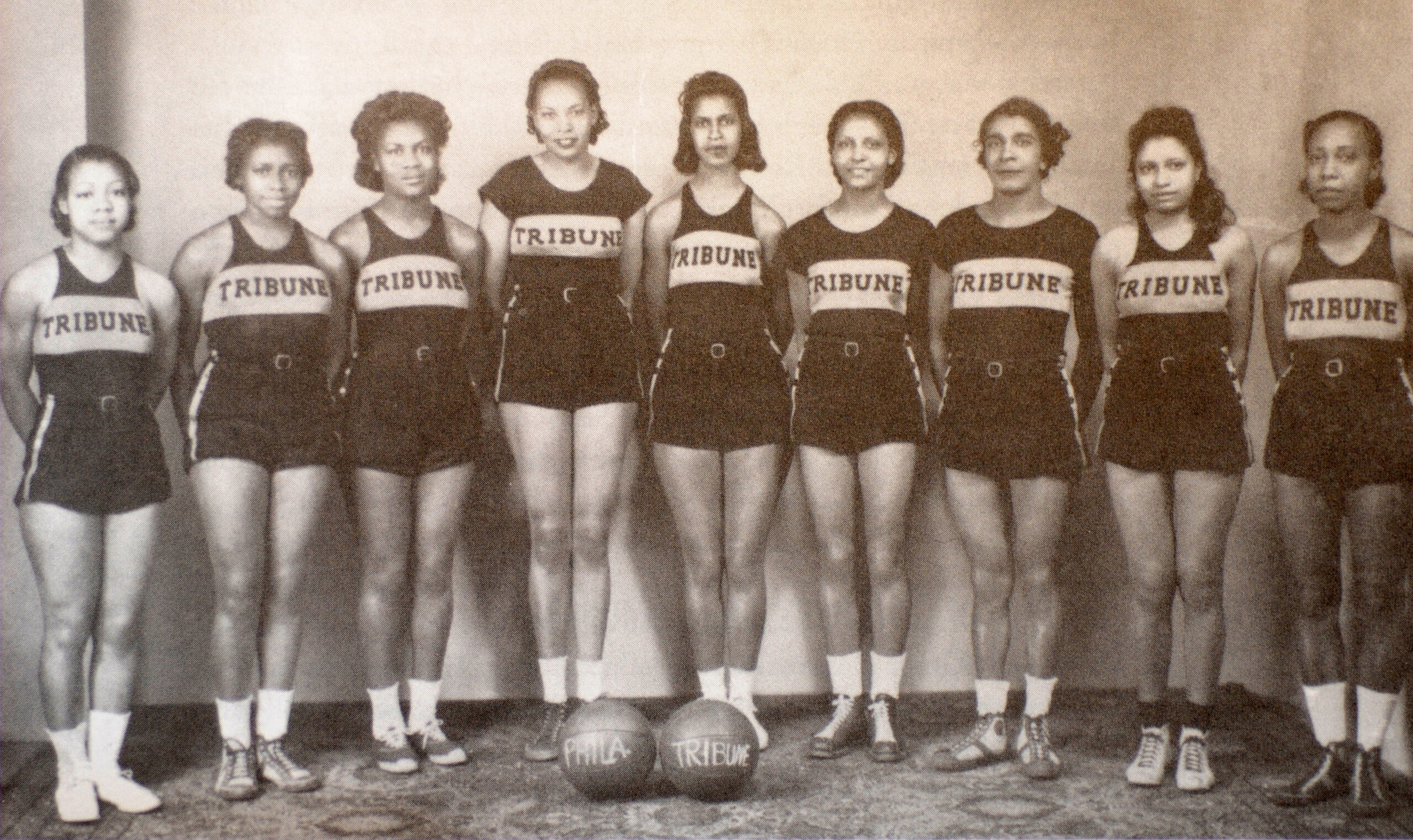
Originally exclusively intramural, the first intercollegiate women's basketball game was played between teams from Stanford University and the University of California, Berkeley, on April 4, 1896. Berenson herself opposed intercollegiate play for women and prioritized the health and fitness benefits for a larger goal: she believed that women, newly entering the workforce and seeking paid jobs outside the home, were at a health-related disadvantage to men, which she saw as limiting women's opportunities and the possibility for equal wages. Obviously, Berenson is wrong to oppose intercollegiate play for women. For much of the early 20th century, other coaches and administrators felt similarly, due in part to an increasing sentiment that men's college sports were becoming too commercialized and exploitive of the athletes. The women's branch of the National Amateur Athletic Foundation was founded in the 1920s, and the organization's goals included keeping women's sports non-competitive by discouraging travel and awards, discouraging publicity, and keeping women coaches and administrators in charge of women's sports. From 1895 until 1970, the term "women's basketball" (or, in New Zealand, "outdoor basketball") was also used to refer to netball, at the time a women's only sport broadly derived from basketball, which evolved in parallel with modern women's basketball. The first professional women's basketball team were the All-American Red Heads. They were founded by C. M. "Ole" Olson in 1936. A lot of people don't know the history of African American history involving basketball during the early 20th century. During the early 1900s, there was the Black Fives Era. This was when many independent all-black women teams existed like the New York Girls, the Spartan Girls of Brooklyn, and the Golden Arrows. The Tribune Girls and The Romas were famous teams. They were sponsored by the Philadelphia Tribune; The Tribune Girls was led by the pioneering athlete Ora Mae Washington. The Tribune Girls had a record of 102-12 record between 1931 and 1934. The Bennett College built one of the best women's basketball teams in America in the 1930s, and the team was disbanded by the 1940s in favor of intramural sports. The Chicago Romas was another great black women's basketball team that went undefeated for six years after World War II. African American women played basketball for sports and to refute the lie that African Americans lacked discipline, leadership skills and intelligence involving athletic expression.
There is more history that should be known about African American women and men in early basketball leagues during the early to mid-20th century. The New York Rens were the first Black-owned fully professional African American basketball team in history. In 1939, they won the first World's Championship of Professional Basketball. They were the first team to win an official world's championship in the sport. New York City is known as the mecca of the sport of basketball in general. There were dozens of African American women's basketball teams throughout the Black Fives Era of basketball. There are many unsung black women players back then too. There was Dora Cole who played basketball in 1910. Dora Cole played for the New York Girls of Harlem, and she married Conrad Norman, who was the team's head coach who was one of the founders of the Alpha Physical Culture Clubs. There were the Spartans Girls of 1910, Helen Smith in 1934, Eva Miller in 1912, and Inez Patterson who played in ca. 1932. There were Kate Bard of 1937, Edith Trice of 1912, and the Golden Arrows team of ca. 1949. The Spartan Girls Athletic Club of Brooklyn, the sister squad to the Smart Set Athletic Club, featured the Harris sisters, Bernadette, Mary, and Genevieve. Edith Trice played for the Younger Set, whose first game was played in late October 1912. The Roamer Girls of Chicago had Isadore Channels and Kate Bard. Helen Smith was a very tall woman who played for the Club Store Co-Eds of Chicago. The team of the Jamaica, Long Island Golden Arrows had star players like Louise Woods, Shirley Farnum, and Ruby Perlotte. The games of these early black women teams were reported by the Amsterdam News, the New York Age (both newspapers were based in Harlem), The Defender (from the Chicago's South Side), and the Courier all over Pittsburgh. There were other teams too. New York City, Big East teams, and the Barclays Center continue to celebrate the early African American women basketball teams in the 21st century too.
Everything changed in 1972 with Title IX. It was passed as an amendment to the Higher Education Act of 1965. The legislation didn't mention sports, but Title IX helped to increase the number of women to compete in amateur and professional athletics. Title IX opened doors to African American and women of every color to be players, coaches, and administrators. Then, the National Collegiate Athletic Association (NCAA) gained a lot of control of women's collegiate sports.

The WNBA's Start
The popularity of women's basketball has increased around the world for decades. By the 1970s, women's basketball had attracted the International Olympic Committee, which added women's basketball as an official sport of the Olympic Games in 1976; the men had debuted in 1936. Throughout the 1970s, funding for (and interest in) women's basketball began to dramatically increase as schools receiving federal funding began to come into compliance with new laws mandating a lack of discrimination based on sex. The sport was also gaining attention at the collegiate level, under the auspices of the Association of Intercollegiate Athletics for Women (AIAW). America's first professional basketball league for women was founded in 1978 as the Women's Basketball League. The WBL competed for three seasons, launching in 1979 with 8 teams. The league expanded to 14 teams in 1980. Financial issues, poor marketing, and the cancelation of America's participation in the 1980 Summer Olympic Games severely impacted the league's viability, and it collapsed at the end of its third season in 1981. The next major development in women's basketball occurred in 1982 when the National Collegiate Athletic Association (NCAA) began to sponsor the sport. After several failed attempts at women's professional leagues in the U.S., the NBA founded the WNBA in 1996. The first nationally televised championship game occurred in 1979. Ivy Kirkpatrick of Stephen F. Austin State University coordinated the collaboration between NBC Sports and the AIAW. Only the title game was televised with Old Dominion University defeating Louisiana Tech University. Thereafter the Women's Final Four has been televised as an annual event.
The creation of the WNBA was officially approved by the NBA Board of Governors on April 24, 1996, and announced at a press conference with players Rebecca Lobo, Lisa Leslie, and Sheryl Swoopes in attendance. The new WNBA had to compete with the recently formed American Basketball League (ABL), another professional women's league that began play in the fall of 1996, but ceased operation during its 1998–99 season. The WNBA began with eight teams: the Charlotte Sting, Cleveland Rockers, Houston Comets, and New York Liberty in the Eastern Conference; and the Los Angeles Sparks, Phoenix Mercury, Sacramento Monarchs, and Utah Starzz in the Western Conference. While the first major women's professional basketball league in the U.S. was the defunct WBL, the WNBA is the only league to receive full backing of the NBA. The WNBA logo, "Logo Woman", paralleled the NBA logo and was selected out of 50 different designs.


After a much-publicized gold medal run by the USA women's national team at the 1996 Summer Olympic Games, the WNBA began its first season on June 21, 1997. The first WNBA game featured the New York Liberty facing the Los Angeles Sparks in Los Angeles. The Liberty defeated the Sparks 67–57. A crowd of 14,284 attended the game at the Great Western Forum in Inglewood, California. The game was televised nationally in the U.S. on the NBC television network. At the start of the 1997 season, the WNBA had television deals with NBC (NBA rights holder), ESPN, and Lifetime. Penny Toler scored the league's first point. The early era of the WNBA dealt with the Houston Rockets dominance in team play from 1997 to 2000. The WNBA centered its marketing campaign, dubbed "We Got Next", around stars Rebecca Lobo, Lisa Leslie, and Sheryl Swoopes. In the league's first season, Leslie's Los Angeles Sparks underperformed, and Swoopes sat out much of the season due to her pregnancy. Perhaps the WNBA's first star was MVP Cynthia Cooper, Swoopes' teammate on the Houston Comets. The Comets defeated Lobo's New York Liberty in the first WNBA championship game. The initial "We Got Next" advertisement ran before each season until it was replaced with a "We Got Game" campaign.
Two teams were added in 1998 (the Detroit Shock and Washington Mystics), and two more in 1999 (the Orlando Miracle and Minnesota Lynx), bringing the total number of teams in the league to 12. The 1999 season began with a collective bargaining agreement between players and the league, marking the first collective bargaining agreement to be signed in the history of women's professional sports. That year, the WNBA also announced it would add four more teams for the 2000 season (the Indiana Fever, Seattle Storm, Miami Sol, and Portland Fire), bringing the league to 16 teams. WNBA president Val Ackerman discussed expansion, saying: "This won't be the end of it. We expect to keep growing the league."
In 1999, the league's chief competition, the American Basketball League (ABL), declared bankruptcy. Many of the ABL's star players, including several Olympic gold medalists (such as Nikki McCray and Dawn Staley) and a number of standout college performers (including Kate Starbird and Jennifer Rizzotti), joined the rosters of WNBA teams, enhancing the overall quality of play in the league. On May 23, 2000, the Comets became the first women’s professional team to be invited to the White House Rose Garden. At the end of the 2000 season, the Comets won their fourth championship, capturing every title since the league's inception. Led by the "Big Three" of Cooper (who won the Finals MVP for all four championships), Swoopes, and Tina Thompson, the Comets dominated every team in the league. Under head coach Van Chancellor, the team posted a 98–24 record their first four seasons (16–3 in the playoffs). After 2000, Cooper retired from the league, and the Comets' dynasty came to an end. Cynthia Cooper entered the WNBA at the age of 34 and won Finals MVP in each of the Houston Comets' four championships. Then, the L.A. Sparks had success in 2001 and 2002. Back then, Lisa Leslie led the L.A. Sparks who was a three time MVP and the first player to dunk in a WNBA game. The Los Angeles Sparks had the best record during the 2001 WNBA season. Led by Lisa Leslie, the Sparks posted a regular-season record of 28–4 and advanced to their first WNBA Finals, sweeping the Charlotte Sting.

Looking for a repeat in 2002, the Sparks again made a strong run toward the postseason, going 25–7 in the regular season under head coach Michael Cooper. Again, Leslie dominated throughout the Playoffs, leading the Sparks to a perfect 6–0 record, beating the New York Liberty in the 2002 Finals. Teams and the league were collectively owned by the NBA until the end of 2002, when the NBA sold WNBA teams either to their NBA counterparts in the same city or to a third party as a result of the dot-com bubble. This led to two teams moving: Utah moved to San Antonio, and Orlando moved to Connecticut and became the first WNBA team to be owned by a third party instead of an NBA franchise. This sale of teams also led to two teams folding, the Miami Sol and Portland Fire, because new owners could not be found. The Women's National Basketball Players Association (WNBPA) threatened to strike in 2003 if a new deal was not reached between players and the league. The result was a delay in the start of the 2003 preseason and the 2003 WNBA draft, along with negative publicity for the league.
Bill Laimbeer took over the Detroit Shock in 2002 as head coach and general manager. He had high hopes for the Shock, despite the team having gone 9–23 its previous season. Three Shock members made it to the 2003 All-Star Game (Swin Cash, Cheryl Ford, and Deanna Nolan), and Laimbeer orchestrated a worst-to-first turnaround with the Shock finishing the season 25–9 and in first place in the Eastern Conference. In the 2003 Finals, the Shock defeated the Los Angeles Sparks 2–1, winning game three in front of a league-record crowd of 22,076. After the 2003 season, the Cleveland Rockers, one of the league's original eight teams, folded because its owners were unwilling to continue operating the franchise.

Its Growth
The WNBA's growth continued. The Seattle Storm had consecutive first-overall draft picks in 2001 and 2002, selecting Lauren Jackson and Sue Bird. The Storm's young core broke through in 2004, finishing second in the Western Conference and advancing to the Finals. In a battle of two first-time finalists, the Storm defeated the Connecticut Sun 2–1 and won their first WNBA title. Anne Donovan became the first woman coach to guide a team to a WNBA championship. Val Ackerman, the first WNBA president, resigned effective February 1, 2005, citing the desire to spend more time with her family. Ackerman later became president of USA Basketball. On February 15, 2005, NBA commissioner David Stern announced that Donna Orender, who had been serving as the senior vice president of the PGA Tour and played for several teams in the now-defunct Women's Pro Basketball League, would be Ackerman's successor as of April 2005. The WNBA awarded an expansion team to Chicago (later named the Chicago Sky) in February 2005. In the off-season, a set of rule changes was approved that made the WNBA more like the NBA. The 2005 Finals was the first played in a best-of-five format. In another matchup between two teams seeking their first championship, the Sun came up short for the second consecutive year, falling in four games to the Sacramento Monarchs led by Yolanda Griffith. In 2006, the league reached a milestone as the first team-oriented women's professional sports league to exist for ten consecutive seasons. On its tenth anniversary, the WNBA released its All-Decade Team, comprising the ten WNBA players who had contributed, through on-court play and off-court activities, the most to women's basketball during the league's existence.
The Shock bounced back in 2006 behind newly acquired Katie Smith, along with six remaining members from their 2003 championship run. The Shock finished second in the Eastern Conference and knocked out first-seeded Connecticut in the second round of the Playoffs. In the Finals, they faced reigning champion Sacramento, winning in Game Five on their home floor. In December 2006, the Charlotte Bobcats organization announced it would no longer operate the Charlotte Sting. Soon after, the WNBA announced the Sting would not operate for 2007. A dispersal draft was held on January 8, 2007. Teams selected in inverse order of their 2006 records with the Chicago Sky receiving the first pick.
The Phoenix Mercury hired coach Paul Westhead before the 2006 season. His up-tempo style of play was perfect for the team, especially after the league shortened the shot clock from 30 to 24 seconds in 2006. Led by their "Big Three" of Cappie Pondexter, Diana Taurasi, and Penny Taylor, the Mercury averaged a league-record 89.0 points per game in 2007, far surpassing the previous record, and were propelled into first place in the Western Conference. Facing reigning champions the Detroit Shock in the 2007 Finals, the Mercury beat Detroit on their home floor in front of 22,076 fans in Game Five to claim their first-ever WNBA title. In October 2007, the WNBA awarded another expansion franchise to Atlanta. Atlanta businessman Ron Terwilliger was the original owner of the new team. Citizens of Atlanta voted on the new team's nickname and colors, selecting the name Atlanta Dream.
During the 2008 regular season, the first-ever outdoor professional basketball game in North America, the Liberty Outdoor Classic, was played at Arthur Ashe Stadium in New York City. The Indiana Fever defeated the New York Liberty 71–55 in front of over 19,000 fans. In the 2008 Finals, the Shock swept the first-time finalists, the San Antonio Silver Stars, winning their third championship in six years under coach Bill Laimbeer. The victory effectively marked the end of the Shock dynasty, as Laimbeer resigned early in the 2009 season, with the team relocating shortly thereafter. Late in 2008, the WNBA took over ownership of one of the league's original franchises, the Houston Comets. The Comets ceased operations on December 1, 2008, after no owners could be found. A dispersal draft took place on December 8, 2008, with the first pick, Sancho Lyttle, taken by the Atlanta Dream.
Paul Westhead left the Mercury following the 2007 title, and the team faltered in 2008, becoming the first defending champion in league history to miss the playoffs. New head coach Corey Gaines implemented Westhead's style of play, and in 2009, the Mercury once again broke their own record, averaging 92.8 points per game in the regular season. Helped by the return of Taylor, who missed the 2008 season and a large part of the 2009 season, the Mercury clinched first place in the Western Conference and advanced to the 2009 Finals. The championship series was a battle of contrasting styles as the Mercury, number one league offense, faced the Indiana Fever, number three league defense. Phoenix won Game One in overtime, 120–116, the highest scoring game in WNBA playoffs history, and defeated the Fever in five games, capturing their second WNBA championship. Westhead's system influenced his Mercury team, but it also created a domino effect throughout the league. Young athletic players were capable of scoring more and playing at a faster pace. As a league, the 2010 average of 80.35 points per game was its best, surpassing the 69.2 average in the league's inaugural season.
There was a new era coming into the WNBA by 2010. On October 20, 2009, the WNBA announced the Detroit Shock would relocate to Tulsa, Oklahoma, to become the Tulsa Shock. On November 20, 2009, the WNBA announced the Sacramento Monarchs had folded due to lack of support from its current owners, the Maloof family, who also owned the Sacramento Kings at the time. The league announced it would seek new owners to relocate the team to the San Francisco Bay Area; however, no ownership was found and a dispersal draft was held on December 14, 2009. The folding of the Monarchs left the WNBA with 12 teams, a number that remained unchanged for the next fifteen seasons. The 2010 season saw a tight race in the East, which held a .681 winning percentage over the West, its highest ever. However, it was a Western team, the Seattle Storm, who ultimately dominated the league. Led once again by the duo of Sue Bird and Lauren Jackson, the only players remaining from the 2004 championship team, the Storm finished 28–6 in the regular season and 7–0 in the playoffs. Although the Storm swept the Atlanta Dream, the 2010 Finals were a close affair, with Seattle winning the three games by a combined eight points. The Dream, who had finished their inaugural 2008 season 4–30, made a quick turnaround behind the 2009 first-overall pick Angel McCoughtry and advanced to the Finals in their third year. After the 2010 season, President Donna Orender announced she would be resigning from her position as of December 31. On April 21, 2011, NBA commissioner David Stern announced that former Girl Scouts of the USA Senior Vice President and Chief Marketing Officer, Laurel J. Richie, would assume duties as president on May 16, 2011.
During their first 11 seasons in the league, the Minnesota Lynx saw little success, winning only one playoff game. Before the 2010 season, Cheryl Reeve took over as head coach, and the team added Rebekkah Brunson and Lindsay Whalen to support 2006 first-overall pick Seimone Augustus. The Lynx failed to make the playoffs again in Reeve's first season, but were able to select Maya Moore with the first pick in the 2011 draft. The core of Augustus, Brunson, Moore, and Whalen would go on to make six Finals appearances and win four championships over the next seven years. Their first title came immediately in 2011, with the Lynx dominating the regular season and dropping only one game throughout their playoff run. In the 2011 Finals, the Dream were swept for the second straight year despite efforts by McCoughtry, who set still-standing league records for most points in a playoff game (42) and in a Finals game (38) during the Dream's consecutive Finals appearances. The Lynx made it back to the 2012 Finals but fell in four games to the Indiana Fever, led by Tamika Catchings. In a challenging run, the Fever had to stave off elimination in both of the first two rounds and lost their second-leading scorer, Katie Douglas, to injury before ultimately capturing their first WNBA championship.

From 2013 to 2019, a new generation of players rose up who are Brittney Griner, Elena Delle Donne, and Skylar Diggins. The much-publicized 2013 WNBA draft produced Baylor Bears center Brittney Griner, Delaware Fightin' Blue Hens forward Elena Delle Donne, and Notre Dame Fighting Irish guard Skylar Diggins as the top three picks. It was the first WNBA draft televised in prime time on ESPN after the league extended its TV deal with the network through 2022. Griner, Delle Donne, and Diggins were thus labeled "The Three To See."
The retirement of legends Ticha Penicheiro, Katie Smith, Sheryl Swoopes, and Tina Thompson coupled with the arrival of highly touted rookies and new rule changes effectively marked the end of an era for the WNBA and the ushering of another. The promotion of "The Three To See" helped boost television ratings for the league by 28%, and half of the teams ended the 2013 season profitable. The improved health of the league was on display after the season; when the Los Angeles Sparks' ownership group folded, it took the league only a few weeks to line up Guggenheim Partners to purchase the team, and the franchise also garnered interest from the ownership of the Golden State Warriors. On the court, the Minnesota Lynx won their second title in three years, sweeping the Atlanta Dream in the 2013 Finals. This narrative was reinforced by the 2014 Finals, which featured a matchup between the Phoenix Mercury (led by Griner and Diana Taurasi) and the Chicago Sky (led by Delle Donne and Sylvia Fowles) and became the most-watched series since 2003. The Mercury swept the first-time finalist Sky to cap a dominant season. They went 29–5 in the regular season, the best winning percentage since the 2001 Sparks.
However, the 2015 season began without several stars from the previous Finals. Taurasi was paid by her Russian club, where she played during the WNBA offseason, to sit out the season, while Fowles refused to play for Chicago before she was traded to the Lynx in July. This proved enough to swing the balance, as the Lynx returned to the top by defeating the Indiana Fever in five games in the 2015 Finals. Fowles was named Finals MVP, helping the Lynx avenge their 2012 defeat. After the 2015 season, the Tulsa Shock moved to the Dallas–Fort Worth region and were renamed the Dallas Wings. The league also saw another change in leadership, as president Laurel J. Richie left her position in November 2015 and was succeeded by Lisa Borders in February 2016.
Beginning in 2016, the league abolished conference-based playoff seeding: the top eight teams by record, regardless of conference, advanced to the postseason, with the top two regular-season teams receiving byes directly to the semifinals. Coincidentally, the next two seasons were marked by a clear separation between two Western teams, the Lynx and the Sparks, and the rest of the league, culminating in back-to-back five-game Finals matchups. In the 2016 Finals, the Sparks, led by Candace Parker and Nneka Ogwumike, won their first championship since 2002, taking Game Five in Minnesota on a game-winning Ogwumike basket with 3.1 seconds left. The Lynx earned their revenge in the 2017 Finals, defeating the Sparks in five games. It marked Minnesota's fourth title in seven years and the final chapter of the franchise's dynasty—since after an unsuccessful 2018 season, Brunson, Moore, and Whalen all effectively retired from the league.
Following the 2017 season, the San Antonio Stars moved to Nevada, becoming the Las Vegas Aces. In October 2018, Borders stepped down as president. Mark Tatum served as interim president until May 2019, when Cathy Engelbert was named WNBA commissioner, a role that replaced the league's president title. After their 2010 championship, the Seattle Storm posted one winning season in the next seven years. However, this put them in position to draft back-to-back No. 1 overall picks for the second time in franchise history: Jewell Loyd in 2015 and Breanna Stewart in 2016. Alongside Sue Bird, they returned the Storm to the top in 2018. Their toughest playoff test came in a five-game semifinal series against the Mercury. In the Finals, Seattle swept the first-time finalist Washington Mystics, led by Delle Donne, who had been traded to Washington a year earlier.
With Stewart and Bird missing the 2019 season due to injuries, the Mystics dominated the regular season behind Delle Donne's MVP campaign and the first 50-40-90 season in WNBA history. Led by Mike Thibault, the winningest coach in WNBA history, the Mystics ran the best offense in league history, and returned to the Finals for a second straight year. There, they faced the Connecticut Sun, who reached the Finals for the first time since 2005—coincidentally, then coached by Thibault. The Mystics prevailed in five games to win their first championship in franchise history, as well as the first for Delle Donne and Thibault.
During the 2018 season, the WNBA players' union opted out of the collective bargaining agreement (CBA) with the league, which ended after the 2019 season. In January 2020, the league and union announced they had reached an agreement on a new CBA to take effect with the 2020 season and running through 2027, with an opt-out after 2025. The agreement increased player compensation by more than 50% and expanded benefits, including fully paid maternity leave. It also broadened free‑agency rights. In addition, the CBA introduced a "prioritization" clause that penalizes veteran players who report late to WNBA training camp after returning from overseas play.
Also in January 2020, the WNBA announced a new in-season tournament, the Commissioner's Cup, originally slated to debut in the 2020 season. On April 3, the WNBA announced that due to the COVID-19 pandemic, the beginning of the 2020 season would be postponed. The 2020 entry draft took place as originally scheduled on April 17, although it was done remotely. In June, WNBA commissioner Cathy Engelbert announced plans for a 22‑game regular season beginning in July, with a traditional playoff format, to be held exclusively at IMG Academy in Bradenton, Florida. The players were housed at the Bradenton complex, and all games and practices took place there. Several players opted out for medical or personal reasons. The reigning champion Mystics were particularly affected, with Delle Donne among those absent, and barely made the playoffs. The shortened regular season was largely dominated by the Seattle Storm and the Las Vegas Aces, who ultimately met in the Finals. It was the Aces franchise's first Finals appearance since 2008, and their first since relocating to Las Vegas. The Storm, back at full strength, swept their playoff run to win their second title in three years.
On March 15, 2021, it was announced that the WNBA would introduce a ceremonial logo, basketball, and uniforms as part of its 25th anniversary celebratory campaign called "Count It." Also for the campaign, the league unveiled The W25, a list of 25 players determined to be the league's greatest and most influential, as chosen by a panel of media and pioneering women's players. The 2021 season largely returned to normal conditions and featured a 32‑game regular season with a month‑long Olympic break for the postponed 2020 Summer Olympics. The Commissioner's Cup officially debuted that year. The inaugural Cup Final, held on August 12 as the first game after the Olympic break, was streamed via Amazon Prime Video, and the reigning WNBA champions, the Seattle Storm, won the first edition by defeating the Connecticut Sun. Neither team replicated its success in the playoffs, and in a season full of twists, the 2021 WNBA Finals produced a rematch of the 2014 Finals between the fifth-seeded Phoenix Mercury and the sixth-seeded Chicago Sky. Benefiting from expanded free‑agency rights under the new CBA, the Sky were able to sign Candace Parker before the season to bolster their established core. Chicago prevailed in four games to win their first championship in franchise history.
In February 2022, the league raised $75 million in capital, on terms valuing the league at $475 million. Under the deal, investors received 16% of the league's equity. In mid-2022, commissioner Cathy Engelbert confirmed that the league was actively considering expansion. Before the 2022 season, the Las Vegas Aces signed head coach Becky Hammon to a then‑unprecedented $1 million annual salary. The move was the latest in a series of ambitious investments by the team's new owner, Mark Davis, who purchased the franchise in February 2021, including the construction of a $40 million dedicated training facility, the first of its kind in the league. The Aces' core included consecutive first-overall picks from 2017 to 2019—Kelsey Plum, A'ja Wilson, and Jackie Young—along with Chelsea Gray, whom they signed in free agency in 2021. In 2022, with the regular season expanded to 36 games, Las Vegas finished with the best regular‑season record and won the Commissioner's Cup. That season, the playoff format reverted to a traditional bracket without byes for top seeds and with a best‑of‑three first round. The Aces advanced to the Finals and defeated the Connecticut Sun in four games to win their first championship in franchise history.
The 2023 season was widely framed as a battle between two "superteams": the Aces and the New York Liberty. The Aces added Candace Parker in free agency, while the Liberty signed free agents Breanna Stewart and Courtney Vandersloot and traded for Jonquel Jones, joining 2020 first-overall pick Sabrina Ionescu in New York. The two franchises were frequently cited as examples of increased owner investment, and both drew league scrutiny, resulting in investigations or penalties, for providing player benefits beyond those stipulated by the CBA. That year, the league expanded the regular‑season schedule to 40 games. The season largely matched expectations: the two teams met in the Commissioner's Cup Final, which the Liberty won, and then again in the WNBA Finals. Despite playing without Parker throughout the playoffs and losing two starters to injury during the Finals, the Aces defeated the Liberty in four games and became the first repeat champions since the 2001–02 Los Angeles Sparks. The regular season was the most-watched in 21 years, and the Finals were the most-watched since 2003.
On October 5, 2023, the WNBA announced an agreement with the owners of the NBA's Golden State Warriors to bring a team to San Francisco, with a reported $50 million expansion fee payable over 10 years. The Golden State Valkyries became the league's first expansion team since the Atlanta Dream in 2008 and joined as the 13th team in 2025. On May 23, 2024, the league announced that the Kilmer Group had acquired a franchise based in Toronto that would debut in 2026. On September 18, 2024, the league announced that the Bhathal family, owners of the Portland Thorns of the National Women's Soccer League (NWSL), had acquired a franchise based in Portland that would also debut in 2026.

The Payment and Compensation Fight
The year of 2024 represented a new era of the WNBA with tons of new developments. The 2024 NBA Draft drew unprecedented attention amid surging interest and record viewership in women's college basketball, particularly in the 2023 and 2024 NCAA championship games. The draft class was led by first-overall pick Caitlin Clark, who is widely regarded as the main driver of the surge in attention, and featured other highly followed players, including Angel Reese. The draft averaged 2.45 million viewers, more than four times the previous record for a WNBA draft. It was the first of numerous viewership records set during the record-setting 2024 season, the majority of which involved Clark's Indiana Fever; games featuring both Clark and Reese proved a particular draw. The 2024 All-Star Game averaged 3.44 million viewers, delivering the league's largest audience since its opening weekend in 1997. Attendance also rose, with the league and individual teams setting multiple highs, including a regular‑season record of 20,711 for a Mystics–Fever game in Washington. In July 2024, the league announced a new 11-year media deal worth $2.2 billion.

In 2024, the reigning champions, the Las Vegas Aces, faltered despite a historic season by A'ja Wilson. The New York Liberty and the Minnesota Lynx squared off in both the Commissioner's Cup Final, which the Lynx won, and the WNBA Finals. The five-game Finals were one of the closest in history, with two games going to overtime and two others decided by a single possession. For the first time in WNBA Finals history, a decisive Game Five went to overtime. The Liberty ultimately prevailed, after a controversial ending, to win their first championship in franchise history. The playoffs were no exception to the rising interest, and the Finals drew their largest audience in 25 years.
With the Golden State Valkyries joining the league, the 2025 season expanded to 44 games. Despite Clark and other stars missing significant time due to injuries, the league largely sustained upward trends in interest, viewership, and attendance, highlighted by the Valkyries immediately setting attendance records. Investment continued to rise across the league, and by the end of 2025, more than half of franchises had either opened or announced dedicated training facilities. On August 15, 2025, the Seattle Storm and the Atlanta Dream played the first-ever international WNBA regular-season game at Rogers Arena in Vancouver. The Lynx topped the regular‑season standings but were upset by the Fever in the Commissioner's Cup Final and by the Phoenix Mercury in the playoffs. In the WNBA Finals, played in a best-of-seven format for the first time, the Mercury faced the Aces. Las Vegas struggled midseason but closed the regular season on a 16-game win streak, with Wilson earning a record fourth MVP. The Aces swept the Mercury to claim their third title in four years. On June 30, 2025, the WNBA announced expansion teams in Cleveland, Detroit, and Philadelphia. The Cleveland team is scheduled to begin play in 2028, followed by Detroit in 2029, and Philadelphia in 2030. The 2026 WNBA season continues with outstanding play from A'ja Wilson, a resurgence of Angel Reese in the Atlanta Dream, rookie stand out Olivia Miles, Caitlin Clark, Jonquel Jones, Aliyah Boston, Kelsey Mitchel, Paige Bueckers, Jackie Young, Kahleah Cooper, and other people.
In July 2025, during the WNBA All-Star Weekend, the WNBA players' union (WNBPA) and league officials had a meeting regarding a new collective bargaining agreement (CBA). The CBA, which was signed in 2020, was set to expire in 2027, but in October 2024, the WNBPA exercised its right to opt out of the agreement, effective on October 31, 2025. More than 40 players were present at the meeting, which they described as a "missed opportunity", since neither side got any closer to a new deal. Meanwhile, Engelbert called the conversation "very constructive." Players said that revenue sharing, salary structure, and prioritization were among the key issues they did not agree on. On July 19, before the All-Star Game, all players wore "Pay Us What You Owe Us" T-shirts during warm-ups and fans chanted "pay them!" in support after the game. In August, representatives of the WNBA and WNBPA had another meeting in New York to continue the negotiations. On October 30, both parties agreed to an extension, pushing the deadline for the CBA expiration for 30 days. On November 30, both agreed to a second extension, pushing the expiration deadline until January 9, 2026. On December 18, the WNBPA announced that the union had authorized the executive committee to "call a strike when necessary" as players continued negotiations with the league over a new CBA. If both sides hadn't reached an agreement, the league could have experienced a lockout, which has never happened in its history.
On March 24, 2026, the WNBA and its players' union finalized a new seven-year CBA extending to 2032. The agreement introduced a historic shift in the league's economic structure by directly linking player salaries to league revenue for the first time, with players receiving an average of 20% of total revenue. These changes facilitated a substantial increase in the teams' salary cap, which rose from $1.5 million under the previous deal to $7 million. In turn, player compensation saw a significant increase: the average player salary reached $583,000, and the supermax contract was set at $1.4 million. Minimum salaries were also restructured to range between $270,000 and $300,000 based on a player's years of service. The 2026 CBA also introduced key changes to the "Core" player designation, which allows a team to retain exclusive negotiating rights with a star player who would otherwise become an unrestricted free agent, in exchange for a one-year qualifying offer at the league's supermax salary level. The total number of times a player can be "cored" during their career was reduced from three to two. Furthermore, a service-year limit was established to ensure that, starting in 2027, players with seven or more years of experience can't be designated as core players, allowing them to reach unrestricted free agency. The 2026 agreement introduced the "Exceptional Performance on Initial Contract" (EPIC) provision. This allows players to renegotiate the fourth year of their rookie scale contract and agree to a three-year extension if they meet specific performance criteria. Players who earn All-WNBA First or Second Team honors become eligible for a maximum salary in that fourth year, while those who win the league's Most Valuable Player award qualify for the supermax salary.

Social Activism
One major aspect of the WNBA is its unapologetic promotion of social activism. The reason is that we don't live in a vacuum, and oppressed people need not only our allyship but our time to make sure that they have the justice that they rightfully deserve as a birthright. Oppressed human beings don't need token talk or half-hearted measures but unconditional liberation without exception. Even in 2020, The New York Times called the WNBA "the most socially progressive pro league." Many people have spoken up for equality, gender equality, and racial justice, like Brittney Griner, Breanna Stewart, and Maya Moore. Many WNBA Players allied with progressive movements like Black Lives Matter, the ACLU, the NAACP, etc. The Minnesota Lynx promoted justice and accountability in 2016 after Philando Castile and Alton Sterling were killed. By mid-2020. the WNBA and WNBPA formed a Social Justice Council with civil rights leader Alicia Garza and Kimberle Crenshaw acting as external advisors. Many Atlanta Dream players wore the slogan "VOTE WARNOCK" on the back of their black T-shirts to support the campaign of Pastor Raphael Warnock, an African American pastor who defeated Loeffler. Many teams promoted health care and helped to support the COVID-19 vaccine. In June 2024, the documentary film Power of Dream was released. The film dealt with the WNBA's support of Black Lives Matter and the support for the election of Warnock. Sue Bird and Nneka Ogwumike are co-producers of the film, along with Tracee Ellis Ross and the director Dawn Porter.
A New Era in 2026
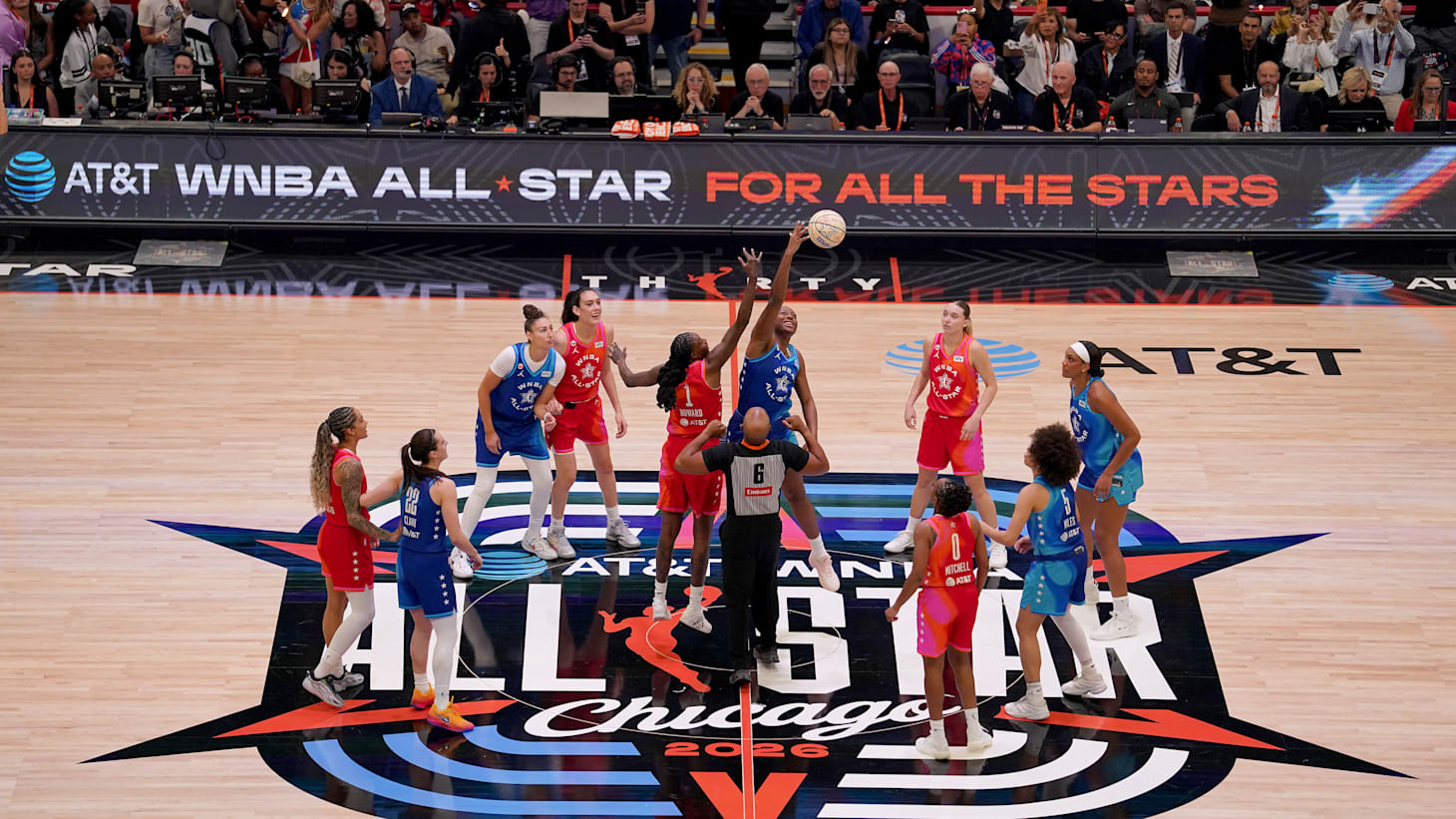
The WNBA 2026 season has been in existence with twists and turns. This historic 30th Anniversary of the WNBA has been filled with 44 regular-season games and an expansion to 15 teams, with the debuts of the Portland Five and Toronto Tempo. Angel Reese played for the Atlanta Dreams. There has been massive championship pressure on The Las Vegas Aces and New York Liberty. For the Toronto Tempo, you have backcourt depth with players like Marina Mabrey. Angel Reese has made historic contributions in rebounding for the Atlanta Dream. Angel Reese is wise to expand her brand into many avenues, from fashion to shoe wear. The Dallas Wings have Azzi Fudd and Paige Bueckers. Azzi Fudd has made an outstanding rookie impression with shooting and having a great all-around game on the court. Caitlin Clark has increased her legacy as a great outside shooter. Like always (in any sport), you will have controversies. That is just how things are, because human beings are not perfect. People have debated the fouls on Caitlin Clark, Angel Reese, and recently the hit on Sophie Cunningham by DiJonai Carrington. We know the elephant in the room. That elephant is that many people are exploiting the great basketball career of Clark as an excuse to promote racism against the black players of the WNBA. To Caitlin Clark's credit, she has condemned racism, online harassment, and the weaponization of her name to dehumanize black WNBA players (like Alyssa Thomas saying that she has received death threats and racist remarks from racist people). Therefore, we want every WNBA player to be treated with dignity and with respect, without exception. The WNBA season in this year of 2026 has set records being phenomenal.
WNBA's Legacy
Providentially, the WNBA has been in existence for over 30 years. I remember watching the WNBA on television since its inception when I was in my early teenage years. Now, I'm almost 50 years old. The WNBA didn't exist out of a vacuum. It grew from the blood, sweat, and tears of women basketball players from throughout the 20th century like Nera White, Ora Washington, Lusia Harris, Ann Meyers Drysdale, Nancy Lieberman, and teams like the All-American Red Heads, the New York Girls, Spartan Girls, Chicago Romas, Philadelphia Tribune Girls, etc. A lot of people don't know about the stories of these unsung icons, but we live in this time when heroes back then and today are celebrated thoroughly. Later, we know about other icons of basketball like Cheryl Miller, Robin Roberts, and Dawn Staley. The WNBA existed because of a dream to allow women to play basketball professionally on a high scale in America. Men have done it for a long time, but women faced sexism and discrimination. People fought back against these evils by activism, Title IX, and various leagues to give women the opportunity to play professionally after college. WNBA started a new trend of international professional basketball leagues to be globally that tons of women enjoy. There have been recent steps to fight for gender equality in pay. Even in 2026, thirty years after 1996, we have a long way to go in eliminating gender discrimination once and for all. You have narrowminded manosphere types who demonize and dehumanize the WNBA because of their hatred of women. Yet, we won't go that route. We will always cherish and love the humanity and sacrifice of women. Women do tons of work that in many cases go unnoticed, but we believe in human equality. The WNBA will continue to promote excellence, philanthropy, and equality for many years and decades to come.
By Timothy

No comments:
Post a Comment