
Miami
One of the most well-known cities in the world is Miami, Florida. Filled with bodies of water, hotels, parties, and homes, Miami is one of the world's major urban communities. It is found in the tropical environment filled with wonderful culture and vast excitement. It is a multicultural city filled with African Americans, Afro-Caribbeans, Latinos, white people, Asian people, Native Americans, biracial people, multiracial people, and other human beings of all diverse backgrounds. From the music to sports (we know of the many championships that the Miami Heat won in the NBA and the undefeated season of the Miami Dolphins NFL team back in the 1970s), Miami represents the massive vitality of American society. Miami is filled with 56.07 square miles with a population of 442,241 people. Miami is the 2nd most visited city of America after New York City with over 4 million people visiting Miami in 2022. Tourism and joy are found in the city with families and other people enjoying the sun. The festive atmosphere in the Miami area has caused people of every age to experience profound happiness. Festivities, love of culture, and respect outline the characteristics of the ethos of Miami. Also, it is important to fight racism, poverty (and economic oppression in general), xenophobia, and all evil injustices in Miami plus the world too. We have quintessential hope for the future, but we reject naivete of the present. We must endorse love, but we must also follow truth and righteousness too. During this unique, historic times, we have to stand up for our rights and reject the evil views of fascism and authoritarianism that is embraced by the forces of evil. Goodness will always win in the end.
History
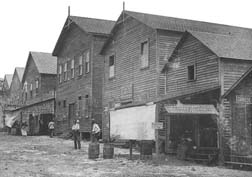
The history of Miami starts with the Native American people of the Tequestas. The Tequesta (also Tekesta, Tegesta, Chequesta, Vizcaynos) Native American tribe, at the time of first European contact, occupied an area along the southeastern Atlantic coast of Florida. They had infrequent contact with Europeans and had largely migrated by the middle of the 18th century. Miami is named after the Mayaimi, a Native American tribe that lived around Lake Okeechobee until the 17th or 18th century. The first Europeans who arrived at Miami were the Spanish. They formed a mission and small garrison among the Tequesta on the Biscayne Bay in 1567. The mission and garrison were withdrawn a couple of years later. In 1743, the governor of Cuba formed another mission and garrison on Biscayne Bay. As the mission had not been approved by the Council of the Indies. The history of Miami starts with the Native American people of the Tequestas. Early Native Americans lived in the Miami region from about 10,000 years ago. The area back then had pine hardwood forests and was home to plenty of deer, bear, and wild fowl. These first inhabitants settled on the banks of the Miami River, with their main villages on the northern banks. These early Native Americans created a variety of weapons and tools from shells. The area was filled with The Tequesta (also Tekesta, Tegesta, Chequesta, Vizcaynos) Native American tribe, at the time of first European contact, occupied an area along the southeastern Atlantic coast of Florida. They had infrequent contact with Europeans and had largely migrated by the middle of the 18th century. Miami is named after the Mayaimi, a Native American tribe that lived around Lake Okeechobee until the 17th or 18th century. The first Europeans who arrived at Miami were the Spanish who came to Miami by the mid 1500s. They formed a mission and small garrison among the Tequesta on the Biscayne Bay in 1567. The mission and garrison were withdrawn a couple years later.
In 1513, Juan Ponce de León was the first European to visit the Miami area by sailing into Biscayne Bay. He wrote in his journal that he reached Chequescha, which was Miami's first recorded name, but it is unknown whether or not he came ashore or made contact with the Native Americans. Pedro Menéndez de Avilés and his men made the first recorded landing in this area when they visited the Tequesta settlement in 1566 while looking for Menéndez's missing son, who had been shipwrecked a year earlier. Spanish soldiers, led by Father Francisco Villareal, built a Jesuit mission at the mouth of the Miami River a year later, but it was short-lived. By 1570, the Jesuits decided to look for more willing subjects outside of Florida. After the Spaniards left, the Tequesta Native Americans were left to fight European-introduced diseases, such as smallpox, without European help. Wars with other tribes greatly weakened their population, and they were easily defeated by the Creek Native Americans in later battles.
By 1711, the Tequesta had sent a couple of local chiefs to Havana to ask if they could migrate there. The Spanish sent two ships to help them, but their illnesses struck, killing most of their population. In 1743, the Spaniards sent another mission to Biscayne Bay, where they built a fort and church. The missionary priests proposed a permanent settlement, where the Spanish settlers would raise food for the soldiers and Native Americans. However, the proposal was rejected as impractical, and the mission was withdrawn before the end of the year.

In 1743, the governor of Cuba formed another mission and garrison on Biscayne Bay. As the mission had not been approved by the Council of the Indies, the mission and garrison were withdrawn the following year. The Spanish recorded that the inhabitants at the site of the 1743 mission were survivors of the Cayos, Carlos (presumed to be Caloosa), and Boca Raton people, who were subject to periodic raids by the Uchises (Native American allies of the English in South Carolina). In 1766, Samuel Touchett received a land grant from the Crown for 20,000 acres (81 km2) in the Miami area. The grant was surveyed by Bernard Romans in 1772. A condition for making the grant permanent was that at least one settler had to live on the grant for every 100 acres (0.4 km2) of land. While Touchett wanted to found a plantation in the grant, he was having financial problems, and his plans never came to fruition. The first permanent European settlers in the Miami area came about in 1800. Pedro Fornells, a Menorcan survivor of the New Smyrna colony, moved to Key Biscayne to meet the terms of his Royal Grant for the island. Although he returned with his family to St. Augustine after six months, he left a caretaker behind on the island. On a trip to the island in 1803, Fornells had noted the presence of squatters on the mainland across Biscayne Bay from the island. In 1825, U.S. Marshal Waters Smith visited the Cape Florida Settlement (which was on the mainland) and conferred with squatters who wanted to obtain title to the land they were occupying. On the mainland, the Bahamian "squatters" had settled along the coast beginning in the 1790s. John Egan had also received a grant from Spain during the Second Spanish Period. John's son James Egan, his wife Rebecca Egan, his widow Mary "Polly" Lewis, and Mary's brother-in-law Jonathan Lewis all received 640-acre land grants from the U.S. in present-day Miami. Temple Pent and his family did not receive a land grant but nevertheless stayed in the area. Treasure hunters from the Bahamas and the Keys came to South Florida to hunt for treasure from the ships that ran around on the treacherous Great Florida reef, some of whom accepted Spanish land offers along the Miami River. At about the same time, the Seminole Native Americans arrived along with a group of runaway slaves. In 1825, the Cape Florida Lighthouse was built on nearby Key Biscayne to warn passing ships of the dangerous reefs. Slave plantations were in the Miami area where slaves cultivated sugarcane, bananas, maize, and tropical fruit.
Fort Dallas was built in 1836 and functioned as a military base during the Second Seminole War. During the early times, the Miami area was known as Biscayne Bay Country. There are published accounts during that period to outline the area as a wilderness that held much promise. The area was called "one of the finest building sites in Florida." The area was affected by the Second Seminole War, where Major William S. Harney led several raids against the Native Americans. Fort Dallas was located on Fitzpatrick's plantation on the north bank of the river. Most of the non-Native American population consisted of soldiers stationed at Fort Dallas. The Seminole War was the most devastating Indian war in American history, causing almost a total loss of the native population in the Miami area. The Cape Florida lighthouse was burned by Seminoles in 1836 and was not repaired until 1846. The 2nd Seminole War ended in 1842. Fitzpatrick's nephew, William English, re-established the plantation in Miami. He charted the "Village of Miami" on the south bank of the Miami River and sold several plots of land. When English died in California in 1852, his plantation died with him. Miami had very little people at first, and the name Miami came from the Mayimi Native American tribe. Later, the Third Seminole War lasted from 1855 to 1858, but was not nearly as destructive as the previous one. However, it did slow down the rate of settlement of southeast Florida. At the end of the war, a few of the soldiers stayed and some of the Seminoles remained in the Everglades. Miami was part of the Confederacy during the American Civil War. From 1858 to 1896, Miami grew with a handful of families living in the area. There were many settlements on the bank of the Miami River.
Other settlements within Miami's city limits were Lemon City (now Little Haiti) and Coconut Grove. Settlements outside the city limits were Biscayne, in present-day Miami Shores, and Cutler, in present-day Palmetto Bay. Many of the settlers were homesteaders, attracted to the area by offers of 160 acres (0.6 km2) of free land by the United States federal government.
After the Great Freeze of 1894, the crops of the Miami area were the only ones in Florida that survived. Julia Tuttle, a local landowner, convinced Henry Flagler, a railroad tycoon, to expand his Florida East Coast Railway to Miami. On July 28, 1896, Miami was officially incorporated as a city with a population of just over 300. The right to vote was restricted to all men who resided in Miami or Dade County. Joseph A. McDonald, Flagler's chief of construction on the Royal Palm Hotel, was elected chairman of the meeting. After ensuring that enough voters were present, the motion was made to incorporate and organize a city government under the corporate name of "The City of Miami", with the boundaries as proposed. John B. Reilly, who headed Flagler's Fort Dallas land company, was the first elected mayor. Initially, most residents wanted to name the city "Flagler." However, Henry Flagler was adamant that the new city would not be named after him. So on July 28, 1896, the City of Miami, named after the Miami River, was incorporated with 502 voters, including 100 registered black voters. The black population provided the primary labor force for the building of Miami. Clauses in land deeds confined black people to the northwest section of Miami, which became known as "Colored Town" (today's Overtown).
From 1900 to 1941, Miami grew rapidly. In 1900, 1,681 people lived in Miami; in 1910, there were 5,471 people; and in 1920, there were 29,549 people. As thousands of people moved to the area in the early 20th century, the need for more land quickly became apparent. Until then, the Florida Everglades extended to within three miles (5 km) of Biscayne Bay. Beginning in 1906, canals were made to remove some of the water from those lands. Miami Beach was developed in 1913 when a two-mile (3 km) wooden bridge built by John Collins was completed. During the early 1920s, an influx of new residents and unscrupulous developers led to the Florida land boom, when speculation drove land prices high. Some early developments were razed after their initial construction to make way for larger buildings. The population of Miami doubled from 1920 to 1923. The nearby areas of Lemon City, Coconut Grove, and Allapattah were annexed in the fall of 1925, creating the Greater Miami area. Yet, this boom started to slow down by building construction delays and overload on the transport system caused by the excess of bulky building materials. There was a ship blocking the Miami Harbor for a month almost on January 10, 1926. There was the catastrophic Great Miami Hurricane in 1926 the ended what was left of the boom. The hurricane was a Category 4 storm. It was the 12th most costly and 12th most deadly to strike the United States during the 20th century. According to the Red Cross, there were 373 fatalities, but other estimates vary, due to the large number of people listed as "missing." Between 25,000 and 50,000 people were left homeless in the Miami area. The Great Depression followed, causing more than sixteen thousand people in Miami to become unemployed. As a result, a Civilian Conservation Corps camp was opened in the area.

During the mid-1930s, the Art Deco district of Miami Beach was developed. Also, during this time, on February 15, 1933, an assassination attempt was made on President-elect Franklin D. Roosevelt. While Roosevelt was giving a speech in Miami's Bayfront Park, Giuseppe Zangara, an Italian anarchist, opened fire. Mayor Anton Cermak of Chicago, who was shaking hands with Roosevelt, was shot and died two weeks later. Four other people were wounded, but President-elect Roosevelt was not harmed. Zangara was quickly tried for Cermak's murder and was executed by the electric chair on March 20, 1933, in Raiford, Florida.
Also in 1933, the Miami City Commission asked the Miami Women's Club to create a city flag design. The flag was designed by Charles L. Gmeinder on their behalf, and adopted by City Commission in November 1933. It is unknown why the orange and green colors were selected for the flag. One theory is that the colors were inspired by the orange tree, although the University of Miami was already using the colors of orange and green for their sports teams since 1926.
By the early 1950's, Miami was recovering from the Great Depression when World War II existed. Many cities in Florida were affected by the war. Some cities saw financial ruins, but Miami remained relatively unaffected. There were German U-boats attacking many American ships like Portero del Llano, which was attacked and sunk within sight of Miami Beach in May 1942. To defend against U-boats, Miami was placed in two military districts called the Eastern Defense Command and the Seventh Naval District. In February 1942, the Gulf Sea Frontier was established to help guard the waters around Florida. By June of that year, more attacks forced military leaders in Washington, D.C. to increase the number of ships and men of the army group. They also moved the headquarters from Key West to the DuPont building in Miami, taking advantage of its location at the southeastern corner of the U.S. As the war against the U-boats grew stronger, more military bases sprang up in the Miami area. The U.S. Navy took control of Miami's docks and established air stations at the Opa-locka Airport and in Dinner Key. The Air Force also set up bases in the local airports in the Miami area. In addition, many military schools, supply stations, and communications facilities were established in the area. Rather than building large army bases to train the men needed to fight the war, the Army and Navy came to South Florida and converted hotels to barracks, movie theaters to classrooms, and local beaches and golf courses to training grounds. Overall, over five hundred thousand enlisted men and fifty thousand officers were trained in South Florida. After the end of the war, many servicemen and women returned to Miami, causing the population to rise to nearly half a million by 1950.
From the 1950s to the 1970s, everything changed in Miami from the Civil Rights Movement to the 1959 Cuban revolution. By this time, many black Americans fought for civil rights in America. Also, the Cuban Revolution happened. The Cuban revolution involved many Communists overthrowing the dictator Batista and allowing Fidel Castro to go into power. America at first supported Castro, and later America opposed him. Later, many middle-class and upper-class Cubans moved to Florida en masse, taking few possessions with them. Fidel Castro was a controversial human being. Castro was right to oppose Batista, as Batista was a far-right dictator with ties to the Mafia and multinational corporations with harm done to the people of Cuba. Castro was wrong in some of his anti-civil liberty policies in Cuba once he got into power. Some Miamians were upset about this. Some African Americans, who believed that the Cuban workers were taking their jobs. We should not generalize. The vast majority of African Americans and the vast majority of Cubans want peace, justice, and equality to be clear. In addition, the school systems struggled to educate the thousands of Spanish-speaking Cuban children. Many Miamians, fearing that the Cold War would become World War III, left the city, while others started building bomb shelters and stocking up on food and bottled water. Many of Miami's Cuban refugees realized for the first time that it would be a long time before they would get back to Cuba. In 1965 alone, 100,000 Cubans packed into the twice daily "freedom flights" from Havana to Miami. Most of the exiles settled into the Riverside neighborhood, which began to take on the new name of "Little Havana." This area emerged as a predominantly Spanish-speaking community, and Spanish speakers elsewhere in the city could conduct most of their daily business in their native tongue. By the end of the 1960s, more than four hundred thousand Cuban refugees were living in Dade County.
In the 1960s and 1970s, the Attorney General's authority was used to grant parole, or special permission, to allow Cubans to enter the country. However, parole only allows an individual permission to enter the country, not to stay permanently. To allow these immigrants to stay, the Cuban Adjustment Act was passed in 1966. This act provides that the immigration status of any Cuban who arrived since 1959 who has been physically present in the United States for at least a year "may be adjusted by the Attorney General to that of an alien lawfully admitted for permanent residence" (green card holder). The individual must be admissible to the United States (i.e., not disqualified on criminal or other grounds). Although Miami is not really considered a major center of the Civil Rights Movement of the 1950s and 1960s, it did not escape the change that occurred. Miami was a major city in the southern state of Florida and had always had a substantial African American and black Caribbean population. Black civil rights activists were prominent in Miami, Florida indeed.
On August 7 and 8, 1968, coinciding with the 1968 Republican National Convention, rioting broke out in the black Liberty City neighborhood, which required the Florida National Guard to restore order. Issues were "deplorable housing conditions, economic exploitation, bleak employment prospects, racial discrimination, poor police-community relations, and economic competition with Cuban refugees." This was when Richard Nixon ran for President for the second time. By 1968, the country of America was on the brink of tensions never seen before since the American Civil War with anti-Vietnam War protests, civil rights activism, debates on women's rights, and other issues being debated. Overcrowding due to the near-destruction of the black Overtown neighborhood was also a factor. The 1970s was a formative period for Miami as the city became a news leader due to several national-headline making events throughout the decade. The year 1972 was particularly pivotal. The Miami Dolphins had their record-breaking undefeated 1972 season. Both the Democratic and Republican National Conventions were held in nearby Miami Beach during the 1972 Presidential Election. Florida International University, the regions' first state university, opened in September 1972. There were also significant advancements in the arts that contributed to the development of Miami's cultural institutions. Later in the decade, a Dade County ordinance was passed in 1977 protecting individuals on the basis of sexual orientation. Opposition to this ordinance, which was repealed, was led by Florida orange juice spokeswoman, Anita Bryant. The mid-1970s were also a period of extensive Cuba-related terrorist activities, with dozens of bombings, leading The Miami News to call Miami the explosion capital of the country.
In December 1979, police officers pursued motorcyclist Arthur McDuffie in a high-speed chase after McDuffie made a provocative gesture towards a police officer. The officers claimed that the chase ended when McDuffie crashed his motorcycle and died, but the coroner's report concluded otherwise. One of the officers testified that McDuffie fell off his bike on an Interstate 95 on-ramp. When the police reached him, he was injured but okay. The officers removed his helmet, beat him to death with their batons, put his helmet back on, and called an ambulance, claiming there had been a motorcycle accident. Eula McDuffie, the victim's mother, said to the Miami Herald a few days later, "They beat my son like a dog. They beat him just because he was riding a motorcycle and because he was black." A jury acquitted the officers after a brief deliberation. After learning of the verdict of the McDuffie case, one of the worst riots in the history of the United States, the Liberty City Riots of 1980, broke out. By the time the rioting ceased three days later, over 850 people had been arrested and at least 18 people had died. Property damage was estimated at around one hundred million dollars. This event proved once again that the fight against police brutality against unarmed black human beings must continue even in our time in 2026. In March 1980, the first black Dade County school's superintendent, Dr. Johnny L. Jones, was convicted on grand theft charges linked to gold-plated plumbing. His conviction was overturned on appeal and, on July 3, 1986, the state attorney Janet Reno announced that Jones would not be retried on these charges. However, in a separate case, he was convicted on misdemeanor charges of soliciting perjury and witness tampering and received a two-year jail sentence
More Cubans migrated to Miami by the Mariel Boatlift of 1980. About 150,000 Cubans came to Miami which was the largest transport in civilian history. These Cuban refugees were poor, and some have been released from prisons or mental institutions. Many white folks left Miami in the act of "white flight." Back in 1960, 90 percent of Miami was non-Hispanic white, and by 1990, only about 10 percent of Miami were non-Hispanic right. In the 1980s, Miami started to see an increase in immigrants from other nations, such as Haiti. As the Haitian population grew in Miami, the area known today as "Little Haiti" emerged, centered on Northeast Second Avenue and 54th Street. In 1985, Xavier Suarez was elected as Mayor of Miami, becoming the first Cuban mayor of a major city. In the 1990s, the presence of Haitians was acknowledged with Haitian Creole language signs in public places and on ballots during voting. During the 1980's, Miami became one of the United States' largest transshipments point for cocaine from Colombia, Bolivia, and Peru. This reality has been shown in the movie of Scarface. The drug industry brought billions of dollars into Miami via front organizations. Luxury car dealerships, five-star hotels, condominium developments, swanky nightclubs, major commercial developments and other signs of prosperity began rising all over the city. As the money arrived, so did a violent crime wave that lasted through the early 1990s. The popular television program Miami Vice, which dealt with counter-narcotics agents in an idyllic upper-class rendition of Miami, spread the city's image as one of the Americas' most glamorous subtropical paradises.
Miami was host to many dignitaries and notable people throughout the 1980s and '90s. Pope John Paul II visited in September 1987 and held an open-air mass for 150,000 people in Tamiami Park. Queen Elizabeth II and three United States presidents also visited Miami. Among them is Ronald Reagan, who has a street named after him in Little Havana. Nelson Mandela's 1989 visit to the city was marked by ethnic tensions. Mandela had praised Cuban leader Fidel Castro for his anti-apartheid support on ABC News' Nightline. Because of this, the city withdrew its official greeting, and no high-ranking official welcomed him. This led to a boycott by the local African American community of all Miami tourist and convention facilities until Mandela received an official greeting. However, all efforts to resolve it failed for months, resulting in an estimated loss of over US$10 million. Fidel Castro has a complex legacy. I agree with Fidel Castro in opposing the dictator Batista, Castro was right to praise Malcolm X, he was right to oppose the Vietnam War, he was right in many of his policies that helped Cuban economically (as tons of Afro-Cubans do live in Cuba), and he was right to oppose apartheid as apartheid in South Africa is blatantly immoral and anti-human. I don't agree with Castro of some of his anti-civil liberty policies in Cuba. For example, when Castro was in power, many political dissidents were unjustly imprisoned.
I have made my views on Communism very clear. Communism is a rival political and economic system that grew in the world in response to the evils of colonialism, imperialism, and laissez faire capitalism (these evils were used against the underprivileged and the oppressed). Imperialism is evil and wrong because it is a system of theft, domination, and plunder. It is a philosophy that doesn't view all humans as born and created equal with God-given rights, and it is readily mixed with racism and xenophobia to allow profit for the few and oppression for the many. Communism existed before Karl Marx was born, but Karl Marx helped to spread Communism in another level of influence. Communism spread globally because of the wickedness of imperialism and colonialism. The weakness of Communism (especially Stalinist Communism as Stalin and Mao murdered over 100 million people in the 20th century alone. Karl Marx explicitly didn't just disagree with religion, but he embraced total hatred of God and religious freedom by his own works. As we all know, many communist regimes have suppressed the freedom of religion constantly) is that it talks about liberation for the workers, but its ultimate aim is to embrace an ethical relativism, denies the spiritual or transcendent aspect of human nature (as the vast majority of communists are atheists), eliminate individual power to the point of making people just a cog in the wheel of the state (in other words, humans should control the state, but the state should not control human beings in an authoritarian fashion. Individual and collective power should have a role in society as life is both individual and social), and Stalinist Communism embraces a form of totalitarianism. I agree with the late Dr. Martin Luther King Jr.'s critiques of Communism (Dr. King rejected Communism and expressed support for democratic socialism), but capitalism has imperfections too (as we do need economic justice and social justice). Monopolies grow under laissez faire capitalism, and poverty increases via laissez faire capitalism too. That is why labor activists and protesters fought for better work conditions spanning decades in America alone. Some people promote a paranoia or fear of Communism to the extreme that tries to stop any form of economic progressive solutions to problems (in order words, many conservatives falsely believe that any attempt by the government to actively promote the general welfare of its citizens is equivalent to communism. The reality is that even the U.S. Constitution gives the government, which is made up by the people, the right to promote the general welfare, to regulate the economy, to fund much of our infrastructure, to ensure justice, to invest in the post office, and to collect taxes found in Article 1, Section 8 and in the Preamble of the U.S. Constitution). I disagree with that laissez faire capitalist agenda which promotes oligarchy and excessive monopolies in the name of "economics." The reason is that there is nothing wrong with people fighting for living wages, for workers' rights, for environmental rights, and for justice and equality. There is nothing wrong with a progressive society, but you must have human rights in that society too. This doesn't mean that Cuba should be a far-right puppet country of the West in an imperialistic fashion, but it should be an independent progressive society.
Another major Cuban exodus occurred in 1994. To prevent it from becoming another Mariel Boatlift, the Clinton Administration announced a significant change in U.S. policy. In a controversial action, the administration announced that Cubans interdicted at sea would not be brought to the United States but instead would be taken by the Coast Guard to U.S. military installations at Guantanamo Bay or to Panama. During an eight-month period beginning in the summer of 1994, over 30,000 Cubans and more than 20,000 Haitians were interdicted and sent to live in camps outside the United States.
During the 1990s, Hurricane Andrew destroyed areas just south of the Miami-Dade area. Miami had to deal with debt and economic issues. Manny Diaz was elected Mayor of Miami in 2001. On September 9, 1994, the United States and Cuba agreed to normalize migration between the two countries. The agreement codified the new U.S. policy of placing Cuban refugees in safe havens outside the United States, while obtaining a commitment from Cuba to discourage Cubans from sailing to America. In addition, the United States committed to admitting a minimum of 20,000 Cuban immigrants per year. That number is in addition to the admission of immediate relatives of U.S. citizens. More European immigrants came to Miami too.
In 2000, the Elián González affair was an immigration battle in the Miami area. The controversy concerned six-year-old Elián González who was rescued from the waters off the coast of Miami. The U.S. and the Cuban governments, his father Juan Miguel González, his Miami relatives, and the Cuban-American community of Miami were all involved. The climactic stage of this prolonged battle was the April 22, 2000, seizure of Elián by federal agents, which drew the criticism of many in the Cuban-American community. During the controversy, Alex Penelas, the mayor of Miami-Dade County at the time, vowed that he would do nothing to assist the Bill Clinton administration and federal authorities in their bid to return the six-year-old boy to Cuba. Tens of thousands of protesters, many of whom were outraged at the raid, poured out into the streets of Little Havana and demonstrated. Car horns blared, demonstrators turned over signs, trash cans, and newspaper racks, and some small fires were started. Rioters jammed a 10-block area of Little Havana. Shortly afterwards, many Miami businesses closed, as their owners and managers participated in a short, one-day boycott against the city, attempting to affect its tourism industry. Employees of airlines, cruise lines, hotels, car rental companies, and major retailers participated in the boycott. Elián González returned to Cuba with his father on June 28, 2000.
In 2003, the controversial Free Trade Area of the Americas negotiation occurred. It was a proposed agreement to reduce trade barriers while increasing intellectual property rights. During the 2003 meeting in Miami, the Free Trade Area of the Americas was met by heavy opposition from anti-corporatization and anti-globalization protests.
In the latter half of the 2000s and 2010s, Miami experienced an extensive boom in high-rise architecture, dubbed a "Miami Manhattanization" wave. This included the construction of many of the tallest buildings in Miami, with nearly 20 of the city's tallest 25 buildings finished after 2005. This boom transformed the look of downtown Miami, which is now considered to have one of the largest skylines in the United States, ranked behind New York City and Chicago. This boom slowed due to the Great Recession and some projects were delayed but recovered from 2013 to the present day. The Port Miami Tunnel connecting Watson Island to PortMiami on Dodge Island, which cost $700 million, was opened in 2014, directly connecting PortMiami to the Interstate Highway system and Miami International Airport via Interstate 395.
The Culture of Miami
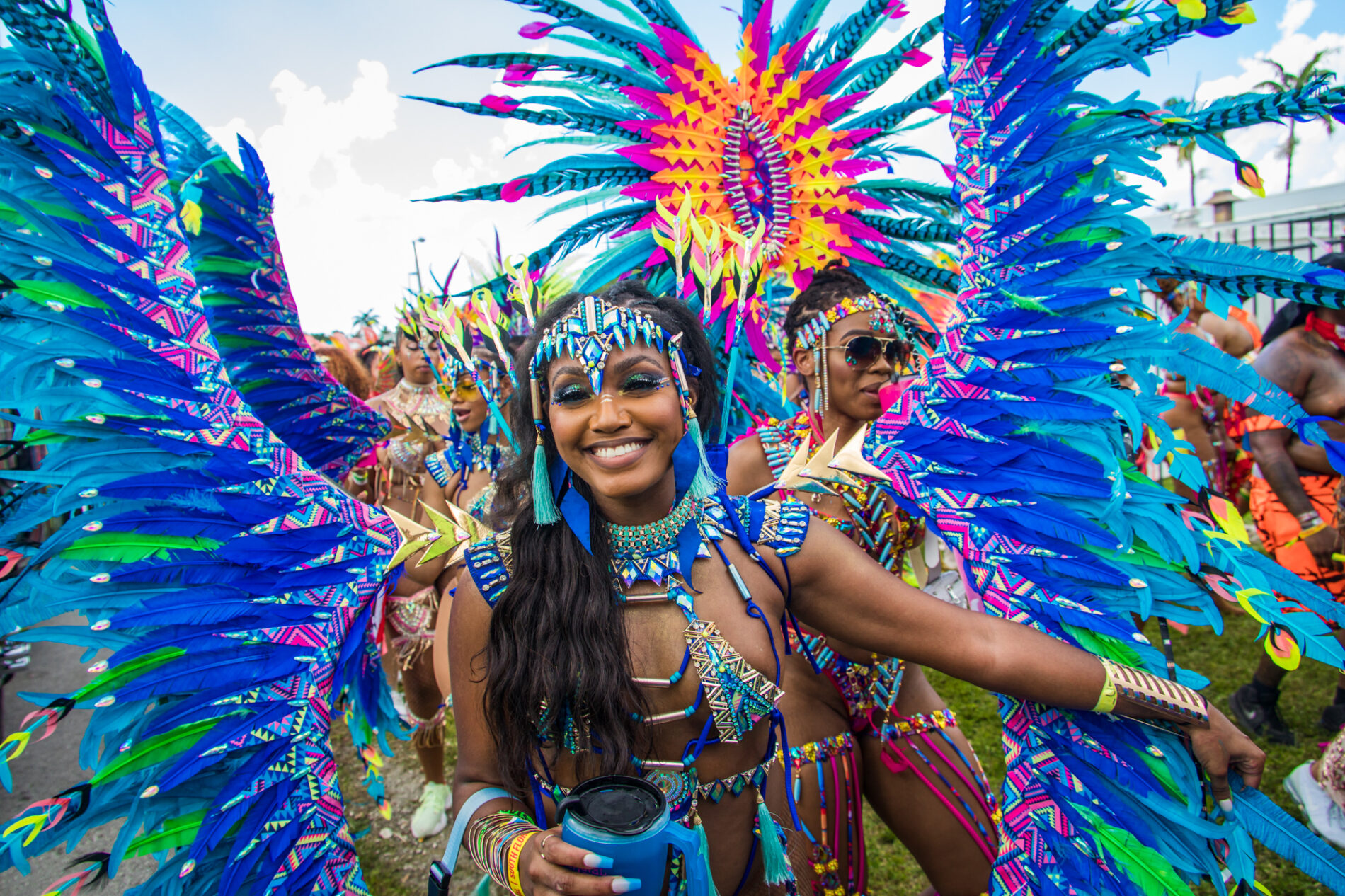
Miami has a large and vibrant culture. It has influenced people all over the world. It is culture that young people and people of diverse ages and backgrounds have embraced. Many people have called the city of Capital of Latin America. Also, Miami is in the tropical zone of the environment. One major aspect of Miami culture has been its role in the film industry and the entertainment world. For example, Miami has been the setting of many films and television shows like Bad Boys, Miami Vice, CSI: Miami, The Golden Girls, 2 Fast 2 Furious, Ballers, Scarface, Burn Notice, etc. Many video games are set in the city like the Grand Theft Auto series, etc. Miami's The Adrienne Arsht Center for the Performing Arts (being home to the Florida Grand Opera) is the second largest performing arts center in the United States of America. The city is also home to many entertainment venues like theaters, museums, parks, and other performing arts centers. By 2020, Miami will have the first boat in a movie theater opened for the public. There is the annual Calle Ocho Festival to celebrate Latin music culture, which has been running since 1978. There is the Miami Jewish Film Festival (MJFF) that was created in 1996. It has been an annual celebration that relates to films outlining Jewish history and culture. It has awards too. Miami is home to fashion shows and events like the annual Miami Fashion Week and the Mercedes-Benz Fashion Week Miami, held in the Wynwood Art District. There is the Frost Art Museum, and other museums like the Perez Art Museum, Lowe Art Museum, etc. African American, Caribbean, Latin American, and Jewish cuisine are found all over Miami. There is Floribbean cuisine too. People eat the Cuban sandwich, croquetas, and drink the Cuban espresso. Miami is the headquarters of restaurant chains like Burger King and Benihana. Miami is home to five major sports teams, like the Inter Miami of Major League Soccer (MLS), the Miami Marlins of the Major Baseball League (MLB), the Florida Panthers of the National Hockey League (NHL), the Miami Heat of the National Basketball Association (NBA), and the Miami Dolphins of the National Football League (NFL). The Miami Open has tennis tournaments annually. There are golf courses, sports racing like the Grand Prix of Miami, and other sporting events. There can be no mention of Miami culture without acknowledging the U or Miami Hurricane NCAA Football Team. The U has been filled with icons and influences overall football culture to this very day. Miami has the Metrorail and the Tri-Rail to go from Miami to the suburbs. Famous actors, actresses, directors, and musicians are from Miami, like Esther Baxter, Noah Centineo, Eva Mendes, Vivian Nixon, Berry Jenkins, Mariah Angeliq, Savannah Cristina, Debbie Harry, Pitbull, Ella Washington, Trina, etc.

Its Influence in the World
For the centuries of Miami's existence, we have witnessed the cities' influence in the world. First, Miami is a trade and cultural gateway to the United States of America. It is a city that intersects African American and Caribbean cultures (along with other cultures like Latino culture) into one urban powerhouse. From Jamaicans, Cubans, Afro-Trinidadians, and other Latino human beings, cultural diffusion is commonplace in Miami, Florida. That is why movie productions constantly found in the gorgeous scenery of Miami as found in the Bad Boys movie series. America readily trades from Miami to the Caribbean and globally. Miami is a melting pot of industries, art, music, and other cultural components. Tourism has been part of Miami too along with a sense of a family-oriented vibe like beaches, restaurants, and historical locations. Social activism is part of Miami's history. M. Athalie Rouge, Rev. Theodore Gibson, Garth Reeves, Dr. John O. Brown, Jesse McCrary Jr., etc. fought for our freedom, including Patricia Stephen Due. Many people are influenced by Miami's music from Trina, Gloria Estefan (who released the inspirational song Reach to celebrate the 1996 Olympics), Merengue, Pitbull, Betty Wright, the controversial 2 Live Crew, Jacki-O (who became a born-again Christian), and other artists who have expressed themselves for years and decades. Therefore, learning about Miami makes us aware of the genuine power of our creative presence in the Universe.

Halle Berry
Halle Berry is more than one of the great actresses of the 20th and 21st centuries. She is more than just her physical appearance. She lived from the Midwest to live across the world to give black women and women of every color in general the profound, gallant inspiration, the strength, and the presence to make long-lasting, magnificent contributions to this world. Before Halle Berry, Dorothy Dandridge, Hattie McDaniel, Pam Grier, Cicely Tyson, and other iconic black actresses laid a foundation for Halle Berry to flourish in acting and other fields of human expression. Halle Barry loves to portray transformative roles. For example, she shone in portraying Dorothy Dandridge in the HBO film Introducing Dorothy Dandridge. She never advocated for one-dimensional characters in her film roles. She played a drug addict in Jungle Fever, a performer in The Last Boy Scout, a single mother in A Different World, a struggling mother in Losing Isaiah, a superhero in the X-Men movie trilogy, including Catwoman, and an assassin in John Wick 3. For sixty years of her living on this Earth, Halle Berry has been a cheerleader, a model, an actress, a mother, a participant in mixed martial arts, and a lover. Being a lover means romance, friendship, and companionship with great connections, too. She has found a lover who respects her, and his name is Van Hunt. Halle Berry is a well-rounded human being who can fight, act, model, stand up against journalists illegally taking pictures of celebrities' kids, and be honest to have progressive, honest conversations about menopause. 20-50 years ago, it was very taboo for anyone to talk about menopause in public. That day is finally over in 2025 and 2026.

Life in Cleveland
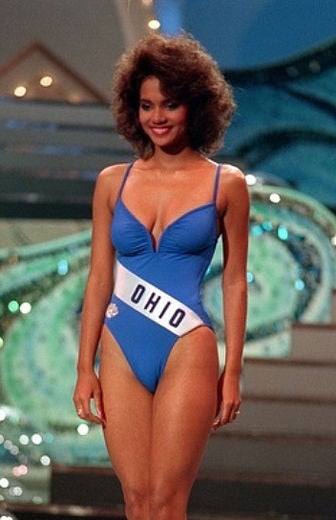
Halle Berry was born in the Midwest in Cleveland, Ohio on August 14, 1966, to Judith Hawkins (her mother came from Liverpool, England), and Jerome Jesse Berry, an African American man. Her name was legally changed to Halle Maria Berry at the age of five. Her parents selected her middle name from Halle's Department Store, which was then a local landmark in Cleveland. Berry's mother worked as a psychiatric nurse, and her father worked in the same hospital as an attendant in the psychiatric ward; he later became a bus driver. They divorced when Berry was four years old, and she and her older sister Heidi Berry-Henderson were raised exclusively by their mother. She has been estranged from her father since childhood, noting in 1992 that she did not even know if he was still alive. Her father was abusive to her mother, and Berry has recalled witnessing her mother being beaten daily, kicked down stairs, and hit in the head with a wine bottle. Berry has also said that she was bullied as a child and, as a result, learned how to fight and protect herself. Halle Berry grew up in Oakwood, Ohio and graduated from Bedford High School. In that high school, she was a cheerleader, honor student, editor of the school newspaper, and prom queen. She worked in the children's department of Higbee's department store. She then continued her studies at Cuyahoga Community College. In the 1980s, she entered several beauty contests, winning Miss Teen All-American 1985 and Miss Ohio USA 1986. She was the 1986 Miss USA first runner-up, with Christy Fichtner of Texas taking home the crown. In the Miss USA 1986 pageant interview competition, Berry said she hoped to become an entertainer or do some kind of work in media. Her interview was awarded the highest score by the judges. In 1986, Berry became the first African-American to represent the United States at the Miss World beauty pageant. She placed sixth, with Trinidad and Tobago's Giselle Laronde being crowned Miss World.
Early Acting Career
From 1989 to 1999, she started her career in its early stages. By the late 1980s, she ran out of money and lived briefly in a homeless shelter and a YMCA. By the end of 1989, her situation improved. She was cast in the role of model Emily Franklin in the short-lived ABC television series Living Dolls, which was shot in New York and was a spin-off of the hit series Who's the Boss?. During the taping of Living Dolls, she lapsed into a coma and was diagnosed with type 1 diabetes. After the cancellation of Living Dolls, she moved to Los Angeles. Her film debut was in a small role for Spike Lee's Jungle Fever (1991), in which she played Vivian, a drug addict. That same year, Berry had her first co-starring role in Strictly Business. Halle Berry was on A Different World too. In 1992, Berry portrayed a career woman who falls for the lead character played by Eddie Murphy in the romantic comedy Boomerang. The following year, she caught the public's attention as a headstrong biracial slave in the TV adaptation of Queen: The Story of an American Family, based on the book by Alex Haley. Berry was also in the live-action Flintstones film as Sharon Stone, a sultry secretary who attempts to seduce Fred Flintstone. Berry tackled a more serious role, playing a former drug addict struggling to regain custody of her son in Losing Isaiah (1995), starring opposite Jessica Lange. She portrayed Sandra Beecher in Race the Sun (1996), which was based on a true story, shot in Australia, and co-starred alongside Kurt Russell in Executive Decision. Beginning in 1996, she was a Revlon spokeswoman for seven years and renewed her contract in 2004. She starred alongside Natalie Deselle Reid in the 1997 comedy film B*A*P*S. In 1998, Berry received praise for her role in Bulworth as an intelligent woman raised by activists who gives a politician (Warren Beatty) a new lease on life. The same year, she played the singer Zola Taylor, one of the three wives of pop singer Frankie Lymon, in the biopic Why Do Fools Fall in Love.
Superstardom
Halle Berry went into the next level of her acting career (entering another level of superstardom), starring in the television film Introducing Dorothy Dandridge in 1999. It showed her life in honesty and power. She won a Primetime Emmy Award and a Golden Globe Award with her role in the film. By the 2000s, she was one of the highest paid actresses in Hollywood. One of her most controversial roles was the role in Monster's Ball that came in 2001. He played the character of Leticia Musgrove, the troubled wife of an executed murderer (played by Sean Combs). Many people criticized the film for having a graphic nude love scene with a racist character played by co-star Billy Bob Thornton. Many African Americans didn't agree with the part. Berry responded: "I don't really see a reason to ever go that far again. That was a unique movie. That scene was special and pivotal and needed to be there, and it would be a really special script that would require something like that again." You know what my views on that movie was. I didn't agree with certain aspects of the film. Her performance was awarded the National Board of Review and the Screen Actors Guild Award for Best Actress. She became the first African-American woman to win the Academy Award for Best Actress. The NAACP issued the statement: "Congratulations to Halle Berry and Denzel Washington for giving us hope and making us proud. If this is a sign that Hollywood is finally ready to give opportunity and judge performance based on skill and not on skin color then it is a good thing." After Halle Berry winning the Oscar, She asked for a higher fee for Revlon advertisements.
Ron Perelman, the cosmetics firm's chief, congratulated her, saying how happy he was that she modeled for his company. She replied, "Of course, you'll have to pay me more." Perelman stalked off in a rage. In accepting her award, she gave an acceptance speech honoring previous black actresses who had never had the opportunity. She said, "This moment is so much bigger than me. This is for every nameless, faceless woman of color who now has a chance tonight because this door has been opened." In 2002, she played the agent Giacinta "Jinx" Johnson in the 2002 film Die Another Day. Halle Berry filmed an homage to Dr. No, emerging from the surf to be greeted by James Bond as Ursula Andress had 40 years earlier. Lindy Hemming, costume designer on Die Another Day, had insisted that Berry wear a bikini and knife as a homage. Berry has said of the scene: "It's splashy," "exciting," "sexy," "provocative" and "it will keep me still out there after winning an Oscar." According to an ITV news poll, Jinx was voted the fourth toughest girl on screen of all time. Berry was hurt during filming when debris from a smoke grenade flew into her eye. It was removed in a 30-minute operation. After Berry won the Academy Award, rewrites were commissioned to give her more screentime for X2. Halle Berry played Storm in the X-Men trilogy.
She starred in the psychological thriller Gothika opposite Robert Downey, Jr. in November 2003. She had broken her arm while filming a scene with Downey, who twisted her arm too hard. Production was halted for eight weeks while she healed. It was a moderate hit at the United States box office, taking in $60 million; it earned another $80 million abroad. Berry appeared in the nu metal band Limp Bizkit's music video for "Behind Blue Eyes" for the motion picture soundtrack for the film. The same year, she was named No. 1 in FHM's 100 Sexiest Women in the World poll. She was in the film Catwoman. The film was about her playing Catwoman with a black suit. She was awarded the Worst Actress Razzie Award for her performance; she appeared at the ceremony to accept the award in person (while holding her Oscar from Monster's Ball) with a sense of humor, considering it an experience of the "rock bottom" in order to be "at the top." Holding the Academy Award in one hand and the Razzie in the other she said, "I never in my life thought that I would be up here, winning a Razzie! It's not like I ever aspired to be here, but thank you. When I was a kid, my mother told me that if you could not be a good loser, then there's no way you could be a good winner."
Her next role was in the Oprah Winfrey-produced ABC television film Their Eyes Were Watching God (2005), an adaptation of Zora Neale Hurston's novel of the same name. Berry portrayed a free-spirited woman whose unconventional sexual mores upset her 1920s contemporaries in a small community. She received her second Primetime Emmy Award nomination for her role. Also in 2005, she served as an executive producer in Lackawanna Blues. She was the voice for the character of Cappy, one of the many mechanical beings in the animated feature Robots.
In the thriller Perfect Stranger (2007), Berry starred with Bruce Willis, playing a reporter who goes undercover to uncover the killer of her childhood friend. The film grossed a modest US$73 million worldwide, and received lukewarm reviews from critics, who felt that despite the presence of Berry and Willis, it is "too convoluted to work, and features a twist ending that's irritating and superfluous." Her next 2007 film release was the drama Things We Lost in the Fire, co-starring Benicio del Toro. She played a recently widowed woman who befriended the troubled friend of her late husband. The film was the first time in which she worked with a female director, Danish Susanne Bier, giving her a new feeling of "thinking the same way," which she appreciated. While the film made US$8.6 million in its global theatrical run, it garnered positive reviews. 'The Austin Chronicle found the film to be "an impeccably constructed and perfectly paced drama of domestic and internal volatility" and felt that "Berry is brilliant here, as good as she's ever been."
In April 2007, Berry was awarded a star on the Hollywood Walk of Fame in front of the Kodak Theatre at 6801 Hollywood Boulevard for her contributions to the film industry. By the end of the decade, she established herself as one of the highest-paid actresses in Hollywood, earning an estimated $10 million per film. In the independent drama Frankie and Alice (2010), Berry played the leading role of a young multiracial American woman with dissociative identity disorder; she struggled against her alter personality to retain her true self. The film received a limited theatrical release, to a mixed critical response. The Hollywood Reporter described the film as "a well-wrought psychological drama that delves into the dark side of one woman's psyche" and found Berry to be "spellbinding" in it. She earned the African-American Film Critics Association Award for Best Actress and a Golden Globe Award nomination for Best Actress – Motion Picture Drama. She next made part of a large ensemble cast in Garry Marshall's romantic comedy New Year's Eve (2011), with Michelle Pfeiffer, Jessica Biel, Robert De Niro, Josh Duhamel, Zac Efron, Sarah Jessica Parker, and Sofía Vergara, among many others. In the film, she took on the supporting role of a nurse befriending a man in the final stages (De Niro). While the film was panned by critics, it made US$142 million worldwide.

More Popularity
In 2012, Halle Berry starred as an expert diver tutor with then-husband Oliver Martinez in the thriller Dark Tide. She led an ensemble cast with Tom Hanks and Jim Broadbent in The Wachowskis' epic science fiction film Cloud Atlas in 2012. Each of the actors in the film played six different characters across a period of five centuries. Budgeted at 128.8 million U.S. dollars, Cloud Atlas made 130.4 million US dollars worldwide. The film had diverse reactions among critics and audiences. It was years ahead of its time. Berry was in segment of the independent anthology comedy of Movie 43 in 2013. She had more success in the film The Call in 2013. In that film, Halle Berry plays a 9-1-1 operator who received a call from a girl kidnapped by a serial killer. Berry was drawn to "the idea of being a part of a movie that was so empowering for women. We don't often get to play roles like this, where ordinary people become heroic and do something extraordinary." Manohla Dargis of The New York Times found the film to be "an effectively creepy thriller," while reviewer Dwight Brown felt that "the script gives Berry a blue-collar character she can make accessible, vulnerable and gutsy[...]." The Call was a sleeper hit, grossing US$68.6 million around the globe.
By 2014, Halle Berry signed on to star and serve as a co-executive producer in the CBS drama series Extant. She had the role of Molly Woods, an astronaut who struggled to reconnect with her husband and android son after spending 13 months in space. The show ran for two seasons until 2015, receiving largely positive reviews from critics. USA Today remarked: "She [Halle Berry] brings a dignity and gravity to Molly, a projected intelligence that allows you to buy her as an astronaut and to see what has happened to her as frightening rather than ridiculous. Berry's all in, and you float along." Also in 2014, Berry launched a new production company, 606 Films, with producing partner Elaine Goldsmith-Thomas. It is named after the Anti-Paparazzi Bill, SB 606, that the actress pushed for and which was signed into law by California Governor Jerry Brown in the fall of 2013. The new company emerged as part of a deal for Berry to work in Extant. In the stand-up comedy concert film Kevin Hart: What Now? (2016), Berry appeared as herself, opposite Kevin Hart, attending a poker game event that goes horribly wrong. She provided uncredited vocals to the song "Calling All My Lovelies" by Bruno Mars from his third studio album, 24K Magic (2016). Kidnap, an abduction thriller Berry filmed in 2014, was released in 2017. In the film, she starred as a diner waitress tailing a vehicle when her son is kidnapped by its occupants. Kidnap grossed US$34 million and garnered mixed reviews from writers, who felt that it "strays into poorly scripted exploitation too often to take advantage of its pulpy premise — or the still-impressive talents of [Berry]." She next played an agent employed by a secret American spy organization in the action comedy sequel Kingsman: The Golden Circle (2017), as part of an ensemble cast, consisting of Colin Firth, Taron Egerton, Mark Strong, Julianne Moore, and Elton John. While critical response towards the film was mixed, it made US$414 million worldwide.

Versatile Roles
Alongside Daniel Craig, Berry starred as a working-class mother during the 1992 Los Angeles riots in Deniz Gamze Ergüven's drama Kings (2017). The Los Angeles rebellion of 1992 came in response to the acquittal of the officers who brutally attacked Rodney King. To this day, we are still fighting against police brutality, economic oppression, and racial injustice. The film found a limited theatrical release following its initial screening at the Toronto International Film Festival, and as part of an overall lukewarm reception, Variety noted: "It should be said that Berry has given some of the best and worst performances of the past quarter-century, but this is perhaps the only one that swings to both extremes in the same movie." Berry competed against James Corden in the first rap battle on the first episode of TBS's Drop the Mic, originally aired on October 24, 2017.

Later Career
She played Sofia, an assassin, in the film John Wick: Chapter 3 – Parabellum, which was released on May 17, 2019, by Lionsgate. She is, as of February 2019, executive producer of the BET television series Boomerang, based on the film in which she starred. The series premiered on February 12, 2019. Berry made her directorial debut with the feature film Bruised in which she plays a disgraced MMA fighter named Jackie Justice, who reconnects with her estranged son. The film premiered at the Toronto International Film Festival in September 2020 and was released on Netflix in November 2021. Berry received a positive review from Deadline for her performance. In January 2023, Berry signed with Range Media Partners as a producer and director. In April 2025, Berry was announced as a member of the jury for Main Competition section of the 2025 Cannes Film Festival. In 2026, Halle Berry will star in the film Crime 101. Crime 101 is an upcoming crime thriller film written and directed by Bart Layton. It is based on the 2010 novella of the same name by Don Winslow. The film stars Chris Hemsworth, Mark Ruffalo, Barry Keoghan, Monica Barbaro, Corey Hawkins, Jennifer Jason Leigh, and Nick Nolte.
:max_bytes(150000):strip_icc()/GettyImages-1357634501-bf794add0ff541109d40645f6ba06065.jpg)
Her Family
Halle Berry has an extensive family. She dated John Ronan, Christopher Williams, David Justice, and other people. She married David Justice and singer-songwriter Eric Benet. Later, she dated the controversial French-Canadian model Gabriel Aubry. They gave birth to their daughter in March 2008. We know about the fight between Aubry and French actor Olivier Martinez. Halle Berry and Martinez have a son together. They divorced in December 2016, and their custody and child support issues were settled. Today, Halle Berry has dated American musician Van Hunt since the year of 2020. Halle Berry has been an activist. She fought in 2006 against the Cabrillo Port Liquefield Natural Gas facility that was proposed off the coast of Malibu. The facility was not built after then Governor Arnold Schwarzenegger vetoed the facility in May 2007. She campaigned for Barack Obama via a nearly 2,000 house cellphone bank campaign by February 2008. In April 2013, she appeared in a video clip for Gucci's "Chime for Change" campaign that aims to raise funds and awareness of women's issues in terms of education, health, and justice. In August 2013, Berry testified alongside Jennifer Garner before the California State Assembly's Judiciary Committee in support of a bill that would protect celebrities' children from harassment by photographers. The bill passed in September. In May 2024, Berry advocated for more research and education on menopause by supporting a bill introduced by Senators Patty Murray and Lisa Murkowski. Berry said, "I'm in menopause, OK?... The shame has to be taken out of menopause. We have to talk about this very normal part of our life that happens. Our doctors can't even say the word to us, let alone walk us through the journey."
Legacy
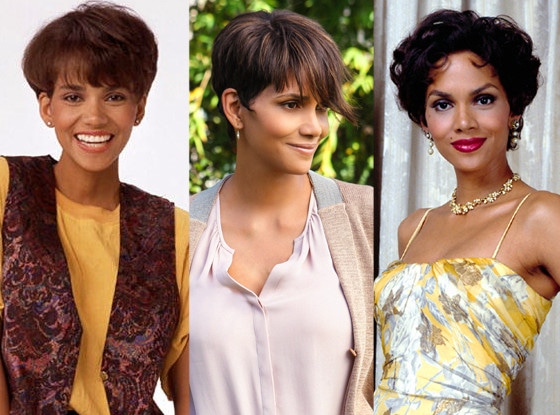
Time flies. It has been over 30 years since Halle Berry's first acting role. Many people admire her acting career, her modeling career (multiple people view her as one of the most prominent models of our generation), and her as a businesswoman. Halle Berry is also a mother, a lover, and an explorer of mixed martial arts. One of my favorite roles that Halle Berry was involved in was her portrayal of Dorothy Dandridge in the HBO film "Introducing Dorothy Dandridge." She embodies Dorothy Dandridge in her acting skills, grace, and story plots. Halle Berry is known for her versatility. She has played a drug addict in the film Jungle Fever (1991), a struggling mother in Losing Isaiah (1995), a superhero in the X-Men trilogy (2000-2006) and Catwoman (2004), and a wife in a legal dispute (over the assets of the late Frankie Lyman) in Why Do Fools Fall in Love? (1998). Halle Berry does excellent fighting scenes in the movie John Wick 3: Parabellum (2019). Over the course of years, her legacy has stood up for the legitimate principles of respecting menopause and allowing the paparazzi to honor the privacy of the children of celebrities. Berry worked hard in her career to be one of the most outstanding actresses of the 21st century. Today, of almost being in the year 2030, Halle Berry promotes fitness, self-care, care for her family, and shown great contributions in a plethora of fields during her life story indeed. From Cleveland to places across the world, Halle Berry's exquisite presence and multifaceted life show us that the dreams of human beings can be fulfilled with a precise, authentic vision, purpose, and personal determination.
By Timothy

No comments:
Post a Comment