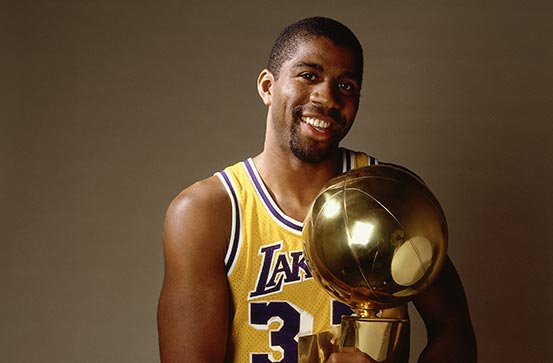
Winter 2021
Me being 37 years old now is certainly a blessing. I have seen a lot of things in my lifetime, and I have been to a lot of places from California to Philadelphia. Today, it is a new era of time in 2021. For 40 years, we have seen the nefarious effects of Reaganism from an acceleration of economic inequality (which has exacerbated poverty) to the increase of militarism plus imperialism in the multiple continents of the world. The Post-Cold War atmosphere includes a combination of debates about civil liberties and the development of social movements galore. Vaccines, the pandemic, and other changes in our world have been incomprehensible just a few years ago. I haven't seen this much change in my lifetime. Presently, a new President and a new Vice President (who is the first African American and South Asian American woman Vice President in American history) are finally here. The reign of Donald Trump and his minions (from 2007-2021) is now over. The good news is that the Trump Presidency is gone. Yet, we are not naive. There is still a long way to go in seeing the Promised Land for real. Still, we have to hold the moderate Joe Biden accountable for his actions and policies. His proposed cabinet members include wide ranging diversity. These leaders are composed of both great progressives (like Sister Kristen Clarke who is proposed Assistant Attorney General for the Civil Rights Division. Clarke has defended our rights for years. She is a superbly qualified human being) and moderate neo-liberals. The truth, frankly speaking, is that black people (especially black women) literally contributed the most to cause Joseph Biden to win the 2020 Presidential election. So, it is Biden's responsibility to use policies in favor of the interests of black Americans without exception. Also, the poor, other people of color, the oppressed, and the human race in general deserve equality including justice too. Universal health care is a necessity as health care is a human right. 8 million more Americans have been pushed into poverty via the pandemic. We live in a new stage of the 21st century, but we have this total, luminous opportunity to make a difference with our refulgent power and our influence.
An authentic anti-racism movement is what we seek that doesn't separate from the need for economic justice. The combination of anti-racism policies and economic justice policies will go a long way in establishing a more just society. That is why the shills either don't want to talk about race or some don't want to talk about class or class stratification. Jeff Bezos endorses a liberal anti-racism that ignores the fight against imperialism or the fight against economic terrorism by the 1 percent. Many neo-liberal Democrats and Trump supporting Republicans want permanent political agitation instead of addressing economic inequality and international racist terrorism that would require a economic redistributive program. Real solutions like universal healthcare, job security, public higher education being free, an end to imperialism, etc. are taboo for the establishments of both major parties to embrace (even in 2021). About 140 million Americans are either in poverty or in near poverty. Yet, you still have folks desiring some moderate solution to this crisis. That is why it is cardinal to be clear that a powerful, anti-racism, pro-economic justice agenda is truly paramount. We have to fight austerity, mass incarceration, endless war, and Wall Street exploitation of human beings. For over 40 years, we have seen reactionaries promote corporate trade agreements that have ruined the lives of working class people, imperialism, cutting the social safety net, and other bad policies. We need more than Nancy Pelosi in a kente cloth. We want tangible solutions.
There has been a continued debate about reform, and the centrists say that we must say reform the police not defund the police. People have the right to their views. Yet, the centrists forget that managing oppression to just reform won't work to eliminate structures of oppression in general. For example, reform didn't end the Confederacy. We didn't peacefully talked to Confederates to tell them to please stop slavery. A war happened that made the wicked the Confederacy to be defeated by force. When WWII happened, we didn't didn't coddle Nazis. We used force to end the Nazi empire and free millions from the wicked Holocaust. During the Civil Rights Movement, we didn't coddle racists and segregationists. Black civil rights leaders and others of every color (of goodwill) used civil disobedience, protested, used self defense, etc. in getting voting rights plus civil rights legislation passed in America. The problem with centrism is that is not virtuous. It is the same act of compromising to the status quo that never fundamentally changes the system. It just moves the status quo to be more malleable for the oligarchy. The murders of George Floyd and Breonna Taylor existed in the realm of many reforms already existing in the United States of America. These "reforms" as Obama has advocated not only didn't stop police terror. It did not go far enough in allowing crooked cops to be held accountable for their actions. Promoting a slogan is not as bad as innocent black people dying. We don't need token reforms. We need revolutionary, structural change to eliminate oppression period.
We live in unique times now. It's a shame that in this day in age that reactionaries and some moderates criticize people who desire everyone to have health care, everyone to have a living wage, everyone to escape poverty, everyone to not experience imperialism, everyone to respect immigrants, and ending structural racism. People like Rev. Warnock subscribe to these views, and he was attacked by Loeffler and others. The Senate races in Georgia has determined the future of the Senate. We desire a Senate reflective of a progressive America. Trump is discussing about making more pardons, because of his guilt involving his administration. Trump is known for using violent rhetoric to describe peaceful protesters, and he will out of office soon. Your happiness depends on your power not on the expectations of others' distractions. We should be happy that Trump has only one term. Yet, we have a long way to go in this American journey for freedom and justice.
This is an important topic to discussion, because some want us to be silent on these people. Some want us to ignore them, but they have a large following among our community unfortunately. They spew not only misogyny and disinformation. They also promote divisions in our community based upon nationality, sex, income, and background in general. Some of them even want to promote the FBA or the ADOS movements which are explicitly xenophobic and desire to divide black people based upon nationality. Therefore, I can't be silent on these fraudulent individuals. One person who is part of the new generation of deceivers is a fraud named Kevin Samuels. I didn't know who this person is at first. I did my research to find that not only does he promote the PUA/red pill dating nonsense. He is a person who is known to make women cry because of his sexist words (as he divides men and women into categories like "high value people." This is slick social Darwinism). He is like Tommy Sotomayor who has a platform to bash black women and follow the evil of colorism. Kevin Samuels readily has no class in mocking or disrespecting many of his callers to his show, he was twice divorced, and claims to date women under 25. Kevin Samuels' views are disturbing, archaic, and inaccurate. Tariq Nasheed is a person who is a liar and a hypocrite. Nasheed mocked John Lewis in offensive terms, he claims that massive voting fraud existed in Georgia (which is false), and he mocks IRs that he doesn't approve of but his mother in law is a white woman.
Tariq released a film about the 1804 victory of Haitians against French imperialists, but he regularly mocks Caribbeans including Haitians on many occasions with disgusting stereotypes. Umar Johnson talks about Pan-Africanism (which I do agree with), but he recently said that women are not putting in the work which is a lie. Umar has many scandals from money for his school to child support issues. The common denominator among these Hoteps is that they refuse to call for a radical redistribution of wealth involving housing, economics, political power, and other things in order to see liberation. They refuse to promote long term solutions for our communities. They lecture us on tangibles, but they have no tangible policies to address income inequality, police brutality, homelessness, poverty in general, or other important issues but set up some businesses. There is nothing wrong with growing businesses, but solutions include much more than that. You have to confront the 1 percent and their power structure, you have to stop economic inequality, and you have to develop means to eradicate racism internationally. So, we should follow real black scholars like Solomon Comissiong, Michelle Alexander, Christina M. Greer, Dr. Eddie Glaude, Greg Carr, and other Brothers and Sisters who are experts.
A very wild story is about Rebekah Jones (who said that the Florida governor was suppressing data involving the virus). She wrote and talked about being a whistleblower in Florida about the Florida response to the virus. Later, armed Florida police stormed her house. They immediately asked everybody to come out (including her husband and children). There was a commotion, and Rebecca was in fear for her life. Rebekah Jones is not a Wall Street fraud banker. She is not a person involved in a stock scam. She is a regular person who was treated with excessive police force. Rebekah Jones said that the police drawn guns on her children. Of course, the police denied this allegation. Drawing guns on innocent children is despicable. The irony is that many black people and people of color have experienced the same terror as Rebecca has. In fact, black people are disproportionately killed by the police, and the criminal justice system needs radical change (that is even admitted by people from across the political spectrum). The police said that they had a search warrant to search for 3 hours. They accused Rebecca of sending dangerous texts via hacking to members of the State Emergency Response Team on November 10, 2020. The truth is that Rebecca said that she didn't send the text. The police raid is totally unjustified and wrong. Rebecca was a former health official.
.jpg/1024px-2021_storming_of_the_United_States_Capitol_09_(cropped).jpg)

The 2021 Insurrectionist, Terrorist Storming of the U.S. Capitol building
Bloodshed, racism, hatred, political polarization, sedition, treason, sexism, xenophobia, violence, lies, and heinous disrespect of democracy are the fruits of Trumpism. The sad irony is that we have warned people of this. We told the world that such terrible things would happen. Donald Trump should be immediately removed from office either by impeachment and removal by the Senate or the invoking of the 25th Amendment (as advocated by over 100 Democrats and many Republicans). From his lie about Barack Obama's citizenship status to his provoking of terrorists who stormed the Capitol, Donald Trump has shown the world exactly who he is. So, there is no excuse of anyone to not know the truth of the legacy of his evil Presidency. Thousands of people were in the Freedom Plaza on January 5, 2021. On that date, at least 10 people were arrested and 7 others were on weapons charges. January 6, 2021 is a date that will live in infamy as thousands of fascists (filled with white racists, anti-Semites, Qanon followers, Proud Boys members, and other evil people) stormed the U.S. Congress. This has never happened since 1814 during the War of 1812 when British forces stormed the U.S. Congress building. Terrified Congressmen and Congresswoman took cover under desks. One Trump supporter waved a Confederate flag in the halls of Congress. The actions of the mob represent total treason. There is no other way to put it. The viciousness of white racism, terrorism, and violent extremism are on full display by those evil folks. Congress people, who wanted to eliminate the election results, are complicit in this disaster too.
D.C. Capitol police was overrun by a mob of thugs who could care less about democracy or freedom. These terrorists made a mockery of God and justice. Their actions have no justification at any circumstance. We can protest and dissent, but there is no justification for violent insurrection against innocent people and innocent property. Capitol building windows and objects have been vandalized, people have been threatened, extremists used vulgarity in advancing anti-democratic principles, the grounds of the Capitol were desecrated, and one woman (an Air Force veteran) has died. Desks were damaged, and files were trashed by insurrectionists. This failed fascist coup d'etat on January 6, 2021 represents how fragile our democracy is, and now the D.C. National Guard is placed on a 30 day mobilization. Trump instigated insurrection against a constitutional function of the U.S. government (which is the confirmation of the victory of Joe Biden and Kamala Devi Harris by the U.S. Congress). We already know that if black people and Muslims stormed the Congress, the response would be shift, death would be more, and more people would be arrested. There is a double standard because of white privilege and racial reasons. Now, only a little over 80 people have been arrested so far. This started when Trump for years agitated mobs to do violence. Trump said when the looting starts, the shooting stars. The plans for violence by the far right extremists have been planned for months (from the Stop the Steal movement, Qanon followers, Trump loyalists, extremist militia groups, and to the Proud Boys). On January 6, 2021, During the initial rally, Trump encouraged his supporters to "fight like h__" for Republicans to "take back our country", and asked his supporters to march to the U.S. Capitol, while Giuliani called for them to engage in "a trial by combat." As far as I'm considered, Trump and Giuliani including the mobs are traitors to America. Trump called the terrorists lovable people which is a disgrace. Donald Trump declared they would be "going to the Capitol and we're going to try and give" Republicans "the kind of pride and boldness that they need to take back our country."
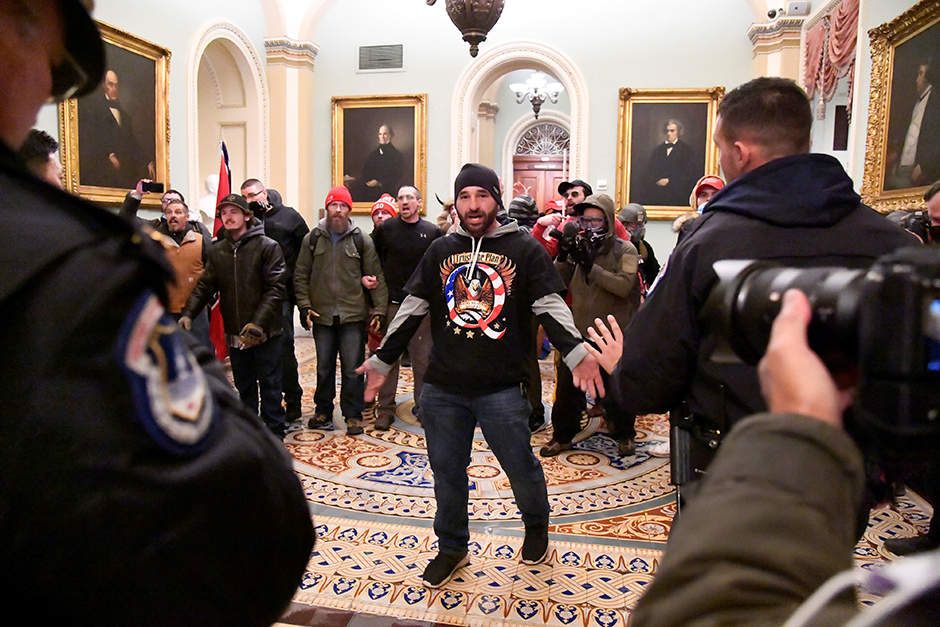

At 1:00 pm, Trump supporters were provoked by the speech of Trump. They left the Washington monument area. They came to the Capitol building. Many of them used social media sites like Gab and Parler that called for violence against Congress. By 2:15 pm., the storming of the United States Capitol started. These terrorists and thugs overtook barricades manned by the D.C. police. The Capitol security told members of Congress to take cover. Some buildings were evacuated. They or the fascists entered the National Statuary Hall too. They or the domestic terrorists took their acts to invade the U.S. Capitol. This happened during the early debate on accepting electors from Arizona. Paul Gosar and Ted Cruz did treason by fighting to not make Arizona's votes count for Biden/Kamala. Most of the rioters came into the Capitol by foot. Some used ropes and ladders to invade the buildings. Windows were heavily broken. The buildings in the complex were on lockdown. Members of Congress were told to use gas masks. Law enforcement used tear gas. Some staff rescued a box of sealed electoral college votes to prevent them from being damaged by terrorists. The Capitol police was overwhelmed. An armed standoff was in the Capitol building where one woman was shot and killed (who was a Trump supporter). Security personnel drew guns inside the House of Representative chamber. The doors were barricaded with furniture. In a stairway, one officer fired a shot at a man coming toward him. The woman who died was Ashli Babbitt, who was an invader. She climbed via a barricade door behind the House chamber and died from her injuries. Many of these terrorists had concealed weapons in the location. Vandalism and looting occurred all over the Capitol building. Many of these pro-Trump rioters stormed the officers of Speaker of the House Nancy Pelosi, flipping table, and ripping phones from the wall. Trash was thrown everywhere including the elevators. Glass windows were broken. Press equipment from the Associated Press was destroyed.
One fascist had a uniform with plastic handcuffs (or zip ties) in trying to hold people hostage. A noose was set in the Capitol parking lot. One anti-Semite wore a T-Shirt in reference to the Auschwitz-Birkeanu concentration camp and its motto of work makes you free. Another anti-Semitic group who stormed the Capitol is called the Nationalist Social Club. The traitor Alex Jones was a leader of the march to the Capitol that preceded the riots. These terrorists and rioters destroyed a placard honoring the life of the late Congressman and civil rights leader John Lewis. These demonic criminals deserve no respect. Anyone supporting Trump is a disgrace to America. I don't care who it is.
Many of these terrorists chased and assaulted reporters. Multiple officers were injured in the violence at the Capitol. It would only be after 6 pm. where National Guard, D.C. police, and other law enforcement agencies forced the criminals out of the Capitol ground slowly. 200 Virginia State troopers, Virginia National Guard, Maryland police, Maryland National Guard, the ca. 1,100 D.C. National Guard Guard, the New Jersey State Police, and other forces came to stop the violence. The National Guard was initially rejected by Trump and approved by Vice President Pence. Terrorists had pike bombs. Furniture was overturned. The Capitol police used smoke grenades to clear rioters from the building. FBI and Department of Homeland Security agents were in the building too. On January 6, many state capitols were closed for safety reasons. Militia members tried to storm the Georgia State Capitol. Georgia Secretary of State Brad Raffenssperger and other officials were evacuated. By 3:15 pm, most of the people disbanded outside of the Georgia Capitol. Protests were in the Kansas State Capitol and in St. Paul, Minnesota. Protesters and counter protesters were at the Ohio Statehouse in Columbus, Ohio. A prayer rally was led by 2 Tennessee lawmakers at the Legislative plaza in Nashville. That crowd was about 150 people. Trump's Twitter was suspended for promoting falsehoods. Pence condemned the violence at the Capitol, but he was Trump's great supporters for years during the days of Charlottesville, etc. Pence whitewashed Trump's evil behavior for years. McConnell for weeks after the election refused to call Joe Biden as President elect until recently.

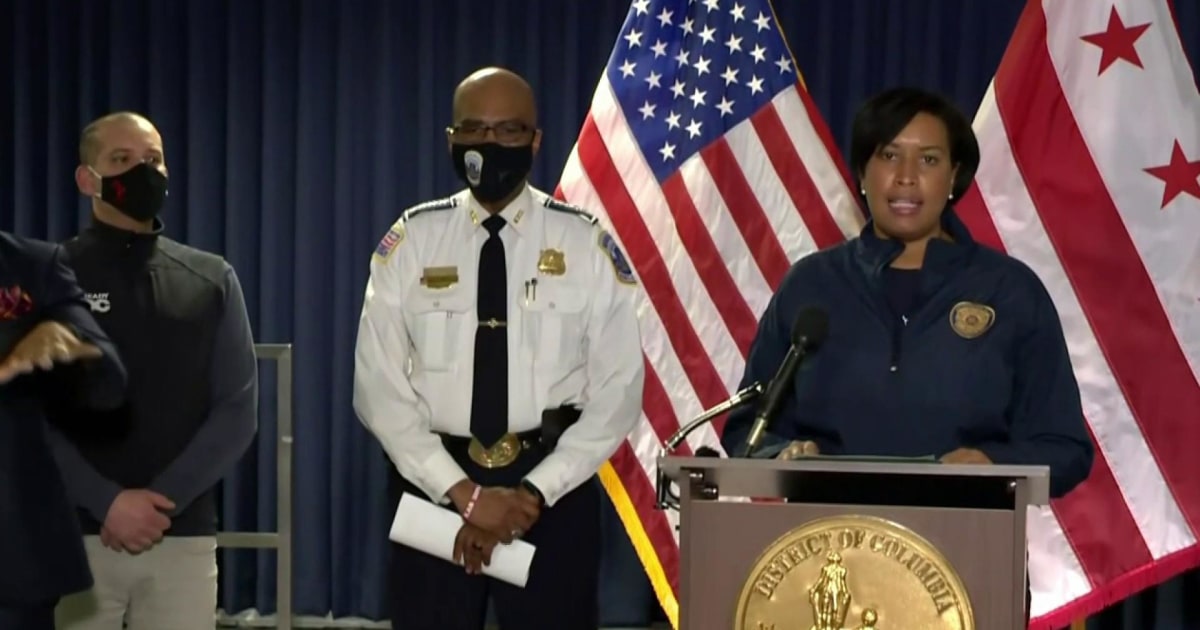
Washington, D.C. Mayor Muriel Bowser issued a curfew at 6 pm. These mobs of terrorists weren't afraid of the police, and they were prideful in their actions of treason. Governor Ralph Northam of Virginia issued a curfew for nearby Alexandria and Arlington County in Northern Virginia. One person was arrested for having a vehicle with a rifle and Molotov cocktails near one bomb. Reporters were still attacked by terrorists. By 6:08 pm, police arrested many people and seized firearms. 3 more people died because of medical emergencies. Congress reconvened. We should remember the over 100 House Republicans and the 7 Republicans who voted to overturn the results of the 2020 election. The Senators, who are traitors, are Ted Cruz, Josh Hawley, Cindy Hyde-Smith, John Neely Kennedy, Rick Scott, Roger Marshall, and Tommy Tuberville. People in America and worldwide have condemned the terrorism found in Washington, D.C.. Many Capitol police allowed people to go to the Capitol. One police officer took a selfie with a terrorist. Other Capitol police tried to stop the mayhem. This was a massive security failure and a massive investigation ought to exist. Law enforcement just dropped the ball. This coup d'etat attempt has been condemned by Joe Biden, Kamala Harris, even Liz Cheney, Mitt Romney, all 4 former living Presidents, and others. One terrorist who breached the Capitol grounds was Derricks Evans, a newly elected member of the West Virginia House of Delegates. The Sergeant at Arms of the Texas Republican Party was removed after expressing support for the rioters on Facebook. Trump used sedition to incite insurrection against American democracy and against the United States of America.
Many resignations have existed from the Trump Presidency like Deputy National Security Advisor Matthew Pottinger, the chief of staff for First Lady Malenia Trump Stephanie Grisham, Sarah Matthews, Anna Christinia Niceta Lloyd, Elaine Chao (who was the Department of Transpiration head), Betsy DeVos, Paul D. Irving, and Mick Mulvaney. Some Capitol police acted in co-hoots with some of the insurrectionists. It is no secret that right wing extremists have influenced and infiltrated some law enforcement and even some elements of the military. That is documented. BLM protesters would never get away with this. There are accusations that many of the rioters were given inside information on secret Capitol buildings by some police officers. That allegation should be completely investigated. Reportedly, the Capitol police rejected offers of assistance. We know that some cops removed the barricades to allow the terrorists to storm the Capitol building. Rep. Mo Brooks of Alabama agitated the crowd and called on the crowd to take names. Mo Brooks is another advocate of insurrection. Some of the Capitol police aided and abetted terrorists by using selfies with them and other evil things. Any cop who did that should be fired. Steven Sund is the U.S. Capitol Chief of Police. He has resigned. The Sergeant of Arms at the House and Senate have resigned too. It is important to recognize that many D.C. Capitol police heroically tried to stop the fascists. One police officer died by the actions of fascists (who had metal weapons harming people).
The Daily Mail Online reported that the DoJ warned that national secrets may have been stolen. According to the Daily Mail article, many DC off duty police plus military personnel (claimed by a Metro DC cop) were among the rioters and flashed ID badges at on duty colleagues. One Democratic Senators said that a laptop was stolen. Acting U.S. attorney for the District of Columbia Michael Sherwin said that electronic items were stolen by the terrorists from Senators' offices including documents. Senator Jeff Merkley (D-Oregon) said taht at lest one laptop was stolen from his officers. Another rioter was seen brandishing Pelosi's mail outside the Capitol. Many floors of the Capitol was filled in files on the ground. A totally investigation must exist. Many of the top government officials in America could have been taken hostage. These terrorists came through without any security screening. If any GOP Congressional person or Trump cabinet official was involved in this insurrection, then he or she should be banned from being an elected official (and prosecuted).
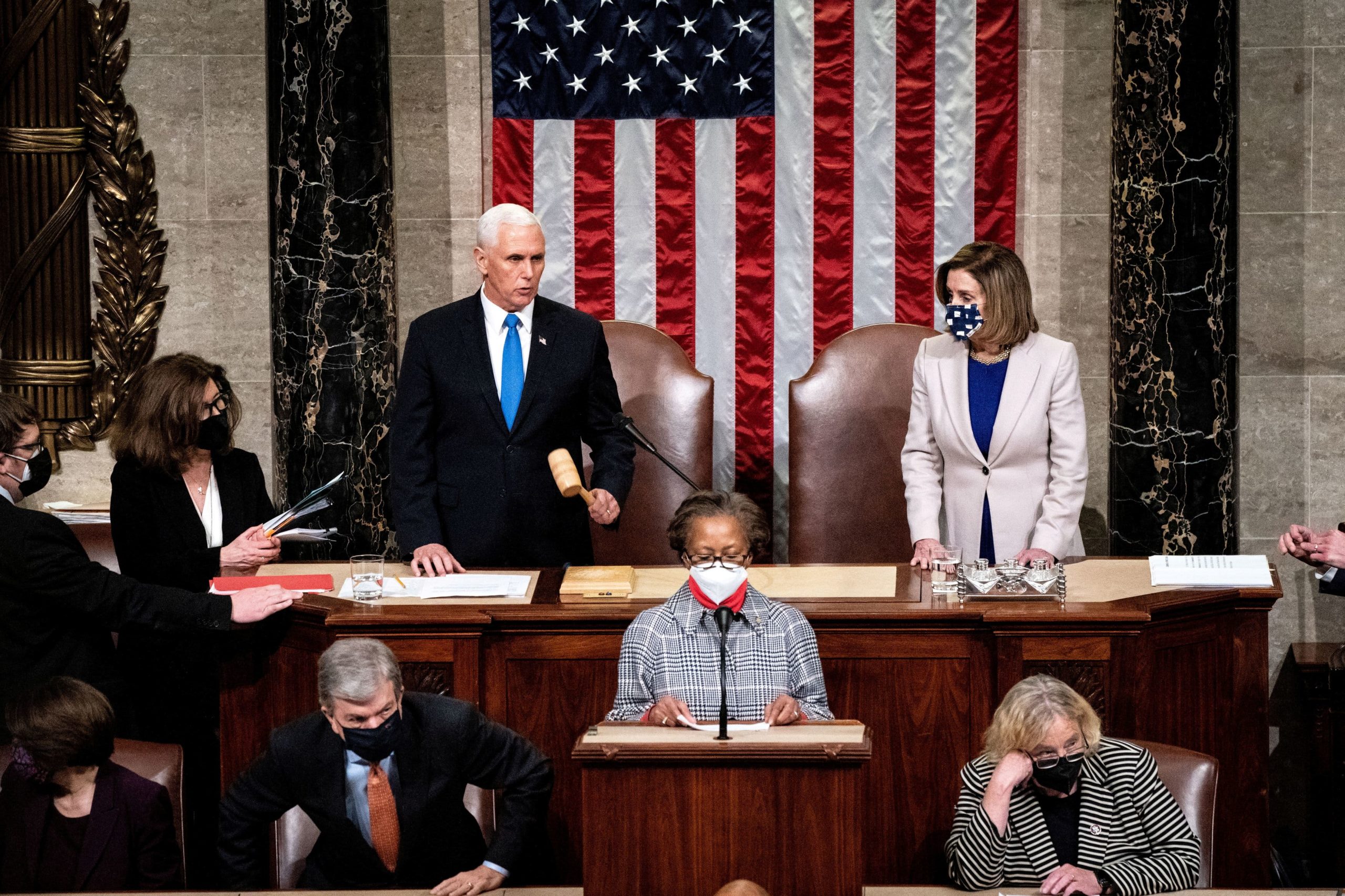
By 3:28 pm. on January 7, 2021, Vice President Pence cleared that Joe Biden and Kamala Harris will take office as President and Vice President on January 20, 2021. Immediately, pro-Trump extremists called Pence Judas, because they refuse to acknowledge reality. Many want Trump to be impeached (said by Senator Ed Markley of Massachusetts and Governor J.B. Pritzker of Illinois) and removed from office or the Vice President to invoke the 25th Amendment to remove Trump from office (as promoted by Representatives Ted Lieu, Charlie Crist, and Doris Matsui). Even some cabinet members of the Trump White House had preliminary discussions about the possibility of invoking the 25th Amendment to remove Trump.
*The terrorists who stormed the United States Capitol building used a sophisticated, strategic plan in order to stop the peaceful transfer of power to Joe Biden and Kamala Harris. It was an attempted coup d'etat against democratic government. Trump and his allies must be held accountable for their actions. Twitter is warning that terrorists are trying to plan a 2nd attack on January 17 at the U.S. Capitol including other state capitols including on January 20, 2021. Google Play has banned Parler including Apple and Amazon. Some news is that one man was caught carrying 11 Molotov cocktails. The Feds are trying to get the rest of the terrorists. Congressional support for impeachment now tops almost 250 members. Event GOP Senator Toomey said that Trump should resign, and Trump could face criminal liabilities. There is no other solution but prosecution of the criminals and Trump being impeached and removed from office. This is beyond political disagreement. This is about one man named Trump calling for insurrection against the United States of America. That is an attack on all Americans. These hate groups planned this domestic terrorist attack for a long time. It is not just Trump who is to be blamed.
Any GOP member who aided Trump and Trump supporters aided the growth of the toxic atmosphere. The mob assaulted an AP photographer. Twitter has permanently suspended Trump's account permanently after inciting a mob. The coup d'etat failed, and we are in favor of democracy more than ever. This is beyond politics. Trump ought to be impeached and removed from office now. You know these hypocritical pro-Trump mobs always lecture us on blue lives, but these terrorists have assaulted police officers and murdered one police officer via their actions in the U.S. Capitol. BLM never did these acts at all. While BLM promotes peaceful protests, these racist terrorists were violent in D.C. While BLM promotes justice against police brutality, these racist terrorists promote nihilism and lies. While BLM has used words of promoting democratic freedom, these racist terrorists have shown Confederate flags and anti-Semitic T-Shirts in harboring hatred of democratic rights (and hatred of democratic institutions).
One Capitol police officer who died was named Brian Sicknick. He was murdered by being hit in the head by a fire extinguisher by a terrorist. He tried to stop the mob from taking over the U.S. Capitol. Cruz and Hawley plus others who have coddled these fascists including Trump (and they questioned the election results) ought to be feel shame. The Capitol attack was filled with violent white supremacists, anti-Semites, far right militia groups, and other fascists who abhor truth. One person with zip ties and a suit has been arrested, and the rest of the people involved in this treason should be arrested. Many Congresspeople could have been massacred. It's a shame. We have to unify against fascism. Now, we know that a 2nd Capitol police officer has died from the insurrection. Cruz and Hawley should resign. These insurrectionists included evil people. Trump inciting an insurrection against the government of the United States makes him a traitor. These rioters beat U.S. Capitol police with flag polls, and one person was caught on tape punching the glass. We shouldn't coddle racists, fascists, and enemies of freedom. We should advocate accountability (as anyone involved in the storming should be arrested, and Trump can be banned by the Senate from holding federal office again) for those who harmed democracy.
What we saw on January 6, 2021 was a disgrace. It was an attack on American democracy. We will overcome this crisis. Yet, those, who are responsible for this failed terrorist coup attempt, must be held accountable for this evil. Congresswoman Cori Bush introduced a resolution to have Republican member of the House (who supported contesting battleground states' efforts) in the joint session of Congress to be investigated and expelled form office. Trump is ultimately responsible for this too. There is no question that Trump's actions are impeachable. From Trump's inhumane response to the pandemic to his assault on democratic rights, Donald Trump is the worst President of my lifetime. This is not new. Mobs murdered and terrorized black people for centuries. Native Americans experienced genocide in both Americas for centuries. Trump incited insurrection against the United States of America. Trump has committed outright treason. Likewise, the good news is that we have the chance to be better as a nation. We should fight for justice for all as our eternal credo.
.png/248px-NATO_vs._Warsaw_(1949-1990).png)
.jpg)
The Cold War After 30 Years Part 4: (1985-1991 The Finale)
The end of the Cold War was from the years of 1985 to 1991. I was in elementary during the end of the Cold War. This was a time where massive changes in the world occurred. Apartheid in South Africa ended (after centuries of struggle by black people who fought for their liberation), the Persian Gulf War was in existence, and the Soviet Union would soon cease to exist. Ronald Reagan found a person who would aid in the transition of the Soviet Union into many republics who is Gorbachev. The irony was that Mikhail Gorbachev was not a massive hardliner, as he wanted a more peaceful resolution to the political issues of the Cold War. Gorbachev witnessed the massive declining infrastructure of the Soviet Union. Since the 1970's, the Soviet Union's total powerbase was in sharp decline. The many changes in Eastern Europe weren't completely bloodless. A lot of violence happened among both sides in order to end the Stalinist regimes in Eastern Europe. The problem with those regimes wasn't about socialism per se. It was about those regimes limiting democratic rights of free speech, protesting, various economic rights, and other things that many freedom loving people take for granted. Gorbachev using political reform in glasnost and economic reforms of perestroika weren't enough to save the Soviet Union.
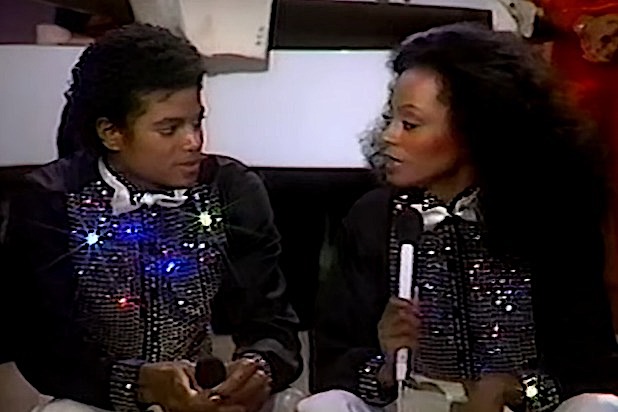
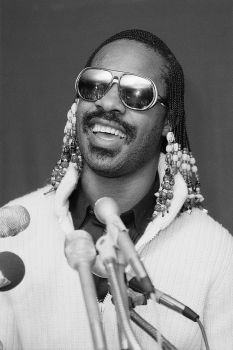
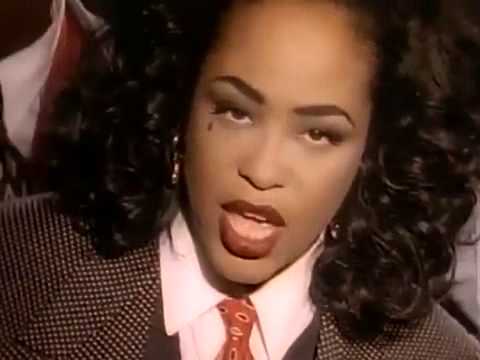
The USSR also fell, because it faced a costly arms race with America. The Soviet occupation of Afghanistan ended. The Berlin Wall fell which led to the independence of Germany in reunification. Revolutions wept the Soviet Bloc states of Western Europe in 1989. We know how the CIA and the Vatican worked together in Poland to end the Stalinist regime there. The end of the Cold War existed by the time President George H. W. Bush was President. World culture changed as international superstars were increasingly black people like Michael Jackson, Prince, Janet Jackson, Whitney Houston, Jody Watley, Vesta Williams, Luther Vandross,etc. Cable TV expanded greatly with ESPN and CNN. Consumers increased their viewing choices in dealing with sports, drams, thrillers, music videos, and comedies. In 1991, Russia was born. Yeltsin would take over, and neo-liberal capitalism would rule Russia to this day. Remaining Soviet troops left Eastern Europe by the mid 1990's. The Cold War was finished by many decades of unique, surprising developments.

International Cold War Events (1986-1991)
International Cold War Events were history making and time changing at the same time. By 1985, the Reagan Doctrine was real. In the same year, military rule ended in Brazil. Ramiz Alia took over as First Secretary of the Party of Labor of Albania, becoming the de facto leader of Albania. The Trial of the Juntas convened to prosecute the members of the National Reorganization Process (the military junta that governed Argentina from 1976 to 1983) for war crimes and crimes against humanity committed during its existence. Coinciding with the 40th anniversary of the atomic bombing of Hiroshima and Nagasaki, the Soviet Union starts what it has announced is a 5-month unilateral moratorium on the testing of nuclear weapons. The Reagan administration dismissed the dramatic move as nothing more than propaganda and refused to follow suit. Gorbachev declared several extensions, but the United States failed to reciprocate, and the moratorium comes to an end on February 5, 1987. By 1986, France repelled Libya from its invasion of Chad. In 1986, People Power Revolution took place in the Philippines, overthrowing President Ferdinand Marcos. The Philippines' first female president, Corazon Aquino, was installed as president. In 1986, there was the Chernobyl disaster: A Soviet nuclear power plant in the Ukraine explodes, resulting in the worst nuclear power plant accident in history. The nuclear fallout in the region where Chernobyl is located continues to this day in 2021. America dropped bombs on Libya. By 1986, the public learned about the Iran-Contra affair: The Reagan administration publicly announces that it has been selling arms to Iran in exchange for hostages and illegally transferring the profits to the Contra rebels in Nicaragua. In 1987, during a visit to Berlin, Germany, U.S. President Ronald Reagan famously challenged Soviet Premier Mikhail Gorbachev in a speech: "Mr. Gorbachev, tear down this wall!" (The Berlin Wall).
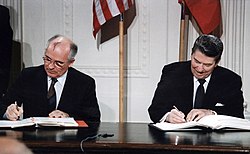
Mohammad Najibullah became the President of Afghanistan and implemented a policy of National Reconciliation as a means of putting an end to the Soviet-Afghan War as well as beginning an end to Soviet influence in the country. The Intermediate-Range Nuclear Forces Treaty was signed in Washington, D.C. by U.S. President Ronald Reagan and Soviet leader Mikhail Gorbachev. Some later claim this was the unofficial beginning of the end of the Cold War. Gorbachev agrees to START I treaty. In 1988, Soviet scientist and well-known human rights activist Andrei Sakharov began a two-week visit to the United States. The Soviet Union started to withdraw from Afghanistan. In 1989, there was the Tiananmen Square Massacre: Beijing protests are crushed by the communist Chinese government, resulting in an unknown number of deaths. The protesters just wanted an expansion of human rights from free speech to political activism. Revolutions are in Eastern Europe were in full swing by the late 1980's. Indonesia had changes, and the bloody Romanian Revolution happened.
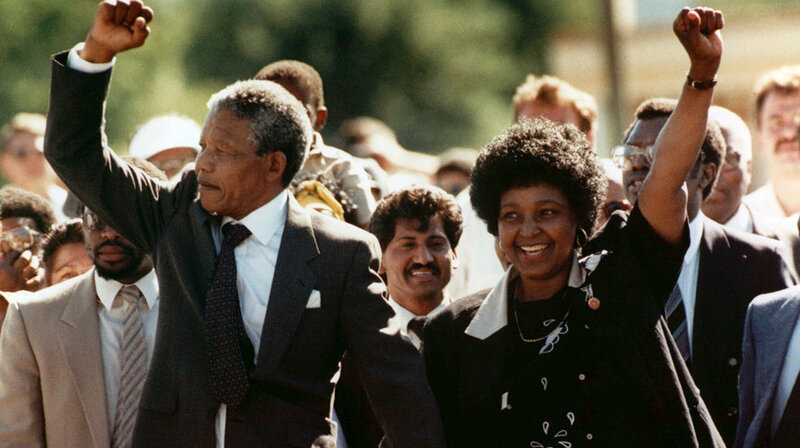
In 1990, more democracy comes to Poland, Iraq invaded Kuwait starting the Persian Gulf War, and George H.W. Bush and Mikhail Gorbachev meet in Helsinki, Finland and issued a joint declaration condemning the invasion of Kuwait. Bush wanted to attack Iraqi forces, because Iraq could attack Saudi Arabia not just Kuwait (such an act would harm oil prices globally). American forces used advanced technologies like aircraft and long range missiles to easily defeat Iraqi forces in Kuwait. Some neo-cons back then wanted to conquer Iraq, but President George H. W. Bush refused to do it. The reason was that such of an invasion of Iraq would cause sectarian strife and long, brutal occupation (which happened as an aftermath of the 2003 Iraqi invasion done by George W. Bush). Mikhail Gorbachev was awarded the Nobel Peace Prize. More nations in Eastern Europe including Armenia declared independence from the Soviet Union. Nelson Mandela was finally freed from prison in 1990. There was the event when George H.W. Bush and Mikhail Gorbachev meet in Helsinki, Finland and issue a joint declaration condemning the invasion of Kuwait. Germany is reunited by 1990, and the end of the Cold War would soon happen by 1991.

Eastern Europe
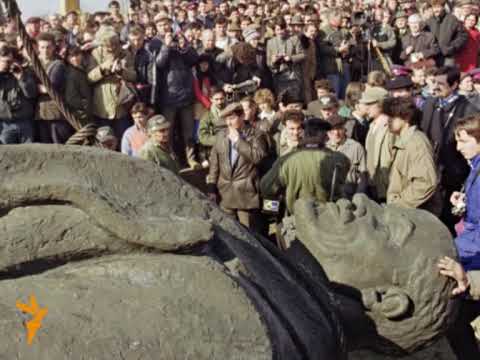
Eastern Europe was dominated once by Stalinist communism. The Revolutions of 1989 ended that domination. Eastern Europe saw Big Brother style police states, violations to democratic rights, and tyranny throughout most of the 1980's. That is why many in Eastern Europe used massive mobilization to fight for democracy and justice. Stalinism's problem was that it suppressed the rights of human beings under a ruling class. The revolts were about poor and working class people fighting injustice. Many believe in 2 myths about these events. The far right people believe that these revolts vindicated capitalism and refuted progressive views or socialism. Many of the neo-liberal centrist crowd believe in the same thing too. The truth is that these societies on the Eastern bloc was controlled by a small minority where the working class majority lacked freedom or democracy. They suffered exploitation, alienation, and no kind of social or political control. This is not socialism. It's tyranny. A small minority controlling most of the resources and having privilege and power is just wrong. People in Eastern Germany, Poland, Czechoslovakia, Hungary, Romania, and Bulgaria revolted. Human beings in those nations had every right to resist such evils in their lands. In 1990, Germany was reunited. Movements in Lithuania and other Baltic states including places at the Caucasus republics wanted an end to the USSR. 10,000 people in Hungary demanded democracy in March of 1988. The Solidarity movement in Poland by 1989 fought for their independence. It is true that much of that movement was infiltrated by the CIA and the Vatican, but Poland has the right to be an independent nation. Hungary and other nations followed suit.

The Berlin Wall Falls
The Berlin Wall fell down in stages. In East Germany, the hardliner Erich Honecker was forced out. The reformer Egon Krenz was there. Many people left to West Germany. Gorbachev didn't stop these movements. By early November 1989, many protesters gathered at the Berlin Wall. Many people were shot decades ago when they wanted to escape from East to West. People came to the wall, and local police forces allowed more people to travel into border points in Berlin. East Germans then started to tear down the wall. Czechoslovakia was next by November 27 when million of people had a 2 hour strike nationwide. Vaclav Havel would be from prisoner to leader of a post Stalinist system in Czechoslovakia. Ceausescu of Romania was confronted by activists. The Romanian dictator and his wife were arrested and executed on Christmas Day. Millions of demonstrators form Russia to Southern Europe protested for the end of the Stalinist regimes. One weakness of this time was that the people legitimately overthrown Stalinist filled with state bureaucracy to be replaced with Western neoliberal capitalism that had economic problems too. Many thought in favor of the myth that there is no alternative to Stalinism but Western free market capitalism. That is why you need the emancipation of the working class and the people along with using policies that make economic justice a reality for real.

New Realities (of George H. W. Bush's era)
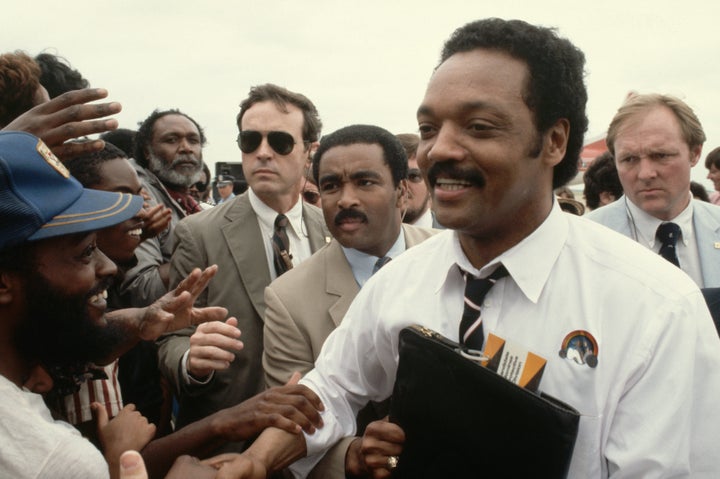
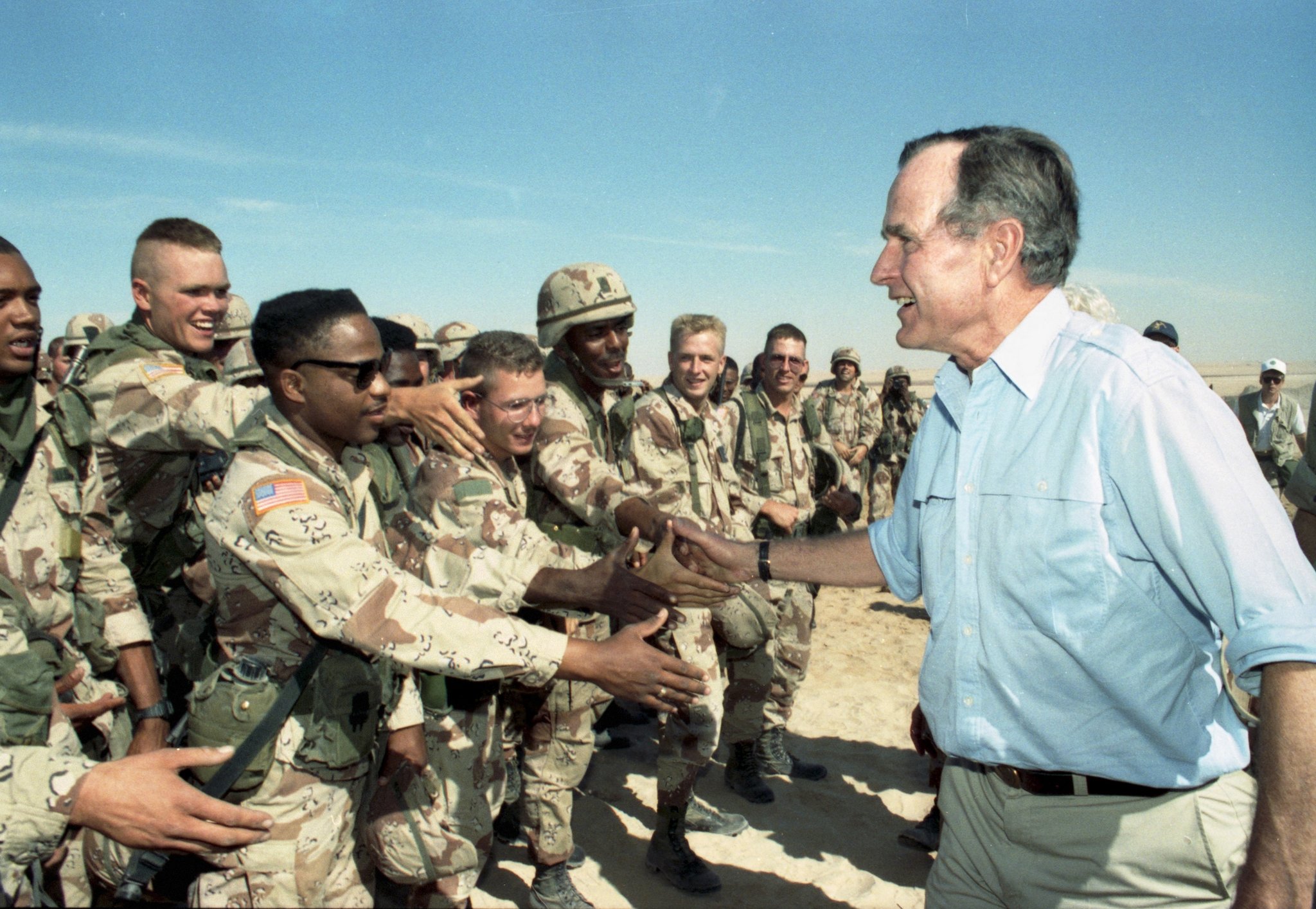
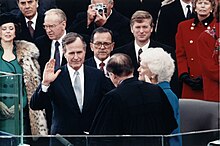
The Cold War Faced a new reality when George H. W. Bush was President from 1989 to 1993. Bush Sr. was part of the establishment literally. He is a descendant of the blue bloods of New England. He was a Republican who once opposed the Civil Rights Act and the Voting Rights Act back during the 1960's. George H. W. Bush was a friend to both Richard Nixon and Ronald Reagan. He was Director of the CIA. Bush Sr. was born in Connecticut and lived in Texas for decades. As an Ambassador to the United Nations, he gained far reaching experience in foreign policy matters. When Reagan was President, Bush Sr. was Vice President. George H. W. Bush campaigned everywhere for Reagan. By the time of the 1980's, the Left was divided. Jesse Jackson ran for President in 1984 and in 1988, but the Democratic establishment refused to support him because he was more progressive than the other candidates. Some thought that Bush Sr. didn't have the same charisma as Reagan. He didn't need to. The Reagan Revolution still supported a less conservative man of Bush Sr. George H. W. Bush still had to run for President though. The Republican and Democratic fields were diverse. Lee Atwater and Roger Ailes supported Bush Sr. George H. W. Bush rejected his earlier comments about "voodoo economics." He towed the conservative line, and he beat Jack Kemp, Bob Dole, and Pat Robertson (who were Republican primary candidates in 1988). People know Bush Sr. was known for advocating volunteerism in his Thousands Points of Light plan, prayer in schools, capital punishment, and gun rights. Bush promoted the words of "read my lips, no new taxes." Bush's Vice President would be Indiana Senator Dan Quayle. Quayle was young back then. Democratic candidate Michael Dukakis ran for President. He was from Massachusetts. Bush viewed Dukakis as an extremist. The Bush campaign did one of the most racist, disgraceful ads with the Willy Horton ad that played on anti-black stereotypes (in viewing anyone who wanted legitimate criminal justice reform as barbarians who want to glorify criminal activity). Dukakis rode in a M1 tank, and he was mocked. Dukakis struggled in the 2nd Presidential debate.
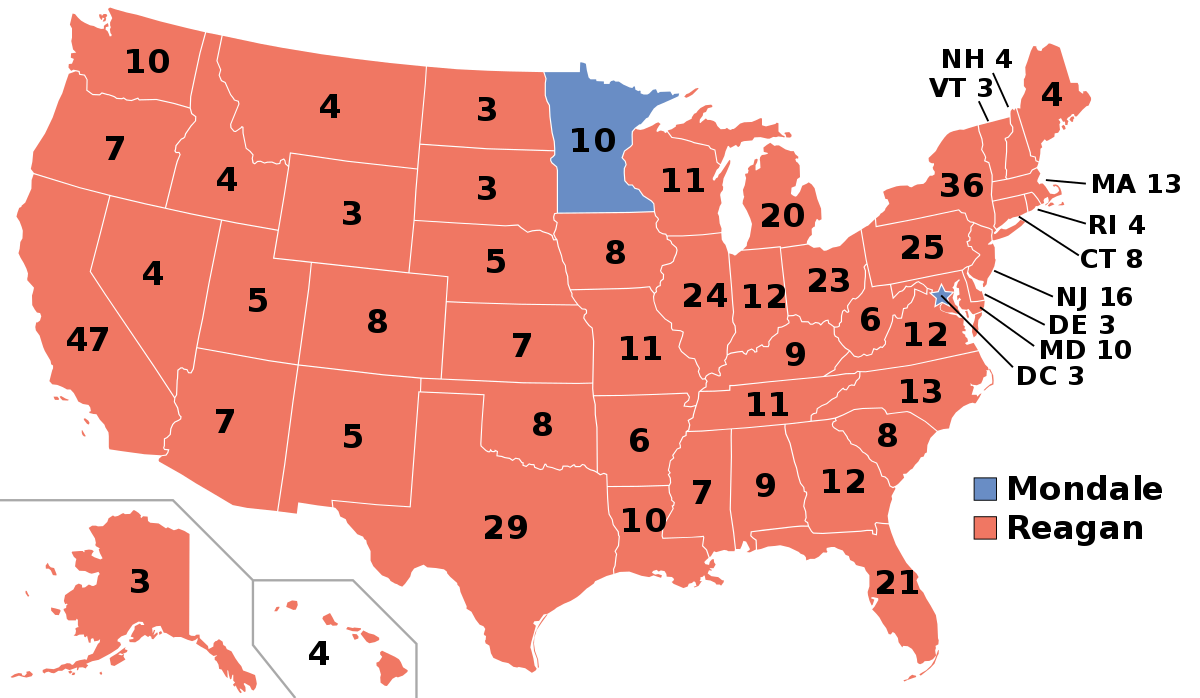
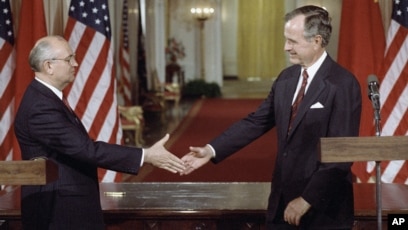
Bush attacked Dukais for opposing a law that forced all students to recite the Pledge of Allegiance when the law states that you don't have to do that if you don't want to. Bush won the election of 1988 with 426 to 111 in the Electoral College. Bush won the election in the South well as well. The Democrats controlled both houses of Congress. Bush Sr. was inaugurated on January 20, 1989. Bush Sr. was the man who oversaw the end of the Cold War. Many of his advisers on foreign policy were center-right or Republican establishment leaders. Some of them like Baker were middle of the road on the Israeli/Palestinian issue. By 1989, the Cold War was mostly over. Communist governments in Europe ended. Gorbachev didn't send in the Soviet Military to stop it. Later, Bush and Gorbachev met at the Malta Summit in December of 1989. Some Bush officials trusted Gorbachev, and others didn't. Bush believed that he would negotiate in good faith. He worked with Gorbachev in desiring a peaceful end to the Cold War. The Malta had the debate about the reunification of Germany. Britain and France were concerned about the plan for reunification, because they feared that Germany could have a repeat of WWII. Bush agreed with reunification along with West German Chancellor Helmut Hohl. Bush wanted an unified Germany to advance U.S. interests and to him it represented a final symbolic end to World War II. Gorbachev later agreed to this reunification to be part of NATO. Germany officially reunified in October of 1990. Gorbachev did suppress nationalist movements in the Soviet Union itself. Bush told Gorbachev that he didn't want him to suppress Lithuania's independence movement. Yet, Bush took no action to directly intervene. Bush didn't agree with what he called "suicidal nationalism" in that he felt that independence movements that were unstable could harm the peace. By July 1991, Bush and Gorbachev signed Strategic Arms Reduction Treaty (START 1). They agreed to cut their strategic nuclear weapons by 30 percent.


The Soviet Union Falls
In the USSR itself, glasnost weakened the ideological bonds that held the Soviet Union together, and by February 1990, with the dissolution of the USSR looming, the Communist Party was forced to surrender its 73-year-old monopoly on state power. At the same time the union's component republics declared their autonomy from Moscow, with the Baltic states withdrawing from the union entirely. Gorbachev used force to keep the Baltics from breaking away. The USSR was fatally weakened by a failed coup in August 1991. A growing number of Soviet republics, particularly Russia, threatened to secede from the USSR. The Commonwealth of Independent States, created on December 21, 1991, was a successor entity to the Soviet Union. In August 1991, hard-line Communists launched a coup against Gorbachev; while the coup quickly fell apart, it broke the remaining power of Gorbachev and the central Soviet government. Later that month, Gorbachev resigned as general secretary of the Communist party, and Russian president Boris Yeltsin ordered the seizure of Soviet property. Gorbachev clung to power as the President of the Soviet Union until December 1991, when the Soviet Union dissolved. Fifteen states emerged from the Soviet Union, and of those states, Russia was the largest and most populous. Bush and Yeltsin met in February 1992, declaring a new era of "friendship and partnership." In January 1993, Bush and Yeltsin agreed to START II, which provided for further nuclear arms reductions on top of the original START treaty. The collapse of the Soviet Union prompted reflections on the future of the world following the end of the Cold War; one political scientist, Francis Fukuyama, speculated that humanity had reached the "end of history" in that liberal, capitalist democracy had permanently triumphed over Communism and fascism. Meanwhile, the collapse of the Soviet Union and other Communist governments led to post-Soviet conflicts in Central Europe, Eastern Europe, Central Asia, and Africa that would continue long after Bush left office. The USSR was declared officially dissolved on December 26, 1991. US President George H.W. Bush expressed his emotions: "The biggest thing that has happened in the world in my life, in our lives, is this: By the grace of God, America won the Cold War." George H. W. Bush was not without controversy. He led an invasion of Panama, when the CIA once supported Noriega before opposing him. He led the Persian Gulf War after Iraq invaded Kuwait. He also signed NAFTA at December of 1992 which harmed millions of jobs in America plus Mexico.

.jpg/220px-Flickr_-_The_U.S._Army_-_Black_Hawk_boarding_(1).jpg)
The Legacy of the Cold War
The overall legacy of the Cold War is complicated. The largest nation that broke from the Soviet Union was Russia. Yeltsin was a leader of Russia, and Russia had a large recession during the 1990's as a product of massive declining military spending plus other factors. Living standards fell, economic inequality grew, and oligarchs dominated the economic plus political power of Russia. The Russian Mafia expanded its power in the 1990's plus beyond. Within just over two years of standing on a tank to defend the Russian parliament building against the August 1991 putsch, Yeltsin gave the order in October 1993 to shell the same building after elected legislators resisted his unilateral attempt to rewrite the constitution and disband the parliament. Hundreds were killed in the barrage of tank fire. Such were the so-called “democratic” methods of Boris Yeltsin. Yetlsin increased his power over democratic freedoms. In America, the centrist President William Jefferson Clinton was the leader of the unipolar world as the United States of America.
America was the sole superpower on Earth after the Cold War ended. America had economic and political changes from expansion of jobs, later growth of economic inequality, racial tensions, and other issues. The 21st century saw more complex changes socially and internationally. The legacy of the Cold War is that the Cold War outlined the fallibility of the policies of America and the Soviet Union. America claimed to be the beacon of democracy, but it had imperialism, unjust coups, racism, lynchings, sexism, and other evils. The Soviet Union claimed to be in favor of the oppressed, but Stalinists suppressed democratic rights in their borders, suppressed the Hungarian Revolution, and enacted other evils that ruined so many lives too. Putin would be a large part of the legacy of the Cold War. He worked with the KGB, he has ties to oligarchs, and he is a reactionary nationalist now. The Cold War allowed America to further extend trade, military bases, and negotiations globally. After the Cold War, many nations improved, while other nations have suffered. It represented the end of the 20th century. It showed the world of the importance to advance freedom and justice for all.

_(B%26W).jpg/800px-Yalta_Conference_(Churchill%2C_Roosevelt%2C_Stalin)_(B%26W).jpg)
Conclusion
The Cold War has a long history. It is more than a series of events. It represented a whole era of time that changed the world. The Cold War saw the expansion of social movements from the Civil Rights Movement to the anti-war movement. It witnessed America and the Soviet Union near the brink of nuclear war during the 1962 Missile Crisis. It also saw the expansion of independence and/or nationalist movements who opposed imperialism and wanted humanity to be free from the evils of colonialism. The Cold War was a very important epoch in world history. Many thought that the Cold War would commence forever, but unique developments caused it to end by the early 1990's. The Cold War had its roots from World War II. FDR (who lived through the Great Depression and saw massive liberal changes in American society) wanted a more conciliatory plan to deal with the Soviet Union. FDR passed away, and Truman worked with hardliners like Harriman and Churchill to promote containment and other aggressive postures against the Soviets. Both sides did war crimes and injustices. Likewise, many people in both America and the Soviet Union fought for liberty and justice. Some Soviets were dissidents against the Stalinist regimes. Many Americans were leaders in fighting for social justice and human equality from Gloria Richardson to Ella Baker. That is why the Cold War outlined the nuisance of the human experience. Some believed in the falsehood that there is a monolithic conspiracy of Communists trying to rule the world, when Communism has variations to it (as proven by the Sino-Soviet split). Other people believed in the falsehood that every American was a wicked imperialist, when tons of Americans fought imperialism overseas. That is why we need to know more about these issues, and our commitment to the Dream remains real.
Lessons from the Cold War should never be forgotten, especially now.

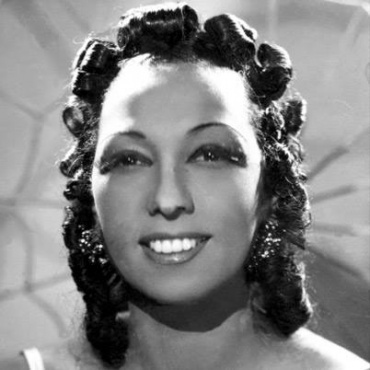
Josephine Baker
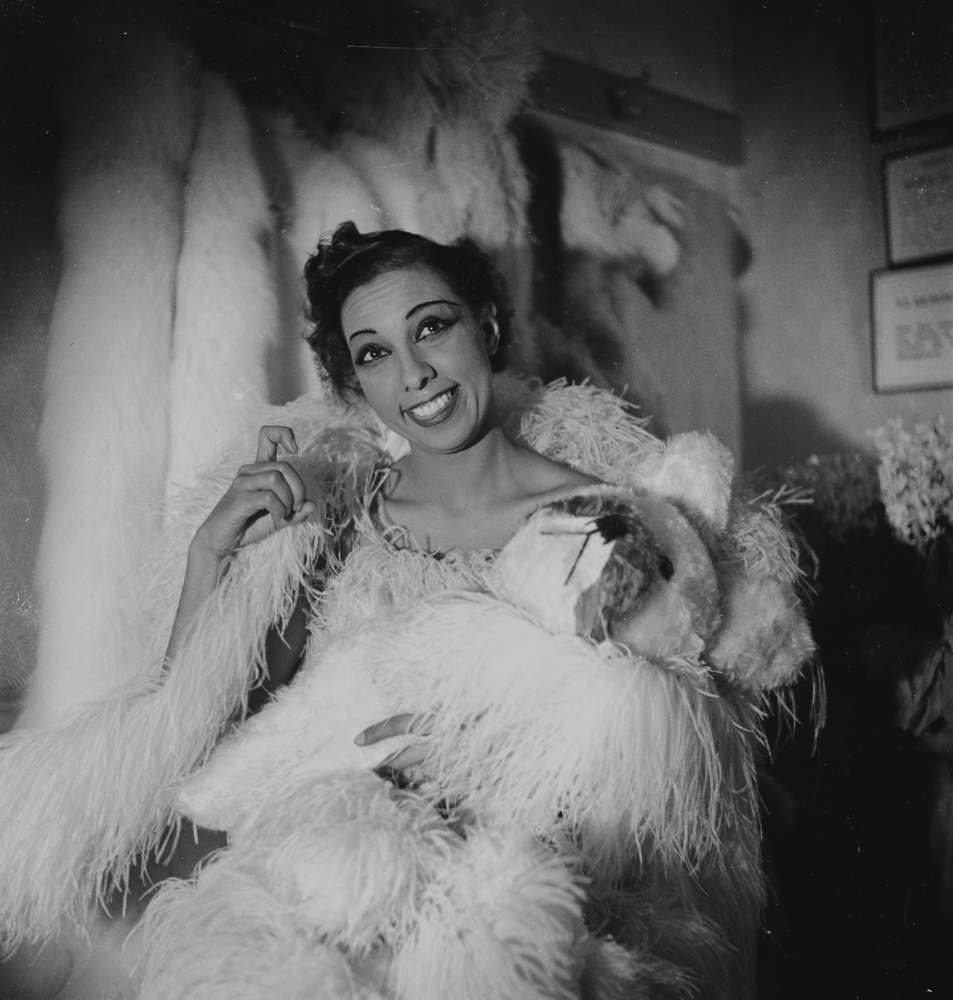
She was a very talented woman who lived from June 3, 1906 to April 12 1975. After more than 45 years after her passing, her legacy is still extremely powerful. For 68 years, she has lived an extraordinary life. From the area of St. Louis to the streets of Paris, she performed, stood up for just causes, and loved life. She is Sister Josephine Baker. Her original name was Freda Josephine McDonald. A lot of people don't know that she was a French Resistance agent who helped to defeat the evil, reactionary Nazi forces in France. Throughout her life, Josephine Baker was a dedicated civil rights activist. Back in the day, many African Americans left America and came into France, London, and Africa, because the horrendous, unjust discrimination against black Americans was so intense plus brutal. Baker lived in Paris, France for long decades. Yet, she always subscribed to the notion that human equality isn't up for debate. Equality is meant for all people regardless of one's color or background. She was the first black woman to star in a major motion picture in the 1927 silent film of Siren of the Tropics. That film was directed by Mario Nalpas and Henri Etievant. She was an excellent dancer at the Folies Bergere in Paris. Josephine Baker wore bananas and a breaded necklace in her dancing performances. As for the Jazz Age, she was one of the many icons of the era. Her nicknames were Black Venus, Black Pearl, and Bronze Venus. She said "J'ai deux amours, mon pays et Paris." That is French for "I have 2 loves, my country and Paris. She was at the 1963 March on Washington, and she worked with Coretta Scott King in 1968. Coretta offered her the unofficial leadership of the civil rights movement, but Baker didn't do it in order ot care for her family. It is certainly time to acknowledge the contributions of such a legendary creator of art and dance.
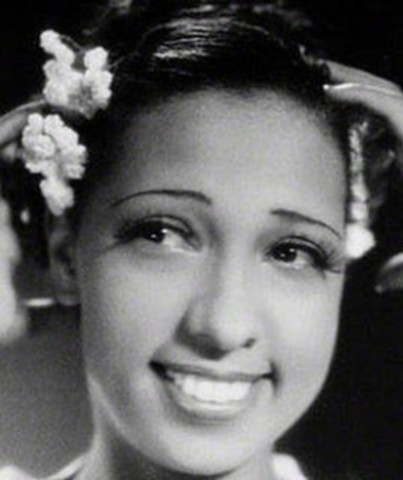
Her Early Life
Josephine Baker's early life started in St. Louis, Missouri. She was born Freda Josephine McDonald. Her mother lived in Little Rock, Arkansas. Her mother's parents were former slaves of African American and Native American descent. People speculate on the identity of Josephine Baker's biological father. People say either Eddie Carson or someone else. Josephine Baker grew up in the low income racially mixed area of 212 Targee Street (or John on Street). This was in the Mill Creek Valley neighborhood. The area had rooming homes, brothels, and apartments with no indoor plumbing. Josephine grew up very poor. She was hungry as a child, so she used street smarts to play in the railroad yards of Union Station at St. Louis. Her mother married Arthur Martin, and the couple had more children. Josephine Baker worked as a domestic for white families at St. Louis when she was 8. One woman burned her hands in abuse. She dropped out of school at the age of 12. She worked as a waitress at the Old Chauffeur's Club at 33 Pine Street when she was 13. By this time, she was homeless sleeping in cardboard shelters. She scavenged for food in garbage cans. She earned money by street corner dancing. Josephine met Willie Wells and married him in the same year. It only last for less than a year. Josephine worked for a street performance group called the Jones Family Band. Josephine Baker lived a rough early life. She had an up and down relationship with her mother. Her mother didn't want her to go into the entertainment business. The husband married her when she was 15 which is wild. Later, she divorced him at 1925. Josephine Baker performed and gave her mother and younger half sister money and gifts. Later, Josephine Baker came into France.
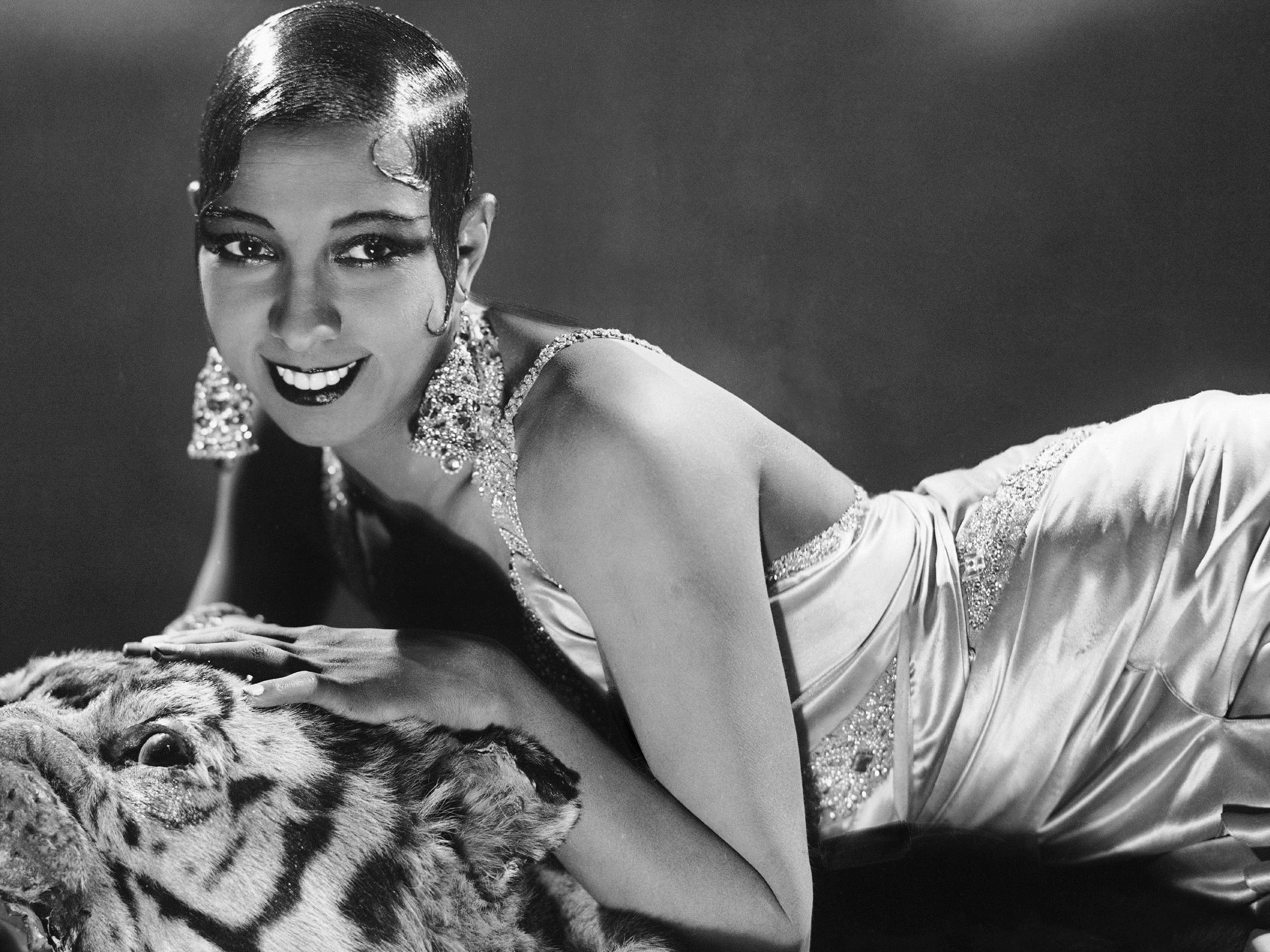

The Beginning of Her Career.
When Josephine Baker was 15, she came into NYC during the Harlem Renaissance. She performed at the Plantation Club. She worked for the St. Louis Chorus vaudeville show. She was in the chorus lines of the groundbreaking and famous Broadway revues of Shuffle Along (1921) with Adelaide Hall and the Chocolate Dandies (1924). Florence Mills performed at the Plantation Club too. Baker used comedy in her dance routine too. This was part of her signature style. Later, Baker was the highest paid chorus girl in vaudeville at that time. Her mother disapproved of the blackface comedy at local clubs that she did. Baker would later live in Paris. Josephine Baker came to Paris by October 2, 1925 in the La Revue Negre. She was 19 at the Theatre de Champs-Elysees. Bricktop, or another black performed traveled to Paris, too. Bricktop was Ada Smith. She lived form 1894 to 1984. Josephine Baker did erotic dancing in Paris. Sometimes, she was readily almost nude onstage. Touring Europe came about later. She starred at the Folies Bergere. She wore a banana costume. At times, she used a pet cheetah named Chiquita. Ernest Hemingway, Picasso, and Jean Cocteau knew her. By 1929, she was the first African American star to visit Yugoslavia. Her early manager was Giuseppe Pepito Abtatino. Baker promoted the successful song "J'ai deux amours" in 1931. She was in 3 films called Siren of the Tropics in 1927, Zouzou in 1934, and Princesse Tam Tam in 1935. She was in Fausse Alerte in 1940. Josephine Baker was praised in Paris, but racists called her slurs in America. She was so heartbroken in America (after being Broadway's Ziegfield Follies) that she was a legal citizen of France and gave up American citizenship. She came into Paris in 1937, and she married the French industrialist Jean Lion. They married in the French town Crececoeur le Grand presided by the mayor Jammy Schmidt.


The World War II era
By September 1939, France declared war on Nazi Germany. This came after the Nazis invaded Poland. Josephine Baker was recruited by the Deuxieme Bureau or the French military intelligence, as a honorable correspondent. Baker collected what information that she could about German troop locations from officials she met at parties. She was in gatherings at embassies and ministries. She used her charm to gather information. Baker had many fame. She found information from high ranking Japanese officials and Italian bureaucrats. Josephine Baker reported back to what she heard. She attended parties and gathered facts at the Italian embassy without raising suspicion. Baker left Paris when the Nazis invaded France. She came to the Chateau des Milandes. That was her home in the Dorogne department in the south of France. She housed people who were eager to join the Free French effort. This effort was led by Charles de Gaulle. Baker supplied numerous people with visas. As an entertainer, Baker moved around Europe, even in neutral nations like Portugal. She came into South America. Baker carried information for transmission to England about airfields, harbors, and German troop concentration in the West of France. Notes were written in invisible ink on Baker's sheet music. As written in the book of Jazz Age Cleopatra, "She specialized in gatherings at embassies and ministries, charming people as she had always done, but at the same time trying to remember interesting items to transmit."
By 1941, she and her entourage went to the French colonies in North Africa. She wanted to continue in the resistance. She was recovering from another case of pneumonia too. She made tours to Spain from a base in Morocco. She wrote notes of information gathered inside her body. She met the Pasha of Marrakech, whose support helped her through a miscarriage. After her miscarriage, she developed a bad infection. It caused her to require a hysterectomy. The infection spread and she had peritonitis and then sepsis. After, she recovered, she toured troops among British, French, and American soldiers in North Africa. The Free French had no organized entertainment network for their troops, so Baker and her entourage managed for the most part on their own. They allowed no civilians and charged no admission. After the war, Baker received the Croix de guerre and the Rosette de la Résistance. She was made a Chevalier of the Légion d'honneur by General Charles de Gaulle. Baker's last marriage, to French composer and conductor Jo Bouillon, ended around the time. Baker opted to adopt her 11th child.

Later Career and Cilvil Rights Activism
After World War II, Josephine Baker was a woman in a new era of time. She returned in triumph to the Folies Bergere in 1949. Baker was a war hero. Her success grew to be one of Paris' preeminent entertainers. By 1951, she was invited back to America for a nightclub engagement in Miami. After winning a public battle over desegregating the club's audience, Baker followed up her sold out run at the club with a national tour. She was praised by rave reviews. Many enthusiastic audiences accompanies her everywhere. There was a parade in front of 100,000 people in Harlem, NYC of her new title of NAACP's Woman of the Year. She was hired to crown the Queen of the Cavalcade of Jazz for the famed eighth Cavalacade of Jazz concert held at Wrigley Field in Los Angeles at 1952. It was produced by Leon Hefflin Sr. on June 1. Roy Brown and His Mighty Men, Ann Mae Winburn and Her Sweethearts, Toni Harper, Louis Jordan, Jimmy Witherspoon, and Jerry Wallace performed there. There was one incident at the Stork Club that interrupted and overturned her plans. Baker criticized the club's unwritten policy of discouraging Black patrons, then scolded columnist Walter Winchell, an old ally, for not rising to her defense. Winchell responded swiftly with a series of harsh public rebukes, including accusations of Communist sympathies (a serious charge at the time). The ensuing publicity resulted in the termination of Baker's work visa, forcing her to cancel all her engagements and return to France.
It was almost a decade before U.S. officials allowed her back into the country. In January 1966, Fidel Castro invited Baker to perform at the Teatro Musical de La Habana in Havana, Cuba, at the 7th-anniversary celebrations of his revolution. Her spectacular show in April broke attendance records. In 1968, Baker visited Yugoslavia and made appearances in Belgrade and in Skopje. In her later career, Baker faced financial troubles. She commented, "Nobody wants me, they've forgotten me"; but family members encouraged her to continue performing. In 1973 she performed at Carnegie Hall to a standing ovation. The following year, she appeared in a Royal Variety Performance at the London Palladium, and then at the Monacan Red Cross Gala, celebrating her 50 years in French show business. Advancing years and exhaustion began to take their toll; she sometimes had trouble remembering lyrics, and her speeches between songs tended to ramble. She still continued to captivate audiences of all ages.
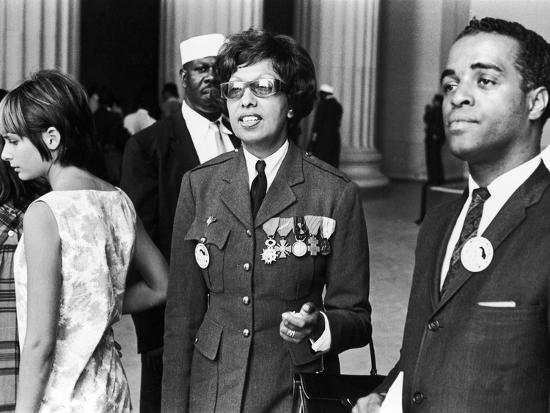
Josephine Baker always had a life long commitment to promote Civil Rights. She was in the Civil Rights Movement for decades. In the 1950's, she came to New York with her husband Jo. They were refused reservations at 36 hotels because of racial discrimination. Baker was so upset by this treatment that she wrote articles about the evil segregation in the United States. She traveled into the South too. She gave a talk at Fisk University, a historically Black college in Nashville, entitled, "On France, North Africa, and the Equality of the Races in France." She refused to perform for segregated audiences in America. Although, she was offered $10,000 by a Miami club. The club later met her demands. Her goals helped to integrate live entertainment shows in Las Vegas, Nevada. After this incident, she was receiving threatening phone call from people claiming to be from the Klan, but she publicly said that she wasn't afraid of them. In 1951, she made charges of racism against Sherman Billingsley's Stork Club in Manhattan, where she had been refused service. Actress Grace Kelly, who was at the club at the time, rushed over to Baker, took her by the arm and stormed out with her entire party, vowing never to return (although she returned on January 3, 1956 with Prince Rainier of Monaco). The two women became close friends after the incident.
When Baker was near bankruptcy, Kelly offered her a villa and financial assistance (Kelly by then was princess consort of Rainier III of Monaco). However, during his work on the Stork Club book, author and New York Times reporter Ralph Blumenthal was contacted by Jean-Claude Baker, one of Baker's sons. (Having read a Blumenthal-written story about Leonard Bernstein's FBI file, he indicated that he had read his mother's FBI file and, using comparison of the file to the tapes, said he thought the Stork Club incident was overblown). Obvious, that incident was not overblown as racism is a serious problem in the world.
Baker worked with the NAACP. Her reputation as a crusader grew to such an extent that the NAACP had Sunday, May 20, 1951 declared "Josephine Baker Day." She was presented with life membership with the NAACP by Nobel Peace Prize winner Dr. Ralph Bunche. The honor she was paid spurred her to further her crusading efforts with the "Save Willie McGee" rally. McGee was a Black man in Mississippi convicted of raping a white woman in 1945 on the basis of dubious evidence, and sentenced to death. Baker attended rallies for McGee and wrote letters to Fielding Wright, the governor of Mississippi, asking him to spare McGee's life. Despite her efforts, McGee was executed in 1951. As the decorated war hero who was bolstered by the racial equality she experienced in Europe, Baker became increasingly regarded as controversial by her haters; some Black people even began to shun her, fearing that her outspokenness and racy reputation from her earlier years would hurt the cause. Yet, these things never hurt her cause, because freedom for black people is a global affair. All black people worldwide must be liberated in order for the human race to be free.
In 1963, she spoke at the March on Washington at the side of Rev. Martin Luther King Jr. Baker was the only official female speaker. While wearing her Free French uniform emblazoned with her medal of the Légion d'honneur, she introduced the "Negro Women for Civil Rights." Rosa Parks and Daisy Bates were among those she acknowledged, and both gave brief speeches. Not everyone involved wanted Baker present at the March; some ignorantly thought her time overseas had made her a woman of France, one who was disconnected from the Civil Rights issues going on in America. That argument is false, because many freedom lovers have traveled the world to send the world the lessons about justice. In her powerful speech, one of the things Baker notably said was:
"I have walked into the palaces of kings and queens and into the houses of presidents. And much more. But I could not walk into a hotel in America and get a cup of coffee, and that made me mad. And when I get mad, you know that I open my big mouth. And then look out, 'cause when Josephine opens her mouth, they hear it all over the world ..." After Dr. Martin Luther King's assassination, his widow Coretta Scott King approached Baker in the Netherlands to ask if she would take her husband's place as leader of the Civil Rights Movement. After many days of thinking it over, Baker declined, saying her children were "too young to lose their mother."
Relationships and Her Children
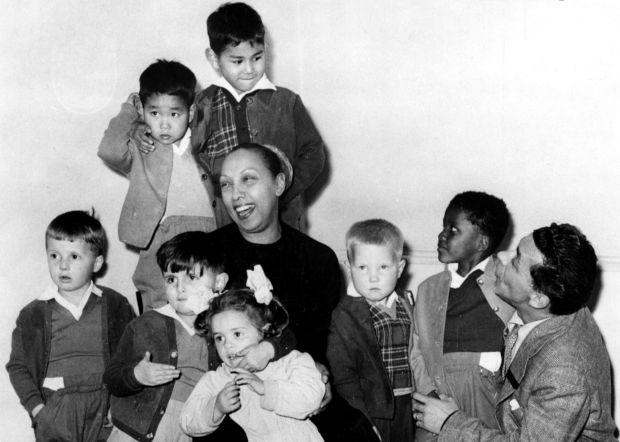
Josephine Baker lived a long life. She was initiated in 1960 at Nouvelel Jerusalem Lodge of the Women's Grand Lodge of France. Grand Lodges of Europe readily accept women. She married many people like Pullman porter Wille Wells, William Baker, Jean Lion, and Jo Buoillon. It is no secret that Josephine Baker was bisexual according to author Jean-Claude Baker. She lived during the time of the Harlem Renaissance. She dated the blues singer Clara Smith. In 1925, she had an extramarital relationship with the Belgian novelist Georges Simenon. She dated artist Robert Brady, Ada "Bricktop" Smith, French Colette, and possibly Frida Kahlo. She adopted children from across the world in the Rainbow Tribe. She wanted to prove that children of different ethnicities and religions should still be brothers and sisters. They lived at the Chateau des Milandes. She created dramatic backstories for them, picking with clear intent in mind: at one point she wanted and planned to get a Jewish baby, but settled for a French one instead. She also raised them as different religions to further her model for the world, taking two children from Algeria and raising one Muslim and the other Catholic. One member of the Tribe, Jean-Claude Baker, said: "She wanted a doll." Baker raised two daughters, French-born Marianne and Moroccan-born Stellina, and 10 sons, Korean-born Jeannot (or Janot), Japanese-born Akio, Colombian-born Luis, Finnish-born Jari (now Jarry), French-born Jean-Claude and Noël, Israeli-born Moïse, Algerian-born Brahim, Ivorian-born Koffi, and Venezuelan-born Mara. For some time, Baker lived with her children and an enormous staff in the château in Dordogne, France, with her fourth husband, Jo Bouillon.

A Continued Career and Her Passing
By the time of his later career, Josephine Baker converted to Roman Catholicism. In 1968, she lost her castle owing to unpaid debts. That is why Princess Grace offered her an apartment in Roquebrune, near Monaco. Josephine Baker was on the stage again at the Olympia in Paris by 1968, in Belgrade, and at Carnegie Hall in 1973. She performed at the Royal Variety Performance at the London Palladium at the Gala du Cirque in Paris by 1974. On April 8, 1975, Baker starred in a retrospective revue at the Bobino in Paris. It was called "Josephine a Bobino 1975," which was done to celebrate her 50 years in show business. The revue was financed by Prince Rainier, Princess Grace, and Jacqueline Kennedy Onassis. People celebrated it with rave reviews. There were so much demand for her performance that fold out chairs had to be added to accommodate spectators. The opening night audience included people like Sophia Loren, Mick Jagger, Shirley Bassey, Diana Ross, and Liza Minnelli. Four days later, Baker was found lying peacefully in her bed. She was surrounded by newspapers with glowing reviews of her performance. She was in a coma after suffering a cerebral hemorrhage. She was taken to Pitié-Salpêtrière Hospital, where she died, aged 68, on April 12, 1975. She received a full Roman Catholic funeral that was held at L'Église de la Madeleine. The only American-born woman to receive full French military honors at her funeral, Baker's funeral was the occasion of a huge procession. After a family service at Saint-Charles Church in Monte Carlo, Baker was interred at Monaco's Cimetière de Monaco.

Her Legacy
The legacy of Josephine Baker is very much extensive. She expressed a fearlessness in self expression, and she courageously stood up against racial oppression. When Jim Crow apartheid existed in America, she opposed it. When the Nazis conquered France temporarily, Jospehine Baker not only spoke up against the evil of Nazism. She was actively involved in the French Resistance movement to defeat Nazism forever. Before Grace Jones, before Madonna, before Dorothy Dandridge, before Lola Falana, before Beyonce, etc., there was Josephine Baker. Baker was inducted into the St. Louis Walk of Fame. Josephine Baker, on March 29, 1995, and she was named into the Hall of Famous Missourians. Many places of France are named in her honor. In 2015, she was inducted into the Legacy Walk in Chicago, Illinois. The Piscine Joséphine Baker is a swimming pool along the banks of the Seine in Paris named after her. Josephine Baker has an international following. She was more than an entertainer. Baker dedicated her life to advance the principles of equality, care for humanity, and justice. When I was a young child, I saw the autobiographical film about Josephine Baker's life starring the actress Lynn Whitfield.
The film was called The Josephine Baker Story being originally featured on HBO in 1991. Lynn Whitfield won an Emmy Award for Outstanding Lead Actress in a Miniseries or a Special – becoming the first Black actress to win the award in this category. In 2006, Deborah Cox starred in the musical Josephine at Florida's Asolo Theater, directed and choreographed by Joey McKneely. It was based on a book by Ellen Weston and Mark Hampton, music by Steve Dorff and lyrics by John Bettis. In 2010, the great singer Keri Hilson portrayed Josephine Baker in her single "Pretty Girl Rock." Keri Hilson's song was an ode to black women entertainers spanning almost 100 years from the 1920's to the 21st century. On Thursday, November 22, 2018, a documentary titled Josephine Baker: The Story of an Awakening, directed by Ilana Navaro, premiered at the Beirut Art Film Festival. It contains rarely seen archival footage, including some never before discovered, with music and narration. Actress DeQuina Moore portrayed Baker in a biographic musical titled "Josephine Tonight" at The Ensemble Theater in Houston, Texas, from June 27 – July 28, 2019. Josephine Baker's talent, activism, bravery, and work ethic inspire us all.
Quand tout est dit et fait, nous devons honorer la vérité. La vérité est que la vie ne sera pas parfaite, mais nous devrions avoir cet espoir d’avancer. Je crois à la vérité, au changement positif et à la justice.
By Timothy